All on 4 Dental Implants Turkey: 17 Essential Cost & Procedure Facts
All on 4 dental implants turkey is a common search for people exploring full-arch fixed replacement teeth, treatment costs and the stages of implant surgery in Istanbul. A complete treatment decision requires more than a starting price: the jawbone, health history, implant stability, type of temporary teeth and final bridge all influence what can be recommended.
This detailed guide explores the All-on-4 treatment concept, clinical assessment, four-implant placement, same-day provisional restorations, the cost of each stage, recovery, maintenance and questions to ask a dental team. It is written for patients who want realistic expectations rather than guarantees about immediate teeth or permanent outcomes.
What Are All-on-4 Dental Implants?
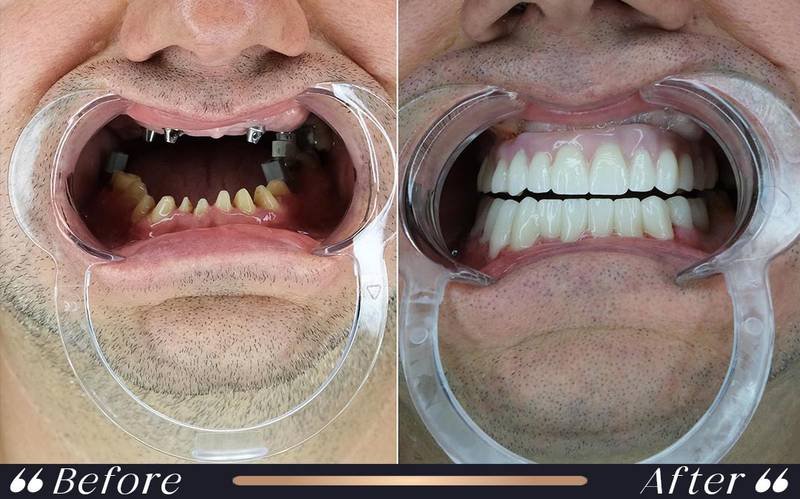
All-on-4 is a full-arch restoration concept in which four dental implants support a prosthesis replacing a complete row of teeth. Common configurations use two front implants that are relatively straight and two posterior implants that may be tilted to make use of available jawbone. The arrangement is planned using a clinical examination and appropriate imaging, not a standard template imposed on every jaw.
The four implants are artificial roots, not four replacement teeth. A bridge attached to them can restore a complete arch. The number of visible teeth varies with restorative design. All-on-4 is commonly discussed for people with no teeth in one jaw or teeth considered unsuitable for long-term retention. It is not the automatic choice whenever several teeth are missing.
For informed decision-making, ask the clinician to explain how this part of treatment affects both the immediate visit and the eventual final bridge. Request the difference between what is possible in a favorable case and what can realistically be expected for your own jaw. Written plans are especially useful when comparing international providers.
How the All-on-4 Concept Works
A fixed full-arch prosthesis distributes biting forces through implants positioned in strategic parts of the jaw. Tilted posterior implants may help avoid certain anatomical structures and use available bone without always requiring extensive grafting. This design requires careful assessment of implant stability, restoration geometry and the bite.
The dentist must also plan how patients can clean under the bridge, how the teeth will look when smiling and how the restoration is repaired if a screw or component becomes damaged. Successful treatment is both surgical and prosthetic. A technically placed implant is only one part of a functioning, maintainable set of replacement teeth.
Clinical suitability is not defined by a single scan image or a social media photograph. Oral hygiene, bite forces, gum condition, general health and willingness to return for maintenance influence success. A treatment that looks simple in an advertisement can involve significant restorative planning and future responsibilities.
Who May Benefit From Full-Arch Treatment?
Patients missing all teeth in an upper or lower arch, or with many teeth that cannot predictably be retained, may be assessed for a fixed full-arch implant bridge. Concerns can include difficulty chewing with removable dentures, repeated dental problems or dissatisfaction with an unstable prosthesis.
An assessment reviews oral infection, periodontal history, available bone, general health, smoking, medications, oral hygiene and expectations. Sometimes saving natural teeth remains the better course. An ethical plan should explain why extraction is or is not recommended instead of assuming every compromised tooth must be removed for a package.
Before committing, discuss alternatives and what would happen if the original strategy proved unsuitable during examination. A change to the planned number of implants, restoration material or healing sequence should be explained clearly rather than treated as an unexpected sales upgrade.
When All-on-4 May Not Be Suitable
Severe untreated gum infection, inadequate implant stability, certain medical risks or an inability to maintain hygiene can change candidacy. The amount and pattern of bone loss also affect whether four implants can be positioned usefully and whether immediate loading is appropriate.
A clinician may recommend staged treatment, a different implant number, removable implant-supported dentures or conventional restorative work. Patients should not regard this as a failed consultation. The correct objective is long-term oral function and safety, not fitting everyone into one commercial treatment label.
A reliable follow-up pathway specifies who will review symptoms, when the dentist expects to assess healing and how records are shared across borders. The patient should know the warning signs requiring urgent examination and should have an accessible dental professional at home for problems that cannot be solved remotely.
All-on-4 Dental Implants in Turkey: Treatment Planning
International patients often begin with a preliminary conversation, existing dental records and images. These can help plan an initial consultation but may not provide enough information for a final diagnosis. A complete examination and imaging in Istanbul may change the proposed procedure.
Ask who will diagnose and plan the case, who performs surgery, who designs the prosthesis and which clinician manages follow-up. The dentist should explain both the first surgical visit and the later steps needed for a definitive restoration. Informed planning includes the possibility that surgery will not be suitable on the expected date.
Ask the dentist to distinguish long-term implant health from the condition of the prosthesis. A stable implant can still support a bridge that needs cleaning, screw checks, adjustment or repair. Understanding maintenance needs is essential when comparing apparently similar package quotations.
Why Patients Consider Istanbul
Istanbul has international transport links and dental providers that may coordinate consultations, translation, transfers and accommodation. These arrangements can be convenient for treatment requiring more than one visit. Convenience, however, cannot replace verification of the professional team, facility or proposed treatment.
Compare providers based on examination standards, clinical communication, component traceability, continuity of care and a realistic timetable. A dental holiday that includes only the surgical visit but not a plan for the final prosthesis and long-term maintenance is incomplete.
For informed decision-making, ask the clinician to explain how this part of treatment affects both the immediate visit and the eventual final bridge. Request the difference between what is possible in a favorable case and what can realistically be expected for your own jaw. Written plans are especially useful when comparing international providers.
The First Consultation and Oral Examination
A thorough assessment includes discussion of missing teeth, current dentures, gum symptoms, medical history and desired appearance. The dentist examines soft tissues, jaw relationships, tooth contacts and how much space exists for a fixed bridge. Expectations about chewing strength, speaking and smile appearance should be discussed.
Patients should disclose anticoagulant medicines, previous implant failures, diabetes, medications affecting bone metabolism, radiotherapy and nicotine use. Never stop medication without guidance from the prescribing professional. A written plan should define the stages, alternatives and potential complications.
Clinical suitability is not defined by a single scan image or a social media photograph. Oral hygiene, bite forces, gum condition, general health and willingness to return for maintenance influence success. A treatment that looks simple in an advertisement can involve significant restorative planning and future responsibilities.
Dental Imaging and CBCT
Three-dimensional imaging such as cone-beam computed tomography may be indicated to assess implant sites, bone quantity and nearby structures. Other radiographs and clinical records can be useful depending on the case. The choice of imaging should follow a clinical need and appropriate radiation principles.
The dentist may consider sinus position in the upper jaw and nerve anatomy in the lower jaw. A digital plan can improve communication, but software does not make an unsafe site suitable or replace clinical judgment. Ask to see an understandable explanation of the intended implant positions.
Before committing, discuss alternatives and what would happen if the original strategy proved unsuitable during examination. A change to the planned number of implants, restoration material or healing sequence should be explained clearly rather than treated as an unexpected sales upgrade.
Upper Jaw Versus Lower Jaw
Upper and lower jaws have different anatomy and may require different implant positions or restoration designs. Upper-jaw bone can be less dense in some regions and the maxillary sinuses can limit available posterior bone. Lower-jaw planning must account for important nerve anatomy and the shape of the remaining ridge.
The same patient may qualify for immediate loading in one arch but need a different sequence for the other. Do not assume that a promotional price for one arch predicts the total price or the same treatment time for both jaws.
A reliable follow-up pathway specifies who will review symptoms, when the dentist expects to assess healing and how records are shared across borders. The patient should know the warning signs requiring urgent examination and should have an accessible dental professional at home for problems that cannot be solved remotely.
Why Are the Back Implants Sometimes Tilted?
Tilting selected posterior implants can make strategic use of existing bone and increase the span between supports for a full-arch bridge. The surgeon may use this approach to work around anatomical limitations while aiming to provide stable support for the prosthesis.
Tilt is an engineered part of some full-arch plans, not evidence that the implant was placed incorrectly. However, excessive or unsuitable positioning can create prosthetic challenges. The plan must consider bone, hygiene access, screw access and the forces the bridge will experience.
Ask the dentist to distinguish long-term implant health from the condition of the prosthesis. A stable implant can still support a bridge that needs cleaning, screw checks, adjustment or repair. Understanding maintenance needs is essential when comparing apparently similar package quotations.
Four Implants Versus More Implants
Four implants can support a fixed full arch in selected cases, but four is not a universal maximum or minimum for every patient. Professional consensus considers the available bone, distribution of implant support, opposing bite, prosthetic design and patient-related risks.
A six-implant plan may be appropriate in some cases and unnecessary in others. Ask the clinician to explain why a specific number is recommended for your jaw instead of assuming that more implants must be safer or that fewer implants always represent better value.
For informed decision-making, ask the clinician to explain how this part of treatment affects both the immediate visit and the eventual final bridge. Request the difference between what is possible in a favorable case and what can realistically be expected for your own jaw. Written plans are especially useful when comparing international providers.
All-on-4 Versus All-on-6
All-on-4 typically distributes full-arch support across four implants; All-on-6 uses six. These are treatment configurations rather than guarantees about lifespan, appearance or comfort. Design details and case selection often matter more than the name alone.
Comparison should include the arch being treated, anatomy, need for grafting, surgical complexity, access for cleaning and intended prosthesis. A reliable dentist can explain the reasons for selecting one design and the tradeoffs that apply to the individual patient.
Clinical suitability is not defined by a single scan image or a social media photograph. Oral hygiene, bite forces, gum condition, general health and willingness to return for maintenance influence success. A treatment that looks simple in an advertisement can involve significant restorative planning and future responsibilities.
All-on-4 Versus Removable Dentures
A fixed implant bridge remains connected to implants and is not normally removed by the patient for daily cleaning. A conventional removable denture rests on gum tissues and can be taken out at home. An implant-retained overdenture is another option that may improve retention while remaining removable.
Different options have different costs, hygiene needs, repair procedures and anatomical requirements. A person who struggles to clean beneath a fixed bridge may sometimes find a removable design more practical. Patient preferences should be balanced with maintainability and realistic function.
Before committing, discuss alternatives and what would happen if the original strategy proved unsuitable during examination. A change to the planned number of implants, restoration material or healing sequence should be explained clearly rather than treated as an unexpected sales upgrade.
All-on-4 Versus Individual Implants
Replacing every missing tooth with a separate implant is often unnecessary for an entire arch. A planned bridge can replace many visible teeth using fewer implant fixtures. However, an individual crown or shorter implant bridge can be appropriate when only some teeth are missing.
The goal is not to minimize fixture count at any cost. It is to provide stable support that can be cleaned and repaired. The dentist should consider the remaining natural teeth before recommending extensive extractions.
A reliable follow-up pathway specifies who will review symptoms, when the dentist expects to assess healing and how records are shared across borders. The patient should know the warning signs requiring urgent examination and should have an accessible dental professional at home for problems that cannot be solved remotely.
How Much Do All-on-4 Dental Implants Cost in Turkey?
There is no single verified nationwide price for an All-on-4 treatment plan in Turkey. Advertised fees can vary by whether they cover one arch or both, the implant system, bone procedures, surgeon and laboratory charges, temporary teeth and the definitive prosthesis.
A personal quotation should follow assessment and identify the relevant currency and what is included at every stage. Avoid treating a starting price as a complete final-treatment cost. A low surgical fee may exclude the later definitive bridge, scans or follow-up that are essential to completing treatment.
Ask the dentist to distinguish long-term implant health from the condition of the prosthesis. A stable implant can still support a bridge that needs cleaning, screw checks, adjustment or repair. Understanding maintenance needs is essential when comparing apparently similar package quotations.
What Influences the Total Price?
The number of arches, extractions, available bone, need for additional procedures, type of sedation or anaesthesia and intended restoration material can change costs. Laboratory complexity, digital records and the time required to fit a functional bite are also important.
The patient needs may differ from those pictured in marketing photographs. Revision of older implant work, active infection or a complex jaw relationship can make treatment more demanding. A clinic should revise a quotation when findings change and explain the reasons clearly.
For informed decision-making, ask the clinician to explain how this part of treatment affects both the immediate visit and the eventual final bridge. Request the difference between what is possible in a favorable case and what can realistically be expected for your own jaw. Written plans are especially useful when comparing international providers.
Temporary Teeth Versus Final Teeth in a Quote
Some treatment plans place a provisional fixed bridge soon after surgery if implant stability and other conditions permit. This temporary bridge is generally designed around the requirements of healing and may have different materials and chewing restrictions from the definitive restoration.
A quote must state whether both stages are included. It should explain when the final prosthesis is expected, whether new impressions or scans are required, whether laboratory costs are separate and what happens if the temporary restoration fractures or needs adjustment.
Clinical suitability is not defined by a single scan image or a social media photograph. Oral hygiene, bite forces, gum condition, general health and willingness to return for maintenance influence success. A treatment that looks simple in an advertisement can involve significant restorative planning and future responsibilities.
Common Prosthesis Materials
Full-arch restorations may involve acrylic or composite materials, reinforced frameworks and ceramic materials such as zirconia, depending on the design. A temporary prosthesis is often lighter and intended for limited use during healing, while a final bridge may prioritize long-term function and wear resistance.
No material is universally best. The decision depends on space, bite forces, maintenance, repairability, appearance, and affordability. Patients should request the exact planned material rather than accepting an ambiguous phrase like permanent premium teeth.
Before committing, discuss alternatives and what would happen if the original strategy proved unsuitable during examination. A change to the planned number of implants, restoration material or healing sequence should be explained clearly rather than treated as an unexpected sales upgrade.
What Should an Itemized Quote Include?
A detailed estimate should identify consultation and imaging, extractions if needed, four implant fixtures per arch where appropriate, abutments, surgical fee, anaesthesia, provisional restoration, definitive bridge, appointments, medicines and any possible grafting.
If accommodation, interpretation or transfers are offered, distinguish these commercial services from dental care. Ask who pays for additional visits, complications or modifications if the in-person examination changes the treatment plan. Written terms protect both patient and provider.
A reliable follow-up pathway specifies who will review symptoms, when the dentist expects to assess healing and how records are shared across borders. The patient should know the warning signs requiring urgent examination and should have an accessible dental professional at home for problems that cannot be solved remotely.
The Procedure: Preparation and Extractions
Treatment begins with consent, surgical planning, medication review and preparation of the mouth. Teeth that cannot be retained may be extracted during the same treatment episode, depending on infection and clinical conditions. The team aims to control contamination and preserve useful bone.
Extraction on the same day as implantation may be possible in selected cases, but it is not mandatory or appropriate for everyone. A patient with substantial infection or other issues may require staged treatment. The surgery should follow an individualized risk assessment.
Ask the dentist to distinguish long-term implant health from the condition of the prosthesis. A stable implant can still support a bridge that needs cleaning, screw checks, adjustment or repair. Understanding maintenance needs is essential when comparing apparently similar package quotations.
The Procedure: Placing the Implants
After appropriate anaesthesia, the surgeon prepares sites in the jawbone and places the planned fixtures. The exact configuration depends on imaging, bone quality and available anatomy. Position, insertion stability and the future prosthesis are considered together.
The team may record the insertion stability and reassess whether an immediate provisional restoration is safe. Four implants may be the intended plan, but unexpected bone findings can require a change in strategy. Patients should understand that clinical decisions may differ from the preliminary itinerary.
For informed decision-making, ask the clinician to explain how this part of treatment affects both the immediate visit and the eventual final bridge. Request the difference between what is possible in a favorable case and what can realistically be expected for your own jaw. Written plans are especially useful when comparing international providers.
Does All-on-4 Mean Teeth in One Day?
Teeth in one day is often used to describe placement of a provisional fixed restoration soon after surgery. This is possible only when clinical conditions, including adequate primary implant stability, are favorable. It does not necessarily mean the definitive bridge is completed on that day.
Recent full-arch consensus guidance supports immediate loading in selected cases when stability and other criteria are met. Where those conditions are not present, delayed loading or a different provisional option may be safer. Patients should ask exactly which type of teeth they can expect and when.
Clinical suitability is not defined by a single scan image or a social media photograph. Oral hygiene, bite forces, gum condition, general health and willingness to return for maintenance influence success. A treatment that looks simple in an advertisement can involve significant restorative planning and future responsibilities.
Immediate Loading Explained
Immediate loading generally means placing a restoration in function within a short interval after implant placement. The decision depends on implant stability, the patient bite, restorative design and risk factors. It should not be confused with the early biological healing of the implant to bone.
A provisional bridge may need a softer diet and adjusted contacts to limit excessive forces while healing occurs. The dentist should describe what happens if stability is insufficient and the provisional must be delayed. An honest plan includes alternatives, not only a same-day promise.
Before committing, discuss alternatives and what would happen if the original strategy proved unsuitable during examination. A change to the planned number of implants, restoration material or healing sequence should be explained clearly rather than treated as an unexpected sales upgrade.
What Is Osseointegration?
Osseointegration is the biological process through which bone forms a stable interface around the implant surface. It takes place over time and supports long-term function. The gums may appear healed long before the implant-bone interface has completed its early healing phase.
The timescale varies according to bone quality, surgical conditions, loading and general health. A provisional bridge does not eliminate the need for bone healing. Follow-up helps confirm progress before the definitive restoration is made.
A reliable follow-up pathway specifies who will review symptoms, when the dentist expects to assess healing and how records are shared across borders. The patient should know the warning signs requiring urgent examination and should have an accessible dental professional at home for problems that cannot be solved remotely.
When Is the Permanent Bridge Fitted?
Many full-arch pathways allow a healing period of several months before fitting or finalizing the definitive bridge, but timing is case-specific. The dentist evaluates tissue healing, stability and the jaw relationship before proceeding.
This stage can include new digital scans or impressions, trial fittings, bite adjustments and decisions about tooth shape or color. International patients need to plan whether a second journey is required and who will manage the interim period at home.
Ask the dentist to distinguish long-term implant health from the condition of the prosthesis. A stable implant can still support a bridge that needs cleaning, screw checks, adjustment or repair. Understanding maintenance needs is essential when comparing apparently similar package quotations.
The First 24 to 72 Hours After Surgery
Soreness, mild bleeding, swelling and bruising can follow dental implant surgery, especially if extractions were performed. The responsible team should explain medications, oral hygiene, diet and warning signs before discharge. Rest is important, and brief gentle movement may be appropriate as instructed.
Do not rinse vigorously, smoke, drink through a straw or disturb wounds if your surgeon advises against those actions. Follow the exact instructions supplied by the clinic, since they may differ based on whether sutures, grafting or other procedures were used.
For informed decision-making, ask the clinician to explain how this part of treatment affects both the immediate visit and the eventual final bridge. Request the difference between what is possible in a favorable case and what can realistically be expected for your own jaw. Written plans are especially useful when comparing international providers.
Week One: Swelling and Diet
Swelling may be more noticeable during the first few days before it begins to improve. A soft diet can reduce stress on surgical sites and a provisional bridge. Choose foods approved by the clinician, maintain hydration and avoid chewing hard items against the restoration.
Report uncontrolled pain, persistent heavy bleeding, fever or increasing swelling rather than assuming every symptom is normal. Mouth cleaning still matters during recovery, but brushing and rinsing instructions should be tailored to healing wounds and bridge design.
Clinical suitability is not defined by a single scan image or a social media photograph. Oral hygiene, bite forces, gum condition, general health and willingness to return for maintenance influence success. A treatment that looks simple in an advertisement can involve significant restorative planning and future responsibilities.
Weeks Two to Four: Tissue Healing
Gum tissues commonly become more comfortable during the following weeks, though deeper healing continues. The dentist may remove or review sutures, inspect the temporary bridge and adjust areas that irritate the mouth.
Do not interpret feeling normal as permission to resume hard foods if your team has prescribed a prolonged softer diet. Accidental overload can threaten components before the implant interface is fully established. Attend scheduled reviews even when the teeth look attractive.
Before committing, discuss alternatives and what would happen if the original strategy proved unsuitable during examination. A change to the planned number of implants, restoration material or healing sequence should be explained clearly rather than treated as an unexpected sales upgrade.
Months Two to Six: Bone and Prosthetic Healing
During the subsequent months, osseointegration and adaptation to the new bite continue. The timeline can be longer if bone reconstruction or complications are involved. Some patients experience changes in gum contours that make adjustments to the provisional bridge useful.
This period is central to deciding when the final bridge can be made and whether implant stability and hygiene are satisfactory. A fixed provisional restoration still requires meticulous cleaning, follow-up and adherence to chewing guidance.
A reliable follow-up pathway specifies who will review symptoms, when the dentist expects to assess healing and how records are shared across borders. The patient should know the warning signs requiring urgent examination and should have an accessible dental professional at home for problems that cannot be solved remotely.
What Foods Can You Eat After All-on-4?
Early food choices should be guided by the oral surgeon and restorative dentist. Soft foods such as appropriately prepared eggs, yoghurt, pureed vegetables and soft fish may be suitable for some patients, depending on medical and dietary requirements. The goal is nutrition without overloading healing implants.
Avoid assuming that the ability to bite through food means it is safe to chew hard, sticky or crunchy items. Restrictions may be especially important for an immediately loaded provisional bridge. Ask for a written food progression rather than interpreting marketing claims literally.
Ask the dentist to distinguish long-term implant health from the condition of the prosthesis. A stable implant can still support a bridge that needs cleaning, screw checks, adjustment or repair. Understanding maintenance needs is essential when comparing apparently similar package quotations.
How to Clean Under a Full-Arch Bridge
A fixed implant-supported bridge requires regular cleaning around the implants and underneath the prosthesis. The dentist or hygienist may demonstrate special floss, interdental brushes or other devices appropriate to the restoration design.
Cleaning methods can change once the final prosthesis is fitted. Avoid forcing tools that damage tissues or components. Regular professional maintenance remains necessary, because implant-supported teeth are not immune to plaque accumulation or gum inflammation.
For informed decision-making, ask the clinician to explain how this part of treatment affects both the immediate visit and the eventual final bridge. Request the difference between what is possible in a favorable case and what can realistically be expected for your own jaw. Written plans are especially useful when comparing international providers.
Peri-Implant Mucositis and Peri-Implantitis
Inflammation around implants can affect the surrounding soft tissues and, in more advanced cases, the supporting bone. Patients should not assume that implants cannot develop disease simply because they cannot get ordinary tooth decay.
Bleeding during cleaning, swollen gums, bad taste, persistent discomfort or loosening should trigger dental assessment. Maintenance visits allow clinicians to evaluate hygiene, prosthetic components and peri-implant tissues. Early intervention may prevent more severe problems.
Clinical suitability is not defined by a single scan image or a social media photograph. Oral hygiene, bite forces, gum condition, general health and willingness to return for maintenance influence success. A treatment that looks simple in an advertisement can involve significant restorative planning and future responsibilities.
Smoking, Diabetes and Implant Healing
Nicotine exposure, uncontrolled diabetes and other health conditions can affect wound healing and implant outcomes. Risk differs among patients and should be discussed honestly before surgery. Clinicians may recommend optimization or postponement rather than proceeding during a period of elevated risk.
Never hide medical history or medicines to preserve a package price. Implant rehabilitation is elective in many cases, and the team needs accurate information to choose an appropriate surgical and maintenance plan.
Before committing, discuss alternatives and what would happen if the original strategy proved unsuitable during examination. A change to the planned number of implants, restoration material or healing sequence should be explained clearly rather than treated as an unexpected sales upgrade.
Possible Surgical Complications
Potential complications include infection, pain, bleeding, nerve-related symptoms, sinus-related issues in upper-jaw surgery and failure of an implant to integrate. Surgical risks vary by jaw and the procedures combined with implantation.
A responsible consultation explains the relevant risks without presenting the operation as routine or risk-free. Patients should know how to reach urgent dental and medical help, especially during an international visit.
A reliable follow-up pathway specifies who will review symptoms, when the dentist expects to assess healing and how records are shared across borders. The patient should know the warning signs requiring urgent examination and should have an accessible dental professional at home for problems that cannot be solved remotely.
Possible Prosthetic Complications
Even when implants remain integrated, a bridge, screw, abutment or artificial tooth can chip, loosen, wear or fracture. Bite forces and habits such as clenching may affect maintenance requirements. Repairs and component replacement should be planned for as realistic possibilities.
Ask which parts are removable by a dentist, where replacement components are obtained, whether warranties cover labor or materials and who can provide repairs after you return home. A lifetime claim should never be taken to mean the entire bridge requires no maintenance.
Ask the dentist to distinguish long-term implant health from the condition of the prosthesis. A stable implant can still support a bridge that needs cleaning, screw checks, adjustment or repair. Understanding maintenance needs is essential when comparing apparently similar package quotations.
How Long Can All-on-4 Results Last?
Full-arch implant rehabilitations can function for many years, but longevity varies with oral hygiene, bone and gum health, prosthesis design, bite and regular maintenance. Implant survival is different from complication-free bridge survival.
Research reports encouraging outcomes in selected patients, but studies differ in follow-up length, definitions and case selection. Do not convert one published percentage into a guarantee for an individual. Ask how your personal risk factors affect long-term expectations.
For informed decision-making, ask the clinician to explain how this part of treatment affects both the immediate visit and the eventual final bridge. Request the difference between what is possible in a favorable case and what can realistically be expected for your own jaw. Written plans are especially useful when comparing international providers.
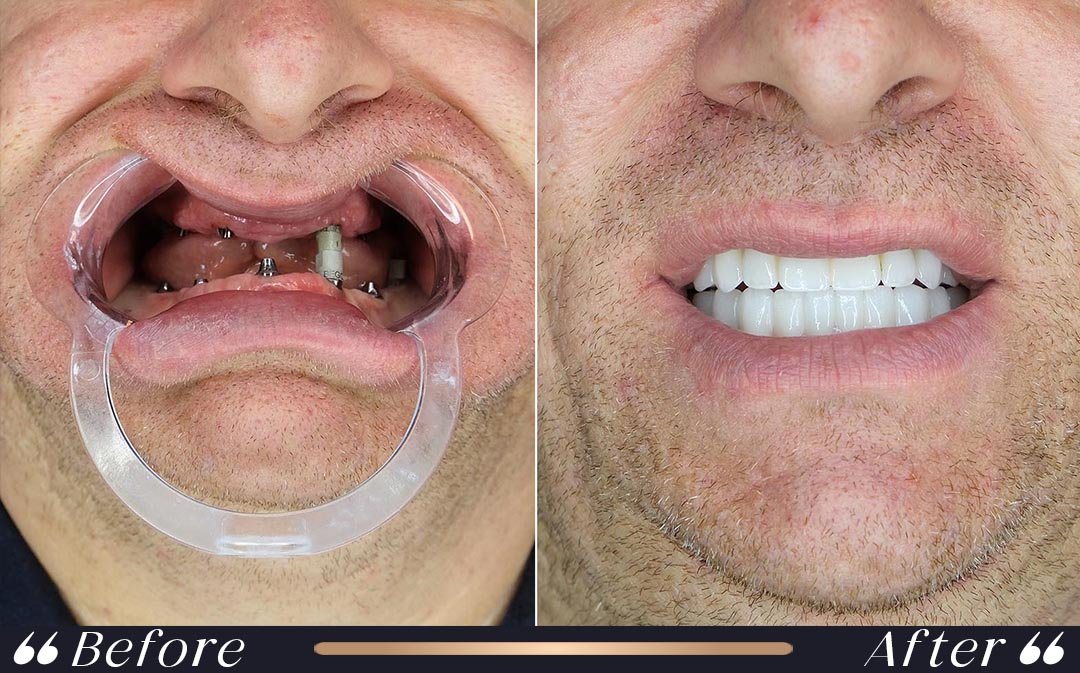
All-on-4 Before and After Photos
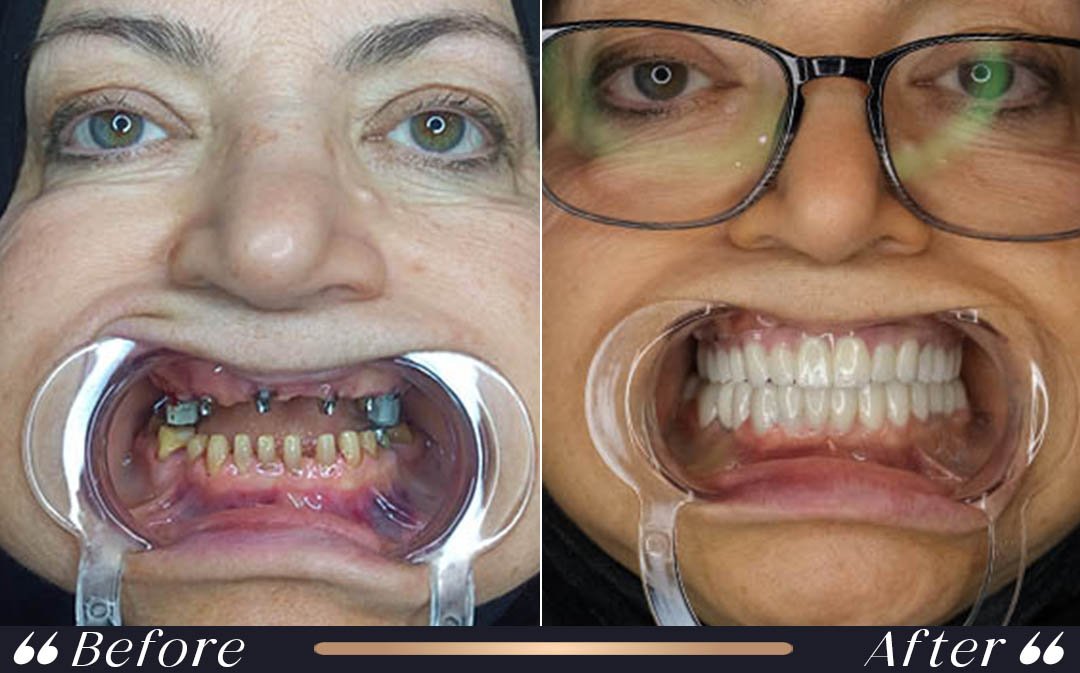
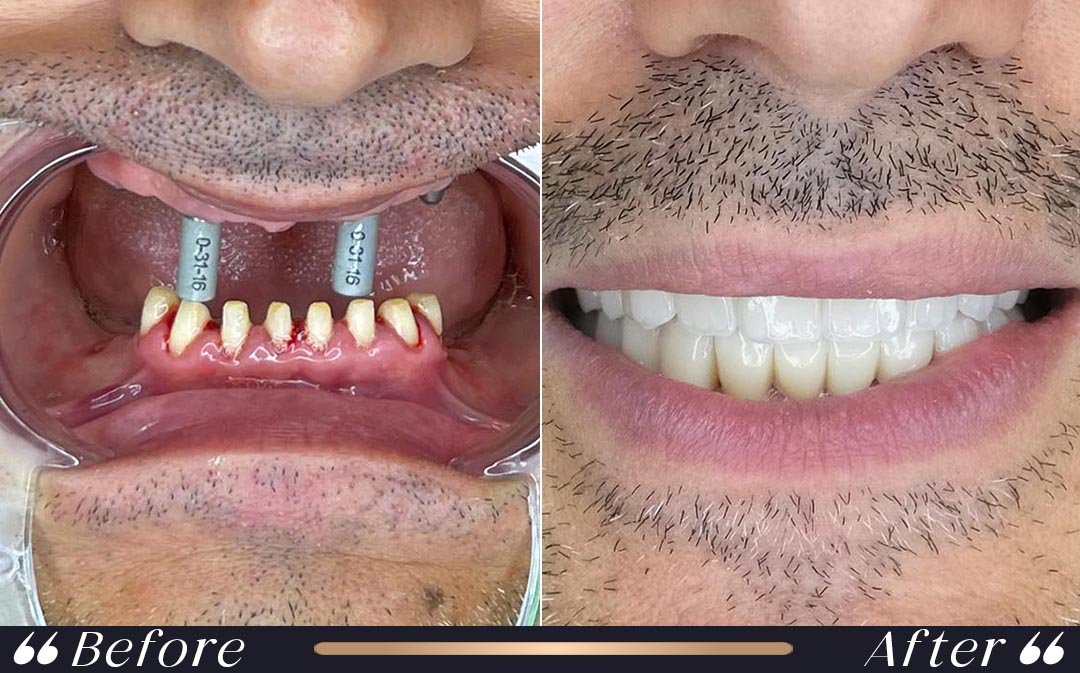
Photographs can help patients discuss tooth shape, color, smile line and general appearance. They are not evidence that another patient had the same anatomical situation or the same procedure. Images should be clearly labeled if they depict immediate temporary teeth rather than the final bridge.
Consistent camera angles and realistic lighting make comparisons more useful. Patients should ask whether the examples include gum-colored prosthetic material, whether natural teeth were removed and whether additional treatments were performed.
Clinical suitability is not defined by a single scan image or a social media photograph. Oral hygiene, bite forces, gum condition, general health and willingness to return for maintenance influence success. A treatment that looks simple in an advertisement can involve significant restorative planning and future responsibilities.
Choosing the Right Clinic in Turkey
Verify the dentist and surgical team, clinical facility, implant brand and availability of emergency arrangements. For international services, review official Turkish health-tourism authorization information through the Ministry of Health and HealthTürkiye.
Authorization is one important check, not a guarantee of an individual outcome. The treatment should also make sense clinically, include a maintenance plan and explain which provider will manage problems after travel.
Before committing, discuss alternatives and what would happen if the original strategy proved unsuitable during examination. A change to the planned number of implants, restoration material or healing sequence should be explained clearly rather than treated as an unexpected sales upgrade.
Planning a First and Second Visit
A first visit may include assessment, imaging, extractions, implant placement and provisional restoration when indicated. A second visit may be needed for fitting the definitive prosthesis after healing. Exact schedules vary significantly and depend on the ability to load implants immediately.
International patients should request a written itinerary with alternative dates if clinical findings change. Build in enough time for postoperative review and prosthetic adjustments. Never assume a short advertised stay establishes that an individual is fit to fly.
A reliable follow-up pathway specifies who will review symptoms, when the dentist expects to assess healing and how records are shared across borders. The patient should know the warning signs requiring urgent examination and should have an accessible dental professional at home for problems that cannot be solved remotely.
Aftercare Back Home
Before departure, obtain the operative report, implant brand and component details, radiographic records, prosthesis information, prescriptions, recommended hygiene routine and a schedule for maintenance. These records can be valuable to a dentist near home.
Remote communication may support routine questions but cannot replace hands-on care for a loose screw, infection or damaged bridge. Confirm in advance which local professional could provide urgent assessment and how the original team would coordinate treatment.
Ask the dentist to distinguish long-term implant health from the condition of the prosthesis. A stable implant can still support a bridge that needs cleaning, screw checks, adjustment or repair. Understanding maintenance needs is essential when comparing apparently similar package quotations.
What to Ask Before Paying a Deposit
Ask whether the quote is for one arch or both and whether it includes extractions, scans, provisional fixed teeth, definitive teeth, implants, abutments, sedation, medicines and follow-up. Request exact brands and a clear description of restoration materials.
Clarify refunds and scheduling changes if immediate loading is not possible, more implants are recommended or additional procedures become necessary. An honest provider should accept that a safe medical decision sometimes changes the original commercial plan.
For informed decision-making, ask the clinician to explain how this part of treatment affects both the immediate visit and the eventual final bridge. Request the difference between what is possible in a favorable case and what can realistically be expected for your own jaw. Written plans are especially useful when comparing international providers.
Dental Implant Consultation at Yesilkoy Clinic
Patients can contact Yesilkoy Clinic to discuss full-arch dental restoration, assessment requirements, possible treatment approaches and a personalized quotation. A professional evaluation determines whether All-on-4 or another restorative strategy may be appropriate.
The clinic should explain the operating dentist, facility, staged treatment plan, patient safety considerations and aftercare arrangements before any commitment. This educational guide does not establish a clinic-specific price, promise immediate fixed teeth or guarantee a particular result.
Clinical suitability is not defined by a single scan image or a social media photograph. Oral hygiene, bite forces, gum condition, general health and willingness to return for maintenance influence success. A treatment that looks simple in an advertisement can involve significant restorative planning and future responsibilities.
All-on-4 Treatment Journey at a Glance
| Phase | Typical focus | What to confirm |
|---|---|---|
| Consultation | Examination, medical history and imaging | Suitability, alternatives and exact quotation |
| Planning | Implant positions and restoration design | Number of implants and any extra procedures |
| Surgery | Extractions if needed and implant placement | Anaesthesia, risks and emergency arrangements |
| Provisional restoration | Fixed temporary bridge when conditions allow | Loading criteria, food restrictions and repair policy |
| Healing | Gum recovery and osseointegration | Reviews, hygiene and healing milestones |
| Definitive teeth | Final scans, bite design and bridge fitting | Material, cost and second-visit schedule |
| Maintenance | Long-term cleaning and periodic reviews | Local clinician, components and repairs |
All-on-4 Dental Implants Turkey: Frequently Asked Questions
What does All-on-4 mean?
It describes a full-arch bridge supported by four implants in a suitable jaw. It does not mean that only four replacement teeth are provided.
Is the treatment performed in one day?
Some patients receive a provisional fixed bridge soon after surgery when stability and clinical conditions permit. The final bridge generally requires a separate stage.
How much does All-on-4 cost in Turkey?
There is no single reliable price for every patient. A full written quote should identify the arch, implants, surgical work, temporary bridge, final bridge and aftercare.
Is a quote per arch or for both jaws?
This varies by provider. Confirm whether the quoted figure applies to the upper jaw, lower jaw or a complete two-arch treatment plan.
Does the cost include the final teeth?
Not always. Ask separately whether provisional and definitive restorations, laboratory work and fittings are included.
Will I need bone grafting?
Some angled-implant configurations may reduce the need for certain grafts, but your anatomy determines whether additional procedures are required.
What if there is not enough bone?
Your dentist may recommend alternative implant positions, more complex reconstruction, staged treatment or another restoration.
Do I need a CT scan?
Three-dimensional imaging may be appropriate for surgical planning; the clinician determines which records are necessary.
Are the posterior implants placed at an angle?
Often, yes. Some All-on-4 designs use tilted back implants to make better use of available bone.
Is All-on-6 better than All-on-4?
Neither is universally better. Appropriate implant number depends on the jaw, bone, biting forces and restoration design.
Will I have to remove the teeth each night?
A fixed full-arch bridge is not normally removed by the patient, but it requires cleaning underneath and professional maintenance.
What is an immediate-load bridge?
It is a provisional restoration connected to implants shortly after surgery when adequate stability and other criteria are present.
Can everyone receive fixed teeth immediately?
No. Implant stability, bone and medical considerations may require delayed loading or a different temporary solution.
How long does surgery take?
The duration depends on extractions, the number of arches, bone conditions and anaesthesia. Your dentist should give a case-specific estimate.
Will the treatment be painful?
Anaesthesia is used during surgery; soreness and swelling afterward vary. The team should provide an individualized pain-management plan.
How long does swelling last?
Postoperative swelling typically improves over the first days to weeks, but individual healing varies and worsening symptoms warrant evaluation.
What can I eat after surgery?
A softer diet is commonly recommended during early healing, particularly with an immediately loaded temporary bridge. Follow the clinician’s specific restrictions.
When can I eat hard food?
Only after your team has confirmed that the implants and restoration can tolerate it; the timing depends on healing and prosthesis design.
How long until the final bridge?
Often several months, but healing, implant stability and restorative planning determine the date.
Can I choose zirconia teeth?
Different restorative materials may be offered; suitability depends on available space, bite, design, repairability and cost.
Are All-on-4 implants permanent?
Implants may function for many years, but implants and bridges can develop biological or mechanical complications requiring care.
Can the bridge break?
Yes. Artificial teeth, frameworks, screws and other parts can wear, chip, loosen or fracture.
How do I clean beneath the bridge?
Your dentist can teach appropriate interdental cleaning tools and a hygiene method matched to the exact prosthesis.
Can implants get gum disease?
Inflammation around implants can occur, including peri-implant mucositis and peri-implantitis. Maintenance and prompt assessment matter.
Can smokers receive All-on-4?
Smoking can increase complications and impair healing. Suitability and cessation advice must be discussed individually.
Can patients with diabetes receive implants?
Some may be eligible, but disease control and other risk factors require professional assessment.
What if an implant fails?
The team must assess the cause and consider the options, which may include revising the restoration or replacing an implant after suitable healing.
Is the process suitable for older adults?
Chronological age alone does not determine eligibility. General health, bone, oral hygiene and ability to maintain the prosthesis are more relevant.
How many trips to Istanbul are needed?
Some pathways involve surgery and a later final bridge visit, but the number and timing depend on the treatment plan.
When can I fly after surgery?
Your treating team should confirm travel fitness based on surgical recovery, symptoms, medical history and planned follow-up.
How can I verify a Turkish clinic?
Check current Ministry of Health and HealthTürkiye authorization information, along with individual professional credentials and treatment arrangements.
How do I contact Yesilkoy Clinic?
Use the official clinic contact page to request an individual dental consultation and a complete written treatment estimate.
Ask Yesilkoy Clinic About Full-Arch Dental Implants
Contact the clinic to discuss your dental condition, treatment alternatives, professional assessment, a proposed staged plan and an individualized quotation. Ask which clinician will perform the procedure and how follow-up and definitive teeth will be arranged.
Request a Dental ConsultationIndependent Medical and Regulatory Resources
- 2026 Global Consensus: Rehabilitation of the Edentulous Maxilla
- ITI: Number of Implants for Complete-Arch Fixed Prostheses
- Consensus Report on the All-on-4 Treatment Concept
- Guy’s and St Thomas’ NHS: Dental Implants
- American Academy of Periodontology: Peri-implant Diseases
- HealthTürkiye: Certified Healthcare Providers
- Turkish Ministry of Health: Authorized Providers
Explore additional oral-health topics in the Yesilkoy Clinic blog.
Last updated: November 2026. This is general educational material; individual surgical and travel decisions require professional assessment.