All on 6 Dental Implants Turkey: 19 Essential Cost & Procedure Facts
All on 6 dental implants turkey is an increasingly familiar search among people considering replacement of an entire upper or lower arch with a fixed implant-supported bridge. Understanding the cost, procedure, treatment timing and maintenance requirements is more useful than choosing a clinic from a headline price alone.
This guide explains how six implants can support a complete arch of replacement teeth, why some patients may be better suited to four or another number of implants, and what to expect from temporary teeth, bone integration and the final restoration. It also covers risks, travel planning and practical questions for dental treatment in Istanbul.
All-on-4 vs All-on-6 at a Glance
| Consideration | All-on-4 | All-on-6 |
|---|---|---|
| Implants in one arch | Typically four | Typically six |
| Placement approach | Frequently includes angled posterior implants | May permit a different distribution where bone is available |
| Clinical suitability | Depends on bone anatomy and prosthetic goals | Depends on bone anatomy and prosthetic goals |
| Survival evidence | Not inherently inferior for every patient | Not inherently superior for every patient |
| Possible grafting | Depends on anatomy | Depends on anatomy |
| Treatment cost | Requires an itemized personal quote | Requires an itemized personal quote |
| Long-term care | Daily cleaning and professional maintenance | Daily cleaning and professional maintenance |
What Are All-on-6 Dental Implants?
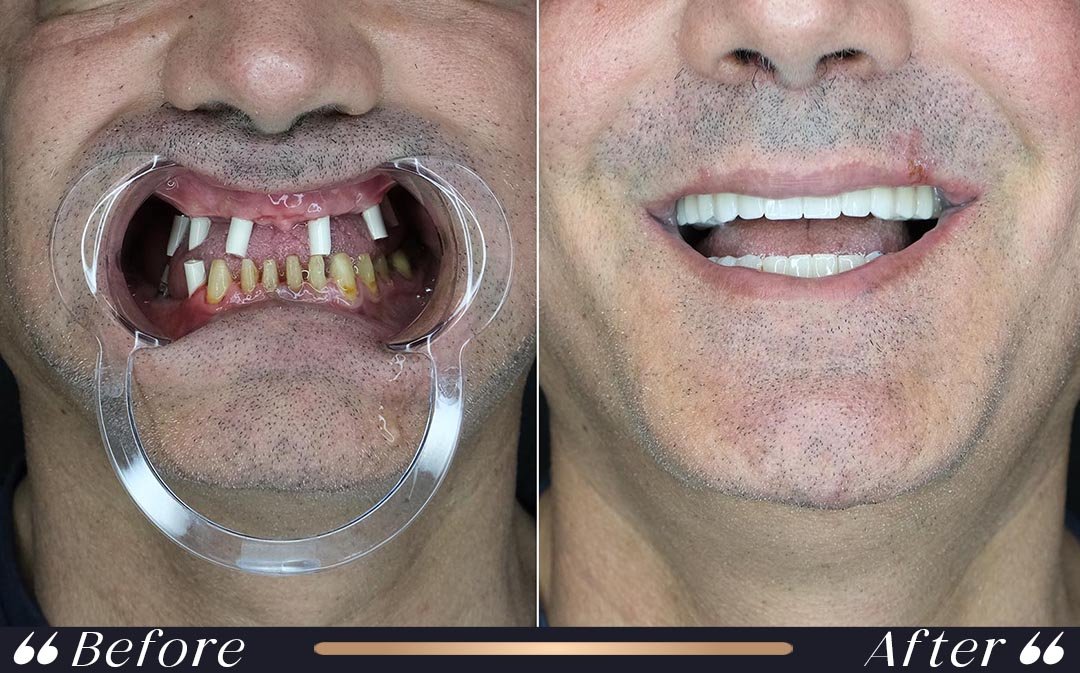
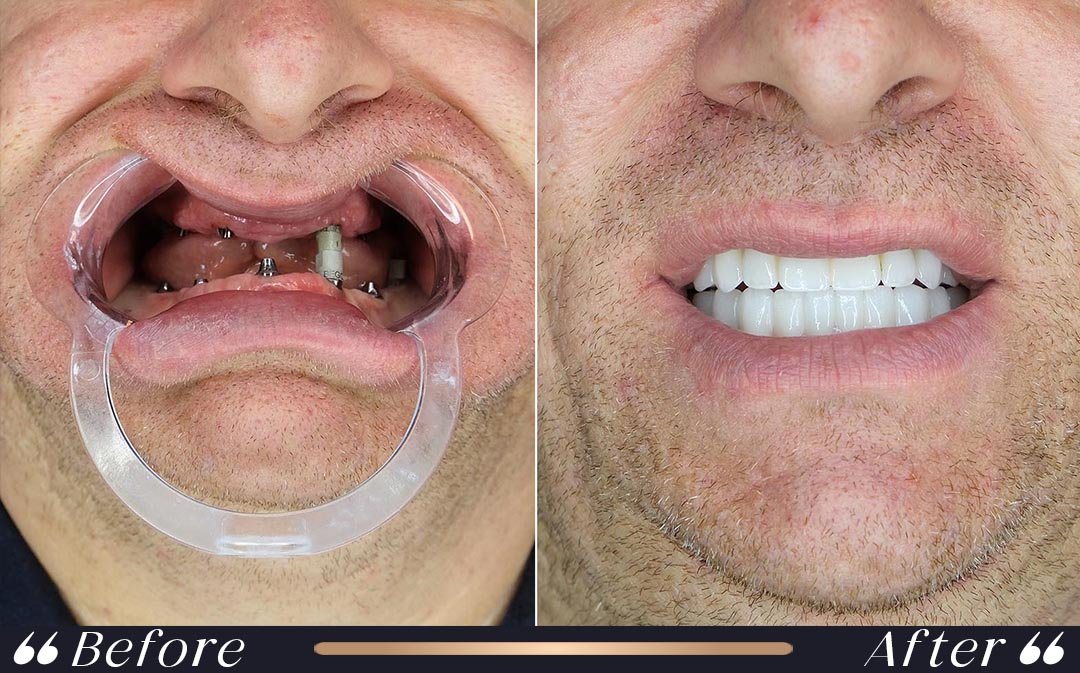
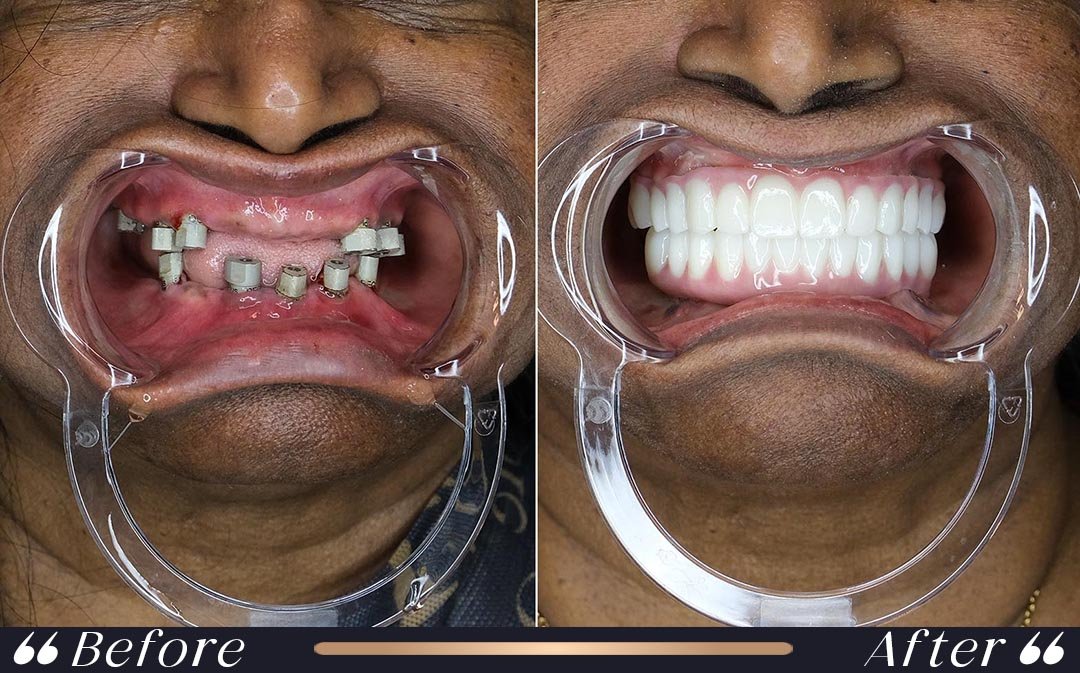
All-on-6 describes a full-arch restoration supported by six dental implants, usually in the upper or lower jaw. Instead of replacing each missing tooth with a separate implant, a dentist places several fixtures strategically and attaches a complete arch of replacement teeth. The expression is a convenient description of a treatment configuration, not a single standardized product. Implant positions and the final bridge design vary between people.
The clinician examines the jawbone, bite, gum condition and any remaining teeth to determine whether a six-implant plan is appropriate. Some people need extractions or grafting; others can retain healthy natural teeth and might not need a full-arch restoration at all. An individualized diagnosis must come before selecting a package.
For an informed decision, ask the dental team to connect this topic to your own jaw anatomy and bite. A well-designed full-arch solution must consider both the implants inside the bone and the way the visible teeth will function. Written explanations make it easier to compare options without relying on advertising terminology.
Why Patients Consider Full-Arch Implants in Turkey
People researching full-arch treatment in Istanbul often compare clinical expertise, overall fees, travel logistics and restoration options. Coordinated appointments and international patient services may be useful, particularly when care takes place over more than one visit. Nevertheless, hotel transfers or a quoted discount are not evidence that a specific dentist or treatment is suitable.
The central issues are the qualifications of the treating professionals, diagnostic planning, implant and prosthesis quality, safe follow-up, and an arrangement for complications after returning home. Ask who will provide the actual dental treatment and who will be accountable when adjustments are needed.
An international treatment plan should describe responsibilities before surgery, during the restorative phase, and after the patient returns home. Find out whom to contact for routine questions, urgent problems and mechanical repairs. Clear follow-up arrangements are part of the clinical value of the treatment.
How the All-on-6 Concept Works
Six implants are arranged in available jawbone so that an implant-supported bridge can distribute chewing forces across the arch. Their diameter, length, positions and angulations are determined by anatomy and prosthetic design rather than by a generic diagram. The bridge may be screw-retained and designed for professional removal when maintenance is required.
The implants do not replace a healthy periodontal foundation or eliminate the need to maintain the surrounding gums. A fixed bridge can feel different from a conventional removable denture, yet it still requires meticulous cleaning under the prosthesis and around each implant connection.
Clinical timelines vary because soft tissues and bone heal differently, and a temporary bridge may have restrictions that the final restoration does not. Patients should avoid treating a promotional promise about immediate teeth as permission for unrestricted chewing. The responsible dentist should provide case-specific instructions.
Is Six Always Better Than Four?
No. The International Team for Implantology reports that comparative evidence has not consistently demonstrated a significant implant-survival difference between complete-arch prostheses supported by fewer than five implants and those supported by five or more. More implants may be advantageous in certain anatomical or prosthetic arrangements, but six is not a universal guarantee.
A newer consensus on restoration of the edentulous upper jaw supports decisions based on patient-specific needs, available bone and prosthesis design. A minimum of four appropriately distributed implants is frequently discussed, while five or six may be preferred when anatomy allows. Patients should understand why their dentist recommends six rather than treating the number as a quality score.
The implant count and brand alone cannot predict the outcome. Long-term comfort also depends on oral hygiene, prosthesis design, bite adjustment, healthy supporting tissues and regular examinations. Compare real care plans instead of selecting a procedure on the basis of a single technical specification.
All-on-6 vs All-on-4: Main Differences
The obvious distinction is the number of implant fixtures supporting the full-arch prosthesis. Four-implant designs often use posterior tilted fixtures to make use of available bone. Six-implant arrangements may provide a different distribution of support when suitable sites are present. The final difference in clinical outcome depends on far more than counting implants.
Neither approach automatically provides better appearance, comfort or longevity. Bone availability, opposing teeth, bite forces, parafunctional habits and planned bridge materials contribute to the decision. Ask for a comparison that explains both approaches for your jaw, including limitations and possible need for grafting.
Patient safety is more important than completing treatment according to a fixed travel schedule. If imaging, implant stability or healing findings require delay, the care team should explain why. A revised clinical plan is preferable to a rushed prosthesis that cannot be safely supported.
All-on-6 vs Conventional Dentures
Conventional dentures rest on soft tissues and may rely on adhesives or anatomical retention. An implant-supported fixed bridge gains support from fixtures integrated with the jawbone, which may improve stability during eating and speech for suitable patients. This should not be described as guaranteed natural-tooth sensation, since the supporting structures differ.
Dentures are less invasive and may be more appropriate for some medical or financial situations. A decision should include costs of maintenance, hygiene requirements, surgical risks and whether the patient would be comfortable with a removable alternative.
For an informed decision, ask the dental team to connect this topic to your own jaw anatomy and bite. A well-designed full-arch solution must consider both the implants inside the bone and the way the visible teeth will function. Written explanations make it easier to compare options without relying on advertising terminology.
Who May Be a Candidate?
Potential candidates include adults missing most or all teeth in one arch, or people whose remaining teeth have a poor prognosis after a thorough examination. Healthy enough bone, controlled oral disease, realistic expectations and willingness to attend maintenance appointments are all relevant. General medical conditions and medications can change the plan.
Successful care requires assessment of both surgical feasibility and prosthetic practicality. A patient may have adequate bone for implants but need a different prosthesis design because of bite relationships, lip support or cleaning access. Candidate status cannot be confirmed from photographs alone.
An international treatment plan should describe responsibilities before surgery, during the restorative phase, and after the patient returns home. Find out whom to contact for routine questions, urgent problems and mechanical repairs. Clear follow-up arrangements are part of the clinical value of the treatment.
Who May Need Another Treatment?
Active untreated gum disease, difficult-to-control medical conditions, inadequate bone, poor oral hygiene or unrealistic expectations can make a fixed full-arch restoration unsuitable or require preparatory treatment. Existing teeth should not be removed solely to match a marketed package when preservation is reasonable.
Alternatives include repairing remaining teeth, partial dentures, conventional full dentures, implant-retained removable overdentures or a different number of fixtures. Patients should hear about reasonable alternatives before agreeing to extract teeth or undergo irreversible surgery.
Clinical timelines vary because soft tissues and bone heal differently, and a temporary bridge may have restrictions that the final restoration does not. Patients should avoid treating a promotional promise about immediate teeth as permission for unrestricted chewing. The responsible dentist should provide case-specific instructions.
Medical History and Implant Suitability
The dental team reviews medical history, healing problems, diabetes control, smoking, previous radiation treatment, bone-related medications, bleeding issues and current prescriptions. These factors do not automatically prevent every implant procedure, but they can alter healing, risk or timing.
Bring a current medication list and accurate health records. Never discontinue prescription medicines on the basis of online dental advice. When appropriate, the dentist may coordinate with the treating physician before planning extractions, grafting or implant placement.
The implant count and brand alone cannot predict the outcome. Long-term comfort also depends on oral hygiene, prosthesis design, bite adjustment, healthy supporting tissues and regular examinations. Compare real care plans instead of selecting a procedure on the basis of a single technical specification.
Clinical Consultation and Examination
A meaningful consultation evaluates the condition of teeth, gums and supporting bone, along with bite, speech, smiling and facial proportions. The clinician should clarify what problems you want solved, what you expect replacement teeth to feel like, and how the proposed prosthesis will be maintained.
If the assessment suggests a full-arch solution, ask to see a written treatment plan identifying both surgical and restorative steps. It should specify any teeth to be removed, whether temporary teeth are possible, the intended bridge type and potential additional procedures.
Patient safety is more important than completing treatment according to a fixed travel schedule. If imaging, implant stability or healing findings require delay, the care team should explain why. A revised clinical plan is preferable to a rushed prosthesis that cannot be safely supported.
CBCT and Digital Planning
Three-dimensional cone-beam computed tomography may help map bone dimensions and important anatomical structures, such as the sinus cavities or mandibular nerve. Clinical examination and appropriate imaging together inform implant placement. Imaging decisions should be made by the treating professionals rather than as a marketing add-on.
Digital impressions, photographs and diagnostic models can further assist in planning the bite and provisional bridge. The purpose is to make the treatment safer and restoratively practical, not to promise that every stage will happen on the same day.
For an informed decision, ask the dental team to connect this topic to your own jaw anatomy and bite. A well-designed full-arch solution must consider both the implants inside the bone and the way the visible teeth will function. Written explanations make it easier to compare options without relying on advertising terminology.
Upper-Jaw All-on-6 Treatment
The upper jaw often presents different bone-density and sinus-related considerations from the lower jaw. Posterior bone height may be limited, and a dentist must account for lip support, smile line and prosthesis contours when deciding the implant positions.
Some patients may need bone augmentation or a modified treatment configuration. A six-implant upper arch can be appropriate for one person but unsuitable for another. The dentist should explain whether a proposed design is supported by available bone and current evidence.
An international treatment plan should describe responsibilities before surgery, during the restorative phase, and after the patient returns home. Find out whom to contact for routine questions, urgent problems and mechanical repairs. Clear follow-up arrangements are part of the clinical value of the treatment.
Lower-Jaw All-on-6 Treatment
The lower jaw presents its own anatomical constraints, including the path of the inferior alveolar nerve and distribution of bone in the front and back of the arch. A surgeon considers these structures along with the desired prosthetic span and chewing forces.
Do not assume that six implants in the lower jaw are always preferable to four. Implant number should reflect the planned restoration, adequate distribution and the patient’s anatomy. Avoid clinics that make permanent implant counts without imaging or examination.
Clinical timelines vary because soft tissues and bone heal differently, and a temporary bridge may have restrictions that the final restoration does not. Patients should avoid treating a promotional promise about immediate teeth as permission for unrestricted chewing. The responsible dentist should provide case-specific instructions.
All-on-6 Dental Implants Turkey Cost
There is no universal or clinically meaningful fixed price for All-on-6 treatment in Türkiye. A quotation can vary with the jaw being treated, implant components, surgical complexity, extractions, grafting, provisional bridge, final bridge material, laboratory fees, anaesthesia and follow-up care.
Published prices may represent only one arch, may omit temporary or permanent teeth, or may be based on a simple case. The accurate way to compare providers is to request a written, individualized estimate in a named currency that distinguishes essential clinical costs from optional travel services.
The implant count and brand alone cannot predict the outcome. Long-term comfort also depends on oral hygiene, prosthesis design, bite adjustment, healthy supporting tissues and regular examinations. Compare real care plans instead of selecting a procedure on the basis of a single technical specification.
Single Arch vs Both Arches Pricing
Replacing an upper arch is not the same as treating both jaws. A two-arch plan usually involves more implants, longer restorative planning, a different bite design and more clinical sessions. Some patients also require simultaneous extractions or preparatory procedures that change overall cost.
A quote should state clearly whether it covers upper jaw, lower jaw, or both. Ask whether the laboratory designs the two arches as a coordinated bite and whether additional visits, adjustments or repairs are included.
Patient safety is more important than completing treatment according to a fixed travel schedule. If imaging, implant stability or healing findings require delay, the care team should explain why. A revised clinical plan is preferable to a rushed prosthesis that cannot be safely supported.
What an Itemized Quote Should Include
An itemized estimate should identify consultation, scans, any extractions, implants, healing components, abutments, provisional teeth, final prosthesis, laboratory work, anaesthesia if applicable, medication and clinical reviews. It should also distinguish between mandatory and optional services.
Confirm whether the provider includes replacement of a temporary bridge if it fractures, what happens when an implant does not integrate, and who funds unforeseen treatment. Written exclusions help prevent misunderstandings after travelling internationally.
For an informed decision, ask the dental team to connect this topic to your own jaw anatomy and bite. A well-designed full-arch solution must consider both the implants inside the bone and the way the visible teeth will function. Written explanations make it easier to compare options without relying on advertising terminology.
Why All-on-6 Prices Differ
Fees can vary because patients need different clinical work, materials and laboratory processes. The brand of implant and the design of the definitive bridge may influence expenditure, but a recognizable brand name alone does not guarantee a specific outcome.
Professional experience, facility standards, the need for bone grafting and complexity of an existing bite are also relevant. A cheaper package and a more expensive package are not comparable until they specify the same medical and restorative stages.
An international treatment plan should describe responsibilities before surgery, during the restorative phase, and after the patient returns home. Find out whom to contact for routine questions, urgent problems and mechanical repairs. Clear follow-up arrangements are part of the clinical value of the treatment.
Hotel and Airport Transfer Packages
Some international patient coordinators arrange accommodation, airport collection or interpretation. These services may be convenient, particularly for multiple appointments, but they are not part of the implant’s biological success.
Ask who pays if healing takes longer than the booked stay, if an extra examination is needed, or if the second visit has to move. Medical safety and the clinician’s assessment must take priority over a travel itinerary.
Clinical timelines vary because soft tissues and bone heal differently, and a temporary bridge may have restrictions that the final restoration does not. Patients should avoid treating a promotional promise about immediate teeth as permission for unrestricted chewing. The responsible dentist should provide case-specific instructions.
Treatment Step One: Diagnostic Planning
Before surgery, the dentist identifies which teeth can be preserved, assesses active infection and gum health, reviews imaging, and designs the intended final bite. The treatment plan should account for available bone and any need for extractions or augmentation.
Many decisions made at this stage affect the number and location of implants. Do not regard a fixed package price or a predetermined implant count as a substitute for this assessment.
The implant count and brand alone cannot predict the outcome. Long-term comfort also depends on oral hygiene, prosthesis design, bite adjustment, healthy supporting tissues and regular examinations. Compare real care plans instead of selecting a procedure on the basis of a single technical specification.
Treatment Step Two: Extractions if Needed
If teeth cannot reasonably be retained, the surgeon may recommend extractions before or during implant placement. Infection control, the condition of the sockets and the available bone determine the timing. Immediate placement after extraction is possible in selected cases but is not mandatory.
Extraction decisions should be explained tooth by tooth, with alternatives discussed where appropriate. Removing repairable teeth solely to standardize treatment can create irreversible consequences.
Patient safety is more important than completing treatment according to a fixed travel schedule. If imaging, implant stability or healing findings require delay, the care team should explain why. A revised clinical plan is preferable to a rushed prosthesis that cannot be safely supported.
Treatment Step Three: Implant Placement
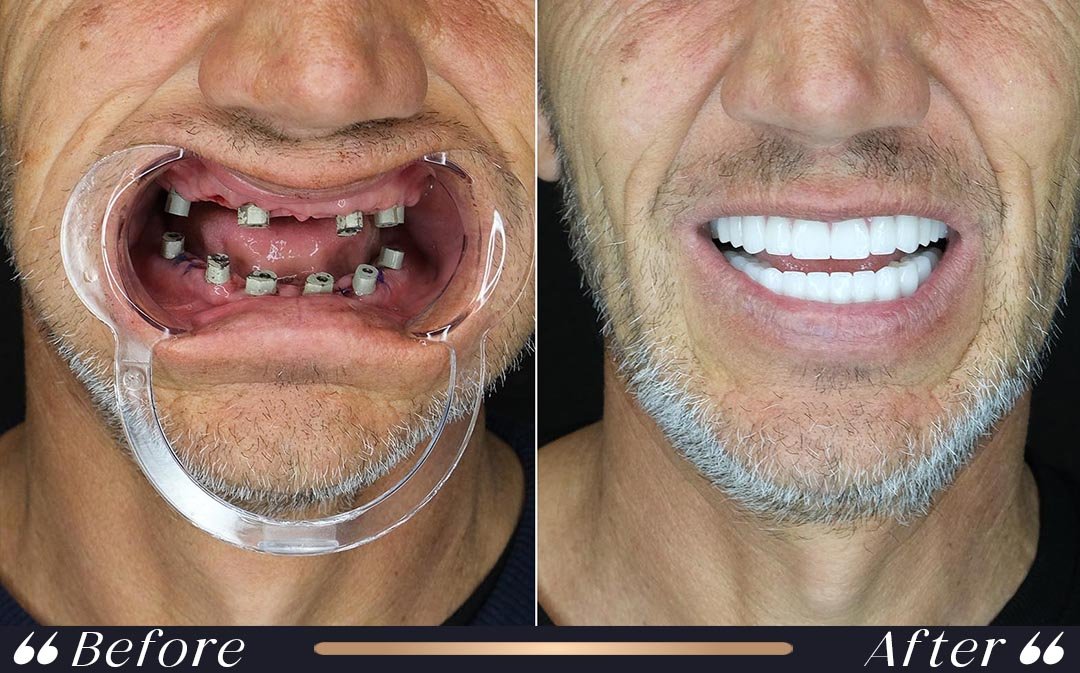
After appropriate anaesthesia, the surgeon prepares carefully planned sites within the jawbone and inserts the implants. Placement depth and angulation are selected to respect anatomy and accommodate the future restoration. The team checks initial stability and reviews the surgical result.
A patient may receive healing components or a temporary restoration depending on stability and protocol. Implant placement is a surgical procedure and can involve swelling, bruising, infection or other complications even when planning is thorough.
For an informed decision, ask the dental team to connect this topic to your own jaw anatomy and bite. A well-designed full-arch solution must consider both the implants inside the bone and the way the visible teeth will function. Written explanations make it easier to compare options without relying on advertising terminology.
Can You Receive Teeth on the Same Day?
Some patients can receive a fixed provisional full-arch bridge soon after implant placement when adequate primary stability and other clinical criteria are met. This is called immediate loading. It is not the same as receiving a definitive long-term bridge and cannot be guaranteed before evaluation.
When the implants are not stable enough for early loading, a different provisional option or a delayed restoration may be safer. A dentist should discuss the reason for the chosen approach and the dietary restrictions associated with it.
An international treatment plan should describe responsibilities before surgery, during the restorative phase, and after the patient returns home. Find out whom to contact for routine questions, urgent problems and mechanical repairs. Clear follow-up arrangements are part of the clinical value of the treatment.
Temporary Bridge vs Final Bridge
A provisional bridge can provide an interim appearance and function while the implants integrate and soft tissues heal. It is designed for a specific phase and may require a cautious diet. The definitive bridge is created after healing and after evaluating the final bite and tissue contours.
Materials and design can differ substantially between temporary and final prostheses. Ask whether the price includes both, what material each uses and whether any provisional adjustment is charged separately.
Clinical timelines vary because soft tissues and bone heal differently, and a temporary bridge may have restrictions that the final restoration does not. Patients should avoid treating a promotional promise about immediate teeth as permission for unrestricted chewing. The responsible dentist should provide case-specific instructions.
Osseointegration and Healing
Osseointegration is the biological process through which bone bonds with the implant surface. It takes time even when an immediate provisional bridge is placed. Cambridge University Hospitals NHS guidance describes a healing period often around three to six months, although individual circumstances differ.
The existence of temporary fixed teeth does not mean the bone has finished healing. Excessive biting forces, infection or medical risk factors can affect the course, so the clinician may recommend dietary precautions and scheduled stability checks.
The implant count and brand alone cannot predict the outcome. Long-term comfort also depends on oral hygiene, prosthesis design, bite adjustment, healthy supporting tissues and regular examinations. Compare real care plans instead of selecting a procedure on the basis of a single technical specification.
When Is the Final Bridge Fitted?
The timing of the definitive restoration depends on clinical findings, tissue healing, implant stability, laboratory work and whether bone grafting was necessary. Some people need several months between implant placement and the final bridge, and others have a longer, more complex pathway.
Ask for an estimated timeline with contingencies rather than a guaranteed date. International patients should understand that the treatment may require more than one trip to Türkiye and that appointments can change for medical reasons.
Patient safety is more important than completing treatment according to a fixed travel schedule. If imaging, implant stability or healing findings require delay, the care team should explain why. A revised clinical plan is preferable to a rushed prosthesis that cannot be safely supported.
Zirconia vs Acrylic and Hybrid Bridges
Full-arch prostheses may use acrylic-based, composite, metal-reinforced or zirconia-containing constructions, among other designs. Each choice has trade-offs involving strength, aesthetics, repairability, weight, cost and laboratory expertise.
No material is universally the best fit. The number and positioning of implants, available restorative space, bite forces and hygiene access should inform the decision. A quote should identify the actual final bridge material instead of relying on vague terms such as premium teeth.
For an informed decision, ask the dental team to connect this topic to your own jaw anatomy and bite. A well-designed full-arch solution must consider both the implants inside the bone and the way the visible teeth will function. Written explanations make it easier to compare options without relying on advertising terminology.
Screw-Retained Bridge Design
Many fixed full-arch restorations are secured by screws, allowing a dental professional to remove the bridge for certain repairs or maintenance procedures. This does not make it a removable denture that the patient takes out each night.
Ask where access channels will be located, how the dentist will maintain the prosthesis and what to do if a screw loosens. A bridge that feels mobile or suddenly changes the bite should be evaluated instead of repeatedly tightened by the patient.
An international treatment plan should describe responsibilities before surgery, during the restorative phase, and after the patient returns home. Find out whom to contact for routine questions, urgent problems and mechanical repairs. Clear follow-up arrangements are part of the clinical value of the treatment.
First 24 Hours After Surgery
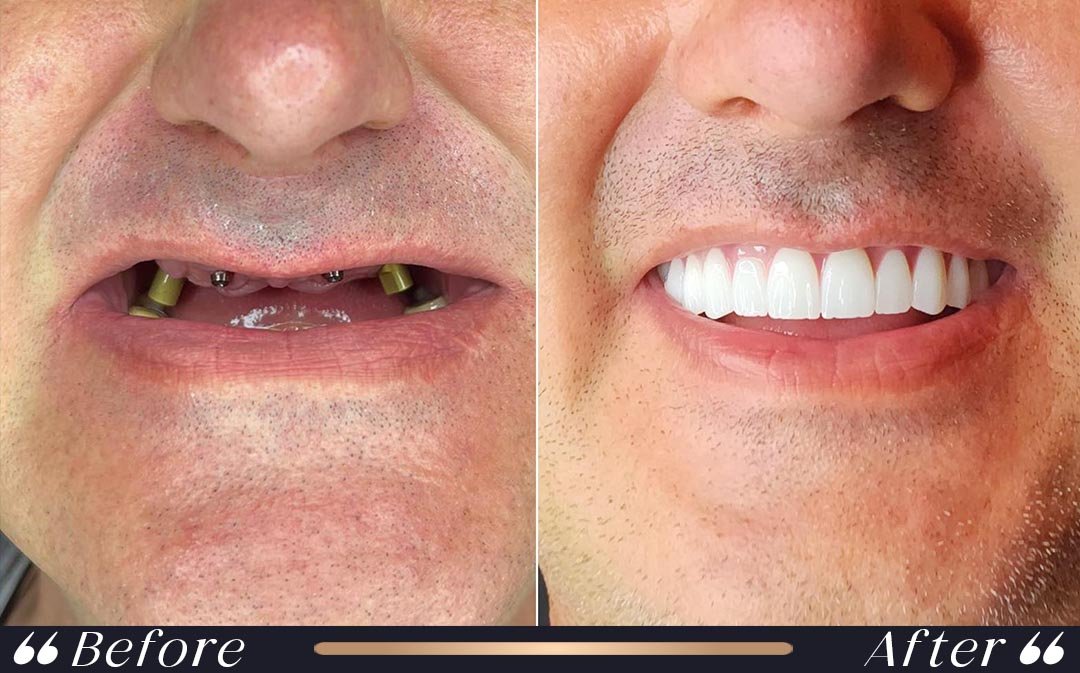
The earliest recovery period may involve swelling, tenderness, light bleeding and fatigue. A patient should follow the written instructions for pain medicine, prescribed rinses, eating and wound care. Anaesthesia or sedation may create additional limitations on driving and decision-making.
Cold packs and other comfort measures should only be used as instructed. Seek prompt care for persistent heavy bleeding, severe worsening pain or symptoms beyond the discharge guidance. Do not attempt to adjust the temporary bridge at home.
Clinical timelines vary because soft tissues and bone heal differently, and a temporary bridge may have restrictions that the final restoration does not. Patients should avoid treating a promotional promise about immediate teeth as permission for unrestricted chewing. The responsible dentist should provide case-specific instructions.
Days Two to Seven of Recovery
Swelling and bruising may be noticeable during the first week before gradually improving. Careful oral hygiene remains important, but cleaning around fresh surgical sites may differ from normal brushing. The team may prescribe a specific rinse and demonstrate safe techniques.
Food choices should protect the healing tissues and any provisional bridge. Avoid hard or chewy foods if instructed and contact the dentist if the bridge begins moving, a component breaks or symptoms worsen rather than improve.
The implant count and brand alone cannot predict the outcome. Long-term comfort also depends on oral hygiene, prosthesis design, bite adjustment, healthy supporting tissues and regular examinations. Compare real care plans instead of selecting a procedure on the basis of a single technical specification.
Weeks Two to Four
Soft tissues often continue closing and tenderness may decrease during the next few weeks. However, the implants are still undergoing deeper healing. A person who feels comfortable cannot assume that hard foods or unrestricted biting forces are safe.
Attend the planned postoperative review. Discuss residual swelling, changes in bite, discomfort during eating and cleaning challenges. Some patients need adjustment of provisional teeth to reduce pressure on healing sites.
Patient safety is more important than completing treatment according to a fixed travel schedule. If imaging, implant stability or healing findings require delay, the care team should explain why. A revised clinical plan is preferable to a rushed prosthesis that cannot be safely supported.
Months Two to Six
Bone integration and prosthetic planning continue over the following months. A clinician assesses whether implant stability, tissue health and laboratory readiness support the next stage. Patients who received grafts or have other risk factors may require additional healing time.
Do not interpret a lengthy interval as proof that treatment has failed. A well-explained delay may represent a safety decision. The patient should receive written instructions about interim care and the next planned assessment.
For an informed decision, ask the dental team to connect this topic to your own jaw anatomy and bite. A well-designed full-arch solution must consider both the implants inside the bone and the way the visible teeth will function. Written explanations make it easier to compare options without relying on advertising terminology.
Bone Grafting and Sinus Lift Considerations
A patient with insufficient bone may require grafting or an alternative placement strategy. Some upper-jaw cases involve sinus-related planning. These interventions can alter both the number of surgical appointments and the time before loading.
Guy’s and St Thomas’ NHS explains that grafting can extend implant treatment by several months. Ask which graft materials and procedures are proposed, what risks they introduce and whether they are included in the original quote.
An international treatment plan should describe responsibilities before surgery, during the restorative phase, and after the patient returns home. Find out whom to contact for routine questions, urgent problems and mechanical repairs. Clear follow-up arrangements are part of the clinical value of the treatment.
Pain Management and Swelling
Mild to moderate postoperative soreness may be manageable with the care team’s prescribed plan. Patients should expect detailed instructions on medications and when to contact the clinic. Severe pain, a spreading infection or symptoms that worsen significantly are not ordinary milestones.
Avoid mixing pain medications or stopping regular prescriptions without clinical guidance. Any allergy, kidney disease, blood-thinning medicine or other relevant condition should be discussed before postoperative medicines are selected.
Clinical timelines vary because soft tissues and bone heal differently, and a temporary bridge may have restrictions that the final restoration does not. Patients should avoid treating a promotional promise about immediate teeth as permission for unrestricted chewing. The responsible dentist should provide case-specific instructions.
Eating With Temporary Teeth
A provisional fixed bridge may be visually convincing but still needs a diet appropriate for healing implants. Soft foods can reduce mechanical stress during early integration. The surgeon and prosthodontist should explain which textures are appropriate at each stage.
Do not test the strength of new implants by biting crusty bread, hard nuts or sticky foods without approval. If a temporary bridge fractures or feels loose, contact the treating dentist promptly rather than continuing to chew on it.
The implant count and brand alone cannot predict the outcome. Long-term comfort also depends on oral hygiene, prosthesis design, bite adjustment, healthy supporting tissues and regular examinations. Compare real care plans instead of selecting a procedure on the basis of a single technical specification.
Oral Hygiene Around Six Implants
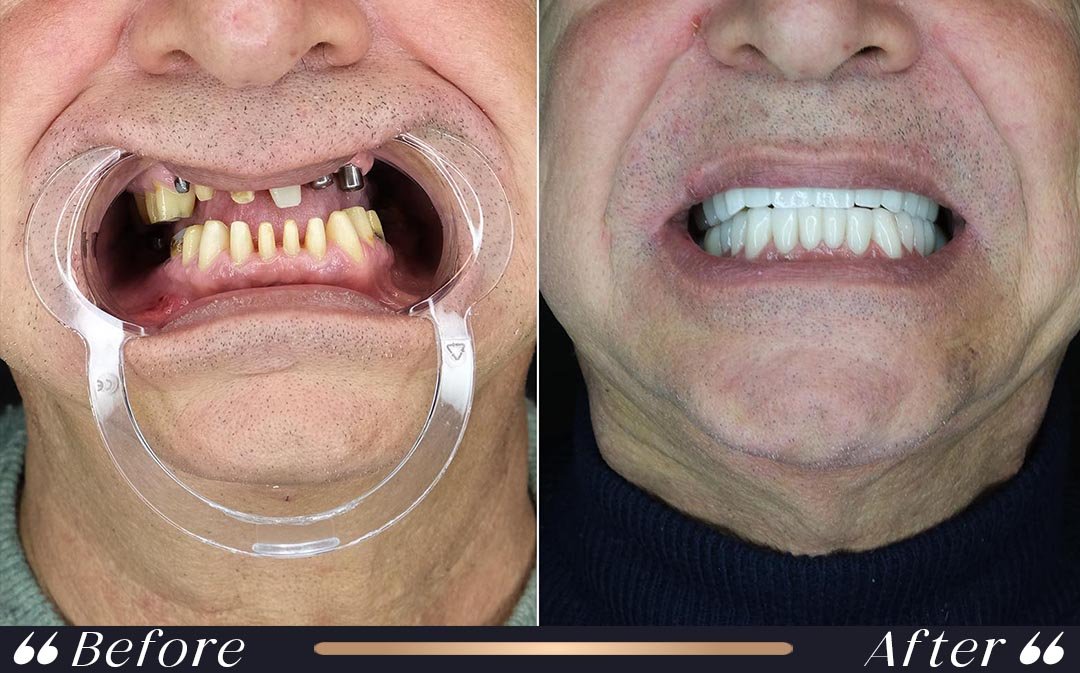
Plaque control remains essential after full-arch treatment. Cleaning beneath the bridge and around implant interfaces can require special brushes, floss systems or other tools selected by the dental team. A fixed prosthesis does not clean itself.
Ask for an in-person hygiene demonstration before returning home. Difficulty reaching the underside of the bridge should be raised early so the clinician can check whether prosthesis contours allow appropriate daily cleaning.
Patient safety is more important than completing treatment according to a fixed travel schedule. If imaging, implant stability or healing findings require delay, the care team should explain why. A revised clinical plan is preferable to a rushed prosthesis that cannot be safely supported.
Peri-Implant Mucositis and Peri-Implantitis
Peri-implant mucositis involves inflammation of the soft tissue around an implant; peri-implantitis includes inflammation accompanied by loss of supporting bone. The American Academy of Periodontology highlights these as important implant complications.
Bleeding during cleaning, swelling, discharge or discomfort deserve professional assessment. Regular maintenance visits help identify problems before they become more difficult to manage. Successful integration at first does not guarantee lifelong immunity from gum disease.
For an informed decision, ask the dental team to connect this topic to your own jaw anatomy and bite. A well-designed full-arch solution must consider both the implants inside the bone and the way the visible teeth will function. Written explanations make it easier to compare options without relying on advertising terminology.
Smoking and Other Risk Factors
Smoking, poor plaque control, untreated periodontal disease and certain systemic health conditions can affect implant outcomes. Risk management is therefore a continuing part of care rather than a one-time preoperative checklist.
Patients should provide an honest smoking and medication history and ask which changes are medically advisable. Do not stop prescribed medicines independently or assume that a branded implant can cancel out biological risk factors.
An international treatment plan should describe responsibilities before surgery, during the restorative phase, and after the patient returns home. Find out whom to contact for routine questions, urgent problems and mechanical repairs. Clear follow-up arrangements are part of the clinical value of the treatment.
How Long Do All-on-6 Implants Last?
Dental implants can provide long-term support when they integrate successfully and are maintained appropriately, but no implant system has a guaranteed lifetime. The screw, abutment and bridge components can encounter different mechanical or biological problems.
Ask what the provider considers implant survival versus prosthesis success. A bridge may need repair or replacement while its implants remain stable. Long-term maintenance responsibilities should be discussed alongside any warranty language.
Clinical timelines vary because soft tissues and bone heal differently, and a temporary bridge may have restrictions that the final restoration does not. Patients should avoid treating a promotional promise about immediate teeth as permission for unrestricted chewing. The responsible dentist should provide case-specific instructions.
Potential Surgical Complications
Possible complications include infection, bleeding, injury to nearby anatomical structures, sinus problems in selected upper-jaw cases, impaired sensation, poor bone integration or implant failure. These risks vary according to anatomy, complexity and health.
An experienced clinician should explain which complications are relevant to the proposed operation, how they are managed and how to access urgent care. No medical-tourism package can remove the possibility of a complication.
The implant count and brand alone cannot predict the outcome. Long-term comfort also depends on oral hygiene, prosthesis design, bite adjustment, healthy supporting tissues and regular examinations. Compare real care plans instead of selecting a procedure on the basis of a single technical specification.
Potential Mechanical Complications
An implant-supported bridge can experience chipped teeth, fractures, screw loosening, excessive wear or changes in bite. Maintenance needs may be different for a temporary acrylic bridge and a final ceramic or hybrid restoration.
Ask about the repair process, the availability of compatible components in your home country, and whether the laboratory can provide records of the prosthesis. Patients should not use household glue or make at-home repairs.
Patient safety is more important than completing treatment according to a fixed travel schedule. If imaging, implant stability or healing findings require delay, the care team should explain why. A revised clinical plan is preferable to a rushed prosthesis that cannot be safely supported.
Maintenance Visits and Long-Term Checks
Routine checks help assess implant-supported bone, soft tissues, hygiene and the condition of the prosthesis. The appropriate interval depends on risk factors and clinical findings, but ongoing professional care is essential even when the bridge feels comfortable.
Work out in advance who will provide maintenance when you are no longer in Istanbul. A local dental professional may need records about implant brand, component sizes and restorative design to deliver suitable care.
For an informed decision, ask the dental team to connect this topic to your own jaw anatomy and bite. A well-designed full-arch solution must consider both the implants inside the bone and the way the visible teeth will function. Written explanations make it easier to compare options without relying on advertising terminology.
Comparing Treatment Quotes Safely
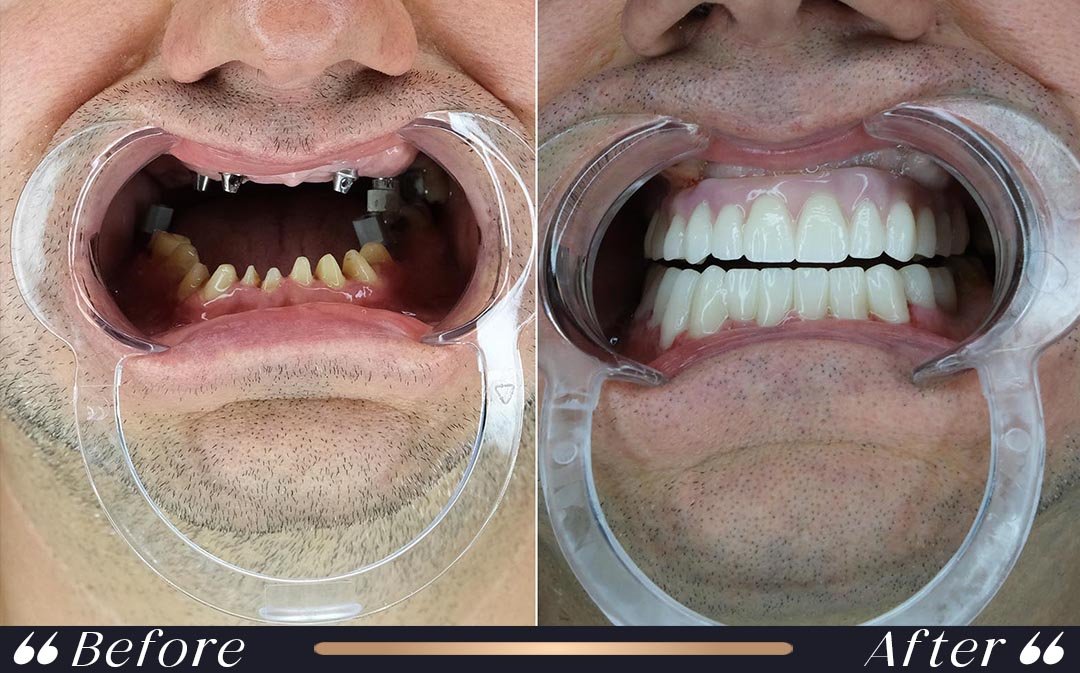
Compare proposals by clinical scope: six implants per jaw, implant components, necessary extractions, imaging, temporary restoration, final bridge type, follow-up and the treatment of complications. Avoid evaluating offers on the headline fee alone.
If one quotation refers to both jaws and another to a single arch, they cannot be directly compared. Ask for clarification on all exclusions and what happens if the in-person assessment requires a change in plan.
An international treatment plan should describe responsibilities before surgery, during the restorative phase, and after the patient returns home. Find out whom to contact for routine questions, urgent problems and mechanical repairs. Clear follow-up arrangements are part of the clinical value of the treatment.
Choosing a Dental Clinic in Istanbul
A prospective patient should verify the dentist’s qualifications and the operating setting, and ask how restorative planning is coordinated with implant placement. Clinical records, a written plan and a clear follow-up schedule matter more than dramatic advertisements.
For health-tourism claims, the official HealthTürkiye directory lists authorized providers. Patients can check authorization using the current official source rather than accepting a certificate graphic at face value.
Clinical timelines vary because soft tissues and bone heal differently, and a temporary bridge may have restrictions that the final restoration does not. Patients should avoid treating a promotional promise about immediate teeth as permission for unrestricted chewing. The responsible dentist should provide case-specific instructions.
International Patient Travel Planning
Some All-on-6 cases involve a surgical visit followed by a second trip for definitive prosthetic work. Others follow a different schedule depending on medical needs, immediate loading decisions and laboratory work. Travel must remain flexible enough for clinical changes.
Discuss the number of visits, time needed after surgery, suitable accommodation and emergency care access. Retain written records and arrange help if language or travel limitations could interfere with attendance at postoperative reviews.
The implant count and brand alone cannot predict the outcome. Long-term comfort also depends on oral hygiene, prosthesis design, bite adjustment, healthy supporting tissues and regular examinations. Compare real care plans instead of selecting a procedure on the basis of a single technical specification.
Questions to Ask Before Booking
Ask why six implants are recommended, whether four or another number would also be appropriate, what imaging is needed, and whether any natural teeth could be retained. Clarify whether same-day temporary teeth are possible and what happens if immediate loading is unsafe.
Request the implant system, temporary and final bridge materials, itemized cost, timetable, complication arrangements and a long-term maintenance plan in writing. A transparent consultation should welcome questions and avoid guaranteeing exact results.
Patient safety is more important than completing treatment according to a fixed travel schedule. If imaging, implant stability or healing findings require delay, the care team should explain why. A revised clinical plan is preferable to a rushed prosthesis that cannot be safely supported.
All-on-6 Dental Implants at Yesilkoy Clinic
Yesilkoy Clinic provides a contact route for patients wishing to discuss dental treatment in Istanbul. An enquiry can outline missing teeth, previous dental work and the desired functional or cosmetic changes, but the final recommendation depends on appropriate professional assessment.
Before making a travel commitment, request details of the treating dental team, clinical facility, proposed diagnostic process, individual quotation, prosthesis options and arrangements for reviews after returning home. This educational article does not certify a particular price or guarantee eligibility.
For an informed decision, ask the dental team to connect this topic to your own jaw anatomy and bite. A well-designed full-arch solution must consider both the implants inside the bone and the way the visible teeth will function. Written explanations make it easier to compare options without relying on advertising terminology.
Full-Arch Treatment and Recovery Timeline
| Phase | What may happen | What to confirm |
|---|---|---|
| Consultation | Examination, images, restorative planning | Preservation of natural teeth, bone and treatment options |
| Surgery | Extractions if necessary and implant placement | Anaesthesia, complications and provisional teeth |
| First week | Swelling and soft-tissue healing | Diet, cleaning and warning signs |
| First month | Provisional bridge care and continuing healing | Bite checks and hygiene guidance |
| Months 2–6 | Osseointegration and restoration planning | Stability, appointments and bridge fabrication |
| Long-term | Professional maintenance and daily plaque control | Repairs, reviews and local dentist arrangements |
All on 6 Dental Implants Turkey: Frequently Asked Questions
What are All-on-6 dental implants?
They are a full-arch replacement design using six implants to support a complete fixed bridge in one jaw.
Are All-on-6 implants better than All-on-4?
Not universally. Studies and consensus guidance support selecting the implant number based on anatomy, distribution and prosthetic needs.
How much do All-on-6 implants cost in Turkey?
Cost depends on the jaw treated, diagnostic work, implants, extractions, grafting, temporary teeth, final bridge and aftercare. Request a personal written quote.
Is the price for one jaw or both jaws?
That depends on the provider. Ask whether the proposal covers the upper arch, lower arch or both.
Can I get fixed teeth on the same day?
A provisional fixed bridge may be possible when implant stability and other clinical conditions permit. It is not guaranteed.
Will I receive permanent teeth immediately?
Usually a provisional restoration is distinguished from the definitive bridge, which is fitted after suitable healing and planning.
How long does the treatment take?
Treatment can take several months, and grafting or complex dental needs may extend the timeline.
Is the operation painful?
Anaesthesia is used during implant placement. Tenderness and swelling afterward vary, and a clinician provides an appropriate pain-control plan.
How long does the bone take to heal?
Osseointegration often takes several months, commonly around three to six, but the timing varies.
Will I need a bone graft?
Only examination and imaging can determine whether grafting or a different placement strategy is necessary.
Are six implants placed in each jaw?
An All-on-6 plan generally means six implants per full arch, but both jaws are treated only when clinically indicated.
Can implants be placed after tooth extraction?
Sometimes, depending on infection status, socket anatomy and implant stability. Other patients need staged treatment.
Is zirconia the best final bridge material?
Not automatically. Material choice depends on bite forces, aesthetics, repair needs, space and other clinical factors.
Are All-on-6 teeth removable?
Many All-on-6 restorations are fixed by screws for professional maintenance, not removed at home like dentures.
Do All-on-6 implants look natural?
A carefully designed prosthesis can provide a lifelike appearance, but results depend on anatomy, materials and restorative planning.
Can I eat normally immediately?
Dietary restrictions may apply, particularly with a temporary bridge while implants heal. Follow the dentist’s specific instructions.
How do I clean under the bridge?
Your clinician may recommend specialized brushes, floss or other tools and should demonstrate the technique.
How long do All-on-6 implants last?
Implants may provide long-term support, but outcomes vary and the bridge or components can need maintenance or replacement.
Can the implants fail?
Yes. Poor integration, infection, excessive force and other problems can affect implant survival.
What is peri-implantitis?
It is inflammation around an implant associated with loss of supporting bone, requiring dental assessment and care.
Does smoking affect treatment?
Smoking can increase clinical risks and should be discussed openly during assessment.
Can a person with diabetes receive implants?
Possibly, depending on disease control and individual health. The dentist may coordinate with the treating physician.
Will I need to return to Turkey?
Many full-arch plans involve several visits, especially if the definitive bridge is made after healing.
What if my temporary teeth break?
Contact the treating clinician. Do not attempt to glue or repair the prosthesis yourself.
What if an implant feels loose?
Arrange prompt dental assessment; do not continue heavy chewing on a mobile implant or bridge.
Is an All-on-6 bridge the same as a denture?
It is a complete tooth-replacement prosthesis, but the fixed implant-supported design differs from a conventional removable denture.
How can I check a clinic in Turkey?
Confirm dental credentials and relevant health-tourism authorizations through official provider directories.
Do I need professional cleaning afterward?
Yes. Maintenance checks and thorough plaque removal remain necessary even with fixed replacement teeth.
Can existing teeth be saved?
Some can, depending on their prognosis. A full-arch procedure should not automatically involve extraction of restorable teeth.
What risks should I discuss?
Ask about infection, nerve or sinus complications, implant integration, bridge fracture, prosthetic maintenance and complication management.
How can I request an assessment?
Use Yesilkoy Clinic’s official contact page to ask for individualized dental evaluation and treatment information.
Considering All-on-6 Dental Implants in Istanbul?
Contact Yesilkoy Clinic to discuss your current dental condition, treatment options, individualized cost estimate and follow-up planning. The appropriate number of implants and restoration type must be determined by qualified dental professionals after assessment.
Request a ConsultationIndependent Dental and Medical Resources
- ITI: Number of implants for complete-arch fixed prostheses
- 2026 consensus: Implant number for the edentulous maxilla
- Cambridge University Hospitals NHS: Dental implants in restorative dentistry
- Guy’s and St Thomas’ NHS: Implant procedure
- American Academy of Periodontology: Peri-implant diseases
- HealthTürkiye: Authorized healthcare providers
Read additional educational articles on the Yesilkoy Clinic blog.
Last reviewed: November 2026. This educational guide cannot replace examination, medical advice or an individual quotation. Images are illustrative and do not establish the treatment or outcome of any pictured patient.