
BBL Results Month by Month: 17 Essential Recovery Insights
BBL results month by month are often very different from the dramatic images that appear immediately after surgery. A Brazilian butt lift uses fat transferred from another part of the body, and the early contour reflects both grafted tissue and postoperative swelling. Over the following weeks and months, swelling falls, some fat is naturally absorbed, and the shape becomes easier to evaluate.
This guide explains the healing timeline from day one to a full year, with an emphasis on safe recovery, realistic expectations and evidence-based information. It also covers the influence of sitting, sleep, compression garments, body-weight changes and the liposuction donor areas. No month-by-month schedule can predict an individual result perfectly.
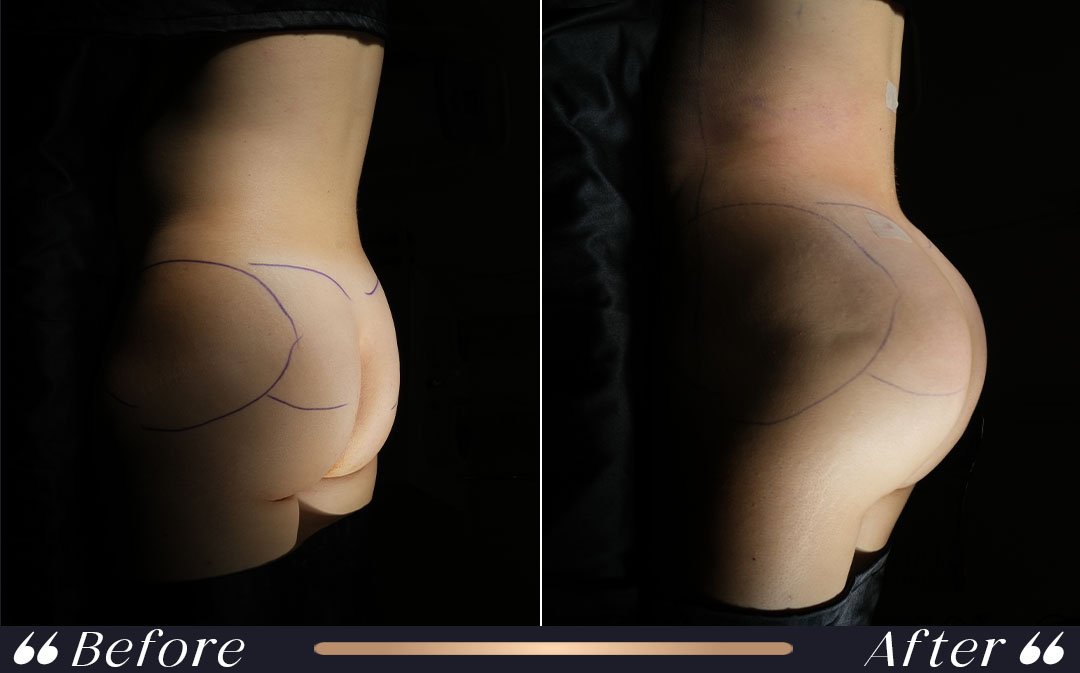
What Does BBL Results Month by Month Mean?
The phrase BBL results month by month describes how the appearance of the buttocks and liposuction donor areas can change after a Brazilian butt lift. The earliest appearance is not a reliable final measurement because swelling, fluid shifts and healing alter the visible shape. An individual may notice an immediate increase in projection yet see a different contour several months later.
Fat transfer is not simply filling an empty space. The grafted tissue needs to establish an adequate blood supply, and some transferred fat does not survive. Simultaneously, swelling fades in the buttocks and in the places where fat was harvested. These processes can make the silhouette seem to expand, shrink or change proportions during recovery.
Use the timeline as a guide to questions for your surgeon, not as a calendar that guarantees what you will see on a particular day. Existing body proportions, transferred volume, skin quality, medical conditions, procedure technique and postoperative care all contribute to the outcome.
The First 24 Hours After BBL
Immediately following surgery, the buttocks may look fuller than expected. This is influenced by the grafted fat, tissue swelling and postoperative fluid. The waist and donor areas can also be swollen, which makes the overall body silhouette difficult to judge. Pain control, monitoring and safe mobility take priority over photographs during this stage.
Patients may be instructed to avoid direct pressure on the grafted buttocks. Positioning advice differs according to the operation and the clinical team. In general, sleeping or resting arrangements should respect the surgeon’s instructions, particularly when combined procedures or important health conditions affect which positions are safe.
Ask the nursing team about walking, pain medication, dressings, garments and who to call for urgent concerns. Never interpret sudden shortness of breath, chest pain or collapse as routine swelling; these symptoms require emergency assessment.
BBL Results in the First Week
The first seven days are commonly dominated by bruising, tenderness and swelling. Some patients report feeling larger than they expected, while others find that fluid in the waist and flanks disguises the shape created by liposuction. Both experiences illustrate why a before-and-after comparison at one week has little value.
The surgical team may recommend short walks when medically safe to support circulation. Pressure restrictions on the buttocks can affect sleeping, working and transportation. Compression garments may be prescribed for liposuction donor areas, but garment placement and fit should follow individualized directions.
Pay attention to the overall trend in pain, wound appearance and mobility rather than the exact circumference of the hips. Increasing redness, fever, severe pain or sudden asymmetrical swelling needs medical review. Do not begin unapproved massage or use a tight garment to force a particular shape.
BBL Results During Week Two
By the second week, early bruising may begin to settle, although swelling can remain substantial. Incisions may look small while the deeper tissues continue to heal. The buttocks can feel firm or uneven, and sensation may be altered temporarily. Such changes do not automatically indicate the final contour.
Transferred fat is still undergoing a biological settling process. It is therefore too early to calculate a personal retention percentage from photographs or tape measurements. The apparent size can also be affected by posture, fluid shifts and how a garment compresses adjacent tissue.
Follow the surgeon’s specific restrictions for sitting and sleeping. Different surgeons provide different timelines, and patients with combined operations may need special positioning. Seek professional clearance before extending sitting periods or returning to long commutes.
Weeks Three and Four: The End of Month One
As month one approaches, some patients feel more comfortable performing ordinary activities, but the difference between apparent improvement and complete healing remains important. Bruising may fade, and the early swelling can decrease enough for the waist-to-hip transition to become clearer.
A temporary perception that the buttocks are smaller can be unsettling. It may reflect a combination of swelling reduction and natural loss of non-surviving transferred fat. No individual can determine the final graft retention rate solely by looking in a mirror at four weeks.
Avoid using social-media photographs to judge progress. Ask your clinician which activities can resume, when pressure restrictions change and whether the garment needs adjustment. A review appointment is more informative than an arbitrary milestone.
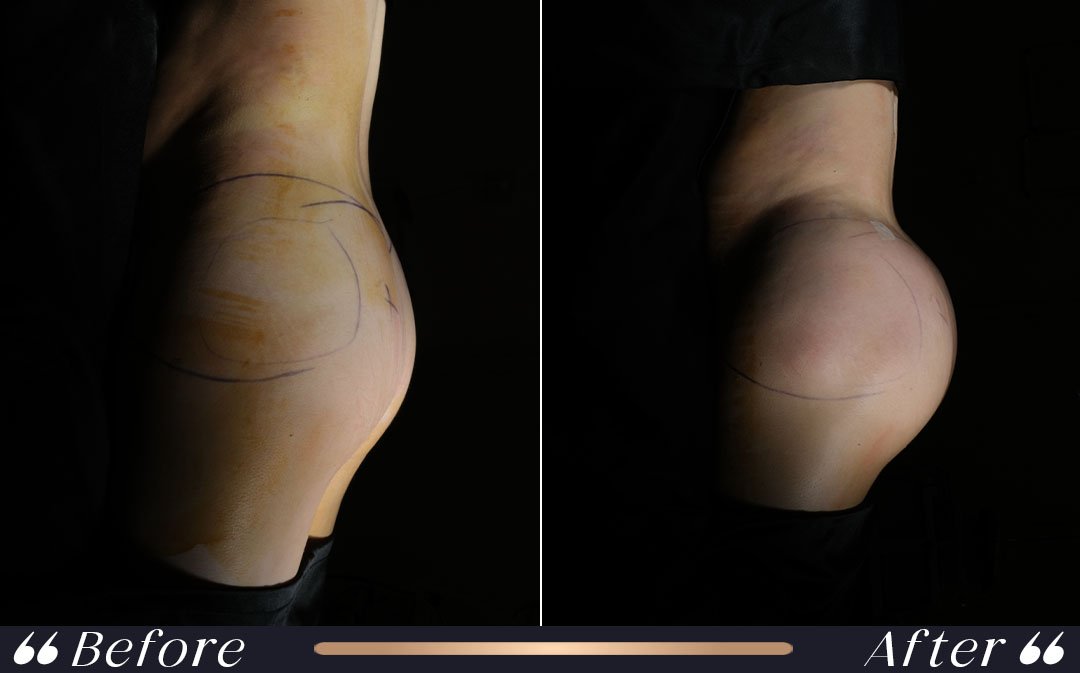
BBL Results at One Month
One-month photographs may show a more recognizable shape than images taken during the first few days. Nevertheless, swelling is often still present, and tissue remodeling is ongoing. Differences between the left and right sides can partly reflect uneven swelling or existing anatomy rather than a permanent problem.
It is possible for a patient to see a relatively narrow-looking waist while the buttocks still appear firm. Another person may have continuing swelling in the donor regions and feel disappointed that the planned definition is not yet visible. Neither pattern predicts the ultimate result by itself.
If you are pleased with the improvement, keep expectations realistic. If you are worried, document the concern and discuss it with the clinical team rather than judging the surgery a success or failure at one month.
BBL Results at Two Months
By month two, normal activity may be expanding under surgical guidance. For many patients, bruising has substantially improved and swelling has declined, though residual fullness or firmness can remain. The buttock shape may look softer and less exaggerated than it did immediately after surgery.
ASPS recovery information describes restrictions on prolonged sitting and direct pressure early in healing; the details should be tailored by the surgeon. Some postoperative advice continues to treat back sleeping and pressure as important considerations into the first eight weeks. This is not a universal deadline for everyone.
At this point, consistent photographs can be useful if the surgeon requests them, but they still should not be treated as a final verdict. Maintaining a stable weight and following appropriate activity recommendations help keep comparisons meaningful.
BBL Results at Three Months
The third month is an important checkpoint because the early swelling and fat-settling process are usually further along. ASPS interviews with surgeons describe the three-month appearance as a useful early indicator of the volume likely to remain. It is not an absolute final result, and subtle changes may continue.
Body contour often becomes more readable when both the grafted area and donor regions have less swelling. Some patients notice that the curve from the waist to the buttocks looks more natural. Others may begin noticing a mild asymmetry or irregularity that merits discussion during follow-up.
If the appearance is smaller than expected, avoid assuming the transferred fat has all disappeared. Compare standardized photographs and ask whether remaining swelling, fat retention, skin characteristics or body weight changes may explain the difference.
BBL Results at Four Months
Month four is often a continuation of the refining phase. The most dramatic recovery changes may be behind you, while small differences in firmness and surface smoothness continue to evolve. The look of the donor sites can also change as the tissues settle after liposuction.
Persistent swelling may be more noticeable late in the day or after prolonged activity. However, new or rapidly worsening swelling is not something to dismiss as normal recovery. The pattern, associated symptoms and examination findings matter.
Patients seeking a precise final measurement at four months may still be disappointed by natural variability. A useful approach is to focus on functional recovery, stable weight, clinician follow-up and the overall balance of the silhouette.
BBL Results at Five Months
At five months, many patients have moved beyond the most intensive portion of their recovery routine. The buttock contour may appear less swollen and more integrated with the surrounding body. The appearance of small liposuction access scars may also be changing gradually.
Any visible improvement is still affected by lighting, body position and changes in overall weight. If the scale has changed significantly since surgery, hip circumference alone cannot separate the effects of retained grafted fat from changes elsewhere in the body.
Discuss stubborn firmness, asymmetry or dissatisfaction in a scheduled assessment. Not every concern requires intervention, and premature revision may be inappropriate while the tissues are still maturing.
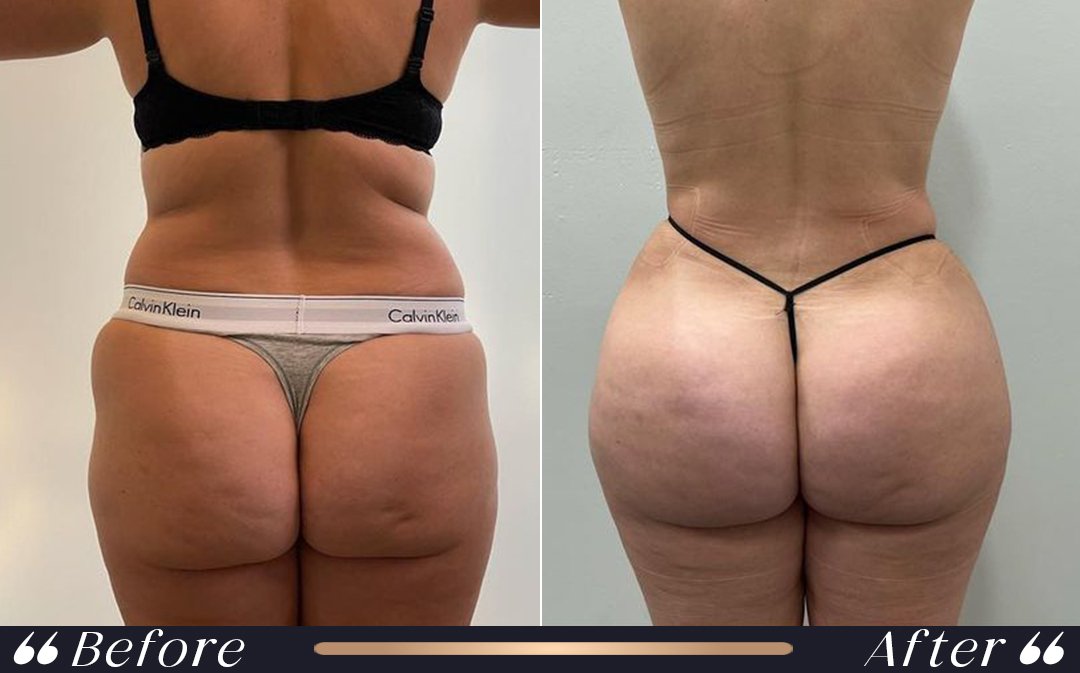
BBL Results at Six Months
Six months is a common milestone for a more meaningful results review. The American Society of Plastic Surgeons explains that buttock enhancement tissues may settle over roughly three to six months. This is a general description, not a promise that every feature will be fully unchanged afterward.
At this stage, a patient and surgeon can often discuss the achieved volume, waist-to-hip balance and any remaining concerns with more confidence than during the first postoperative weeks. Some firmness or minor contour changes may persist longer.
If another procedure is being considered, decisions should follow a complete examination and risk assessment. A second fat transfer is not automatically necessary or appropriate simply because the final volume differs from a preoperative simulation.
BBL Results at Seven and Eight Months
Between seven and eight months, many of the more visible contour changes have already occurred. The patient may primarily notice gradual softening, scar maturation or changes associated with ordinary body weight fluctuations. The pace is individual and may be slower after extensive combined surgery.
The grafted fat that has established a blood supply behaves like living fat tissue. It can be affected by long-term weight changes, meaning the appearance is not frozen at the six-month photograph. Consistency in nutrition and weight can make the silhouette easier to maintain.
Concerns such as ongoing pain, a persistent lump or a new swelling should still be reviewed. Passing a calendar milestone does not make a new symptom harmless.
BBL Results at Nine Months
At nine months, attention usually shifts from early postoperative restrictions to the stability of contour and everyday comfort. The intended relationship between the buttocks, waist and surrounding proportions may be easier to assess in ordinary clothing and natural posture.
Scar lines from liposuction can continue maturing, and subtle differences in skin sensation may persist for some patients. The course is not identical for all patients, especially when healing was complicated by fluid collections, delayed wounds or significant pre-existing tissue laxity.
Rather than calculating a supposed universal fat-survival percentage, assess whether your result meets the realistic goals discussed with the surgeon. Individual photographs help with that conversation when they use consistent angles and lighting.
BBL Results at Ten Months
By ten months, patients often expect the body shape to be stable. While major changes may indeed have slowed, natural fluctuations related to weight, activity and tissue maturation remain possible. Small changes do not automatically represent graft failure or a complication.
It is reasonable to review the appearance of donor areas as carefully as the buttocks. Successful body contouring depends on the overall silhouette, not only the circumference of one region. An isolated measurement may miss improvements in balance or reveal no information about symmetry.
If you are considering an additional procedure, ask whether your current concern is caused by retained fat volume, loose skin, a contour irregularity or expectations that surgery could never realistically satisfy.
BBL Results at Eleven Months
At month eleven, a patient may be preparing photographs for the one-year comparison. The most useful images reproduce similar standing posture, camera height, distance, clothing and lighting from earlier follow-ups. This reduces distortion created by posing.
The perceived result also depends on how your natural body has changed during the year. Pregnancy, major weight shifts and other health factors can alter the contour independently of how successfully fat was transferred.
Keep any long-term review grounded in personal goals and the surgeon’s clinical findings. Before-and-after comparisons should communicate what changed, not imply an identical result is possible for everyone.
BBL Results at Twelve Months
One year after surgery, the appearance is commonly a useful long-term reference. ASPS patient information describes fat transfer outcomes as potentially long-lasting once tissues settle, while emphasizing that the body continues to age and weight stability matters.
The result may differ from the immediately postoperative look because swelling has receded and some transferred fat was naturally reabsorbed. The scar maturation process can continue beyond one year, and individual healing remains variable.
If you have concerns about asymmetry or contour, arrange a proper examination rather than making assumptions from images alone. A surgeon can discuss whether observation, other treatment or no further intervention is appropriate.
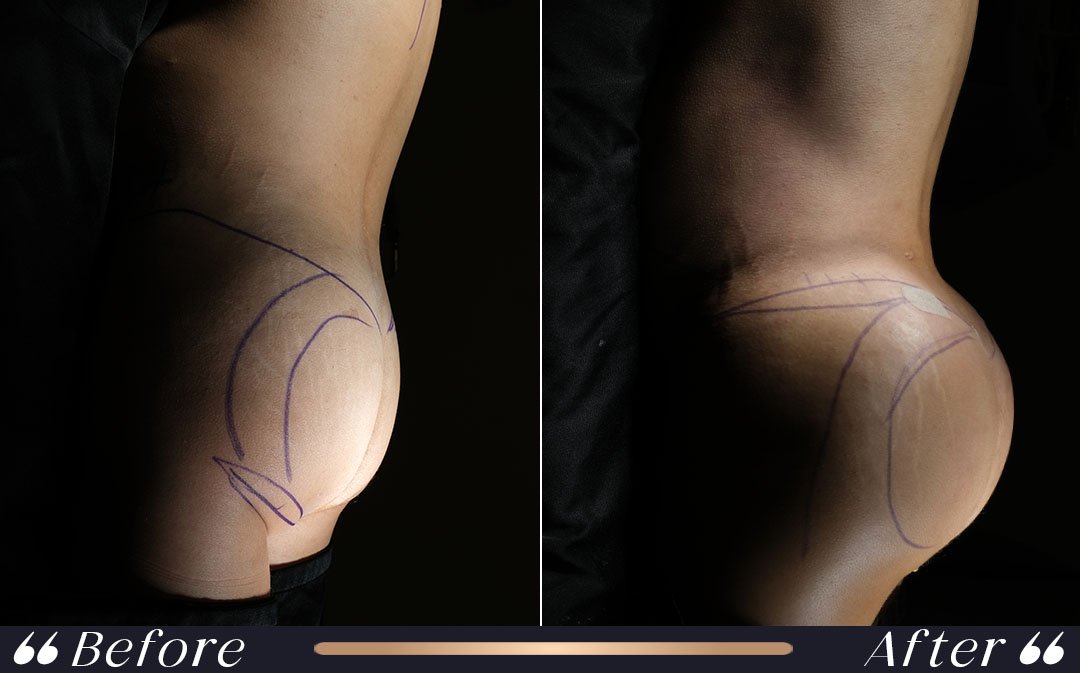
BBL Results After One Year and Beyond
Fat grafts that remain viable can provide enduring changes in body contour, but no cosmetic result is immune to ageing, significant weight changes or skin laxity. The buttocks may become larger with weight gain or smaller with weight loss because retained grafted cells participate in normal fat metabolism.
A stable routine supports the overall result but does not guarantee a permanent appearance. Long-term health is more important than trying to protect a particular measurement at all costs. Patients should avoid extreme dieting to chase a photograph.
If the shape changes dramatically or a new symptom appears, discuss it with an appropriately qualified clinician. Routine changes and medical complications require different responses.
How Much Transferred Fat Survives?
Not all injected fat survives. ASPS educational articles quote surgeons discussing substantial natural reabsorption, with estimated loss ranging from about twenty to forty percent in some clinical experiences. These figures are educational estimates rather than a personal prediction or a guarantee.
Survival depends on tissue perfusion, technique, the recipient area, amount and distribution of fat, health factors and healing. The percentage quoted in a clinic advertisement may refer to a different population or measurement method than the one relevant to your case.
Ask how the surgeon evaluates results and what uncertainty is involved. Claims of one hundred percent survival or a guaranteed exact final volume are not medically credible.
Why Your BBL May Look Smaller Over Time
A gradual reduction in size during the early months is often explained by decreasing swelling and absorption of some grafted fat. The body silhouette can also appear different as liposuction donor areas shrink and heal.
Weight loss after surgery may further reduce fat-cell volume, including in the grafted region. By contrast, prolonged swelling could initially make the buttocks appear unusually full. Without examination it can be difficult to tell how much each factor contributes.
Use weight records, standardized images and clinical follow-up rather than trying to calculate retained volume from one photograph. A sudden major change with pain or swelling needs assessment.
Why Some BBL Results Look Uneven
Natural bodies are not perfectly symmetrical before surgery. Postoperative swelling can exaggerate differences between sides, and the amount of surviving grafted fat may vary across regions. Skin quality, pre-existing contours and the pattern of liposuction removal also affect the result.
Mild apparent unevenness in the first months may change as tissues settle. Nevertheless, persistent or significant contour concerns warrant a professional assessment. The appropriate response depends on the cause, not simply the age of the result.
Do not apply forceful massage or compression to change shape unless specifically authorized. Any plan to correct asymmetry should consider safety and realistic goals.
How Liposuction Donor Areas Change Month by Month
A Brazilian butt lift generally involves harvesting fat by liposuction from one or more selected donor areas. Those areas have their own swelling, bruising, firmness and recovery timeline, which can differ from the buttocks receiving fat.
As donor-area swelling improves, the waist, flanks or other treated areas may look more defined. This can create a stronger waist-to-hip contrast even if the buttock volume changes very little. It is one reason results should be evaluated as a body contour rather than a single measurement.
Persistent nodules, marked pain or fluid collections in donor regions require evaluation. Follow garment instructions and avoid treating lumps yourself without a clinician’s guidance.
Sitting and Pressure Restrictions
Pressure on grafted buttocks is a major practical concern in early recovery. Some surgeons advise avoiding prolonged direct sitting for about two weeks or longer, while individualized protocols can extend restrictions. The correct instruction depends on the operation and the treating surgeon.
When modified sitting is allowed, patients may receive specific instructions about using support under the thighs rather than directly compressing the grafted area. Any pillow or device must be used exactly as demonstrated by the team.
Ask for clear guidance on work, meals, toilet use, transport and flights. Do not assume that a commercial BBL pillow makes unrestricted sitting safe.
Sleeping Positions During BBL Recovery
Sleeping advice usually aims to avoid unnecessary pressure on the transferred fat and to protect other treated regions. Stomach sleeping is commonly discussed, but it is not suitable for every patient, especially if another operation, breathing condition or musculoskeletal problem limits that position.
Side sleeping may be an option in some circumstances, but it can also put pressure on grafted hip areas depending on the treatment map. Your team should explain permitted positions, pillow placement and what to do if you move during sleep.
There is no universal week when everyone can return to back sleeping. Obtain explicit permission rather than testing the position for long periods because it happens to feel comfortable.
Compression Garments and Body Shape
Compression garments are often recommended for liposuction donor areas to help support tissue and manage postoperative swelling. They are not intended to squeeze the newly grafted buttocks without regard to the surgeon’s instructions.
Poor garment fit can cause skin marks, discomfort or inappropriate pressure. As swelling changes, the team may recommend adjustments. Different procedures and garment designs require different schedules.
Ask how to wash and wear the garment and whether it must be modified to protect the grafted areas. Do not add rigid boards or additional layers independently.
Returning to Exercise After BBL
Light walking is commonly encouraged once a patient is medically stable, while strenuous activity is restricted during early healing. The permitted progression varies by operative extent, medical history and surgeon protocol.
Running, jumping, intense lower-body exercise and heavy lifting can place substantial demands on recovering tissues. ASPS educational material describes many patients returning to more normal activity around six to eight weeks, but this is not a universal guarantee.
Ask for activity-by-activity clearance. A safe return considers the buttocks and the liposuction donor areas, which may recover at different rates.
Weight Stability and Long-Term BBL Results
Once grafted fat has survived, it remains responsive to changes in overall body weight. Significant loss can reduce buttock volume, and significant gain can enlarge surviving cells. The result is therefore best understood as a change in contour, not a fixed measurement.
Balanced nutrition and sustainable activity support health during and after recovery. Unapproved crash diets, supplements or extreme training plans should not be used to try to alter the graft’s survival. If you have specific dietary needs, ask a qualified clinician.
Maintaining reasonable weight stability helps make follow-up comparisons meaningful, though normal small fluctuations are part of everyday life.
Hydration, Nutrition and Healing
Adequate fluids and sufficient overall nutrition support ordinary wound healing. Protein-rich meals, produce and balanced energy intake can be part of a healthy recovery plan, but no food can guarantee that transferred fat will survive.
Patients with diabetes, kidney disease or other medical conditions may need individualized dietary advice. Follow guidance from the treating team rather than copying a restrictive online meal plan. Likewise, supplements marketed for BBL fat retention may lack strong evidence and can interact with medication.
Food and water are supportive parts of recovery, not substitutes for appropriate surgical technique, wound care or urgent treatment when complications arise.
When Can You Judge the Final BBL Result?
A reliable assessment usually requires several months of healing. ASPS notes that buttock enhancement tissues commonly settle over three to six months, while scars may continue maturing much longer. Some changes after six months reflect normal weight fluctuations rather than continued graft establishment.
Comparisons are best made through a consistent photo series and the surgeon’s examination. A single calendar date cannot distinguish all the possible reasons for softness, firmness, unevenness or changing projection.
If you are concerned about the eventual result, ask when your surgeon prefers to perform a formal review and how any limitations will be discussed.
How to Take Useful Progress Photographs
Photographs can be valuable when lighting, posture, distance and camera angle are comparable. Take front, side and rear views only if the clinical team recommends them and handle images privately according to your preferences.
A camera positioned lower can make projection appear greater, while twisting the hips changes the waist-to-buttock ratio. Loose or tight clothing can also distort the comparison. Standardization helps you see real changes rather than photographic illusions.
Do not share identifiable surgical photographs publicly unless you choose to do so. Healthcare providers should obtain appropriate consent before using patient images for promotion.
The Difference Between Swelling and Fat Retention
Swelling is a temporary inflammatory and fluid-related response to surgery. Fat retention refers to transferred cells that remain viable after establishing a blood supply. Both affect buttock size, but they are not interchangeable biological processes.
An increase or decrease in circumference during early recovery cannot reveal which process is responsible. Firmness and bruising may also influence appearance, making self-assessment unreliable.
Ask your clinician whether the expected healing pattern fits your symptoms. If swelling is sudden, painful, hot, significantly asymmetric or associated with fever, seek prompt medical assessment.
BBL Results and Body Types
The same volume of transferred fat can produce different visible effects because rib cage, pelvis, waist shape, skin elasticity and existing fat distribution differ. There is no universal ideal shape that every BBL should create.
Patients may prefer subtle enhancement, restoration of particular contours or a more defined waist-to-hip transition. Anatomy and surgical safety determine what is achievable; the desired appearance should never justify unsafe deep fat injection.
A professional consultation should respect the patient’s own goals while clearly identifying limits and alternatives.
Can a Second BBL Improve Results?
Some patients consider additional fat grafting after the initial result has settled because they want more volume or a refinement of asymmetry. This is not automatically necessary or suitable, and a second operation carries its own risks.
The surgeon should assess retained fat, donor-fat availability, skin, overall health and the cause of any irregularity. A longer healing period may be advised before deciding on revision.
Ask whether observation, a different treatment or no additional procedure would better match the concern. Never assume a revision can guarantee a perfect match to a reference photo.
Key BBL Safety Considerations
Gluteal fat grafting carries a serious risk of fat embolism when fat is inadvertently placed in dangerous deep tissue planes. Professional safety statements emphasize placement in the subcutaneous layer above the gluteal fascia, appropriate surgeon qualifications and safe facility standards.
Current professional guidance increasingly supports real-time ultrasound as a tool to help confirm cannula position and subcutaneous fat placement. A 2026 scoping review notes promising use but also emphasizes that comparative evidence remains limited; ultrasound complements rather than replaces safe surgical judgment.
Ask who performs fat harvesting and injection, which anatomical plane is used, whether ultrasound guidance is available and how emergency care is managed. These questions are more important than an advertised volume.
Warning Signs That Require Medical Help
Chest pain, sudden breathlessness, fainting, confusion or other signs of possible fat embolism or blood clot require immediate emergency care. A painful swollen leg, sudden significant swelling or rapidly worsening symptoms also need urgent assessment.
Fever, increasing wound redness, abnormal drainage or severe uncontrolled pain may suggest infection or other complications. Contact your surgical team promptly and obtain local examination when appropriate.
International patients should know how to access emergency services in the location where they are recovering. Do not wait for a routine online follow-up when serious symptoms occur.
Travel and International Follow-Up
An international BBL journey includes more than the operation. Patients need time for clinical evaluation, postoperative monitoring and enough flexibility to delay travel if recovery requires it. Recent surgery and long periods of immobility can raise concerns about blood clots.
Before leaving Türkiye, ask for an operative summary, medication instructions, pressure precautions and emergency contact details. Know who will evaluate wounds or unusual symptoms after you return home.
A fixed departure date advertised in a package does not replace personal medical clearance. The treating team should assess fitness to travel and explain realistic follow-up arrangements.
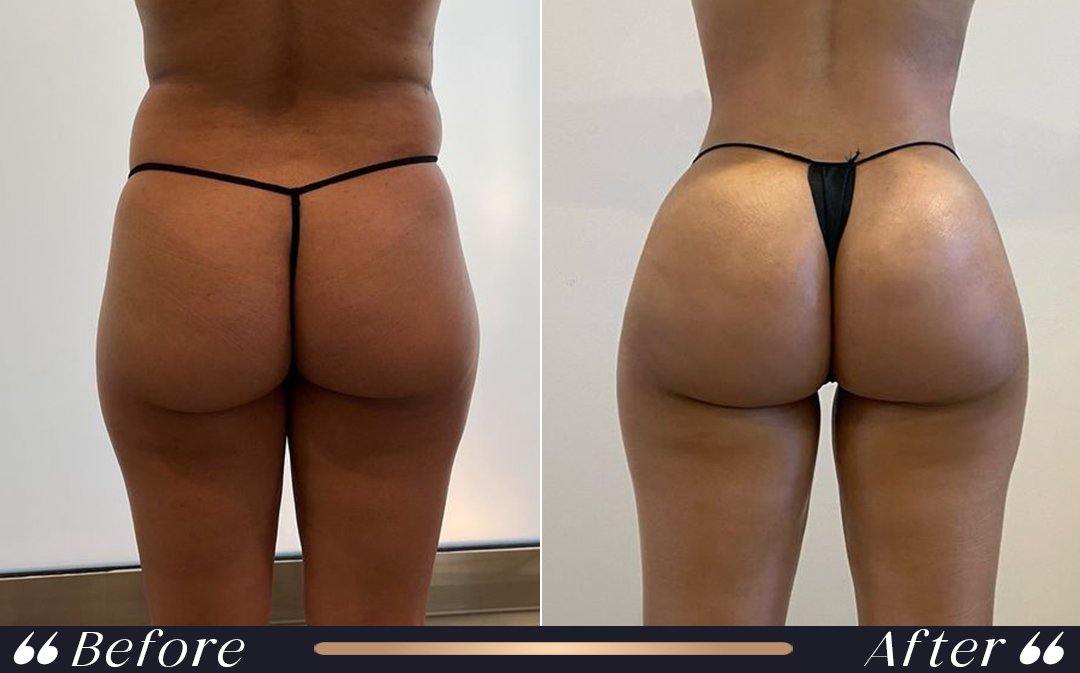
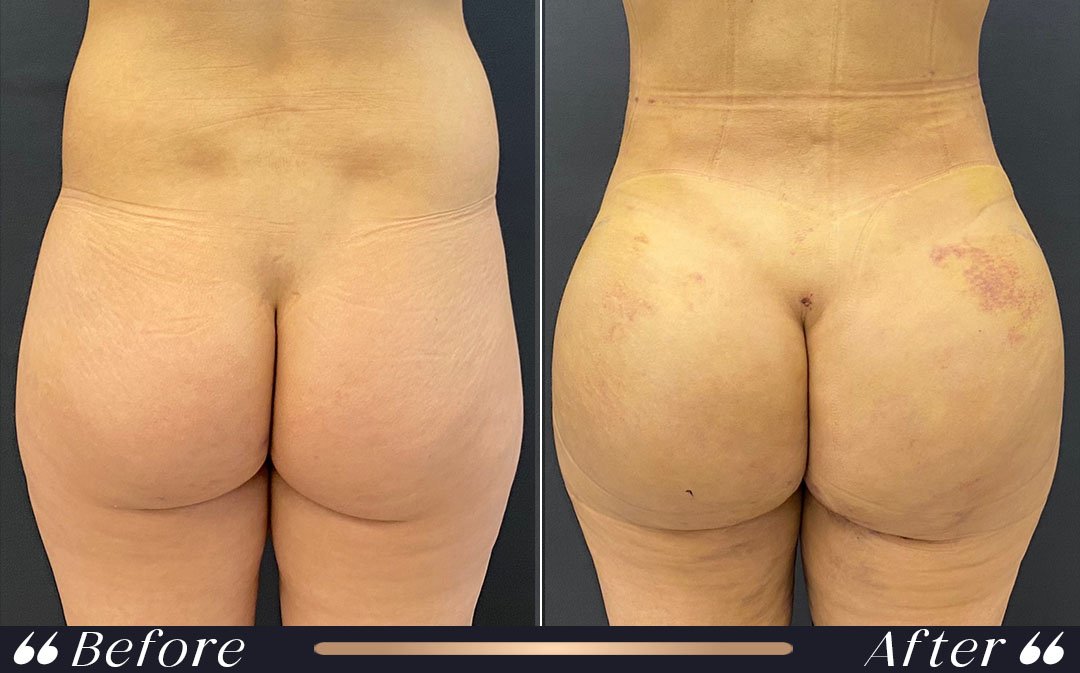
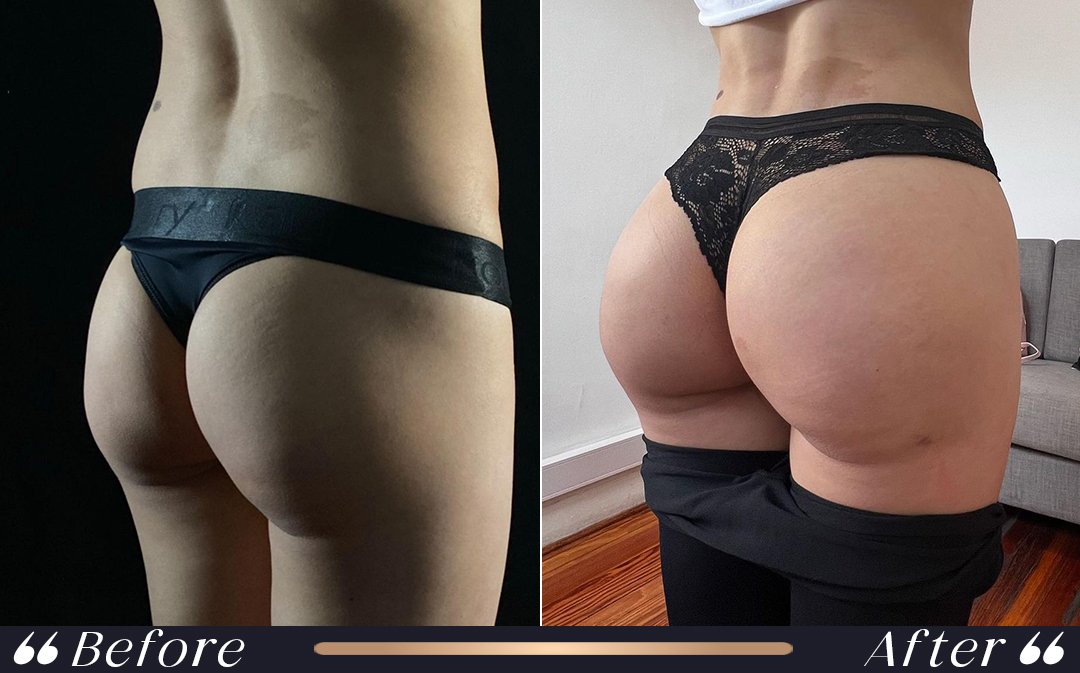
How to Evaluate Before-and-After BBL Pictures
An image taken at two weeks reflects substantial recovery changes, while a six-month image may be more indicative of settled contour. Comparing them without identifying the time since surgery can be misleading.
Ask whether the photographed patient had additional procedures such as a tummy tuck, how body weight changed and whether the same lighting and posture were used. Editing and selective posing can also exaggerate results.
Before-and-after photographs show individual outcomes, not a predictable result for every patient. A responsible provider should explain both benefits and limits.
Questions to Ask Before Booking a BBL in Turkey
Ask for the surgeon’s qualifications, the planned facility, the intended graft placement plane and the role of ultrasound guidance. Discuss the fat-harvesting locations, realistic volume goals, potential risks and alternatives.
Clarify the postoperative review schedule, sitting and sleeping restrictions, compression garment use, return to exercise and medical fitness to fly. Request an itemized quotation and understand what happens if the clinical plan changes.
Pressure to book quickly or promises of a guaranteed exact figure are reasons to seek clarification. An informed decision should come before payment or travel.
BBL Consultation at Yesilkoy Clinic
People considering a Brazilian butt lift can contact Yesilkoy Clinic to discuss their concerns and request information about an individual surgical assessment. The clinical plan should be determined after reviewing anatomy, medical history, desired changes and risks.
Ask about the operating surgeon, surgical setting, safety standards, postoperative instructions and how follow-up is managed for international patients. A consultation may appropriately conclude that surgery is unsuitable.
This guide is general educational material and does not establish a clinic-specific outcome, price, or guarantee of fat retention.
BBL Results Month by Month: Summary Timeline
| Recovery point | What may change | How to interpret it |
|---|---|---|
| Days 1–7 | Bruising, swelling and early fullness | Too early to assess the final volume |
| Weeks 2–4 | Visible swelling begins to settle in many patients | Apparent shrinkage may partly reflect less swelling |
| Month 2 | Reduced bruising and gradual softening | Still not a final graft-retention measurement |
| Month 3 | Shape becomes a more meaningful early indicator | A useful check, not an absolute final result |
| Months 4–5 | Further settling and contour refinement | Compare consistent photographs and weight |
| Month 6 | Often a suitable time for detailed results review | Some tissue changes may continue |
| Months 7–12 | Longer-term contour and scar maturation | Weight and ageing still influence appearance |
Frequently Asked Questions About BBL Results Month by Month
When do BBL results start showing?
Some increase in contour is visible immediately, but swelling makes the early appearance unreliable. The shape becomes easier to assess as tissues settle over the following months.
Are BBL results final at one month?
Usually not. Swelling and natural fat reabsorption can still change the appearance after the first month.
What do BBL results look like at two months?
Many patients have less bruising and swelling, although firmness and contour changes may continue. Individual healing varies.
How accurate are BBL results at three months?
ASPS educational information describes month three as a useful indicator of the volume likely to remain, although refinement can continue.
Are BBL results final at six months?
The three-to-six-month period is often a more meaningful time to evaluate the shape, but minor changes and scar maturation may continue.
Can BBL results change after one year?
Yes. Retained grafted fat responds to major weight gain or loss, and natural ageing affects the body over time.
Why does my BBL look smaller after surgery?
Swelling decreases and some transplanted fat is naturally reabsorbed. Body-weight changes can also affect volume.
Does all transferred fat survive?
No. Survival is variable, and no surgeon can guarantee one hundred percent retention.
What percentage of BBL fat survives?
Published clinical estimates vary. ASPS articles describe partial reabsorption, but a percentage cannot be promised for an individual patient.
Is uneven BBL swelling normal?
Swelling can be uneven, but significant, new or worsening asymmetry should be reviewed by your clinical team.
How long do you need to avoid sitting after BBL?
Restrictions vary by surgeon and operation. Ask specifically about permitted pressure, modified sitting and when normal sitting may resume.
When can I sleep on my back after BBL?
Only when the treating surgeon confirms it is appropriate. Many protocols restrict back sleeping during early recovery.
Do BBL pillows protect transferred fat?
Special cushions may be part of a surgeon’s positioning instructions, but they do not justify unlimited or unrestricted sitting.
Do compression garments change the final result?
They may support donor-area healing and swelling management, but they should be fitted and worn as prescribed rather than used to force a shape.
Can I exercise after six weeks?
Some patients begin gradually resuming activities around this stage, but exact clearance depends on recovery and the surgical plan.
Can weight loss shrink a BBL?
Yes. Successfully grafted fat behaves like living fat tissue and may become smaller with significant weight loss.
Does gaining weight enlarge BBL results?
Remaining fat cells can expand with weight gain, but the distribution is not fully predictable.
Can BBL results improve between three and six months?
The contour can refine as swelling settles and tissues stabilize. ASPS educational information describes this period as important.
Why is my waist still swollen at three months?
Liposuction donor areas can remain swollen while recovering. Persistent or worsening symptoms should be assessed by the surgeon.
Are lumps after BBL always dangerous?
No, but lumps have multiple possible causes and should be evaluated if persistent, painful, enlarging or associated with skin changes.
When is a BBL revision considered?
Only after a detailed assessment of the settled contour, health and cause of dissatisfaction. Another operation is not automatically appropriate.
Can I travel soon after a BBL?
Travel should follow individual medical clearance, accounting for recent surgery, immobility and the need for postoperative evaluation.
What symptoms require urgent medical assessment?
Sudden chest pain, difficulty breathing, collapse or signs of a blood clot need emergency attention. Fever and worsening wound symptoms also warrant review.
Is ultrasound-guided BBL safer?
Real-time imaging can help surgeons confirm superficial fat placement, but it is an adjunct to expertise and does not eliminate all complications.
Where can I request a BBL consultation?
You can contact Yesilkoy Clinic through its official website to request a personalized evaluation and information about the care pathway.
Discuss BBL Recovery With Yesilkoy Clinic
If you are considering a Brazilian butt lift in Istanbul, you can request an individual consultation to discuss your goals, suitability, the planned operating surgeon and facility, risks, aftercare and realistic expectations for recovery. No exact amount of fat retention or final appearance can be guaranteed.
Request a ConsultationIndependent Medical Resources
- ASPS — Buttock Enhancement Results
- ASPS — Seven Things to Know About Brazilian Butt Lift
- ASPS — BBL Recovery and Fat Survival
- ISAPS — Fat Transfer and Recovery
- ISAPS — Patient Safety During Gluteal Fat Grafting
- PubMed — 2026 Review of Ultrasound in Gluteal Fat Grafting
Explore related guides in the Yesilkoy Clinic blog or contact the clinic for individual information.
Last reviewed: November 2026. Recovery and outcome information is educational and does not substitute for medical examination.