Understanding breast augmentation recovery before surgery can make the entire treatment journey easier to plan. Although breast augmentation is one of the most established aesthetic breast procedures, it is still surgery, and the body needs adequate time to heal.
The recovery process does not happen overnight. Most patients gradually progress from the initial post-operative period to light daily activities, work, exercise and finally unrestricted activity over several weeks. Swelling, tightness, soreness and changes in breast shape are normal parts of early healing, while the final appearance continues to develop over the following months.
At Yeşilköy Clinic in Istanbul, breast augmentation treatment is planned individually by experienced specialist doctors. Implant size, implant position, incision location, patient anatomy, medical history and lifestyle are all considered when preparing both the surgical plan and the expected recovery pathway.
There is no single breast augmentation recovery timeline that applies perfectly to every patient. However, understanding the typical stages can help you know what to expect and when different activities may become possible.
Quick Answer: Most patients can walk shortly after breast augmentation, may return to desk-based work in approximately 1–2 weeks, and gradually return to most normal activities by around 6 weeks. Complete recovery commonly takes approximately 6–8 weeks, although swelling, implant settling and scar maturation may continue for several months.
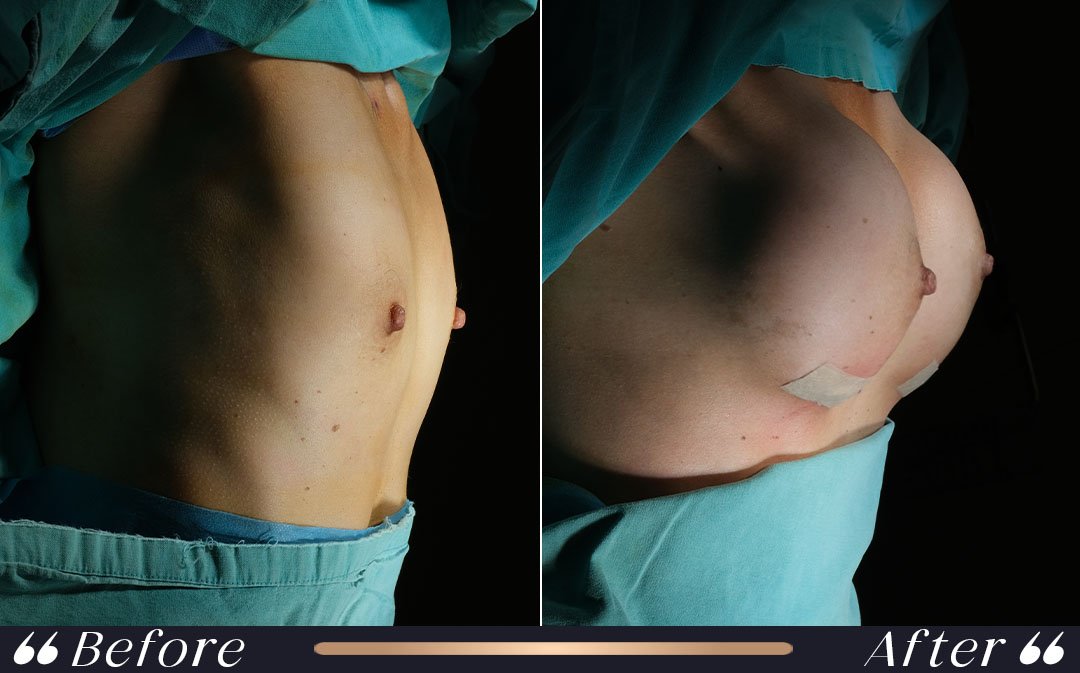
The following timeline provides a general overview of what patients may experience. Your surgeon's instructions should always take priority because recovery varies according to implant placement, surgical technique, general health and individual healing.
| Recovery Stage | What You May Experience | Typical Activity Level |
|---|---|---|
| First 24 Hours | Soreness, tightness, swelling and tiredness after anesthesia | Short walks and rest |
| Days 2–5 | Chest tightness, tenderness and swelling | Gentle movement around home |
| Week 1 | Discomfort gradually decreases | Light daily activities |
| Weeks 1–2 | Swelling and bruising continue improving | Many patients return to desk work |
| Weeks 3–4 | Breasts begin to feel more comfortable | Light activity may increase with medical approval |
| Around 6 Weeks | Significant early healing usually completed | Most normal activities may resume if approved |
| 2–3 Months+ | Implants continue settling and tissues soften | Normal lifestyle for most patients |
The first day is an important stage of breast augmentation recovery. After surgery, you will be monitored while waking from anesthesia. You may feel sleepy, tight across the chest or generally uncomfortable.
Breast swelling is expected. The breasts may initially appear higher, firmer or more swollen than you expected. This should not be interpreted as the final result.
Cleveland Clinic notes that breast augmentation is commonly performed as an outpatient procedure and that patients should arrange for someone to drive them home and stay with them during the first night.
For independent patient information, see the Cleveland Clinic breast augmentation guide.
Your surgeon may provide specific instructions regarding medication, wound care, supportive garments and movement.
Short, gentle walks may be encouraged after surgery according to medical guidance. Movement can also help reduce stiffness and supports general post-operative recovery.
The intensity of these symptoms varies considerably between patients.
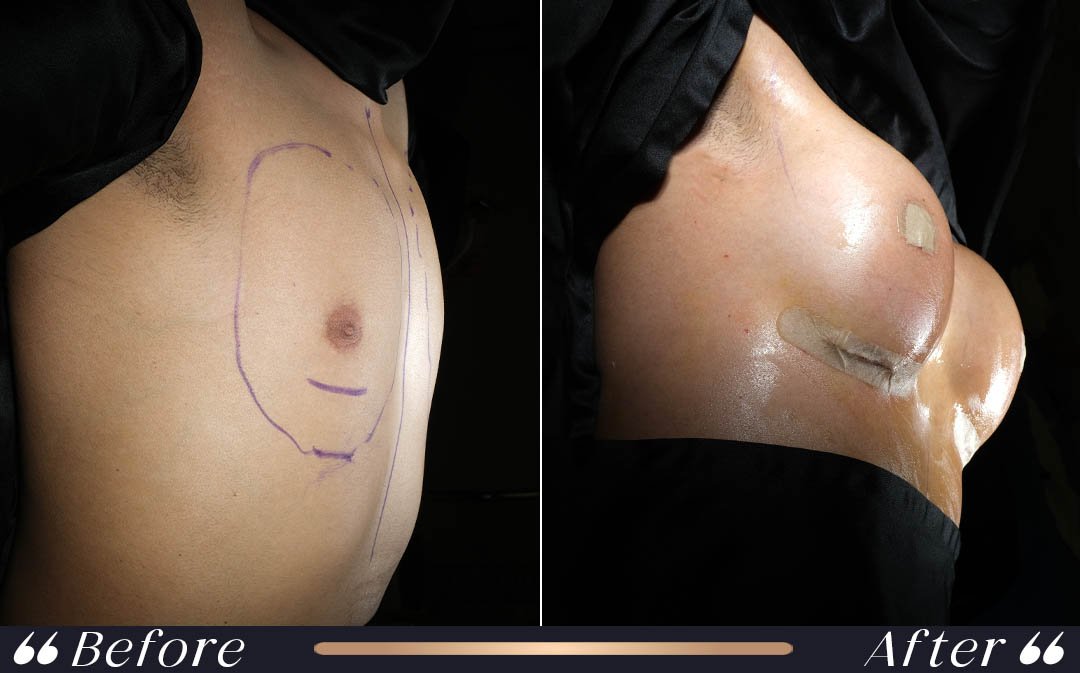
The first several days are commonly the most uncomfortable part of breast augmentation recovery.
The American Society of Plastic Surgeons notes that the first three to five days are often the period when patients experience the greatest discomfort. Symptoms generally begin improving as the first week progresses.
You can read the American Society of Plastic Surgeons breast augmentation recovery guide.
During this stage, patients should focus on rest, medication as prescribed, hydration and light movement.
The breasts can remain swollen and may look unusually high on the chest. The tissues and chest muscles need time to relax and adapt after implant placement.
The timing of your first shower depends on the dressing, incision closure and your surgeon's instructions.
Do not remove surgical dressings or expose incisions to water earlier than advised by your medical team.
Arm movement may initially feel uncomfortable, especially when implants are positioned beneath or partially beneath the chest muscle.
You should follow the specific movement restrictions provided by your surgeon rather than forcing your arms through discomfort.
For many patients, the second week represents an important improvement in breast augmentation recovery.
Swelling and soreness usually continue decreasing, and daily movement becomes easier.
The NHS states that patients commonly need around one to two weeks away from work following breast enlargement surgery. However, the appropriate time depends on your occupation and individual healing.
You can review the NHS breast enlargement information.
A desk-based worker may return sooner than someone whose job involves lifting, repetitive upper-body movement or significant physical activity.
Even if you feel substantially better, internal tissues are still healing. Feeling comfortable does not necessarily mean that the surgical area is ready for strenuous activity.
The NHS advises avoiding driving for at least one week after breast enlargement surgery.
Before driving again, you should also be capable of controlling the vehicle safely, wearing a seatbelt comfortably and performing emergency movements without significant pain or restriction.
Always follow your surgeon's individual advice.
By weeks three to six, most patients experience significant improvement.
Bruising usually continues fading, swelling decreases and the breasts begin to feel more natural.
The NHS advises avoiding heavy lifting and strenuous exercise for at least one month and notes that by approximately six weeks, most patients should be able to return to the majority of normal activities.
Cleveland Clinic describes an average complete breast augmentation recovery period of approximately six to eight weeks.
This does not mean every patient should automatically resume unrestricted activity at six weeks. Your surgeon should assess your healing and advise when specific activities are safe.
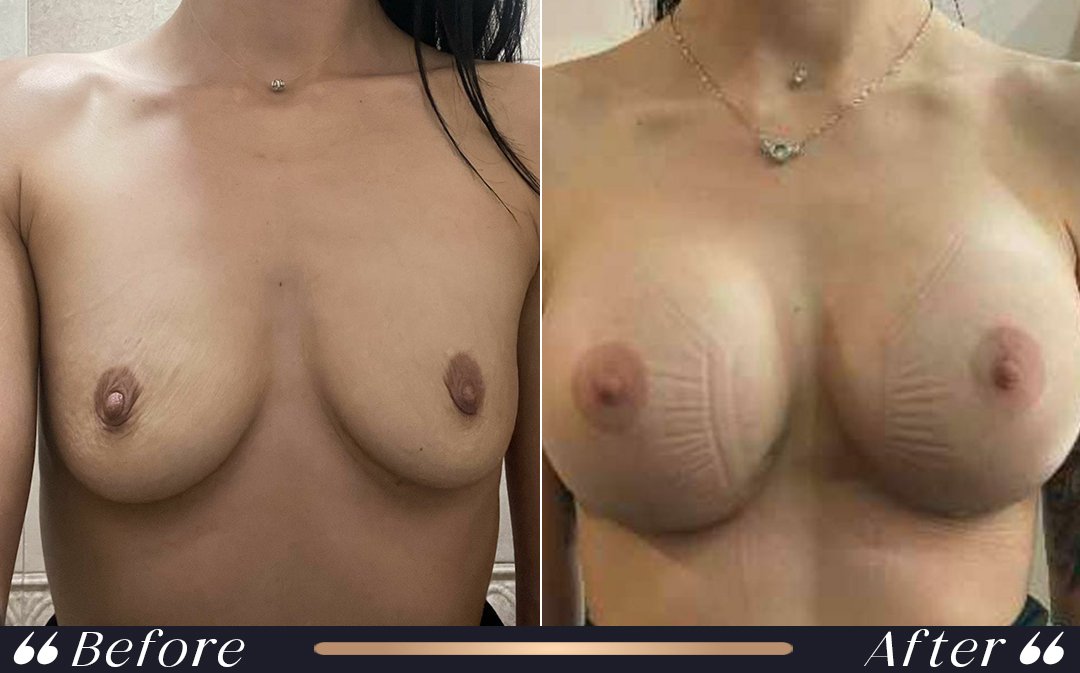
One of the most common questions during breast augmentation recovery is when the breasts will look natural.
Immediately after surgery, implants may appear relatively high and breasts may feel firm because of swelling and tissue tightness.
Over time, swelling decreases and the surrounding tissues adapt. The implants gradually settle into their planned position and the breasts typically become softer.
The NHS notes that after a few months, the breasts should begin to look and feel more natural.
The exact timeline depends on factors including:
It is therefore important not to judge your final result in the first days or weeks.
Patients often encounter the phrase “drop and fluff” when researching breast augmentation online.
It is an informal expression referring to the gradual process in which breast implants settle lower into their planned position while breast tissues soften and adapt around them.
The process is not identical for every patient, and one side may appear to settle slightly faster than the other during early recovery.
If you are concerned about noticeable or persistent asymmetry, contact your medical team rather than attempting to diagnose the issue yourself.
Sleeping position is an important practical consideration during early breast augmentation recovery.
Patients are commonly instructed to sleep on their back during the initial healing period to avoid unnecessary pressure on the breasts.
Some patients find sleeping with the upper body slightly elevated more comfortable because it may reduce pressure and help manage swelling.
The exact duration of back sleeping should be determined by your surgeon.
Avoid changing to stomach or side sleeping simply because discomfort has improved unless your medical team has confirmed that it is appropriate.
Your doctor may recommend a surgical or support bra following surgery.
The NHS notes that some surgeons advise wearing a sports bra continuously for up to three months after breast surgery, although recommendations vary.
The purpose of the garment may include supporting the breasts during healing and providing comfort as swelling decreases.
Do not use an underwire bra or switch garments without following your surgeon's recommendations.
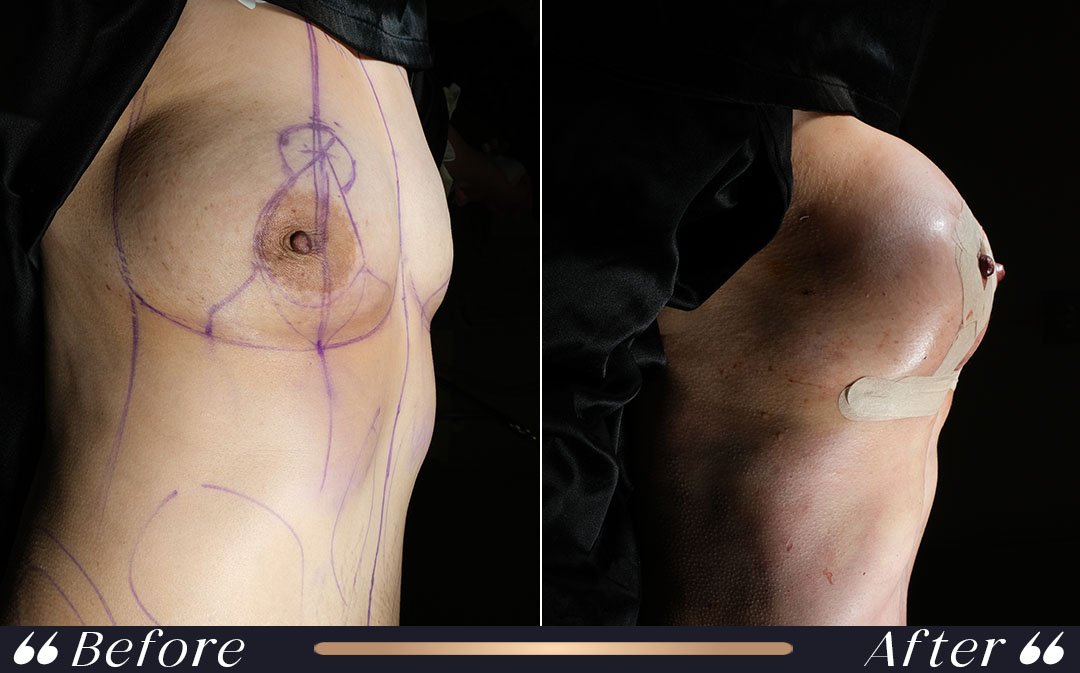
The answer depends heavily on the type of work you do.
Many patients with office-based or remote jobs may be able to return within approximately one to two weeks if recovery is progressing normally.
Cleveland Clinic notes that many patients can return to work and normal activities within approximately two to three weeks, while some desk-based patients can return sooner.
If your work involves lifting, carrying, pushing, pulling or extensive arm movement, you may require significantly more time.
Cleveland Clinic advises that people with physically demanding jobs may need at least three weeks before returning to work.
Your surgeon should determine your individual timeline.
Exercise should be reintroduced gradually rather than resumed immediately because you feel well.
Heavy lifting and intense upper-body activity can place stress on healing tissues.
The NHS recommends avoiding strenuous exercise and heavy lifting for at least a month.
Gentle walking is commonly encouraged early in recovery according to the medical team's instructions.
Some patients may gradually introduce gentle activity during the following weeks, but this should only happen with medical approval.
Running and other high-impact activities create significant breast movement and generally need to be postponed until healing is more advanced.
Exercises targeting the chest, shoulders and arms may need a longer restriction, particularly when implants are placed beneath the chest muscle.
Your surgeon's advice should take priority over generic online exercise schedules.
At Yeşilköy Clinic, breast augmentation is planned according to the individual patient's anatomy and treatment goals by experienced specialist doctors.
The process involves much more than choosing an implant size. Factors such as chest width, existing breast tissue, skin quality, implant position, implant profile and overall body proportions are considered when developing a treatment plan.
Recovery planning is also important. Patients receive guidance regarding post-operative movement, supportive garments, incision care, activity restrictions and scheduled follow-up.
The objective is to combine aesthetic planning with appropriate medical care and realistic expectations throughout the entire treatment journey.
You can review the Yeşilköy Clinic doctors before requesting your consultation.
Recovery is not simply the period between surgery and returning to work.
Follow-up appointments allow the medical team to evaluate incision healing, swelling, implant position and general recovery.
Patients travelling internationally should understand their follow-up plan before returning home.
Ask your clinic:
Swelling is expected after surgery and decreases gradually.
Cleveland Clinic notes that swelling and bruising commonly improve over approximately two to three weeks, although mild swelling can continue beyond this period.
The breasts may change noticeably during the first several months as swelling resolves and the implants settle.
One breast may sometimes appear to heal slightly differently from the other in the early stages.
Persistent, sudden or worsening one-sided swelling should be discussed with your doctor.
Every breast augmentation involving an incision creates a scar.
Scar appearance changes over time. Early scars can appear red, pink, raised or firm before gradually maturing.
The NHS notes that around six weeks after surgery, scars should begin to fade, although complete scar maturation can take much longer.
Your surgeon may provide specific scar-care recommendations once the incisions have healed adequately.
Avoid applying unapproved creams, oils or treatments to fresh incisions.
Breast implants should not be considered lifetime devices.
The NHS explains that implants do not last forever and some patients may need further surgery in the future because of implant-related issues or natural changes in breast tissue.
This is important when considering breast augmentation because recovery from the initial procedure is only one aspect of long-term implant care.
Implants may be positioned in different anatomical planes depending on the patient's anatomy and surgical plan.
When the implant is placed partly or fully beneath the chest muscle, early tightness and muscle discomfort may be more noticeable.
This does not necessarily mean recovery will be problematic, but the first days can feel different compared with implant placement above the muscle.
Your surgeon should explain why a particular placement has been selected and how it may affect your recovery.
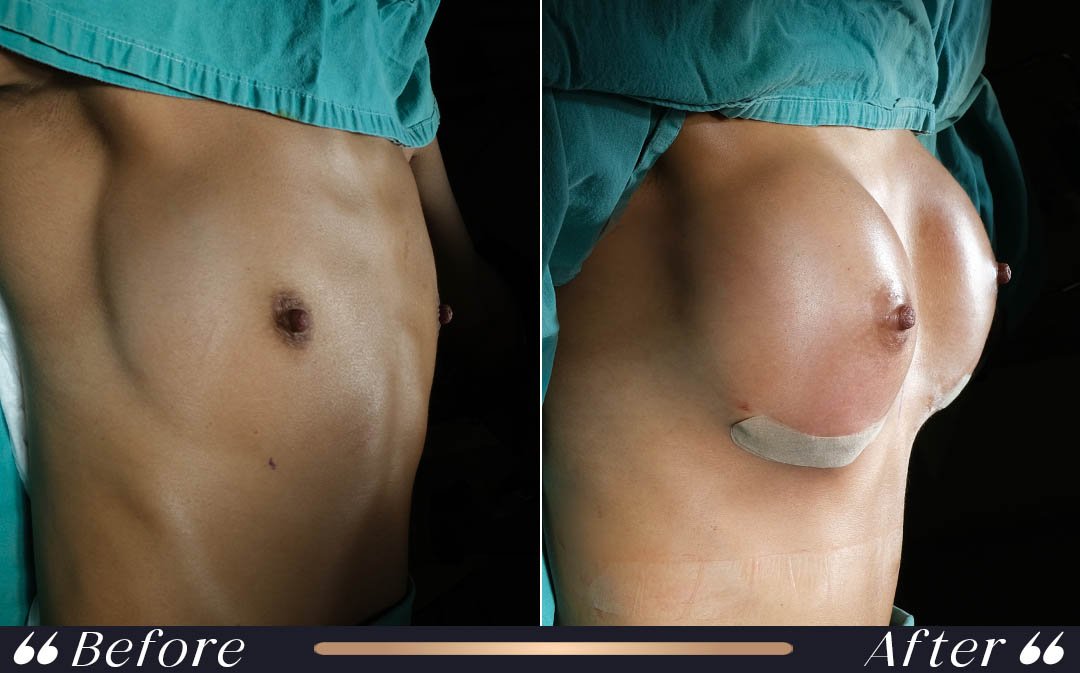
Some discomfort, swelling and bruising are expected during normal breast augmentation recovery. However, patients should know which symptoms require medical attention.
Cleveland Clinic advises contacting a healthcare provider for symptoms including fever, abnormal discharge from the incision, opening of the stitches or increasing painful enlargement and firmness of one or both breasts.
You should promptly contact your medical team if you experience:
Severe breathing difficulty, chest pain or another medical emergency requires urgent medical assessment.
Breast augmentation is established surgery, but all surgical procedures involve risks.
The NHS lists potential complications such as significant scarring, capsular contracture, implant rupture, implant rotation and rippling.
There is also a rare association between certain breast implants and breast implant-associated anaplastic large cell lymphoma, known as BIA-ALCL.
You can read additional independent information on the NHS breast implant information page.
Medical Information Notice: This article provides general educational information and is not a substitute for personalized medical advice. Breast augmentation suitability, implant selection, surgical technique, activity restrictions and recovery times must be determined by your treating medical professional.
Planning ahead can make the first several days after surgery easier.
Before surgery, consider preparing:
Cleveland Clinic specifically recommends arranging transport home and having another person stay with you during the first night after surgery.
If you are considering breast augmentation in Istanbul, understanding recovery before travelling can help you prepare appropriately.
At Yeşilköy Clinic, patients can discuss implant options, surgical planning and the expected breast augmentation recovery timeline with the medical team before treatment.
The appropriate recovery plan depends on your procedure, implant position, health and lifestyle.
You can learn more about the Yeşilköy Clinic doctors or request an individual consultation.
Receive personalized information about breast augmentation, implant planning and your expected recovery journey from Yeşilköy Clinic.
Contact Yeşilköy ClinicComplete recovery commonly takes approximately six to eight weeks, although individual recovery varies. Swelling, tissue softening and implant settling can continue for several months.
Many patients with desk-based jobs return within approximately one to two weeks. Physically demanding occupations may require a longer period away from work.
The NHS advises avoiding driving for at least one week. You should only resume driving when you can safely control the vehicle and your surgeon has confirmed it is appropriate.
Light activity may gradually resume during recovery, but heavy lifting and strenuous exercise are generally restricted for at least the first month. Your surgeon should approve your return to exercise.
The appropriate timing depends on your surgery and healing. Patients are commonly advised to sleep on their back during early recovery and should obtain approval before changing positions.
Most early swelling improves during the first several weeks, but mild swelling and changes in breast shape can continue for several months.
The breasts gradually soften and implants settle during the following weeks and months. The NHS notes that after a few months the breasts should begin to look and feel more natural.
No surgical scar disappears completely. Scars usually become less noticeable as they mature, but the final appearance varies between patients.
Breast augmentation treatment at Yeşilköy Clinic is planned within an individualized medical pathway involving experienced specialist doctors. You can review the doctors here.
Visit the Yeşilköy Clinic contact page to request information about consultation, surgical planning and your expected recovery process.
Last updated: September 2026. Recovery timelines are general estimates and may differ according to the patient, surgical technique and medical plan. Always follow the instructions provided by your treating doctor.