
Breast Lift Scars: 27 Essential Facts About Healing & What to Expect
Breast lift scars are a normal and permanent part of mastopexy, but their color, texture and visibility can change substantially during the first months and years after surgery. Understanding incision choices, how wounds close, and when scar care may help can make recovery expectations more realistic.
This comprehensive guide explains the breast lift scar healing timeline from the first days through 24 months, compares donut, lollipop and anchor incisions, and reviews evidence-informed care, common concerns and situations that require medical attention. It is written for patients considering a breast lift in Istanbul and for those already recovering.

What Are Breast Lift Scars?
A breast lift, or mastopexy, reshapes and raises breast tissue by removing selected excess skin and repositioning the breast envelope. Incisions make this possible, and each incision heals as a permanent scar. The important question is not whether a lift can be truly scar-free, but which incision arrangement fits the anatomy and how the resulting lines are likely to mature.
Fresh scars may be red, pink, dark, firm or uneven. Their appearance changes as collagen reorganizes and postoperative inflammation settles. An early photograph therefore cannot predict the final appearance with precision. A patient should expect a long healing process rather than a finished scar within the first few weeks.
The placement and length of lines depend on the amount of lifting, existing breast position, areola size, skin elasticity and surgical approach. Some marks can be partly hidden in natural contours or beneath clothing, while others remain visible on the breast surface. All options deserve a candid discussion before consent.
Why a Breast Lift Leaves Incisions
When breasts have significant sagging, adjusting only the skin around the nipple may not provide enough reshaping. A surgeon may need additional access to remove redundant skin and reposition tissue. This makes longer incision patterns relevant in some cases even though patients understandably prefer shorter scars.
An incision is not an indication that surgery was performed poorly. A longer, carefully planned line may achieve a shape that a smaller operation cannot. Conversely, more extensive incisions should not be used when a limited technique can responsibly address the same goals. The decision balances contour, tissue support and the number of visible marks.
A consultation should include drawings of the likely incision locations on your anatomy. Ask whether the scars are expected to sit at the areolar border, down the lower breast, or within the inframammary fold. This practical discussion is more informative than vague promises of an invisible lift.
The Periareolar or Donut Incision
A periareolar technique places an incision around the edge of the areola. The contrast between areolar and surrounding skin may help camouflage the line in some patients, but it remains a scar. It is most often considered for selected degrees of reshaping rather than every breast lift.
This option can be appealing because it avoids a longer vertical breast line. Nevertheless, the amount of available correction has limits. A surgeon may warn about widening of the areolar scar, changes in areolar shape, or tension if the technique is pushed beyond what the tissue can support.
Patients should ask what the incision can realistically accomplish in their particular case. A shorter scar does not automatically give the best breast shape, and a technically smaller operation is not necessarily the most appropriate one.
The Vertical or Lollipop Scar
The vertical lift pattern generally includes an incision around the areola and another descending toward the breast crease. The combined shape is often described as a lollipop. It enables more skin tailoring and reshaping than an isolated areolar approach in suitable patients.
The vertical segment is usually visible on the lower breast, particularly early in healing. Some irregularity or gathering can appear during initial recovery and may change as tissues settle. The surgeon should explain which changes are expected and which require examination.
It is reasonable to ask for examples showing the same incision pattern at multiple postoperative intervals. Comparing an early red scar with a fully matured line can otherwise create unrealistic expectations.
The Anchor or Inverted-T Scar
The anchor pattern typically includes three elements: an areolar incision, a vertical incision and a horizontal incision in or near the breast crease. It is often used when more extensive lifting and removal of excess skin are required.
The additional horizontal line allows the surgeon to address lower-breast skin in a way that less extensive patterns may not. Part of the mark can lie within the natural fold, but the scar does not disappear. The meeting point of the vertical and horizontal incisions can need particular attention during early wound healing.
Patients considering an anchor lift should discuss the trade-off between a more comprehensive reshape and a larger scar pattern. The more suitable procedure is defined by anatomy and goals, not by the shortest possible line.
Which Scar Pattern Is Right for You?
There is no universal winner among donut, lollipop and anchor techniques. Breast shape, nipple position, amount of redundant skin, tissue quality and desired change all influence the recommendation. The surgeon may also account for previous procedures and existing scars.
Ask how much correction each technique can provide, where the marks will lie and what limitations would remain. If a clinician recommends an anchor technique, request an explanation of why a shorter pattern is insufficient. If a minimal-scar technique is proposed, ask whether it could compromise the desired lift.
A clear diagram and individualized expectations are useful decision tools. The aim is a balanced result with a scar burden that is justified by the anatomy rather than selected solely for marketing appeal.
Breast Lift Scar Healing Timeline Overview
Scars develop through overlapping phases of inflammation, tissue repair and remodeling. The initial wound generally seals before the scar reaches its mature appearance. The visible line can remain red or dark even after a patient feels physically recovered from surgery.
During remodeling, scar tissue may soften, flatten and become less noticeable. These changes are gradual and do not follow an exact calendar. Factors such as skin tone, genetic tendencies, incision tension and wound complications influence the pace.
The month-by-month framework below illustrates common changes, not a guarantee. Your surgeon should determine when dressings can be removed, when scar products can be started and when a concern needs a closer examination.
Days 1–3: Protecting the Surgical Wounds
Immediately after surgery, the priority is wound protection, pain control and safe monitoring. Dressings, surgical support garments and sometimes drains may be used according to the operation. The incision is a healing wound at this point, not a mature scar ready for cosmetic treatments.
Follow written instructions for showering, activity and wound care. Do not pull at adhesive strips, pick crusts or apply oils and silicone products to open or draining incisions without explicit clinical approval. The team should explain what mild spotting and swelling may be expected.
Sudden chest pain, severe shortness of breath or fainting demands emergency care. Increasing wound redness, fever, foul drainage or rapidly worsening pain requires prompt medical assessment.
Days 4–7: Early Wound Closure
During the first week, swelling, bruising and tightness may still be prominent. Incisions can look darker than the surrounding skin. Dressings or adhesive strips may obscure the line, and some areas may heal at different speeds.
The healing priority is keeping wounds protected and attending scheduled reviews. Do not interpret itching or mild discomfort alone as proof that treatment is needed, but report symptoms that are increasing or unusual. An incision opening, spreading redness or new discharge deserves attention.
Even if the breast shape begins to look improved, the tissue is still recovering. Avoid exercise, lifting and pressure that the surgeon has restricted. Protecting healing incisions is more important than beginning cosmetic scar care early.
Week 2: A Visible but Immature Line
By the second week, some patients have fewer dressings and are increasingly mobile. The scar may appear narrow, pink, red or darker than nearby skin. Early color does not determine whether a line will become thick or remain highly visible.
The care plan depends on whether the incision has fully closed. Some patients may still have small areas requiring wound care, especially where incisions meet. Do not assume that all locations are healed simply because most of the line looks closed.
If the surgeon approves a transition from wound care to scar management, request a precise start date and directions for application. Keeping a follow-up appointment is more valuable than buying several products and experimenting.
Weeks 3–4: Early Scar Formation
At three to four weeks, scar tissue is still remodeling and may feel firm or slightly raised. Breasts may remain swollen and positioned differently from their eventual settled appearance. A line can look more obvious during this period without indicating a permanent problem.
Once the incision is completely epithelialized and the surgeon permits it, silicone gel or sheets may be discussed. These products have evidence for helping prevent or manage some raised scars, but they are not magic erasers and can irritate sensitive skin.
Follow the clinician’s directions for activity and garment use. If movement causes pulling or pain across the scar, mention it at review rather than repeatedly stretching the area in an attempt to speed recovery.
Weeks 5–6: Returning to Routine Carefully
Many patients feel physically better during the fifth and sixth weeks, but scar development remains in an early stage. Firmness, pigment changes and mild asymmetry in scar color may continue. The timeline for returning to exercise or lifting is separate from the timeline for visual scar maturation.
This period often involves confirming that the wounds are stable and reviewing ongoing scar care. Any silicone treatment should be applied only as directed and discontinued if the skin becomes persistently irritated until a clinician advises otherwise.
Do not judge results based on a single brightly lit photograph. Consistent camera angles, lighting and documentation of the postoperative interval make progress comparisons more meaningful.
Months 2–3: Redness and Firmness May Persist
At two or three months, the incisions may be closed but still look pink, red, brown or somewhat raised. Scar remodeling is biologically active, so the appearance can change despite an otherwise comfortable recovery.
Some scars become temporarily more noticeable before they soften. Other scars fade steadily. Both patterns can occur, although rapidly expanding thick tissue, increasing pain or persistent inflammation should be assessed rather than presumed normal.
If a scar has become raised or itchy, the surgeon may recommend silicone or arrange dermatology evaluation. Early recognition is useful for patients prone to hypertrophic scars or keloids.
Months 4–6: Gradual Softening
Between months four and six, some patients notice less redness and greater softness. The vertical and horizontal portions of an anchor scar may mature differently because skin thickness, movement and tension vary by location.
A visible scar at six months is not necessarily the final scar. Photographs taken at this stage are useful for monitoring trends, but a mature appearance often takes considerably longer. Continued protection from ultraviolet exposure is important.
If a line remains uncomfortable, thick or unusually dark, ask which treatments are reasonable for that particular scar type. A product that helps a raised red scar may not address pigmentation or a widened flat line.
Months 7–12: Measuring Long-Term Change
Scar tissue often continues flattening and fading during the second half of the first year. However, color and texture vary widely with skin tone, genetics and healing history. Some people still have prominent marks at one year.
The aesthetic result of the breast lift and the appearance of scars should be assessed as related but distinct outcomes. A patient can be satisfied with improved breast position while wanting advice about persistent scar visibility.
At follow-up, discuss whether observation, sun protection, silicone, targeted dermatologic treatment or another approach is appropriate. Revision should not be assumed to be necessary simply because the scar has not disappeared.
Months 12–24: Continued Scar Maturation
After one year, scars may continue changing. The NHS explains that scars can take up to two years or more to fade, and complete disappearance is not expected. This is particularly important for patients who compare their early recovery with highly selected final photographs.
At this stage, a surgeon can more meaningfully discuss persistent width, thickness, color or discomfort. Some concerns improve without intervention; others may justify specialist assessment and consideration of treatment.
The appropriate approach depends on the scar characteristics rather than a fixed timeline alone. A mature scar can still become lighter, but the degree of improvement cannot be promised.
Will Breast Lift Scars Ever Disappear?
No breast lift incision can be guaranteed to leave no mark. Once tissue has healed through a surgical incision, it forms scar tissue. Good surgical technique and appropriate aftercare may reduce visibility, but they do not restore completely uninjured skin.
Photographs can make thin scars hard to see under certain lighting conditions, and lines within the breast fold may be concealed by anatomy. Neither circumstance means the mark has been erased. A transparent consultation acknowledges permanent scars as a normal trade-off.
Focus on realistic goals: a well-positioned incision, healthy wound healing, gradual fading and management of troublesome symptoms. A promise of scar-free mastopexy should be treated with caution.
What Makes Some Scars More Noticeable?
Factors include inherited wound-healing tendencies, skin pigmentation, incision tension, skin elasticity, smoking or nicotine exposure, wound infection and the amount of skin reshaping required. Previous scar history can be especially informative.
An incision under greater tension may widen or become more conspicuous. Healing problems can interrupt the normal course and create a more irregular line. The relationship is complex, and even well-planned surgery may leave a prominent scar in some people.
Discuss any personal or family history of thick scars before surgery. The care team can explain what measures are reasonable and what cannot be predicted. Avoid assuming skin type alone provides a precise forecast.
Hypertrophic Scars After a Breast Lift
A hypertrophic scar is raised and often red or itchy but generally stays within the boundary of the original wound. It can develop over weeks to months, sometimes when the patient expected the line to be fading.
Potential treatments include silicone therapy and, when clinically indicated, treatments performed by a dermatologist or surgeon. Selection depends on the degree of thickening, symptoms and the stage of healing.
An itchy raised scar is not necessarily dangerous, but the diagnosis should be confirmed. Avoid aggressive rubbing, unapproved steroid creams or home procedures that can irritate fragile tissue.
Keloid Scars and Genetic Tendency
A keloid extends beyond the original wound boundary and may continue enlarging. Keloid susceptibility varies by individual and can be more common in people with particular genetic and skin characteristics, but no background guarantees a specific outcome.
Tell the surgeon if previous piercings, injuries or operations produced keloids. A history may alter the discussion of scar risks and prevention. Early assessment is important when new thick tissue begins extending beyond the incision.
Keloid management may involve silicone, injections or other specialized treatments, and recurrence can occur. It is not appropriate to assume that a single cream or revision surgery will permanently eliminate a keloid.
Dark Scars and Post-Inflammatory Pigmentation
Some healed lines become darker than adjacent skin because inflammation influences pigment production. The appearance can be especially noticeable in contrast to surrounding tissue, even when the scar itself is flat.
This is different from a hypertrophic scar and may need a different approach. Sun exposure can contribute to prolonged discoloration. Sun protection on healed skin and advice from a dermatologist are useful foundations.
Do not start bleaching agents or strong exfoliating acids over a recent incision without specialist approval. Irritation may worsen pigment changes and disrupt recovery. The goal is gentle, appropriate treatment rather than rapid lightening.
White, Flat or Widened Scars
Not all conspicuous scars are raised or dark. A line can become pale, flat or wider than the original incision. These characteristics relate to tissue remodeling and the forces acting on the incision during healing.
Products intended for raised scars may not substantially narrow a mature widened scar. Management depends on whether the concern is color, width, texture or location. Some patients choose observation while others discuss specialist options.
Ask your surgeon when the mark is mature enough for meaningful evaluation. A scar that looks wider during an early phase may still change, and revision itself creates a new healing line.
Silicone Gel and Silicone Sheets
Silicone is among the better-established noninvasive options for preventing or managing certain raised scars. The American Academy of Dermatology explains that silicone gel and sheets may reduce hardness, redness, swelling and itch in appropriate patients.
Silicone belongs on a fully closed wound, not on a raw or draining incision. Sheets may be worn for extended periods over months, but they can cause rash or skin breakdown. Product-specific directions and medical guidance should determine frequency and duration.
Patients should not assume more layers or continuous use despite irritation improves effectiveness. If the skin develops a rash, pause and contact the clinician. There is no guarantee that silicone will render all breast lift scars invisible.
When to Begin Scar Massage
Scar massage is sometimes recommended after complete wound closure, but the start date and method depend on the incision and recovery. The NHS specifically advises massage only when the wound is fully healed.
An incision can look closed superficially while still being too tender for rubbing or pressure. Ask the surgeon to demonstrate the amount of pressure, duration and whether any area should be avoided. Massage should not produce bleeding or worsening pain.
It is not necessary to force the scar to soften quickly. If tightness, redness or discomfort increases, stop and obtain advice. Your clinician may recommend a different plan when the scar is raised, irritated or healing slowly.
Sun Protection for Breast Lift Scars
Ultraviolet exposure can affect scar color, particularly while pigment changes are active. The NHS advises covering scars from the sun for at least a year; the AAD recommends broad-spectrum SPF 30 or higher on healed scars.
Clothing and coverage can be useful because scars may be located near swimwear or neckline edges. Sunscreen should be applied only to closed, healed skin and reapplied as directed when exposed.
Sun protection does not remove existing scar tissue, but it helps avoid preventable discoloration. For sensitive skin, select a suitable product with clinical advice rather than applying heavily fragranced formulas to a newly healed incision.
Surgical Bras and Incision Friction
A surgical support bra may be prescribed to support breast tissues during healing. The exact type and duration vary by operation. The garment should not cause painful friction, deep pressure marks or damage around the incisions.
Seams, underwires or poorly fitting straps can rub sensitive scar areas. Ask which clothing is appropriate and when normal bras can be resumed. Do not assume that tighter compression always improves the final scar.
Garment care and hygiene are part of postoperative comfort. If the bra irritates a line or contributes to persistent moisture, notify the team rather than improvising a more restrictive fit.
Sleeping Positions and Scar Protection
Patients are often advised to sleep on their backs with suitable upper-body support during the first part of recovery, but the exact recommendation comes from the operating team. Turning can pull on tender incisions or cause discomfort.
Pillows may help maintain a comfortable position without direct pressure on the breasts. The goal is to protect the operation while still allowing adequate rest. Do not use rigid supports that create pressure on wounds.
The return to side or stomach sleeping depends on pain, tissue healing and the specific procedure. A patient who also had implants may receive different instructions from someone who underwent a lift alone.
Exercise and Lifting During Healing
Physical recovery and scar maturation have different timelines. A patient may return to everyday activities while the scars continue fading for many months. Nevertheless, heavy lifting or intense upper-body workouts can place early tension on incisions.
Follow the surgeon’s restrictions for lifting, repetitive arm movements, cardio and strength training. Do not attempt to stretch the scars in order to speed softening. When activity is approved, progress gradually.
If an exercise causes pulling, swelling or incision discomfort, pause and consult the care team. A fixed online calendar cannot account for each patient’s operation, health or complications.
Nutrition, Smoking and Wound Recovery
Healing requires adequate nutrition, hydration and medical stability. Protein and a varied diet support normal tissue repair, but no food, vitamin or supplement can guarantee a scar-free result. Extreme dieting during recovery may compromise nutritional needs.
Nicotine exposure can impair circulation and wound healing. Patients should follow their surgical team’s instructions on smoking and nicotine cessation before and after surgery. Medical conditions such as diabetes also warrant appropriate management.
Avoid starting high-dose supplements or stopping medicines without consultation. The best scar-care plan begins with safe wound healing and management of factors that can be modified.
Infection and Delayed Wound Healing
Increasing redness, warmth, foul drainage, fever and worsening pain may indicate infection. A wound that opens, bleeds persistently or develops unusual discharge also requires professional evaluation.
Prompt examination is important because wound complications can affect both health and eventual scar appearance. Do not seal an infected or open area under silicone sheeting or makeup. Treatment depends on the cause and clinical findings.
Follow discharge instructions about urgent contacts. International patients should know where to obtain local medical care if symptoms begin after returning home.
The T-Junction After an Anchor Lift
In an anchor mastopexy, the vertical and horizontal incision segments meet near the breast crease. This meeting point may experience more complex tension and can require close observation during early healing.
Patients should follow the surgeon’s exact dressing and bra guidance. If the junction becomes moist, separates or grows increasingly painful, it should be examined. A small open area is not an indication to begin cosmetic scar products.
Healing is sometimes slower at particular incision points than along the rest of the scar. The practical response is appropriate wound management and follow-up rather than trying to make every segment heal at an identical rate.
When Laser Scar Treatment May Help
Dermatologists can use selected laser or light treatments to address redness, thickness, texture or other characteristics of scars. The timing and modality depend on skin type, scar stage, medical history and the treatment goal.
Laser is not automatically necessary for a normal healing incision. It also cannot guarantee complete scar removal and may carry pigmentation or irritation risks, especially with unsuitable settings.
If the scar remains prominent or uncomfortable, obtain a specialist diagnosis before choosing treatment. The best option for redness may differ from that for a widened, pale or raised line.
Steroid Injections for Raised Scars
Intralesional corticosteroid treatment may be considered for certain hypertrophic scars and keloids. It can help flatten some thick tissue but requires careful assessment and dosing by a qualified clinician.
Potential downsides include skin thinning, pigment changes or other localized effects. It is not a routine injection for every breast lift incision and should not be viewed as a cosmetic quick fix.
Ask which type of scar is present, why the treatment is being recommended and what follow-up is necessary. Multiple sessions or combination therapy may be discussed in selected cases.
When Scar Revision Is Considered
Surgical scar revision may be discussed if a mature line is unusually wide, poorly positioned or associated with a persistent problem. Revision replaces one scar with another incision that must heal; it is not an eraser.
Many clinicians prefer to assess the scar after substantial maturation unless a specific medical problem justifies earlier intervention. Prior infection, tension and scar history influence both the revision strategy and recurrence risk.
Discuss the likely improvement, limitations and risk of creating a similar or more visible scar. A second operation should be a considered decision rather than an automatic response to early postoperative redness.
Breast Lift Versus Breast Augmentation Scars
A lift addresses breast position and redundant skin, often using more extensive incision patterns. Implant-only augmentation may use a shorter access incision, but it does not correct every degree of sagging. These operations serve different goals.
Combining a lift with implants may change the incision design, tissue tension and postoperative instructions. When comparing scars, confirm what procedure was actually performed in each example rather than assuming all breast surgery photographs are equivalent.
Patients should understand why lifting, augmentation or a combination is proposed. Choosing an operation solely to avoid a scar may mean accepting a result that does not address the original concern.
Breast Lift Scars on Different Skin Tones
Scar color is influenced by skin pigmentation and individual inflammatory responses. Some people develop darker marks, while others develop pink or pale lines. The variation does not mean that one color or skin tone always heals better.
The surgeon should review any past scar history and avoid predicting the final color from appearance alone. Sun protection, gentle skin care and appropriate assessment of raised or darkened scars can be valuable.
An individualized plan is preferable to products marketed for a particular ethnicity without clinical evidence. Persistent pigment changes may benefit from a dermatologist experienced with a range of skin tones.
How to Evaluate Before-and-After Photos
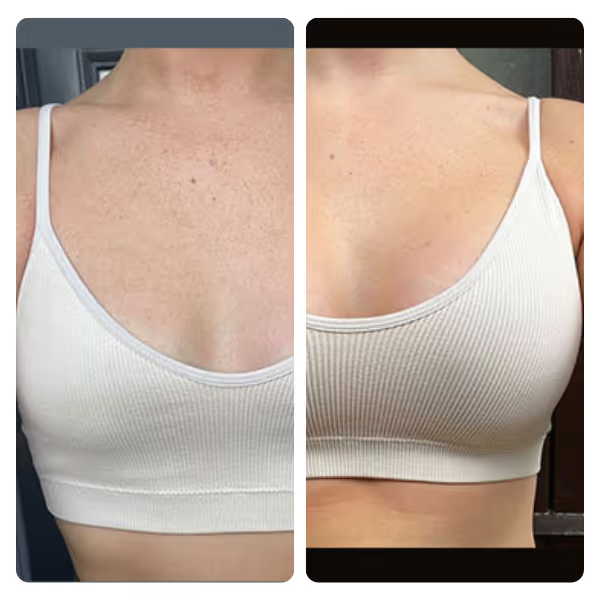
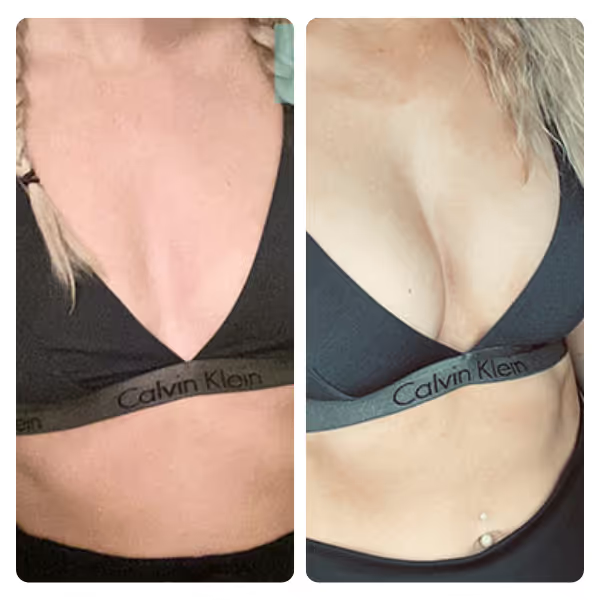
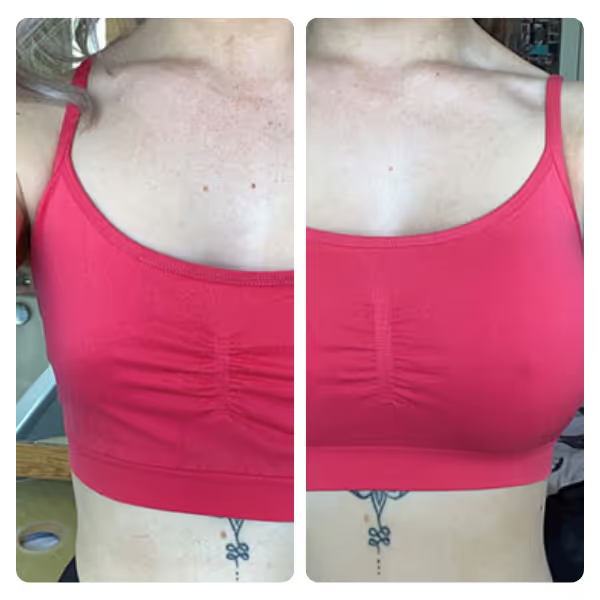
Photographs can illustrate incision placement and possible maturation, but they should be interpreted carefully. Look for comparable camera angles, lighting, posture and clearly stated postoperative intervals. A six-week scar is not equivalent to a two-year scar.
Check whether the patient underwent a lift, an augmentation, or both. Images labeled only as breast augmentation cannot be assumed to show lift-specific incision results. Patients must have consented appropriately to any published clinical photographs.
The images included in this guide are illustrative clinic media supplied for this article; their filenames reference breast augmentation, and they have not been independently verified as scar-timeline examples. They should not be presented as proof of a particular mastopexy outcome.
Questions to Ask During Your Consultation
Ask which incision pattern the surgeon recommends, where each line will be visible and why that pattern fits your anatomy. Request a discussion of realistic appearance at one month, six months, one year and beyond.
Also ask about dressing care, support bras, when silicone might start, follow-up visits and your personal risk factors for raised or widened scars. If you have previously developed keloids, bring that history to the consultation.
Clarify what happens if a wound opens or becomes infected, including after returning to another country. Written contact details and an emergency plan make the postoperative pathway easier to manage.
Breast Lift Scar Care for International Patients
Travelling for surgery adds practical questions about follow-up and access to urgent care. Before booking a return flight, agree on the number and timing of wound reviews with the surgical team. Do not assume that a hotel package establishes medical fitness to travel.
Carry a discharge summary, medicine list, wound-care instructions and the name of the operating clinician. Know whom to contact if a dressing problem or possible infection develops once you are home.
Video check-ins can help routine communication but cannot replace all physical examinations. An opening wound, serious infection concern or other urgent symptom requires timely local assessment.
Breast Lift Scar Consultation at Yesilkoy Clinic
Patients considering breast lifting can contact Yesilkoy Clinic to request a professional assessment of breast shape, skin quality, procedure options and anticipated incision patterns. This article does not guarantee a particular technique or cosmetic result.
An individualized consultation should explain wound-care instructions, expected healing stages, possible complications and long-term scar management. It should also confirm who will perform the procedure and where surgery and follow-up will occur.
If you are comparing a lift with augmentation or combined surgery, ask for a separate explanation of how each option changes incision placement. Clear expectations are more valuable than a promise that scars will disappear.
Breast Lift Scar Healing Timeline at a Glance
| Period | Possible appearance | Care priority |
|---|---|---|
| Days 1–7 | Fresh incision, swelling, dressings | Wound care and review |
| Weeks 2–4 | Pink or darker, immature line | Confirm full closure before scar products |
| Weeks 5–12 | Firmness or persistent color | Follow approved scar plan |
| Months 3–6 | Gradual softening; color may remain | Monitor raised areas and sun exposure |
| Months 6–12 | Further flattening and fading | Document progress and concerns |
| Months 12–24+ | Continued maturation; permanent mark remains | Evaluate persistent concerns individually |
Frequently Asked Questions About Breast Lift Scars
Are breast lift scars permanent?
Yes. Surgical incisions form permanent scar tissue, although many lines flatten and fade with time.
How long do breast lift scars take to fade?
They can change for one to two years or longer. The NHS notes that scars may take at least two years to fade.
Will breast lift scars be visible after one year?
They may still be visible. Their color, width and texture depend on individual healing and incision location.
Which breast lift technique leaves the least scarring?
A periareolar technique has a shorter pattern, but it may not provide sufficient lift for every patient.
What is a lollipop scar?
It combines a line around the areola with a vertical line to the breast crease.
What is an anchor scar?
It includes the areolar, vertical and breast-crease incision segments.
Can silicone gel improve breast lift scars?
Silicone may improve the appearance of some raised scars when used on fully healed skin and under professional guidance.
When can I start silicone sheets?
Only when the incision is completely closed and your surgeon confirms the timing.
Can I massage my breast lift scars?
Massage may be advised after full wound healing; ask your surgeon when and how to do it.
Can I use vitamin E oil on new incisions?
Do not apply oils or other products to fresh or open incisions without clinical approval.
Do breast lift scars get darker before fading?
Some scars change color while remodeling. Unusual or worsening changes should be assessed.
How do I protect scars from the sun?
Cover scars and use broad-spectrum SPF 30 or higher on healed skin when exposed.
What causes a raised breast lift scar?
Healing tendencies, inflammation and incision tension can contribute; a professional should identify the scar type.
Are keloids possible after mastopexy?
Yes, particularly in people with a personal predisposition, although they are not inevitable.
Can laser treatment remove breast lift scars?
Laser may reduce selected scar features but cannot reliably erase scar tissue entirely.
When should scar revision be considered?
Usually after sufficient maturation and specialist evaluation, unless a medical problem warrants earlier action.
Why is the T-junction healing slowly?
Areas where incision lines meet may experience different tension and healing demands and should be assessed if they open or drain.
Do breast lift scars hurt?
Tenderness may occur early, but increasing or severe pain should be evaluated.
Is redness normal after several weeks?
Mild persistent redness can occur during remodeling, but spreading redness with heat, discharge or fever needs prompt assessment.
Will a breast lift with implants leave different scars?
It may. Combined procedures can alter the incision plan and postoperative care.
Can smoking affect scar appearance?
Nicotine can impair healing and may increase the likelihood of wound complications.
How soon can I wear an underwire bra?
Follow your surgeon’s instructions because timing depends on healing and incision placement.
Does exercise make scars wider?
Early excessive tension may be undesirable; follow individualized lifting and activity restrictions.
Do scars look the same on every skin tone?
No. Pigment response, redness, texture and maturation differ from person to person.
Can I judge scars from before-and-after photographs?
Use comparable dates and lighting, and confirm the actual operation shown. Other patients’ results are not guaranteed.
How can I request a breast lift consultation?
Use Yesilkoy Clinic’s official contact page to request an individualized assessment.
Ask Yesilkoy Clinic About Breast Lift Options
Request an individualized consultation about potential incision patterns, expected scarring, postoperative care and whether a breast lift or another procedure suits your goals. No outcome or scar appearance can be guaranteed.
Request a ConsultationIndependent Medical Resources
- American Society of Plastic Surgeons — Breast lift incision patterns
- The Aesthetic Society — Breast lift incisions and scars
- NHS — Scars and long-term maturation
- American Academy of Dermatology — Scar diagnosis and treatment
- American Academy of Dermatology — Proper wound care
For related patient information, read the Yesilkoy Clinic blog and contact the clinical team.
Last reviewed November 2026. Educational information only; individual medical assessment is required.