Ethnic rhinoplasty turkey is increasingly researched by international patients who want to improve nasal shape, proportion or function while preserving facial characteristics that are important to their identity. The goal should not be to create one standardized “ideal” nose, but to develop an individualized surgical plan based on the patient's anatomy, facial proportions, personal preferences and functional needs.
The term ethnic rhinoplasty is commonly used for rhinoplasty planning in patients with diverse anatomical and cultural backgrounds. However, there is significant variation even between people from the same country, region or ethnic background.
For this reason, a professional ethnic rhinoplasty turkey consultation should focus on the individual patient rather than assuming that everyone from a particular background has the same nasal anatomy or wants the same result.
Quick answer: Ethnic rhinoplasty turkey focuses on individualized nose reshaping that respects the patient's natural facial identity, anatomy and goals. Techniques may involve bridge refinement or augmentation, tip reshaping, structural support, cartilage grafting, nostril modification or functional correction depending on the individual case. There is no single ethnic rhinoplasty technique that is appropriate for everyone.
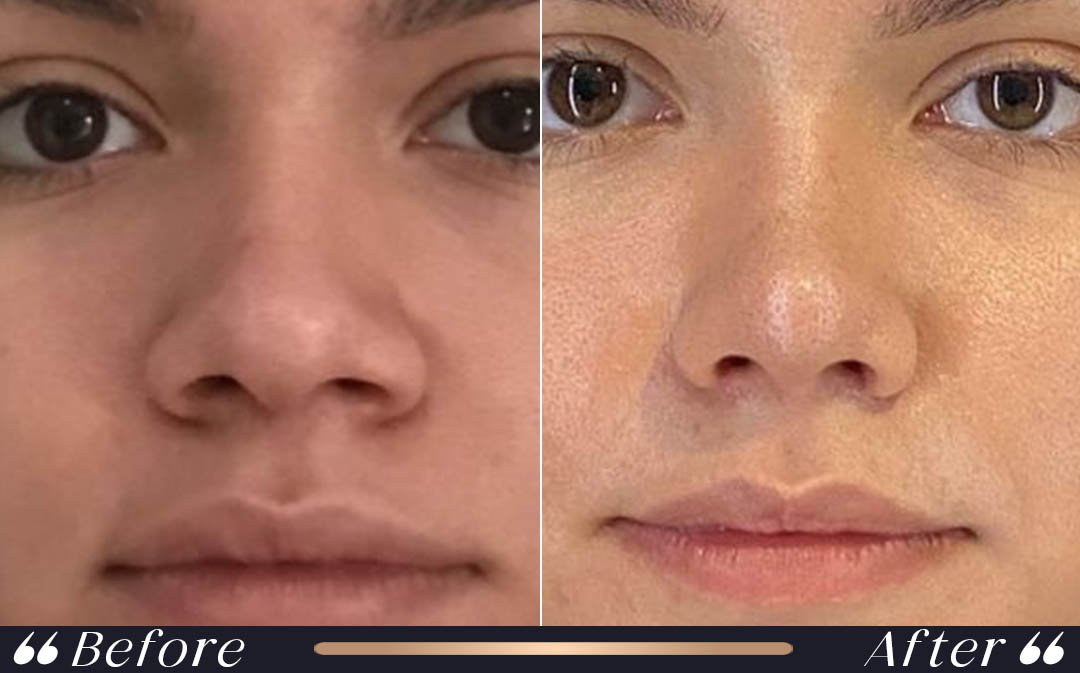
Ethnic rhinoplasty is a term used to describe rhinoplasty performed with particular attention to the patient's individual nasal characteristics, facial proportions and cultural or aesthetic preferences.
The purpose is not to classify every patient from a particular background as having the same nose.
Modern rhinoplasty planning recognizes that nasal anatomy varies significantly between individuals.
Areas that may require assessment include:
The patient's own goals are equally important.
Some patients may want subtle refinement while preserving most of their existing nasal characteristics. Others may seek more noticeable structural changes.
Important: Ethnic rhinoplasty should never be based on the assumption that all people from one ethnic or geographical group have identical anatomy or aesthetic preferences. Individual examination and discussion are essential.
The core principles of rhinoplasty remain the same: evaluate anatomy, protect nasal function, understand the patient's goals and create a realistic surgical plan.
What can make an ethnic rhinoplasty turkey case different is the range of nasal characteristics and the patient's desire to modify particular features without unnecessarily removing characteristics that contribute to facial identity.
Published rhinoplasty literature emphasizes that traditional aesthetic standards based on a single facial model are not appropriate for all populations.
The patient should therefore be assessed according to their own facial proportions rather than compared with one universal nose template.
A successful plan should ask:
This approach helps avoid creating an artificial appearance that does not fit the patient's overall face.
The first and most important principle is that ethnicity does not define one fixed nasal anatomy.
People from the same country, family or broad ethnic background can have very different nasal structures.
Planning must therefore begin with the individual nose.
One patient may want to preserve a strong bridge while refining the tip.
Another patient may want augmentation of a low bridge while preserving nostril shape.
A third patient may primarily be concerned with breathing.
The treatment plan should reflect these individual priorities.
Skin thickness is an important factor in rhinoplasty.
Thicker skin can reduce how clearly fine cartilage changes are visible through the skin and may also influence postoperative swelling.
This can be particularly relevant when planning nasal tip refinement.
The strength, size and orientation of the nasal cartilages vary between individuals.
Some noses may require structural support to achieve the intended change while maintaining long-term stability.
Rhinoplasty is not always about reducing the nose.
Depending on anatomy, surgery may involve augmentation or structural support using cartilage grafts.
This is important because aggressive reduction is not appropriate for every patient.
The nasal tip can differ substantially in:
The surgical strategy should therefore reflect the patient's own tip anatomy.
Some patients may have concerns about nostril width or shape, but nostril surgery should only be performed when appropriate for the patient's goals and anatomy.
Changing the nostrils unnecessarily can alter facial identity.
Aesthetic changes should not compromise breathing.
If a patient already has nasal obstruction, septal deviation or another functional concern, this should be assessed before surgery.
One of the central ideas in modern ethnic rhinoplasty is deciding what should remain unchanged.
A surgeon may refine a feature while preserving other characteristics that the patient considers important to their appearance or identity.
Swelling, scar maturation and skin contraction vary substantially.
Patients with thicker skin may notice that tip definition continues developing for a longer period.
Early postoperative appearance is not the final outcome.
Rhinoplasty refinement can continue for many months, particularly around the nasal tip.
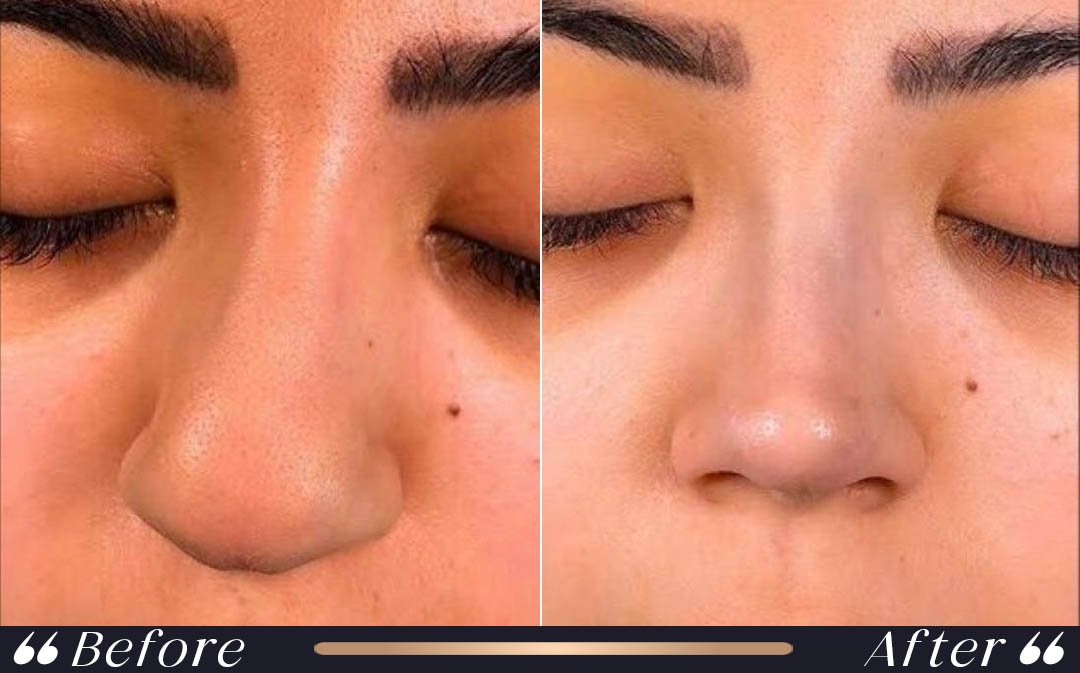
There is no single technique called “the ethnic rhinoplasty technique.”
The operation can use different rhinoplasty techniques depending on the changes required.
If a prominent dorsal hump is present and the patient would like it changed, the bridge can be modified according to the surgical plan.
The goal should be proportional refinement rather than automatically creating a very low or excessively curved bridge.
Some patients may seek increased bridge height rather than reduction.
Augmentation may involve grafting or other structural approaches depending on anatomy and surgeon assessment.
Tip surgery may involve reshaping, suturing or supporting the underlying cartilage.
Changes should be planned around skin thickness and the existing structural framework.
Projection describes how far the nasal tip extends from the face.
Depending on anatomy, the goal may be to increase, reduce or preserve projection.
Selected patients may discuss changes to nostril width or alar-base shape.
This step should be conservative and individualized because excessive narrowing can appear unnatural and may affect function.
Cartilage grafts may be used to:
The need and source of graft material depend on the individual operation.
Skin thickness influences how the underlying nasal framework appears externally.
Thin skin may reveal small irregularities more easily.
Thicker skin can provide more soft-tissue coverage but may reduce the visibility of very fine structural definition.
Thicker skin can also retain postoperative swelling for longer, particularly around the nasal tip.
This means ethnic rhinoplasty turkey planning should consider what degree of definition is realistically achievable within the patient's own skin characteristics.
Key point: Skin thickness is an individual anatomical characteristic. It should not be assumed solely from a person's ethnic background.
Modern rhinoplasty often focuses on creating or preserving sufficient structural support rather than simply removing tissue.
Cartilage strength can affect:
If existing cartilage is insufficient for the planned changes, grafting may be considered.
Possible graft material may come from the nasal septum or, in selected cases, other cartilage sources depending on the surgical requirements.
The exact strategy requires professional assessment.
Many patients researching ethnic rhinoplasty turkey are concerned about looking dramatically different or losing characteristics that they associate with their heritage or identity.
This is a legitimate topic to discuss during consultation.
Published clinical literature on ethnically sensitive rhinoplasty emphasizes achieving balance and refinement while respecting the patient's identity rather than forcing the nose toward one historically standardized aesthetic model.
A useful consultation should therefore include a clear discussion of:
The patient should be actively involved in defining treatment goals.
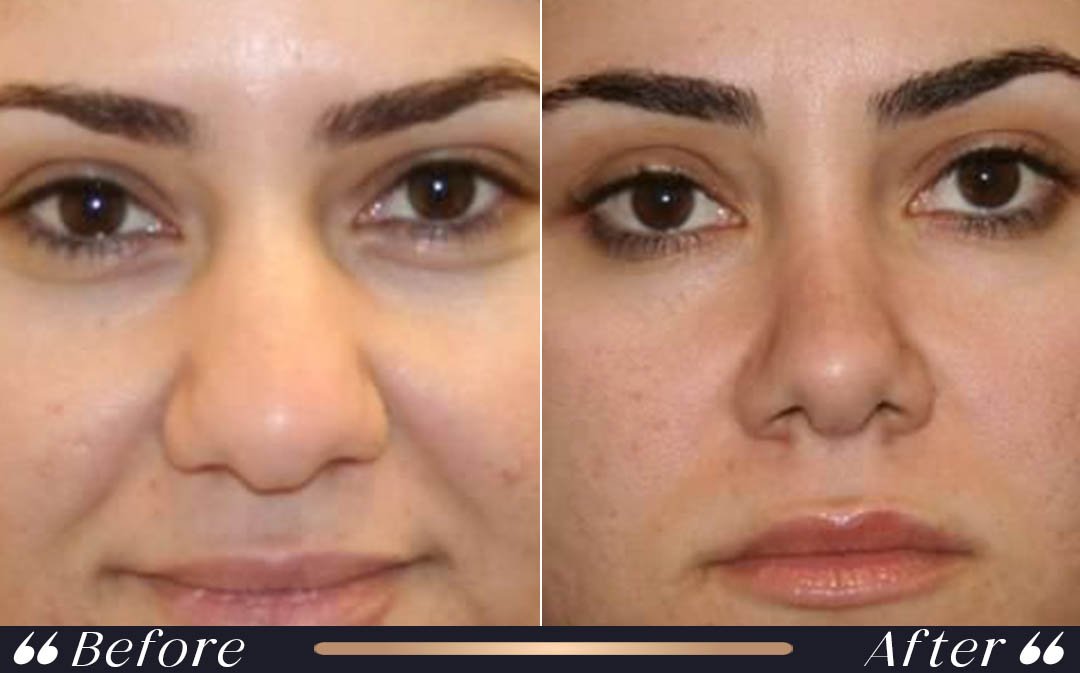
The term Middle Eastern includes an extremely diverse group of countries, communities and individuals.
Even within the same country, nasal characteristics and aesthetic preferences can vary significantly.
Possible concerns discussed by some patients may include a dorsal hump, tip position, bridge shape or nasal width, but these should never be assumed without examination.
The appropriate operation is determined by the individual patient's anatomy and preferences.
Patients of African or Afro-descendant backgrounds also demonstrate broad anatomical diversity.
Some individuals may discuss concerns involving bridge projection, tip definition or nostril shape, while others may seek completely different changes.
There is no single surgical plan appropriate for all patients.
Conservative planning and preservation of functional support are important.
Some East Asian rhinoplasty cases may involve discussion of bridge augmentation or tip projection rather than major reduction.
However, patients may also present with a dorsal hump, asymmetry, septal deviation or other concerns.
The desired result should be established individually instead of assuming that every Asian patient wants augmentation.
Hispanic and mixed-heritage populations encompass highly varied facial and nasal characteristics.
A surgeon cannot infer the correct treatment technique from a broad ethnic label.
Individual nasal analysis remains essential.
Important: The examples above describe concerns that may occur in some patients. They are not rules or diagnostic characteristics of any ethnic group.
Rhinoplasty can involve both aesthetic and functional considerations.
If the patient has difficulty breathing, evaluation may include:
Not all breathing problems are caused by the same issue, so diagnosis is important.
Aesthetic changes should also avoid unnecessarily weakening nasal structures that contribute to airflow.
| Feature | Open Rhinoplasty | Closed Rhinoplasty |
|---|---|---|
| Incisions | Internal incisions plus a small columellar incision. | Incisions are inside the nostrils. |
| Exposure | Allows broad visualization of nasal structures. | Provides access through internal incisions. |
| Potential Use | May be considered when detailed structural work is required. | May be appropriate for selected anatomical changes. |
| Better Option? | Neither is automatically better. Technique selection depends on anatomy and the planned operation. | |
The terms open and closed describe surgical access. They do not determine whether a result will preserve ethnic identity or appear natural.
Recovery varies according to the operation performed and individual healing.
| Stage | What You May Experience | General Consideration |
|---|---|---|
| Days 1–7 | Swelling, bruising, nasal congestion and a splint may be present. | Rest and protect the nose. |
| Weeks 1–2 | Major bruising and swelling begin improving. | Early appearance should not be judged as final. |
| Weeks 3–6 | Further visible improvement. | Activity increases gradually according to medical advice. |
| Months 2–3 | Bridge definition is usually clearer. | Tip swelling may remain. |
| Months 6–9 | Continued refinement. | Thicker skin may still show residual swelling. |
| Around 1 Year | Most fine swelling has settled in many patients. | Final-result assessment becomes more meaningful. |
Yesilkoy Clinic also emphasizes that rhinoplasty recovery is a process rather than a single fixed timeline and that swelling and tissue settling may continue for months.
Successful results should be assessed according to the goals established before surgery.
Potential objectives can include:
Results should not be judged during the first few weeks because postoperative swelling can temporarily affect bridge and tip appearance.
The final result also cannot be guaranteed to match another patient's photograph.
Before-and-after photographs can help patients understand possible changes, but they should be interpreted carefully.
Look for:
Yesilkoy Clinic's website includes selected rhinoplasty and ethnic rhinoplasty before-and-after examples while noting patient privacy.
Photographs demonstrate individual results, not guaranteed outcomes.
There is no fixed universal ethnic rhinoplasty turkey price.
Yesilkoy Clinic's current 2026 rhinoplasty cost guide reports that published market guides commonly place many primary rhinoplasty procedures in Turkey at approximately €2,500–€5,800.
However, its cost guide specifically lists ethnic rhinoplasty as case dependent because cost can vary according to anatomy and structural requirements.
Factors that may influence cost include:
Cost note: €2,500–€5,800 is an indicative 2026 market range for many primary rhinoplasty procedures in Turkey, not a guaranteed Yesilkoy Clinic ethnic rhinoplasty price. Ethnic rhinoplasty cost is case dependent and requires an individual assessment and quotation.
Some procedures require additional structural work.
For example, grafting, previous surgery, functional correction or complex reconstruction may increase surgical complexity.
A higher or lower price should not itself be interpreted as evidence of quality.
Patients should understand exactly what the quotation includes and why the proposed surgical plan is appropriate.
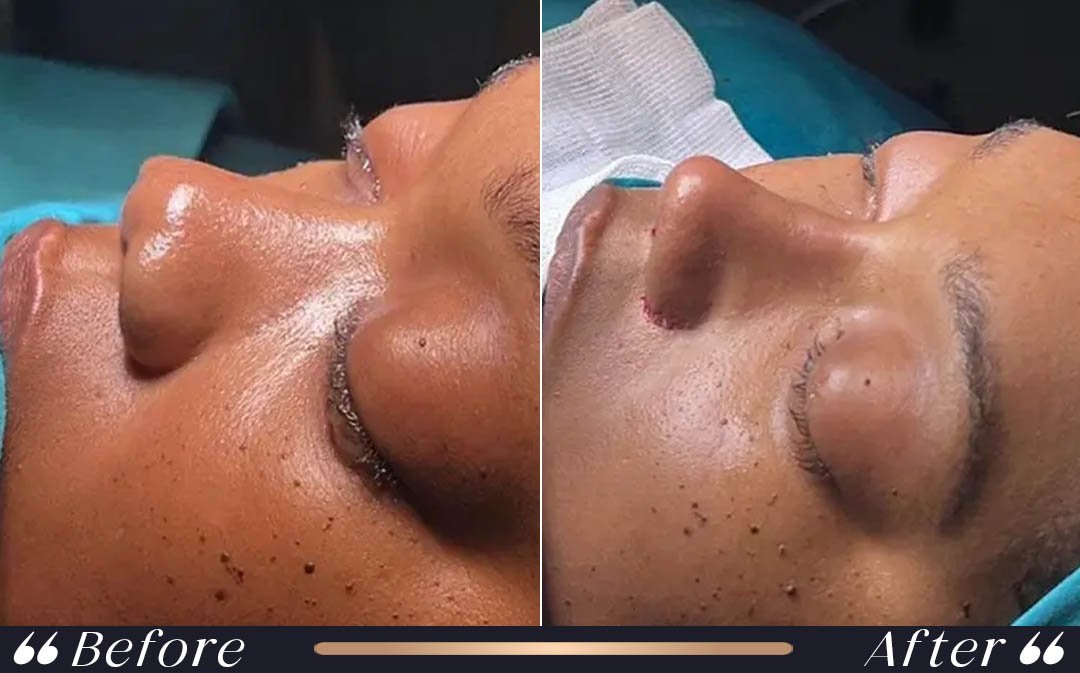
At Yesilkoy Clinic, ethnic rhinoplasty turkey treatment is approached through individual assessment rather than using a standard nose design or assuming that one technique is appropriate for every patient.
The clinic's rhinoplasty approach is organized around individual assessment, professional planning, structured patient care and postoperative follow-up.
Planning considers the patient's actual anatomy, medical history, expectations, skin characteristics, facial proportions and the findings of professional assessment.
This framework is particularly relevant to ethnic rhinoplasty because facial characteristics and aesthetic preferences vary significantly between individuals, including individuals who share the same cultural or geographic background.
The goal is not to erase identity or force the nose toward one standardized appearance. Instead, treatment planning can focus on proportion, structural refinement, facial harmony and the specific changes the patient would like to discuss.
Yesilkoy Clinic also makes institutional information available to patients, including its Health Tourism Authorization and Facility License, helping international patients review relevant clinic documentation before travelling.
No surgical procedure can be guaranteed to be completely risk-free. Professional and safety-focused treatment therefore requires appropriate patient selection, informed consent, realistic expectations, individualized surgical planning, appropriate medical care and postoperative follow-up.
For further educational articles about rhinoplasty, plastic surgery and recovery, visit the Yesilkoy Clinic Plastic Surgery Blog.
For an individual and confidential consultation, visit the Yesilkoy Clinic contact page.
Yesilkoy Clinic describes its rhinoplasty planning process as individualized rather than standardized.
The consultation can evaluate:
The treatment strategy is then discussed according to the actual changes required.
No single technique is considered suitable for every patient.
Rhinoplasty is surgery and therefore carries potential risks.
Possible risks can include:
This is not an exhaustive list.
Individual risks depend on health, anatomy and the specific operation performed.
A responsible clinic should discuss relevant risks before informed consent rather than describing rhinoplasty as risk-free.
Potential candidates may include adults who:
Suitability must be determined individually.
Rhinoplasty is a highly personal procedure because the nose occupies a central position on the face.
A patient's idea of an attractive result can be influenced by family, culture, personal identity and individual taste.
Modern research on ethnically sensitive rhinoplasty emphasizes open communication and understanding the patient's own aesthetic goals rather than applying one universal beauty standard.
This makes communication an important part of ethnic rhinoplasty turkey planning.
Contact Yesilkoy Clinic to discuss your individual nasal anatomy, facial proportions, aesthetic goals and any breathing concerns. Your case can be assessed individually so that the proposed technique, realistic expectations, recovery and treatment journey are explained clearly.
Request a ConsultationEthnic rhinoplasty turkey refers to individualized rhinoplasty planning that takes the patient's specific anatomy, facial characteristics, personal goals and identity into account rather than applying one standardized nose shape.
It should not automatically do so. Modern ethnically sensitive rhinoplasty emphasizes individualized refinement and preservation of characteristics that matter to the patient.
The fundamental principles of rhinoplasty remain the same, but surgical planning may need to address different anatomical characteristics and patient goals.
No. Technique selection depends on anatomy and may involve reduction, augmentation, tip reshaping, grafting, nostril modification or functional correction.
In appropriate patients, bridge augmentation may be considered. The required technique depends on anatomy and available structural support.
Yes, a dorsal hump can be modified in suitable patients when this matches the patient's goals and overall facial proportions.
Tip refinement may be possible, but the result depends on underlying cartilage, skin thickness and the extent of safe structural modification.
Yes. Thick skin can influence visible tip definition and may retain swelling longer during recovery.
Not every patient needs grafting. It may be considered when additional support, augmentation or reconstruction is required.
Selected structural problems affecting airflow may be addressed during rhinoplasty. Functional symptoms should be evaluated during consultation.
There is no fixed price. Published 2026 market ranges for many primary rhinoplasty procedures in Turkey are approximately €2,500–€5,800, while Yesilkoy Clinic lists ethnic rhinoplasty pricing as case dependent according to anatomy and structural requirements.
Major bruising and swelling improve during the first weeks, while subtle swelling and nasal refinement can continue for many months.
Meaningful changes become visible earlier, but final refinement may take around a year in some patients.
The goal should not be to select a generic nose shape. A consultation should assess your facial proportions, anatomy, goals and what changes are realistically achievable.
Reference photographs can help communicate preferences, but another person's result cannot be copied exactly because anatomy and healing differ.
Visit the Yesilkoy Clinic Plastic Surgery Blog for further educational articles.
Use the Yesilkoy Clinic contact page to request an individual and confidential consultation.
Last updated: October 2026. This article provides general educational information about ethnic rhinoplasty in Turkey. Ethnicity alone does not determine anatomy, suitability, technique or outcome. Individual assessment, realistic expectations and appropriate medical advice are required.