FUE vs DHI is one of the most common comparisons patients make when researching a hair transplant in Turkey. Both terms are widely used by hair restoration clinics, but they do not actually describe two completely separate hair transplant operations. Understanding this distinction can help patients compare treatment options more accurately and avoid choosing a technique based only on marketing terminology.
FUE, meaning Follicular Unit Excision, describes how individual follicular units are surgically removed from the donor area. DHI, or Direct Hair Implantation, is commonly used to describe an implantation approach in which grafts are placed using an implanter device.
This means that a procedure described as DHI may still use FUE to obtain the donor grafts. Therefore, the most useful FUE vs DHI comparison focuses on extraction, recipient-site creation, implantation, donor management, graft handling and individual treatment planning.
Quick answer: In the FUE vs DHI debate, neither option is automatically better for every patient. FUE refers primarily to the follicular-unit harvesting process, while DHI is commonly used to describe implantation with an implanter device. The most appropriate approach depends on donor capacity, hair-loss pattern, recipient area, graft requirements, hairline design and professional medical assessment.
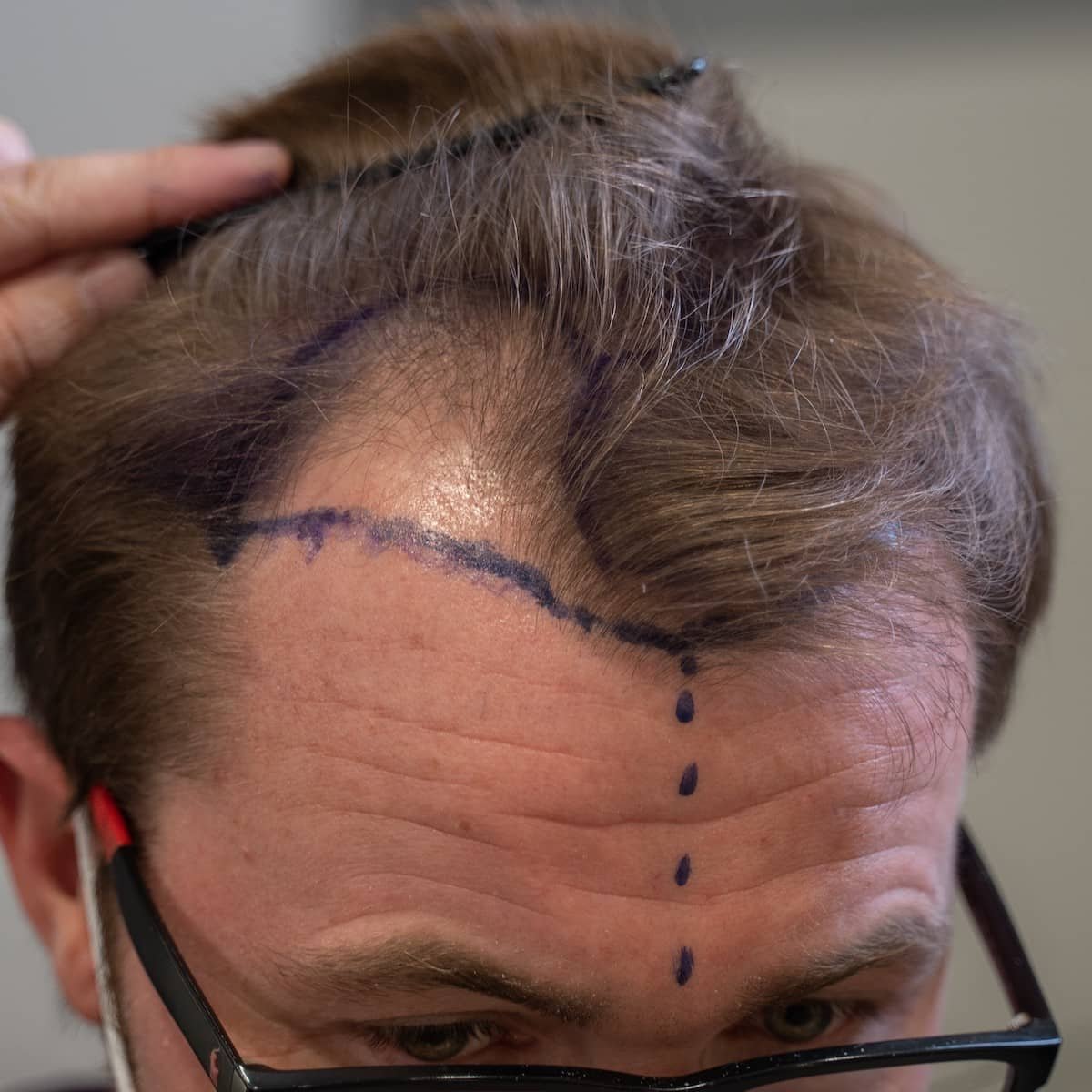
The biggest misunderstanding in the FUE vs DHI comparison is the assumption that the two names represent equivalent but competing methods.
They do not describe exactly the same stage of a hair transplant.
FUE describes a donor harvesting technique. Individual follicular units are excised from the donor area using small punches and removed one by one.
DHI is commonly used to describe the way grafts are implanted into the recipient area, particularly when an implanter device is used.
The International Society of Hair Restoration Surgery explains that the term DHI is used by some practitioners to refer to immediate implantation following extraction or to implantation with a sharp implanter. The ISHRS specifically states that DHI should not be treated as a separate hair transplant method.
Important: When comparing FUE vs DHI, ask the clinic what actually happens during donor harvesting, recipient-site creation and graft implantation. Technique names alone do not explain the complete surgical process.
FUE stands for Follicular Unit Excision.
During FUE, naturally occurring follicular units are individually excised from the donor area using small punches.
The International Society of Hair Restoration Surgery notes that these follicular units commonly contain one to four hairs.
After removal, the grafts are prepared and subsequently implanted into the recipient area according to the surgical plan.
The NHS also describes FUE as a technique in which individual grafts are removed one by one from the donor region.
A typical FUE-based hair transplant can involve several separate stages:
Exactly how the implantation stage is performed can vary. This is one reason FUE vs DHI is not a simple comparison between two completely separate procedures.
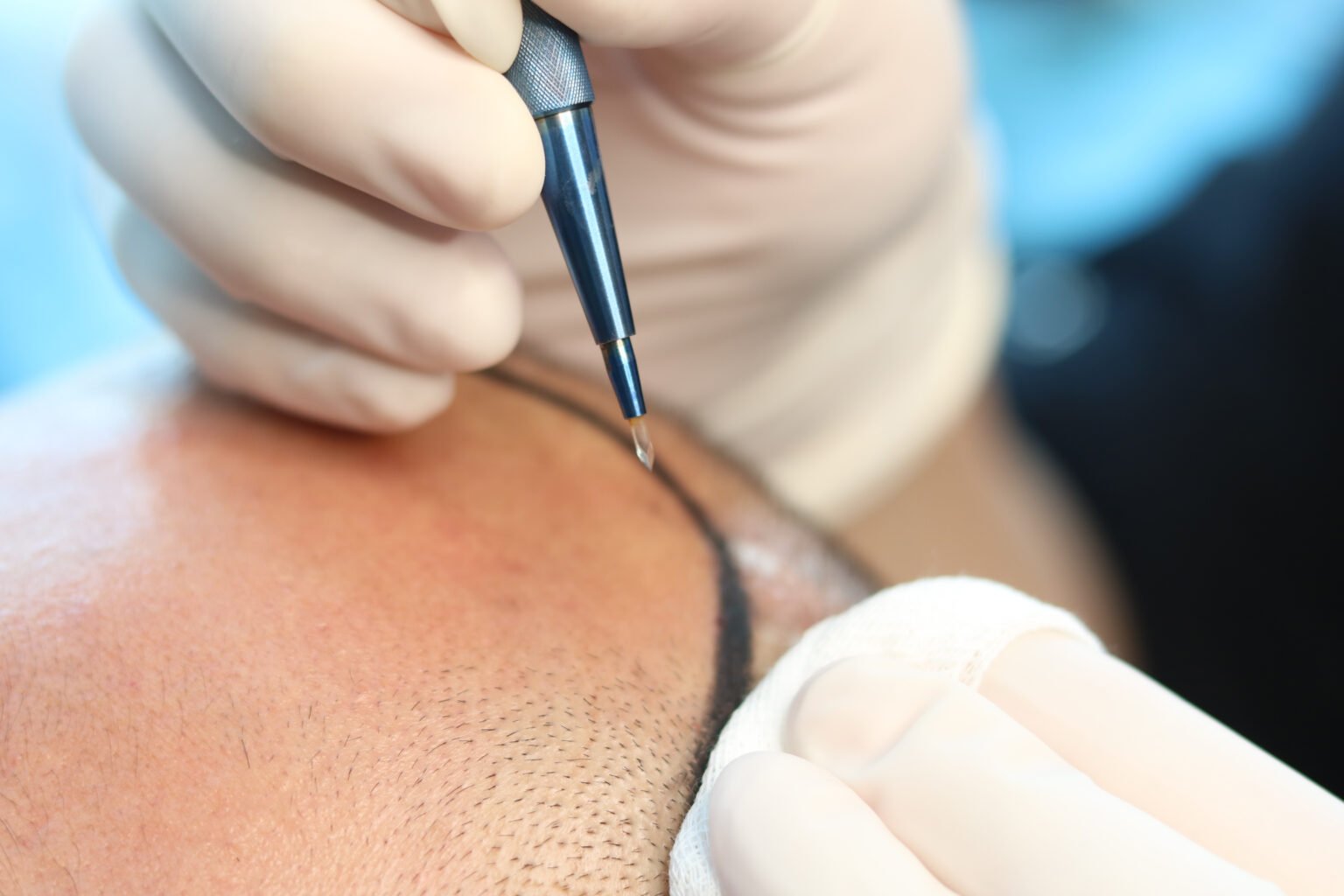
DHI stands for Direct Hair Implantation.
The term is widely used by hair transplant clinics to describe a procedure in which grafts are implanted with a specialized implanter device, often described commercially as an implanter pen.
An implanter contains a channel into which the graft is loaded. A mechanism is then used to place the graft into the recipient area.
Some implanters are used with previously created recipient sites, while sharp implanters can create the incision and place the graft during the same action.
For patients comparing FUE vs DHI, the important point is that donor follicles in a DHI-labelled procedure may still have been harvested with FUE.
It can be different in the implantation stage, but it should not automatically be presented as a completely separate donor-harvesting technique.
This distinction matters because patients may otherwise assume:
These assumptions can oversimplify hair restoration surgery.
Donor management, graft handling, hairline planning, angulation, distribution, medical suitability and the experience of the treatment team remain important regardless of the marketing name attached to the procedure.
| Feature | FUE | DHI |
|---|---|---|
| Primary Meaning | Follicular Unit Excision | Direct Hair Implantation |
| Main Stage Described | Donor follicular-unit harvesting | Recipient-area implantation approach |
| Donor Harvesting | Individual follicular units are excised with small punches. | Often still uses an FUE-based donor harvesting process. |
| Implantation | Grafts may be placed using forceps or implanter devices depending on the surgical plan. | Typically associated with an implanter device. |
| Recipient Sites | May be created before graft placement. | Depending on the implanter, incision and implantation may occur together. |
| Scarring | Small round donor scars can remain after FUE harvesting. | If donor follicles are harvested by FUE, similar donor-site considerations apply. |
| Best Candidate | Depends on donor capacity, hair-loss pattern and surgical plan. | Depends on recipient area, graft strategy, anatomy and professional assessment. |
| Automatic Winner? | No. | No. |
Instead of asking only which label sounds more advanced, patients should understand the practical differences involved in the FUE vs DHI discussion.
FUE describes how follicular units are removed from the donor area.
This is an important surgical stage because excessive harvesting can affect donor-area density and appearance.
Safe donor planning therefore requires consideration of hair density, follicular-unit distribution, future hair loss and the number of grafts that can reasonably be removed.
DHI terminology is usually connected with how grafts are placed into the recipient area.
This means patients should not assume that choosing DHI eliminates the FUE harvesting stage.
In many DHI-labelled procedures, grafts are first obtained through FUE.
Traditional recipient-site preparation may involve creating small incisions before grafts are placed.
With certain implanter approaches, incision and implantation may be performed during the same step.
This workflow difference is one of the most meaningful points in a technical FUE vs DHI comparison.
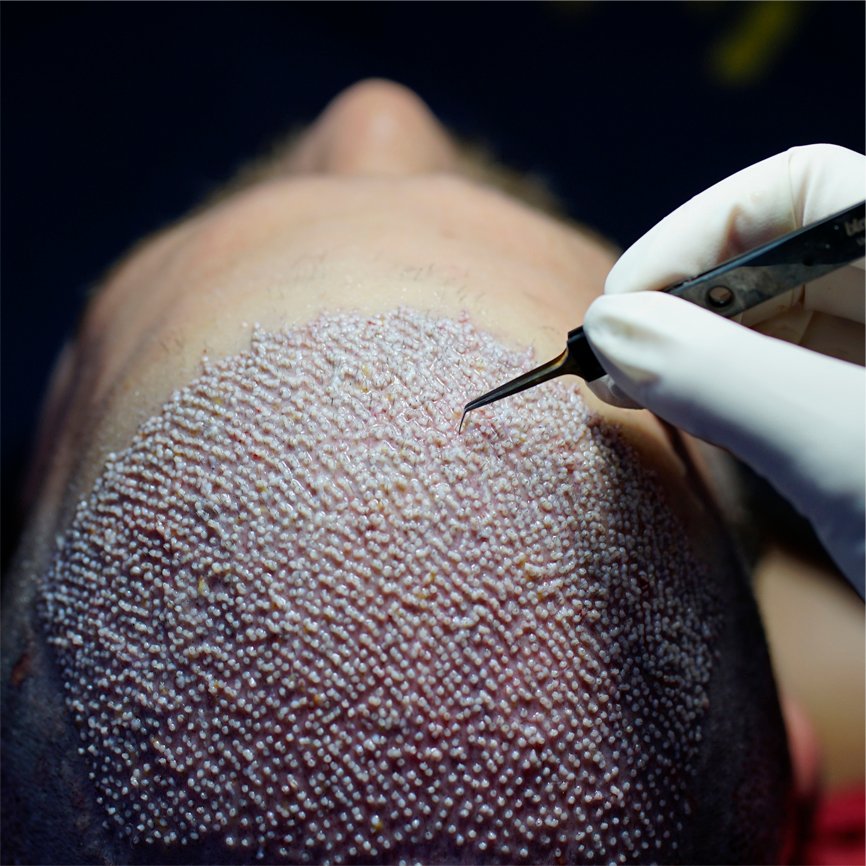
Implanter devices allow a follicular-unit graft to be loaded into a channel before placement.
The ISHRS notes that one potential advantage of implanters is reduced direct handling of the follicular bulb compared with placement using forceps.
However, careful loading and handling remain important because graft trauma can still occur if technique is poor.
Hair transplant duration depends on many factors beyond the technique name.
These include:
A DHI-labelled procedure should therefore not automatically be assumed to be faster or slower than another FUE-based procedure.
Whether the donor or recipient region needs shaving depends on the planned technique and individual case.
Patients should ask specifically whether their donor area, recipient area or both will be shaved rather than relying on generic FUE vs DHI marketing statements.
A patient needing a limited number of grafts for hairline refinement has different requirements from a patient with extensive hair loss requiring a large session.
Technique selection should therefore reflect the complete graft strategy rather than the assumption that one implantation tool is universally superior.
A natural-looking result depends heavily on:
These variables depend on planning and execution, not only whether the procedure is labelled FUE or DHI.
The most important FUE vs DHI question is not which technique has the most attractive marketing name.
The more relevant question is which surgical and implantation strategy is appropriate for your donor area, hair-loss pattern, recipient area and long-term restoration goals.
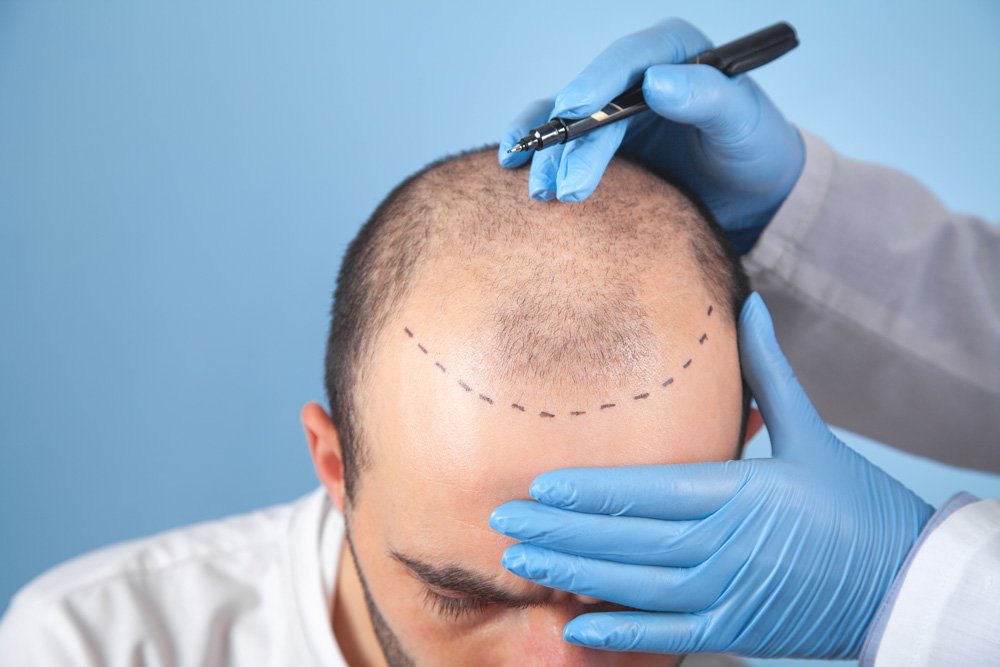
Density is one of the most common reasons patients compare FUE vs DHI.
However, density does not depend solely on whether an implanter is used.
The achievable appearance depends on factors including:
Implanter-based placement may be useful in particular recipient situations, but it does not create unlimited donor follicles.
For this reason, claims that DHI automatically produces higher density than every other FUE-based approach should be treated cautiously.
A natural hairline depends on artistic and medical planning rather than a single device.
Important factors include the patient's facial proportions, age, existing hair loss, expected future progression and donor supply.
Single-hair follicular units are commonly useful in the frontal transition zone, while graft distribution can change behind the leading edge to create the appearance of natural density.
The angle and direction of implantation also matter.
Therefore, when considering FUE vs DHI for hairline design, patients should focus on the proposed design and the reasoning behind it rather than assuming one label guarantees a better hairline.
Patients who still have significant native hair in the recipient area may require careful implantation between existing follicles.
An implanter-based strategy may be considered in selected cases because of the way individual grafts can be placed.
However, suitability depends on scalp characteristics, hair density, recipient-area access and the treatment plan.
The existing hair must also be assessed because progressive hair loss can continue after transplantation.
A long-term strategy should therefore consider both transplanted and non-transplanted hair.
No surgical hair transplant should be described as completely scar-free.
FUE does not create the long linear donor scar associated with strip FUT, but individual follicular-unit excision typically leaves numerous small round donor scars.
The ISHRS specifically warns against describing FUE as a “no scar” technique.
If a DHI-labelled transplant uses FUE to harvest the donor follicles, the same donor-harvesting scar considerations remain relevant.
This is another reason the FUE vs DHI comparison needs to separate donor harvesting from implantation.
Early recovery can vary according to the extent of treatment, graft number, recipient area, donor harvesting and individual healing.
Typical early changes after hair transplantation can include:
The NHS advises patients to be particularly careful with transplanted grafts during the first two weeks because they are not yet fully secure during early healing.
Whether the implantation stage used forceps, pre-made recipient sites or an implanter device does not eliminate the need for careful postoperative care.
There is no simple universal answer.
A DHI-labelled procedure may still use FUE donor harvesting, meaning the donor area can have essentially the same harvesting-related recovery considerations.
The recipient area's recovery can vary depending on the number of grafts, density, implantation method and individual healing.
Patients should therefore avoid assuming that marketing claims about recovery apply equally to every case.
Hair transplantation is commonly performed under local anaesthesia.
The NHS states that hair transplants are usually carried out under local anaesthetic, sometimes with sedation.
Patients may experience discomfort during injections and temporary tenderness after treatment.
The amount of discomfort varies between individuals and should not be predicted solely from the terms FUE vs DHI.
Neither term guarantees a natural result by itself.
A natural-looking hair transplant depends on:
The final appearance also takes time to develop because transplanted hairs typically pass through shedding and regrowth phases.
Technique selection should therefore be viewed as one component of an overall treatment plan.
Sapphire FUE is another term frequently seen when patients research FUE vs DHI.
Sapphire FUE generally refers to an FUE-based hair transplant in which sapphire-tipped blades are used during recipient-site creation.
The donor harvesting principle remains FUE.
The use of sapphire instruments does not create a completely separate donor extraction method.
Patients should ask:
DHI-labelled packages are sometimes priced differently from standard FUE packages.
However, cost differences should not be interpreted as proof that one technique is medically superior.
The overall price can reflect:
Patients comparing FUE vs DHI should ask for a clear explanation of what is actually included in the treatment rather than comparing package names alone.
The number of grafts required should be determined by the patient's actual hair-loss pattern and safe donor capacity.
A larger number is not automatically better.
Overharvesting the donor area can reduce donor density and may create visible thinning.
For this reason, a responsible treatment plan should balance:
Whether implanter placement is suitable for a particular graft count depends on the proposed surgical strategy.
FUE may be considered when individual follicular-unit harvesting is appropriate for the patient's donor region and treatment objectives.
Potential suitability requires assessment of:
FUE should not be selected solely because it is popular or because it avoids a linear scar.
Implanter-based placement may be considered for selected patients depending on the recipient area and surgical strategy.
Potential considerations can include:
However, there is no single patient profile that automatically makes DHI the correct choice.
Individual medical and anatomical assessment remains essential.
At Yesilkoy Clinic, the FUE vs DHI decision is approached through individual assessment rather than assuming that one technique is suitable for every patient.
The treatment pathway focuses on understanding the patient's hair-loss pattern, donor-area characteristics, hairline goals, medical history and long-term restoration needs before a treatment strategy is established.
Yesilkoy Clinic describes its hair restoration approach as including individual assessment, professional planning, structured patient care and postoperative follow-up.
The clinic's DHI treatment information also emphasizes that no single technique is appropriate for every person and that the proposed approach should be determined through professional assessment.
This helps patients understand why a particular extraction and implantation strategy is being considered rather than selecting treatment solely from an advertisement.
No surgical hair restoration procedure can be guaranteed to be completely risk-free. Professional treatment planning should therefore include suitability assessment, informed consent, realistic expectations, appropriate medical care and postoperative follow-up.
For further educational information about hair restoration and aesthetic procedures, visit the Yesilkoy Clinic Plastic Surgery Blog.
To discuss your donor area, hair-loss pattern and suitable hair transplant options, visit the Yesilkoy Clinic contact page.
Instead of simply asking which technique is better, ask the clinic more specific questions.
These questions provide more useful information than asking only whether FUE or DHI is newer.
There is no responsible universal answer stating that one option is better for every patient.
The FUE vs DHI question becomes easier to understand once the terminology is separated into different stages of treatment.
FUE concerns the harvesting of individual follicular units from the donor area.
DHI commonly refers to implantation using an implanter approach.
A patient may therefore undergo FUE donor harvesting followed by DHI-style implantation.
The appropriate strategy depends on the individual patient's donor supply, recipient needs, graft requirements, existing hair, long-term hair-loss pattern and professional surgical assessment.
Key point: Do not choose a hair transplant solely because a clinic says DHI is “better” than FUE or FUE is “better” than DHI. Ask exactly how your grafts will be harvested, handled and implanted and why that plan is appropriate for your individual case.
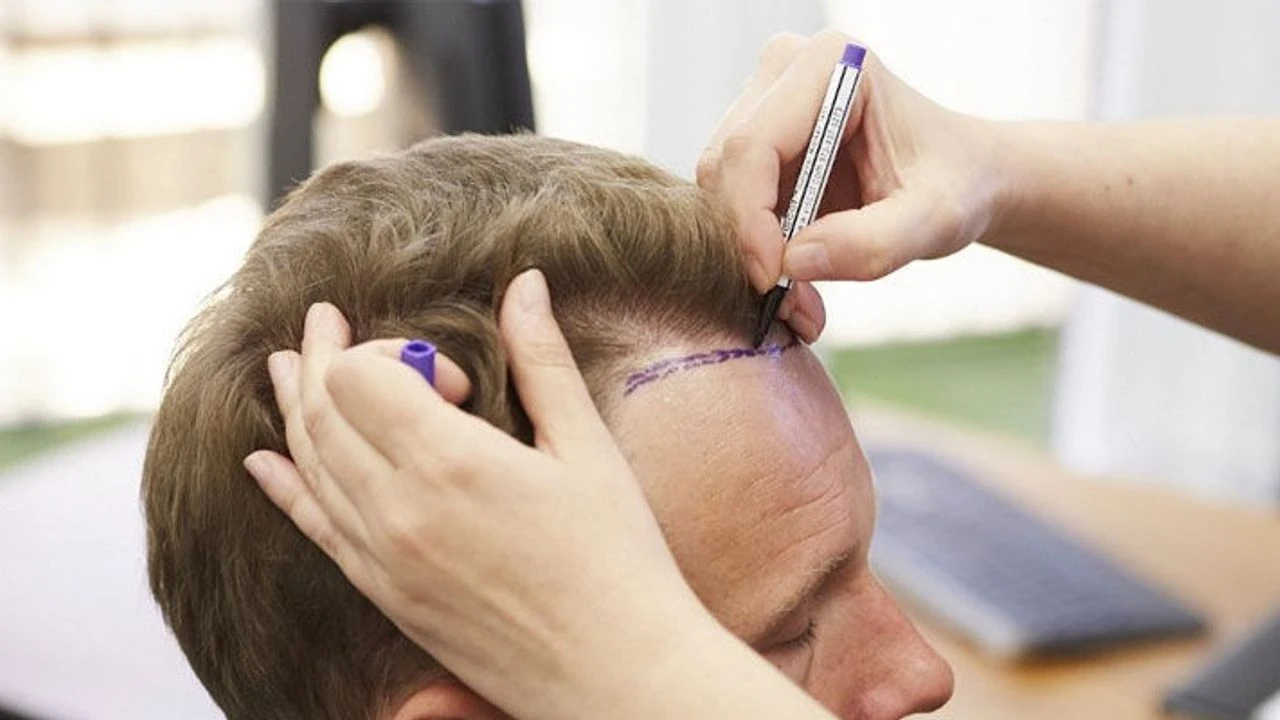
Your donor area contains a finite number of suitable follicular units.
Hair transplantation redistributes existing follicles; it does not create an unlimited new donor supply.
This means responsible planning should protect the donor area for both the current procedure and possible future hair-loss progression.
Excessive or poorly distributed FUE harvesting can result in visible donor thinning.
The ISHRS emphasizes that FUE is a surgical procedure and that patients should understand who is performing the surgical stages.
This makes donor planning one of the most important issues in any FUE vs DHI consultation.
Hair transplantation is surgery.
The ISHRS specifically warns patients about important surgical tasks being performed by unlicensed personnel and encourages patients to determine who will perform the surgical stages of their procedure.
Regardless of whether your plan involves FUE, implanter-based placement, Sapphire FUE or another technical variation, you should understand who is responsible for:
Technique names should never replace appropriate medical oversight.
Contact Yesilkoy Clinic to discuss your hair-loss pattern, donor capacity and individual restoration goals. The treatment team can assess whether an FUE-based procedure, implanter-based placement or another individualized strategy may be appropriate for you.
Request a ConsultationFUE primarily describes how individual follicular units are harvested from the donor area. DHI is commonly used to describe graft implantation with an implanter device. A DHI-labelled procedure may therefore still use FUE for donor harvesting.
Neither is automatically better for every patient. The appropriate strategy depends on donor capacity, hair-loss pattern, recipient area, existing hair, required graft number and professional medical assessment.
The International Society of Hair Restoration Surgery states that DHI should not be considered a separate hair transplant method. The term is commonly associated with an implanter-based implantation technique.
It can. In many procedures marketed as DHI, individual donor follicular units are harvested using an FUE-based technique before being placed with an implanter.
Density depends on multiple factors including donor supply, graft number, hair characteristics, recipient-area size and safe surgical planning. An implantation device alone does not guarantee greater density.
A natural hairline depends on design, graft selection, direction, angle and distribution. Technique selection is only one part of this process.
If donor follicles for a DHI-labelled procedure are harvested through FUE, the donor area still has the small circular scars associated with follicular-unit excision.
No. FUE avoids the long linear scar associated with strip FUT, but small round scars generally remain in the donor region.
Individual discomfort varies. Hair transplants are generally performed under local anaesthesia, and postoperative tenderness can occur regardless of the implantation terminology used.
There is no universal rule. A DHI-labelled procedure can still use FUE for donor harvesting, while recipient recovery depends on graft number, treatment extent and individual healing.
Sapphire FUE generally describes an FUE-based hair transplant in which sapphire-tipped instruments are used for recipient-site creation. It does not represent a different donor harvesting principle.
Yes. This is one reason the terminology can be confusing. Follicular units may be harvested using FUE and then implanted using an implanter technique described as DHI.
The graft number alone does not determine the correct implantation strategy. Donor capacity, recipient area, hair-loss pattern, treatment time and long-term planning should all be evaluated.
Natural-looking results depend on appropriate patient selection, hairline design, donor management, graft handling, implantation direction, density planning and long-term strategy rather than a technique name alone.
An individual assessment is required. Your donor area, hair-loss pattern, existing hair, medical history and restoration goals should be evaluated before a treatment plan is recommended.
Visit the Yesilkoy Clinic Plastic Surgery Blog for additional educational articles about hair transplantation, plastic surgery and recovery.
Use the Yesilkoy Clinic contact page to request an individual hair transplant assessment.
Last updated: September 2026. This article provides general educational information about FUE and DHI hair transplantation. Technique selection, medical suitability, graft requirements and expected outcomes must be assessed individually by an appropriately qualified medical professional.