Hair transplant recovery is a gradual process that begins immediately after your procedure and continues for many months as transplanted follicles heal, shed their initial hairs and begin a new growth cycle. Understanding what normally happens during each stage can make the recovery period easier and help prevent unnecessary concern when temporary redness, scabbing or shedding occurs.
Although many patients feel comfortable within a few days, the transplanted grafts require careful protection during the early healing period. The first two weeks are especially important because newly transplanted follicles are still settling into the recipient area.
At Yeşilköy Clinic in Istanbul, hair transplant treatment is planned individually according to the patient's hair-loss pattern, donor-area capacity, scalp characteristics and long-term expectations. The treatment pathway is managed with experienced doctors and a medical team who provide patients with individualized post-operative instructions and follow-up guidance.
No two patients have exactly the same hair transplant recovery. The technique used, number of grafts, donor area, scalp sensitivity, general health and individual healing response can all influence the timeline.
Quick Answer: Most patients experience redness, mild swelling and small scabs during the first week. The grafts require particular care during the first 10–14 days. Temporary shedding commonly occurs during the first few weeks. New hair usually begins appearing after several months, with increasingly visible improvement from around months 4–6 and continued maturation for approximately 10–18 months.
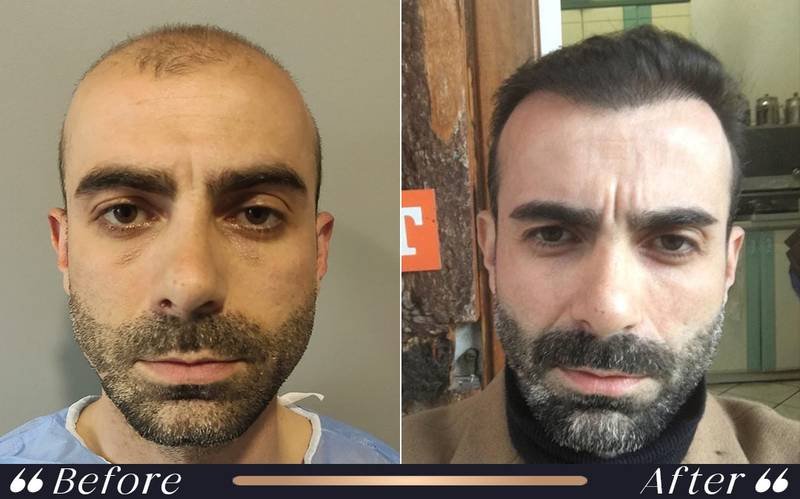
A hair transplant involves moving healthy follicular units from a donor area, usually the back or sides of the scalp, into areas affected by hair loss.
Immediately after transplantation, the follicles begin a healing process within the recipient sites. The visible hairs attached to those follicles may later shed, but shedding does not necessarily mean the transplanted follicles have been lost.
The NHS explains that transplanted hair commonly falls out after several weeks before new hair begins growing later. It also advises that grafts require particular protection during the first two weeks.
You can read independent information in the NHS hair transplant guide.
The day of the procedure is effectively the first stage of your hair transplant recovery.
The recipient area will contain many tiny graft sites, while the donor area may appear red or sensitive. Depending on the extraction technique, small circular extraction points may also be visible in the donor area.
Immediately after surgery, patients may experience:
Your medical team will explain how to sleep, how to protect the grafts and how to use any prescribed or recommended products.
Avoid touching, rubbing or scratching the newly transplanted area.
The first three days require particularly careful graft protection.
Some patients notice mild swelling around the forehead. Swelling may occasionally move downward toward the eyebrows or upper face before resolving.
Small crusts can begin forming around transplanted follicles. This is part of the normal early healing process and should not be picked away manually.
Your clinic may advise sleeping with your head elevated during the first few nights to help limit swelling and reduce accidental contact with the transplanted region.
The International Society of Hair Restoration Surgery has published patient guidance noting that patients may be advised to sleep in a semi-upright position for the first few days to help minimize swelling.
You can review independent information from the International Society of Hair Restoration Surgery.
Avoid unnecessary contact during the early recovery period.
Fresh grafts should not be rubbed, scratched or exposed to unnecessary pressure.
The exact washing and touching instructions provided by your own treatment team should always take priority over generic online advice.
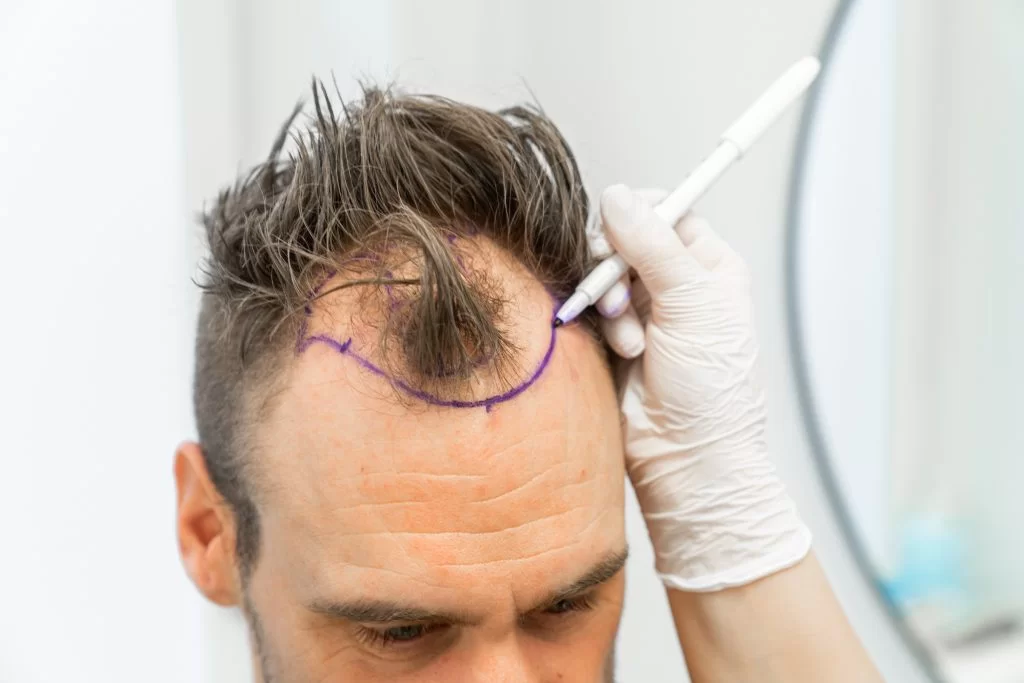
During the first week, redness and swelling generally begin to improve.
Scabs around the transplanted hairs may become more noticeable before gradually loosening during the washing process recommended by your clinic.
The NHS states that patients may usually begin washing their hair gently by hand around day 6, although your surgeon's individual instructions may differ.
Hair washing is an important part of hair transplant recovery, but aggressive washing can damage healing skin.
Patients may be instructed to:
Follow the instructions you receive from your medical team because protocols vary according to technique and individual healing.
Yes. Small crusts or scabs around transplanted follicles are common.
They should gradually loosen and disappear as healing progresses.
ISHRS patient information notes that crusts commonly flake away within approximately 5–14 days following surgery.
By the second week, the scalp often looks significantly calmer than it did immediately after surgery.
Redness and scabbing should gradually decrease, although patients with sensitive or lighter skin may notice redness for longer.
The NHS emphasizes that patients should be very careful with transplanted hair during the first two weeks because the grafts are initially not secure.
After this early period, normal contact becomes progressively less concerning, although scratching or aggressively rubbing the scalp should still be avoided.
Many patients return to non-physical work within several days to approximately two weeks depending on swelling, redness, the visibility of the transplant and personal comfort.
The NHS suggests that some people may require approximately 1–2 weeks away from work following a hair transplant.
Cleveland Clinic notes that some patients can return to work and light activity within several days, illustrating that recovery varies considerably between patients and procedures.
This is one of the stages that can concern patients most during hair transplant recovery.
The transplanted hairs may begin falling out several weeks after surgery.
This temporary shedding is often called post-transplant shedding or shock shedding.
The visible hair shafts may fall, while the follicles remain within the scalp and prepare for a new growth cycle.
The NHS explicitly notes that transplanted hair will often fall out after a few weeks before later growing back.
Usually, no.
Temporary shedding of transplanted hairs is an expected part of the recovery cycle for many patients.
The appearance during this period can temporarily resemble the pre-transplant appearance, which can understandably make patients impatient.
Hair transplantation should therefore be evaluated over months rather than weeks.
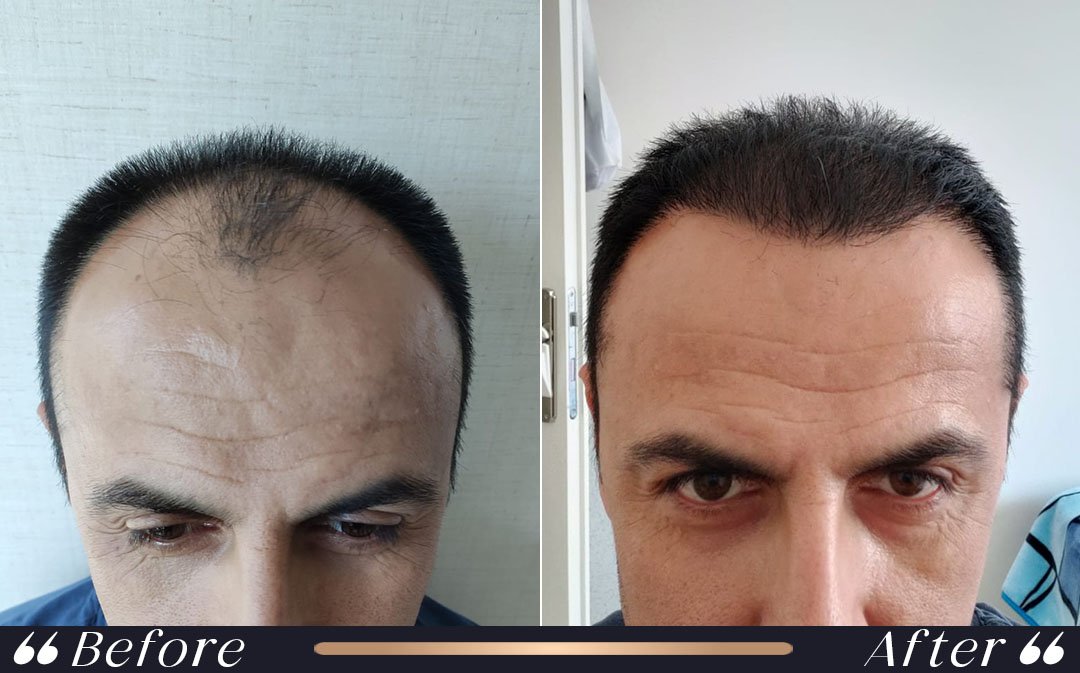
The first few months can be psychologically difficult because dramatic new growth is not usually visible yet.
After the temporary shedding phase, many transplanted follicles enter a resting period before producing new hair shafts.
Some patients may notice small amounts of early growth toward the end of this period, while others see very little visible change.
This difference does not automatically indicate that one transplant is more successful than another.
Temporary shedding can sometimes affect existing hairs close to the transplanted area.
The pattern, likelihood and degree of temporary shedding vary between individuals.
If you experience unusual or extensive hair loss, contact the medical team responsible for your procedure for an individual assessment.
This is the period when hair transplant recovery often becomes more rewarding.
The NHS states that new hair will usually start appearing at around four months.
Early transplanted hairs can initially be thin, fine or uneven. They generally become more mature as subsequent hair-growth cycles continue.
Do not expect final density at month four.
The aim during this stage is gradual development.
There is no reliable percentage that applies to every patient.
Online claims promising that every patient will have a specific percentage of their final result by a particular month can be misleading.
Growth depends on individual biology, technique, graft characteristics, hair calibre and treatment area.
Progress photographs taken under consistent lighting can be much more useful than checking the mirror several times every day.
Between months six and nine, many patients notice that transplanted hair is becoming more visible and easier to style.
Individual hairs may become thicker, longer and more consistent with surrounding hair.
The hairline and frontal region can begin to look more established during this phase.
Crown areas may require more time before reaching their mature appearance.
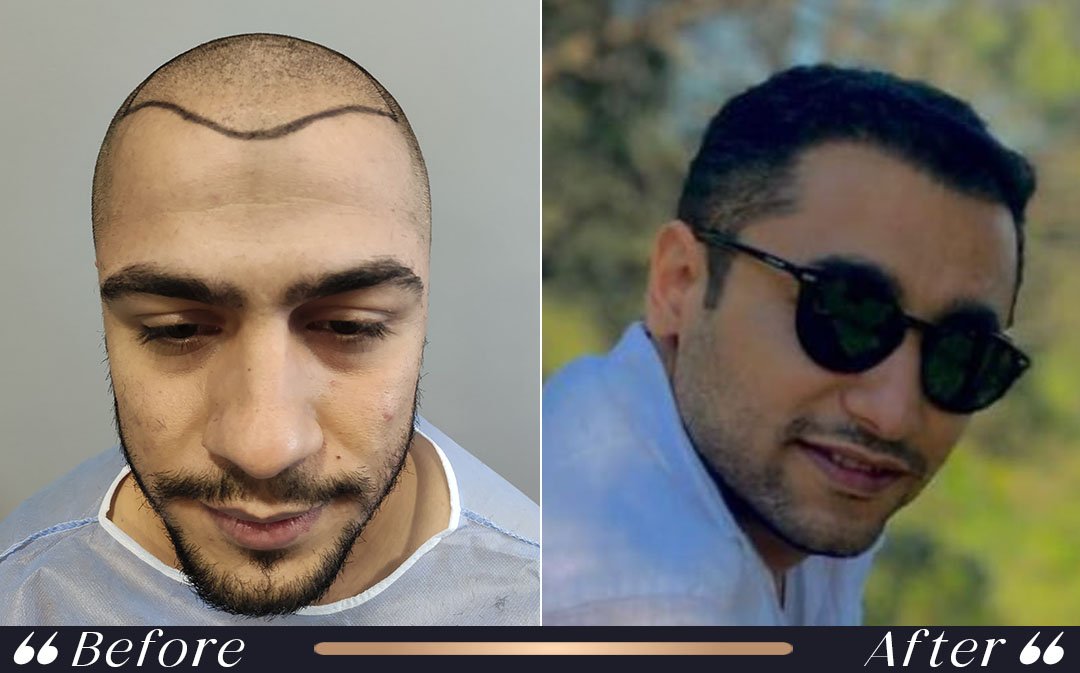
During months nine through twelve, the transplanted hair generally continues to mature.
Hair shafts may become thicker and the overall appearance may look denser than during the earlier growth stages.
Many patients feel that the transplant is significantly more established at this point, although it may still not represent the final outcome.
The NHS advises that the complete result can take substantially longer than one year in some patients.
Full hair transplant recovery and maturation require patience.
The NHS states that full results may be visible approximately 10–18 months after hair transplantation.
During this final period, transplanted hairs can continue to mature in thickness, texture and appearance.
Some areas, particularly the crown, may continue developing later than the frontal hairline.
The final result should therefore not be judged prematurely.
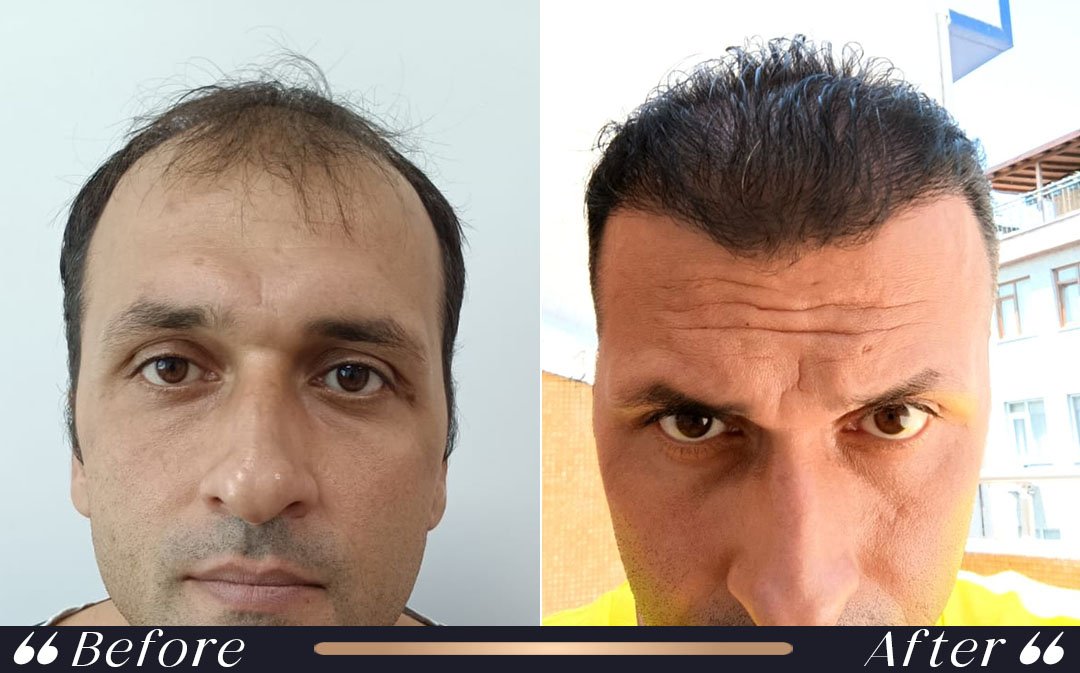
At Yeşilköy Clinic, hair transplantation is approached as an individualized medical treatment rather than simply a standardized graft package.
Experienced doctors and the clinical team evaluate the patient's hair-loss pattern, donor-area characteristics, scalp condition and long-term expectations before planning treatment.
The quality of a hair transplant is not determined only by the number of grafts implanted. Appropriate donor management, hairline planning, graft handling, placement strategy and post-operative follow-up are all important parts of treatment.
Patients also receive recovery guidance designed for their procedure rather than relying exclusively on generic instructions from the internet.
You can view the doctors at Yeşilköy Clinic before requesting your consultation.
The exact restrictions depend on your procedure and the instructions provided by your doctor.
During early hair transplant recovery, patients may be advised to avoid:
The NHS notes that patients may be advised to reduce exercise during the first month.
Your own surgeon's instructions always take priority.
The appropriate time to restart exercise varies according to the procedure and your healing.
Heavy exercise can increase sweating, blood pressure and mechanical contact with the scalp during a period when the recipient sites are still healing.
NHS guidance notes that patients may be advised to reduce exercise during the first month, while Cleveland Clinic describes a gradual return to sports after several weeks.
Ask your treatment team before returning to intense gym sessions, contact sports or activities where the scalp could be hit.
Gentle washing begins relatively early in many protocols, but ordinary vigorous washing should not be resumed immediately.
The NHS states that gentle hand washing may usually begin around day six.
However, specific post-operative techniques differ between clinics.
The safest approach is to follow the washing instructions provided specifically for your transplant.
Any headwear used during early recovery should not rub, compress or disturb newly transplanted grafts.
The correct timing and type of hat depend on the treatment and the doctor's protocol.
Before using a tight cap, helmet or other headwear, ask the clinic that performed your procedure.
Temporary changes commonly associated with healing can include:
Cleveland Clinic lists temporary crusting or scabbing, itching, altered sensation, pain, swelling and tightness among possible short-term effects following hair transplantation.
You can read more in the Cleveland Clinic hair transplant guide.
Most early symptoms are mild and temporary, but unusual symptoms should not be ignored.
Cleveland Clinic advises contacting a healthcare provider when there is persistent fever, excessive bleeding, severe redness or pain, or signs of infection such as abnormal discharge.
Contact your clinic if you experience symptoms that are severe, rapidly worsening or different from the recovery pattern your medical team explained to you.
Medical Information Notice: This article is intended for general educational information only. Hair transplant recovery varies between patients. Your surgeon's individual instructions regarding washing, exercise, medication, sleeping position, graft care and follow-up should always take priority.
A successful recovery is not about trying to accelerate every stage. The transplanted follicles require time to heal and enter their natural hair-growth cycle.
Patients should carefully follow their doctor's recommendations, attend scheduled follow-ups and avoid interfering with the transplanted region during the early healing phase.
A healthy recovery strategy generally involves:
Hair transplantation differs from treatments where the final effect is immediately visible.
During the first months, the appearance may fluctuate as scabs disappear, transplanted hairs shed and the follicles enter a resting phase.
New growth then develops gradually.
The most important thing to remember is that a transplant should generally be evaluated over many months rather than days or weeks.
Both NHS and specialist hair restoration guidance emphasize that transplanted hair initially sheds before later regrowth.
Patients considering hair transplantation at Yeşilköy Clinic receive a treatment plan based on their individual hair-loss pattern, donor-area condition and desired outcome.
The medical team can explain what to expect during hair transplant recovery and provide post-operative instructions appropriate to the procedure.
You can review the Yeşilköy Clinic doctors before beginning your consultation.
Get an individualized hair-restoration assessment and learn what your own recovery timeline may involve.
Contact Yeşilköy ClinicThe initial healing period generally lasts approximately one to two weeks, but hair growth and maturation continue for many months. Full results may require approximately 10–18 months.
The first two weeks are particularly important. NHS guidance states that transplanted hair should be treated very carefully during this period because the grafts are initially not secure.
The NHS states that gentle hand washing may commonly begin around day six. Your own clinic may use a different protocol, so always follow your doctor's instructions.
Small crusts commonly disappear during the first one to two weeks. They should not be aggressively scratched or picked.
Yes. Transplanted hairs commonly shed during the first several weeks before new growth begins later.
The NHS states that new transplanted hair usually starts appearing at approximately four months, although individual timing varies.
The scalp generally looks progressively more settled during the first few weeks, but the final cosmetic result takes much longer because new hair needs months to grow and mature.
Depending on the procedure and your occupation, many patients return to work within several days to two weeks. The NHS notes that some patients may need one to two weeks away from work.
Full results are generally assessed after many months. NHS guidance states that the final result may take approximately 10–18 months.
Visit the Yeşilköy Clinic contact page to request information about hair transplantation, treatment planning and recovery.
Last updated: September 2026. Recovery timelines in this article are general educational references. Individual healing and hair-growth timelines vary, and the instructions of your treating medical team should always take priority.