How long does rhinoplasty swelling last is one of the most common questions patients ask after nose surgery. The most noticeable swelling usually improves during the first few weeks, but smaller amounts of swelling can remain for several months, particularly around the nasal tip. Final refinement may continue for up to a year or sometimes longer depending on the patient and the procedure.
Swelling after rhinoplasty does not disappear at one specific moment. It reduces gradually as the nasal tissues heal, and different parts of the nose may settle at different speeds.
Understanding how long does rhinoplasty swelling last can help patients avoid judging their result too early and make the recovery process easier to understand.
Quick answer: If you are asking how long does rhinoplasty swelling last, the most visible swelling usually improves substantially during the first few weeks. NHS guidance notes that swelling can take up to about six months to completely settle, while the American Society of Plastic Surgeons explains that final nasal refinement may continue for up to a year. Tip swelling, thicker skin and revision surgery can take longer to settle.
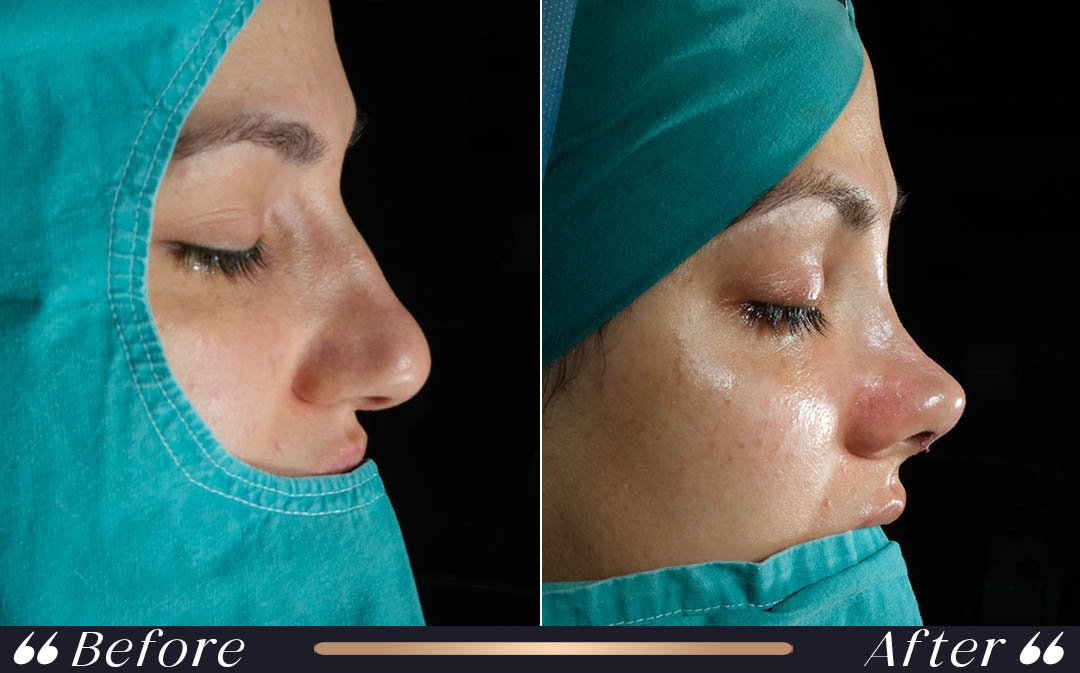
There is no single swelling timeline that applies to every patient, but a general recovery pattern can help explain what happens after rhinoplasty.
| Recovery Stage | Typical Swelling Pattern | What It Means |
|---|---|---|
| Days 1–3 | Swelling can be pronounced around the nose and eyes. | This is the early inflammatory stage and should not be judged as the surgical result. |
| Week 1 | Swelling and bruising remain visible. | A splint is commonly still present during much of this period. |
| Weeks 2–3 | Major facial swelling and bruising usually decrease significantly. | The nose becomes more socially presentable, but still remains swollen. |
| 1 Month | Much of the dramatic early swelling has improved. | The overall shape is clearer, but the tip may remain puffy. |
| 3 Months | Further refinement develops. | Subtle swelling may still affect tip definition and symmetry. |
| 6 Months | A large amount of swelling has usually settled. | NHS guidance notes that complete resolution can take up to around six months. |
| 6–12 Months | Fine swelling continues decreasing. | The tip and thicker skin may continue refining. |
| Around 1 Year | The nasal contour is generally much more mature. | ASPS notes that final refinement can take up to a year. |
Important: A swelling timeline is only a general guide. Your surgeon's assessment and postoperative instructions should take priority because anatomy, technique, skin thickness and surgical complexity affect healing.
Rhinoplasty involves surgical manipulation of nasal bone, cartilage and soft tissues.
The body's normal healing response sends fluid and inflammatory cells to the treated area, producing swelling.
The degree of swelling depends on factors such as:
Swelling itself is therefore expected during normal recovery.
The first several days are generally when swelling and bruising appear most obvious.
The eyes and mid-face may also look puffy.
ASPS notes that pain and swelling are usually most pronounced during the first postoperative week.
Patients often notice substantial improvement during the first few weeks.
However, the smaller amount of swelling that remains later can take much longer to resolve.
This is why a nose may look acceptable socially within weeks while still not representing the final result.
Bruising around the eyes often fades sooner than subtle nasal swelling.
The NHS notes that bruising, redness and more visible swelling can improve considerably by around three weeks, while complete swelling resolution can take months.
The tip contains soft tissues and delicate cartilage structures that frequently retain swelling longer than the bridge.
ASPS specifically notes that the nasal tip can remain swollen longer, particularly after an open rhinoplasty.
Patients with thicker nasal skin may notice that tip definition develops more gradually.
The swelling is not necessarily abnormal; the tissue simply takes longer to reveal the underlying structural changes.
Open rhinoplasty involves an additional incision across the columella and more extensive soft-tissue elevation.
ASPS notes that open rhinoplasty can be associated with greater tip swelling than a closed approach.
However, an open approach may be necessary for certain structural corrections.
Revision surgery can involve scar tissue, cartilage grafting and structural reconstruction.
For this reason, recovery can be less predictable and prolonged compared with some primary rhinoplasty cases.
Recovery is not always a smooth downward line.
A nose can appear slightly more swollen on one day and less swollen on another.
ASPS states that swelling may come and go during the first year.
ASPS also notes that swelling can appear worse in the morning during the first year after rhinoplasty.
This does not necessarily indicate a problem.
One side of the nose may lose swelling faster than the other.
This can temporarily make the nose appear uneven.
Early asymmetry caused by swelling should not automatically be interpreted as a permanent surgical problem.
The NHS notes that the nasal splint is commonly removed after approximately one week.
At that point, the nose is still in an early healing phase.
Many patients are surprised by how swollen the nose can look immediately after splint removal.
The bridge may appear relatively refined earlier, while the tip continues changing gradually.
The answer to how long does rhinoplasty swelling last therefore depends partly on which area of the nose you are evaluating.
ASPS states that while initial swelling improves within weeks, final nasal contour can take up to a year to fully refine.
Some ASPS surgeons also describe total healing as a process that may continue beyond one year in selected patients.
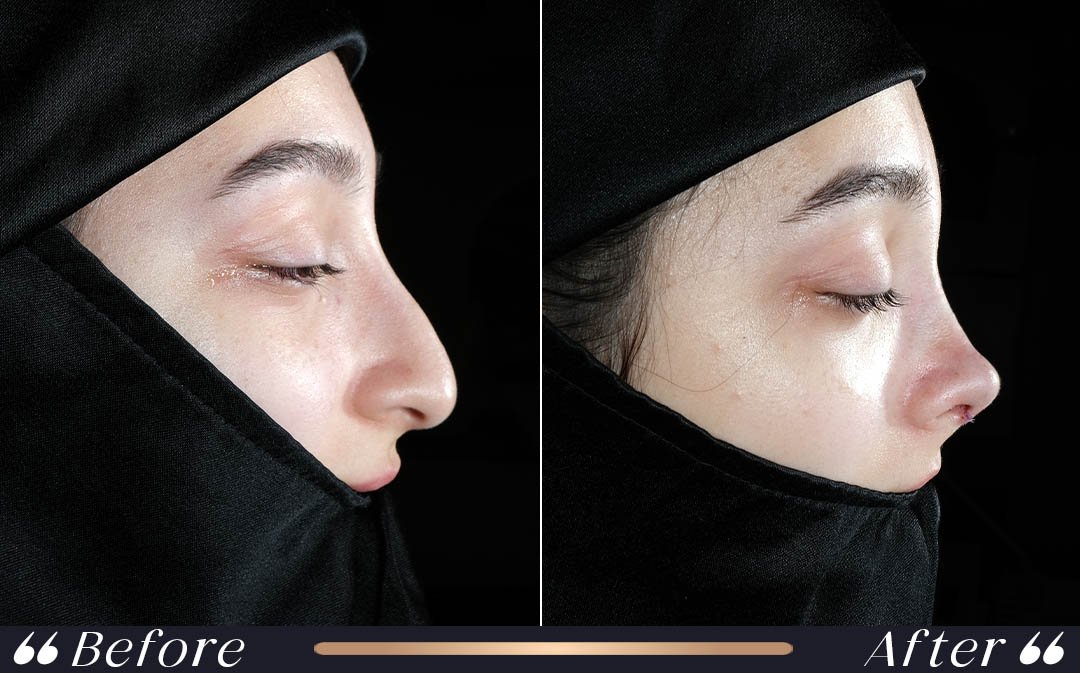
The first week is usually the most noticeable part of the swelling process.
Common features include:
The NHS notes that patients typically wear a nasal splint for around seven days.
This means the nose should not be evaluated aesthetically during the first week.
Yes.
The splint supports the healing nose but does not eliminate postoperative swelling.
It is normal for the nose to remain wider, thicker or less defined than the expected final result when the splint is removed.
By approximately one month, much of the dramatic bruising and early facial swelling has usually improved.
ASPS states that patients often notice meaningful visible change within three to four weeks, while the final contour continues developing afterward.
At one month:
One month is still too early to judge the final rhinoplasty result.
At three months, many patients feel that the nose looks much more natural.
However, some swelling commonly remains.
The bridge may look relatively refined while the tip continues to settle.
Patients with thicker skin or extensive tip work may notice more residual swelling than patients with thinner skin and limited structural changes.
The NHS states that swelling after rhinoplasty can take up to approximately six months to completely resolve.
However, this does not mean every patient is guaranteed to have zero residual swelling exactly at six months.
Other authoritative sources, including ASPS, emphasize that fine refinement can continue for up to a year.
At approximately six months:
For many patients, the nose is close to its mature appearance by around one year.
ASPS states that the final contour may take up to a year to fully refine.
Some patients can still experience very small changes beyond this point, particularly after:
Persistent or worsening swelling should be evaluated rather than assumed to be normal indefinitely.
The nasal tip commonly refines more slowly than the bridge.
ASPS specifically notes that the tip is the area that can remain swollen longest, particularly following an open approach.
Several factors contribute:
This is why patients should avoid deciding that their tip is too wide or too large during early recovery.
Key point: If your bridge looks relatively refined while the tip still looks puffy, this can be part of normal rhinoplasty healing. Your surgeon should determine whether your individual swelling pattern is appropriate.
Patients often notice that the nose appears slightly puffier after waking.
ASPS states that swelling can come and go and may appear worse in the morning during the first postoperative year.
This can occur because fluid distribution changes when lying down overnight.
The appearance may improve after being upright for part of the day.
Morning swelling alone does not necessarily indicate a complication.
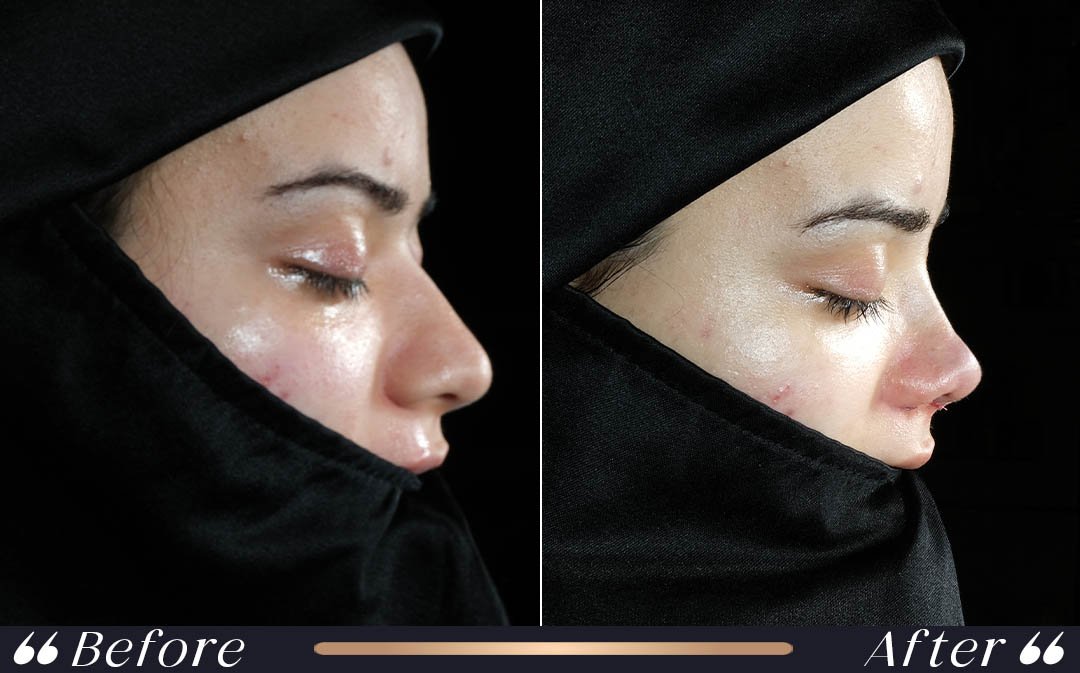
Recovery time differs significantly between patients.
Factors that can influence swelling include:
Thicker skin can retain edema for longer and can make subtle tip changes take longer to become visible.
This does not automatically mean the surgical result will be poor.
It means the final contour may require more patience.
Revision rhinoplasty can involve altered tissue planes, scar tissue and grafting.
Yesilkoy Clinic's current revision-rhinoplasty guidance explains that swelling, tissue settling and scar maturation can continue over time and that recovery varies according to treatment extent.
You cannot eliminate the normal healing response, but following postoperative instructions can support recovery.
Common recommendations can include:
The NHS advises patients to prop the head up with pillows during the first couple of days to help reduce swelling.
Do not place heavy pressure or ice directly onto a newly operated nose unless your surgeon specifically instructs you to do so.
If cold therapy is recommended, follow the location, timing and method given by the medical team.
Normal hydration supports general recovery, but drinking excessive amounts of water will not instantly remove postoperative swelling.
Follow your medical team's nutrition and hydration instructions.
Exercise increases heart rate and blood pressure and may temporarily increase swelling during early recovery.
The NHS advises avoiding strenuous exercise and contact sports for approximately four to six weeks after rhinoplasty.
Your surgeon may adjust this timeline depending on the procedure performed.
High dietary sodium can contribute to general fluid retention in some people.
However, postoperative nasal swelling is mainly caused by surgical healing rather than diet alone.
Follow any dietary recommendations provided by your treatment team rather than relying on extreme dietary restrictions.
Some surgeons use postoperative nasal taping in selected patients, particularly when managing tip swelling.
However, taping protocols vary significantly.
Do not begin taping your nose because of an online tutorial unless your surgeon has specifically instructed you how and when to do it.
Yes, temporary uneven swelling can occur.
Tissue may heal at different rates on the two sides.
This can create temporary asymmetry even when the underlying nasal framework is healing appropriately.
Your surgeon should evaluate significant or persistent asymmetry during follow-up.
Swelling is expected, but some patterns deserve prompt medical assessment.
Contact your medical team if you experience:
Do not diagnose a complication from photographs or internet timelines alone. If swelling changes suddenly or is accompanied by concerning symptoms, contact the medical team responsible for your surgery.
Open rhinoplasty can involve more extensive elevation of nasal soft tissues.
ASPS notes that tip swelling can be greater following an open approach compared with a closed approach.
This does not mean open rhinoplasty is inferior.
The open approach may provide the access required for complex tip work, grafting or structural reconstruction.
Technique selection should be based on anatomy and surgical requirements.
Closed rhinoplasty uses incisions inside the nostrils and avoids the external columellar incision used in an open approach.
Some patients may have less tip swelling depending on the extent of surgery.
However, closed rhinoplasty can still involve substantial bone and cartilage work, so recovery cannot be predicted from the incision approach alone.
Revision rhinoplasty often requires additional patience.
Previous surgery can create scar tissue and alter normal tissue planes.
Revision procedures may also involve grafting or reconstruction.
Yesilkoy Clinic's revision rhinoplasty guidance emphasizes that temporary swelling, scar maturation and tissue settling vary according to the type and extent of treatment and that individual medical instructions should take priority over generic online timelines.
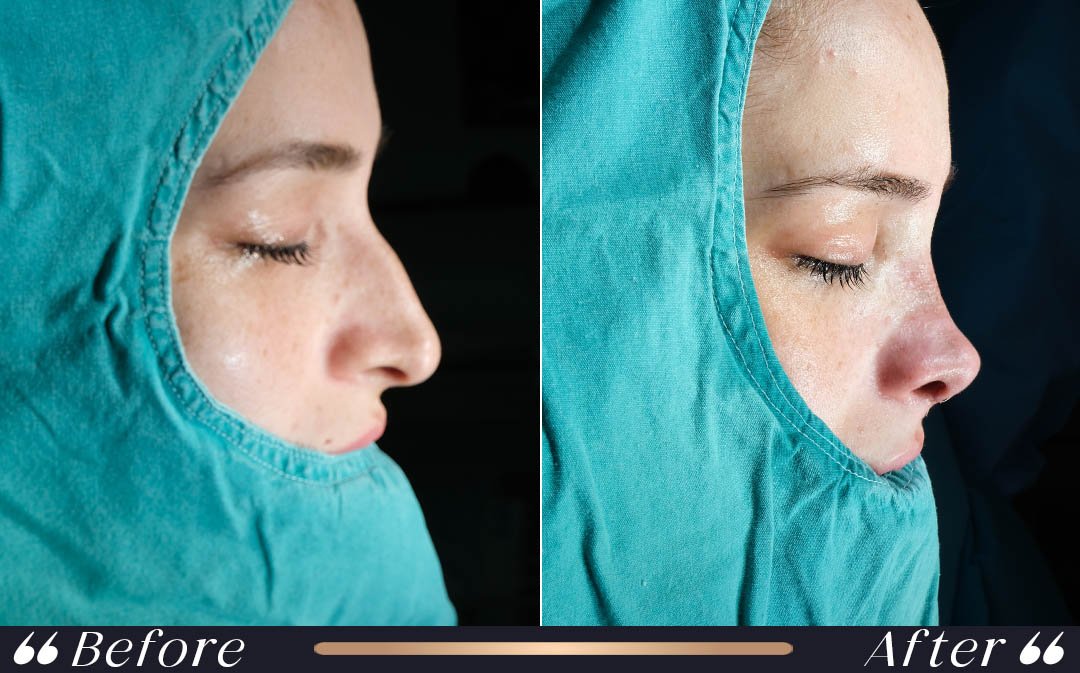
At Yesilkoy Clinic, the answer to how long does rhinoplasty swelling last is approached individually rather than by promising every patient an identical recovery timeline.
The clinic's current rhinoplasty recovery pathway emphasizes that swelling, bruising and congestion are expected during early healing and that visible swelling can continue decreasing for months.
Yesilkoy Clinic also explains that the nasal tip can stay swollen longer, particularly in patients with thicker skin, more extensive tip reshaping or revision rhinoplasty.
The treatment journey is organized around individual assessment, professional treatment planning, structured patient care, medical control and postoperative follow-up.
This is important because postoperative appearance during the first weeks should not automatically be considered the final rhinoplasty result.
Patients are advised to follow their surgeon's instructions regarding sleeping position, head elevation, activity, nasal care and follow-up appointments.
No rhinoplasty procedure can be guaranteed to be completely risk-free or to follow an identical recovery pattern. Professional and safety-focused care means assessing the individual patient, setting realistic expectations and monitoring recovery appropriately.
You can read more rhinoplasty and plastic surgery information in the Yesilkoy Clinic Plastic Surgery Blog.
For individual rhinoplasty and recovery information, visit the Yesilkoy Clinic contact page.
Patients sometimes become concerned because the nose appears:
During the first weeks and months, swelling can contribute significantly to these appearances.
ASPS emphasizes that patients need patience because the final shape develops gradually and can require approximately a year.
Concerns should still be discussed with your surgeon, but early swelling should not automatically be interpreted as the permanent outcome.
There is no exact date.
Many patients look considerably more comfortable in photographs within several weeks as bruising and obvious swelling decrease.
However, close-up photographs may continue revealing subtle swelling around the tip for months.
Final before-and-after photographs are therefore more meaningful after sufficient healing time has passed.
Contact Yesilkoy Clinic to discuss rhinoplasty consultation, postoperative planning and recovery follow-up. Individual assessment helps establish realistic expectations about swelling, healing and final results.
Request a ConsultationIf you are asking how long does rhinoplasty swelling last, the most visible swelling usually improves over the first few weeks. NHS guidance notes that swelling can take up to approximately six months to completely resolve, while ASPS notes that final nasal contour may continue refining for up to a year.
Swelling is usually most noticeable during the first several days and the first postoperative week.
Much of the dramatic early swelling usually improves by one month, but the nose can still be noticeably swollen, particularly around the tip.
Yes, residual swelling can still be present at three months. Fine tip swelling often takes longer to disappear.
Yes. NHS guidance notes that complete swelling resolution can take up to around six months, while finer refinement can continue longer.
Yes. The nasal contour can continue refining during the second half of the first postoperative year.
ASPS notes that final nasal refinement may take up to a year. Small amounts of swelling can persist longer in selected patients.
The nasal tip frequently retains swelling longer than the bridge because of its soft-tissue anatomy and the amount of surgical work performed.
Thicker nasal skin can retain swelling longer and may make fine tip definition develop more gradually.
ASPS notes that open rhinoplasty can produce greater tip swelling than closed rhinoplasty, although the open approach may be necessary for certain structural corrections.
It can. Scar tissue, grafting and structural reconstruction can make recovery more prolonged and less predictable.
ASPS notes that swelling can fluctuate and may appear worse in the morning during the first postoperative year.
Temporary asymmetrical swelling can occur because the two sides may heal at slightly different rates.
Strenuous activity can temporarily increase swelling during early recovery. Follow your surgeon's activity restrictions.
Contact your medical team for rapidly increasing swelling, severe pain, heavy bleeding, worsening redness, fever, major trauma or other concerning symptoms.
Use the Yesilkoy Clinic contact page to request information about rhinoplasty treatment and recovery planning.
Visit the Yesilkoy Clinic Plastic Surgery Blog.
Last updated: October 2026. This article provides general educational information about swelling after rhinoplasty. Swelling, recovery speed and final-result timing vary according to anatomy, technique and the individual patient. Follow the instructions and medical advice provided by the team responsible for your surgery.