How to sleep after rhinoplasty is one of the most important practical questions patients ask during the first days of nose surgery recovery. Your sleeping position can affect comfort, swelling and the risk of accidentally putting pressure on a healing nose, so early sleep habits should follow the instructions provided by your surgical team.
During the initial recovery period, patients are commonly advised to sleep on their back with the head elevated rather than lying completely flat. This can help reduce postoperative swelling and can also make it easier to avoid accidentally pressing the nose against a pillow.
The exact answer to how to sleep after rhinoplasty can vary according to the type of surgery, whether the procedure was primary or revision rhinoplasty, the extent of nasal work and your surgeon's individual recovery protocol.
Quick answer: If you are wondering how to sleep after rhinoplasty, the safest general approach during early recovery is usually to sleep on your back with your head elevated using extra pillows or a suitable wedge, while avoiding direct pressure on the nose. NHS guidance recommends propping the head up with pillows during the first days after rhinoplasty to help reduce swelling. Always follow your own surgeon's instructions if they differ.
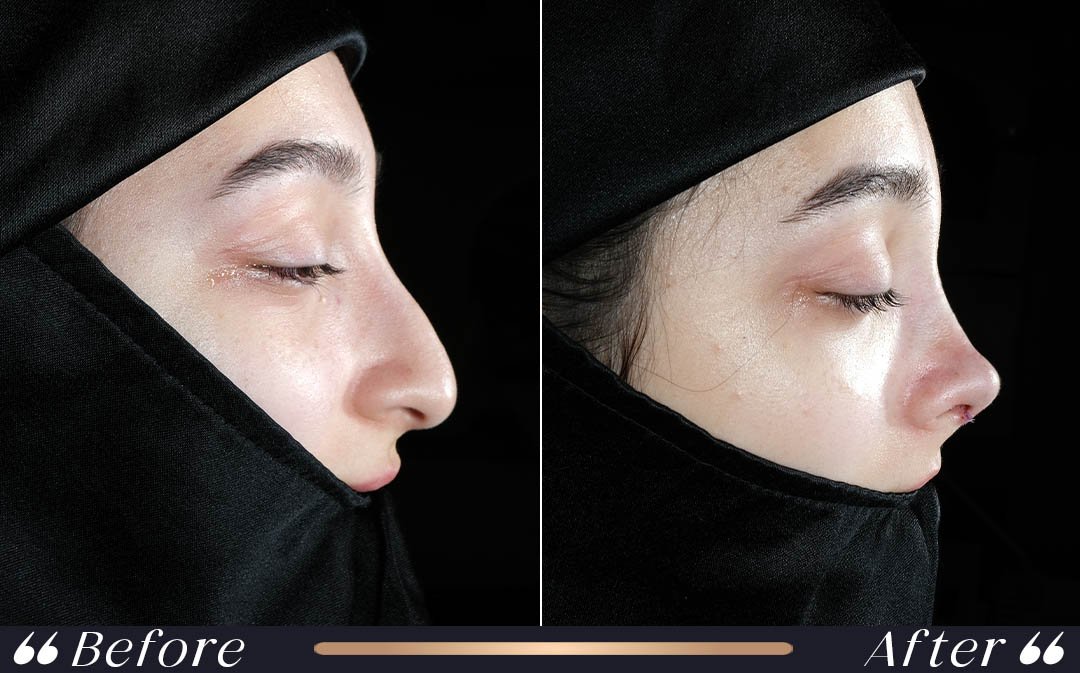
For many patients, the recommended early position is lying on the back with the head elevated.
NHS rhinoplasty guidance states that patients may be advised to prop the head up with pillows for a couple of days while resting to help reduce swelling.
Other NHS postoperative nasal-surgery guidance similarly recommends sleeping with the head raised on additional pillows or in a slightly upright position.
This position offers two practical advantages:
Understanding these principles is more useful than treating how to sleep after rhinoplasty as a rigid one-position rule for every patient.
Important: Your surgeon's instructions should take priority over general online guidance. Procedures differ, and some patients may require specific positioning based on the work performed.
Swelling is expected after rhinoplasty.
The tissues around the nose and eyes can become noticeably swollen during the first days, and bruising may also develop.
Keeping the head elevated while resting and sleeping is commonly recommended because it can help limit dependent swelling.
The NHS specifically advises propping the head up with pillows for the first couple of days after nose reshaping to reduce swelling.
Frimley Health NHS Foundation Trust similarly advises patients to sit upright or rest with the head elevated and suggests using extra pillows at night after rhinoplasty.
No.
Swelling is a normal part of healing and cannot be completely prevented simply by changing your sleeping position.
Elevation is one part of postoperative care, not a guarantee that swelling will disappear immediately.
Sleeping on your back can help protect the nose from direct contact with the mattress or pillow.
This is especially helpful while a splint is present and during the period when nasal structures are healing.
Use additional pillows, a wedge pillow or another setup approved by your treatment team.
Your head should be comfortably raised rather than positioned at an extreme angle.
If you naturally sleep on your side, place pillows beside your body to make accidental rolling less likely.
ASPS notes that when back sleeping is required after surgery, additional pillows can help prevent patients from rolling over during the night.
Some patients find it easier to remain elevated in a reclining chair than in a normal bed.
ASPS notes that a recliner can help patients maintain an elevated, back-sleeping position during surgical recovery.
A partner, child or pet moving during sleep can accidentally bump the face.
ASPS suggests that sleeping alone temporarily may reduce the risk of accidental disruption or injury after plastic surgery.
Pets can unexpectedly jump onto the bed or contact the face.
During early rhinoplasty recovery, protecting the nose from accidental impact is important.
Stomach sleeping places the face close to or directly against the pillow.
This creates unnecessary pressure and increases the risk of hitting or compressing the nose.
Side sleeping may allow the nose or splint to contact the pillow and may make it harder to maintain the recommended elevated position.
Your surgeon should tell you when returning to side sleeping is appropriate.
If you normally sleep on your side or stomach, changing position can be difficult.
ASPS recommends discussing the postoperative position before surgery and practising it in advance when possible.
A quiet, comfortable environment can make sleep easier during recovery.
A room that is excessively hot may also make rest less comfortable.
Discomfort can interfere with sleep.
Use medication only according to the instructions of your medical team.
Do not add sleeping medication, sedatives or other drugs without appropriate medical advice.
Move slowly.
Avoid sudden movements, bending and situations where you might hit your face against a headboard, bedside table or another object.
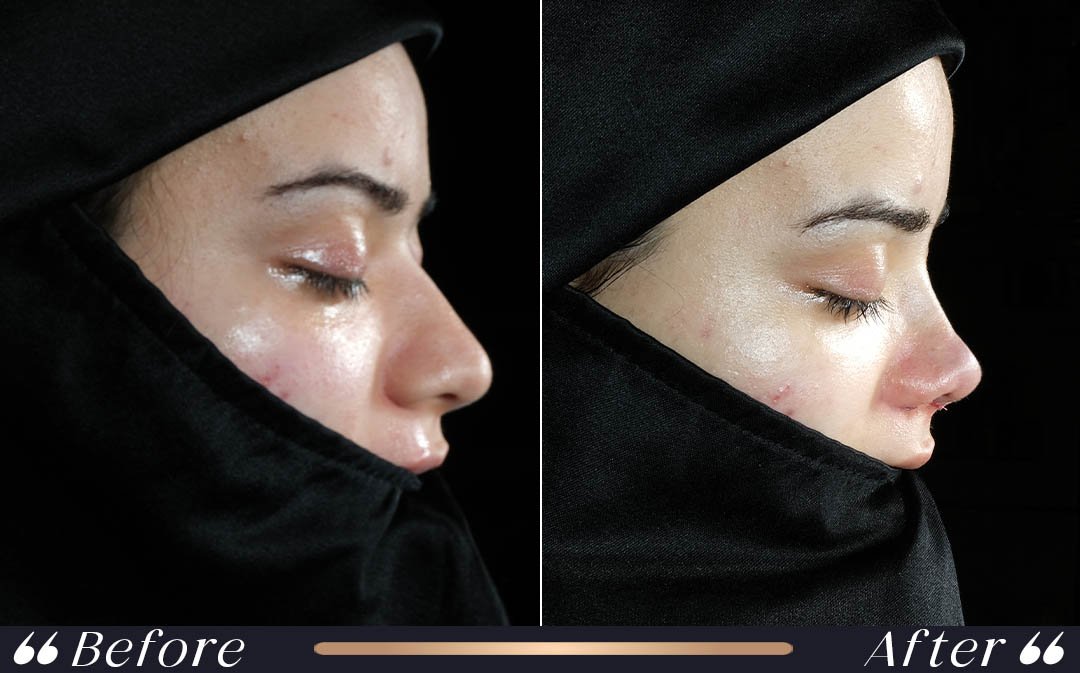
Side sleepers often find postoperative positioning particularly difficult.
During the early recovery stage, your surgeon may advise you to remain on your back to reduce accidental pressure on the nose.
Practical strategies include:
Do not assume that a certain number of days automatically means side sleeping is safe.
The timing depends on the operation and your surgeon's instructions.
There is no universal date that applies to every patient.
Some surgeons restrict side sleeping during the early healing period, while the exact duration can depend on the extent of nasal surgery and how recovery is progressing.
Ask your surgeon at your postoperative appointment before returning to your normal position.
Stomach sleeping is generally unsuitable during the early recovery period because it can place the nose directly against the bed or pillow.
This can create unwanted pressure and increases the chance of accidental impact.
Patients who normally sleep on their stomach should prepare an alternative position before surgery.
A back-sleeping setup with pillows on both sides can help.
The answer depends on your surgeon's postoperative protocol.
NHS guidance specifically supports head elevation during the first couple of days after nose reshaping, while some hospital postoperative instructions recommend elevation for a longer period following nasal surgery.
For example, Royal Berkshire NHS guidance for septorhinoplasty advises sleeping with the head on two or three pillows for two weeks after returning home.
This illustrates why there is no single universal answer to how to sleep after rhinoplasty.
Follow the timeline given by the team that performed your operation.
General NHS postoperative nasal-surgery instructions commonly mention two or three pillows or another slightly upright sleeping position.
The goal is comfortable elevation, not forcing your neck into an uncomfortable angle.
Possible options include:
The most important point is maintaining a stable position without creating neck or back discomfort.
Practical tip: Build your recovery sleeping setup before your procedure. This avoids trying to arrange pillows and supports when you are tired after surgery.
The first week is usually the most protective stage of sleep positioning.
The NHS notes that a nasal splint is commonly held in place for approximately seven days following rhinoplasty.
During this period, you may also experience:
Because nasal breathing can be difficult during early healing, some patients notice dry mouth or disturbed sleep.
Staying hydrated during the day and following your surgeon's nasal-care instructions may improve comfort.
Do not blow your nose unless your surgeon has specifically told you that it is safe.
Do not panic.
Simply return to the recommended position and check whether you have any concerning symptoms.
Contact your surgical team if you experienced a direct impact to the nose or develop:
Accidentally waking on your side does not automatically mean that the surgical result has been damaged.
Your splint should be managed according to your surgical team's instructions.
The NHS states that the external nasal splint is commonly kept in place for around seven days.
Do not remove, reposition or repeatedly touch your splint unless specifically instructed.
Whether you can change sleeping position after splint removal is a separate question and should also be confirmed with your surgeon.
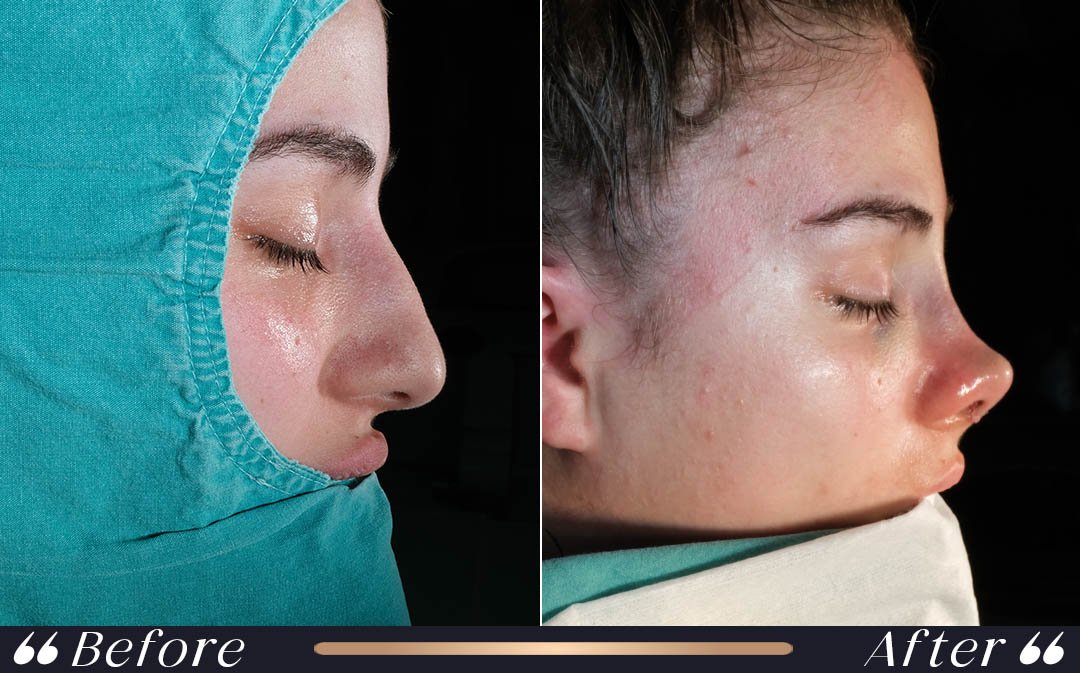
| Recovery Stage | Typical Sleep Consideration | Why It Matters |
|---|---|---|
| First 24–48 Hours | Back sleeping with head elevated is commonly recommended. | Helps manage swelling and protects the nose. |
| Days 3–7 | Continue the surgeon's recommended elevated position. | Splint and early nasal structures remain protected. |
| Week 2 | Some patients may still be advised to sleep elevated. | Swelling and internal healing continue. |
| Weeks 3–4 | Position restrictions may gradually change depending on recovery. | The nose remains healing even when bruising has improved. |
| Later Recovery | Return to normal sleep position only according to individual medical advice. | Healing speed and surgical extent differ between patients. |
This timeline is general educational guidance rather than individual medical clearance.
Sleep can temporarily become more difficult because early rhinoplasty recovery may involve:
NHS guidance notes that patients may have difficulty breathing through the nose for approximately a week after rhinoplasty.
Being prepared for this can make the first nights less stressful.
Comfort strategies may include:
Do not take over-the-counter sleep medication without checking whether it is appropriate with your prescribed postoperative medications.
A travel-style neck pillow may help some patients remain facing upward and reduce rolling.
However, it should not create uncomfortable pressure on the neck or force the head into an unnatural position.
Use it only as a positioning aid rather than as a substitute for your surgeon's instructions.
Yes, some patients find a recliner useful during the earliest stage of recovery.
ASPS notes that a recliner may help a patient remain on the back and keep the head elevated after surgery.
This can be particularly helpful for people who normally roll onto their side during sleep.
Revision rhinoplasty can involve different or more extensive structural work than a primary procedure.
Some revision cases may involve:
For this reason, do not automatically follow the same sleep timeline used after a previous rhinoplasty.
Your revision surgeon should provide individualized positioning instructions.
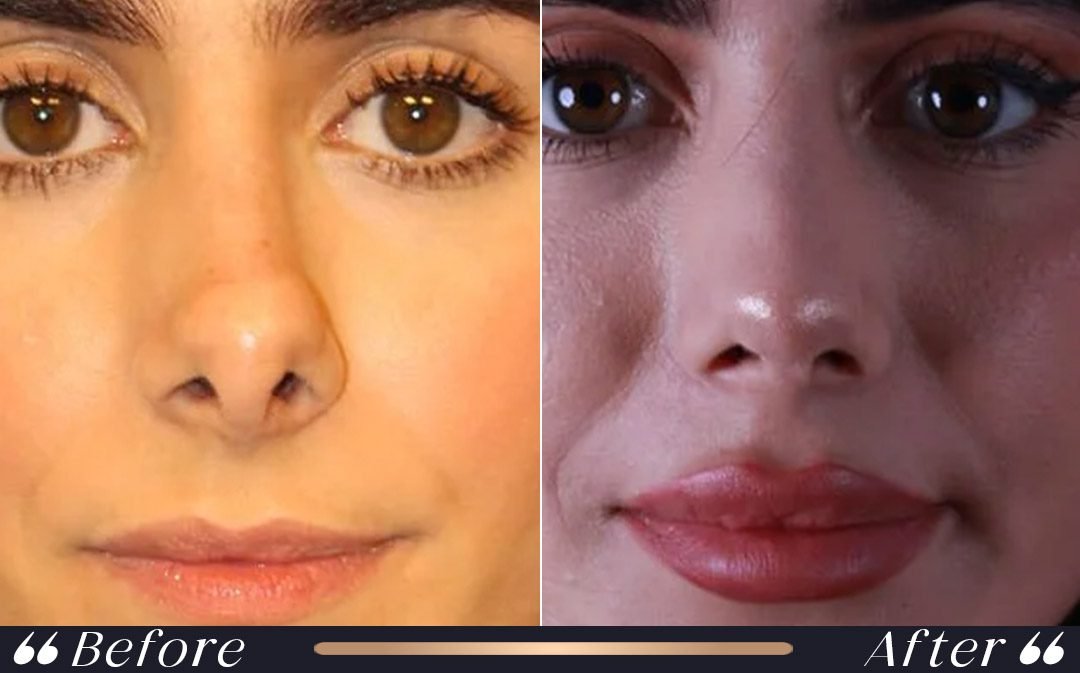
Sleep positioning is particularly relevant because swelling does not disappear when the splint is removed.
The NHS notes that bruising, swelling and redness may improve substantially by around three weeks, but swelling can take several months to completely resolve.
Yesilkoy Clinic's current rhinoplasty recovery guide similarly explains that visible swelling decreases gradually and that the nose can continue refining for many months.
This means patients should remain patient with early appearance rather than assuming swelling represents the final result.
At Yesilkoy Clinic, guidance on how to sleep after rhinoplasty forms part of the wider postoperative recovery plan rather than being treated as a one-size-fits-all instruction.
The clinic's rhinoplasty recovery pathway emphasizes individual assessment, professional treatment planning, structured patient care and postoperative follow-up.
Yesilkoy Clinic's current rhinoplasty recovery guidance advises patients to rest with the head elevated during the early postoperative period and to continue following the surgeon's advice regarding sleeping position as healing progresses.
The clinic also emphasizes protection of the nose from accidental impact, avoidance of premature strenuous activity and attendance at follow-up appointments.
This individualized approach is important because primary rhinoplasty, revision rhinoplasty, septorhinoplasty and more extensive structural procedures may have different recovery requirements.
No surgical procedure can be guaranteed to be completely risk-free. Professional and safety-focused care therefore includes appropriate patient assessment, clear postoperative instructions, realistic expectations and medical follow-up.
You can read more educational information in the Yesilkoy Clinic Plastic Surgery Blog.
For questions about rhinoplasty treatment and recovery, visit the Yesilkoy Clinic contact page.
Some swelling, bruising, congestion and mild discomfort are expected during early recovery.
Contact your medical team if you develop concerning or unexpected symptoms such as:
Do not change your postoperative medication or sleep instructions because of advice found online. If you are unsure about your position or symptoms, contact the medical team responsible for your surgery.
Patients can make recovery more difficult by trying to return to normal sleeping habits too quickly.
Common mistakes include:
Preparing in advance can prevent many of these problems.
Contact Yesilkoy Clinic to discuss your rhinoplasty treatment, recovery plan and postoperative instructions. The international patient team can provide information about consultation, treatment planning and follow-up in Istanbul.
Request a ConsultationIf you are researching how to sleep after rhinoplasty, sleeping on your back with the head elevated is commonly recommended during early recovery. This can help manage swelling and reduce direct pressure on the nose. Follow your surgeon's individual instructions.
You usually do not need to sit completely upright. A comfortably elevated position using pillows, a wedge or a recliner may be recommended.
There is no single angle required for every patient. NHS postoperative guidance commonly recommends using additional pillows or a slightly upright position.
Some NHS nasal-surgery instructions recommend two or three pillows. The goal is comfortable and stable elevation.
Side sleeping may be restricted during early healing to reduce the risk of pressure on the nose. Ask your surgeon when you can safely return to your usual position.
There is no universal timeline. The answer depends on the procedure performed and your individual recovery.
Stomach sleeping should generally be avoided during early recovery because it puts the face and nose close to the pillow and increases the risk of pressure or impact.
The timing varies. NHS guidance recommends head elevation during the early postoperative stage, and some nasal-surgery protocols advise continuing elevation for up to two weeks.
Return to the recommended position. Contact your clinic if there was direct nasal trauma, new heavy bleeding, severe pain or a change in the splint or nasal position.
Accidentally turning once does not automatically mean the result is ruined. The concern is avoiding unnecessary direct pressure or trauma during early healing.
A wedge pillow can be a practical way to keep the upper body and head elevated if it is comfortable and consistent with your surgeon's instructions.
Yes. Some patients find a recliner useful for maintaining back sleeping and elevation during early recovery.
Postoperative swelling can fluctuate, including after lying down overnight. This generally improves as healing progresses.
The duration varies. NHS guidance recommends elevation for the first days, while some hospital protocols advise a longer period after nasal surgery. Follow your surgeon's specific plan.
Do not take sleep medication or sedatives unless your medical team confirms that they are safe with your postoperative medications and medical history.
Visit the Yesilkoy Clinic Plastic Surgery Blog for additional educational articles about rhinoplasty and recovery.
Visit the Yesilkoy Clinic contact page to discuss rhinoplasty, postoperative recovery and international patient planning.
Last updated: October 2026. This article provides general educational information about sleeping after rhinoplasty. Postoperative sleeping position, duration of head elevation and activity restrictions can vary according to the procedure and individual patient. Follow the instructions provided by the medical team responsible for your surgery.