Male rhinoplasty turkey is increasingly researched by men who want to improve nasal proportion, address a prominent bridge or tip, correct asymmetry, or discuss breathing concerns while preserving a natural and appropriately masculine facial appearance.
Male rhinoplasty should not simply be viewed as the same operation performed with a different patient. Male facial proportions, nasal structure, skin thickness, bridge shape, tip characteristics and individual aesthetic goals can influence surgical planning.
The most appropriate male rhinoplasty turkey treatment therefore begins with individual assessment rather than choosing a standard nose shape from photographs or social media.
Quick answer: Male rhinoplasty turkey can address concerns involving nasal size, bridge shape, tip definition, asymmetry and selected functional breathing problems. The procedure should be individually planned to maintain balance with the forehead, chin, jaw and other facial features. Recovery usually requires several weeks for major swelling and bruising to improve, while finer nasal refinement can continue for many months.
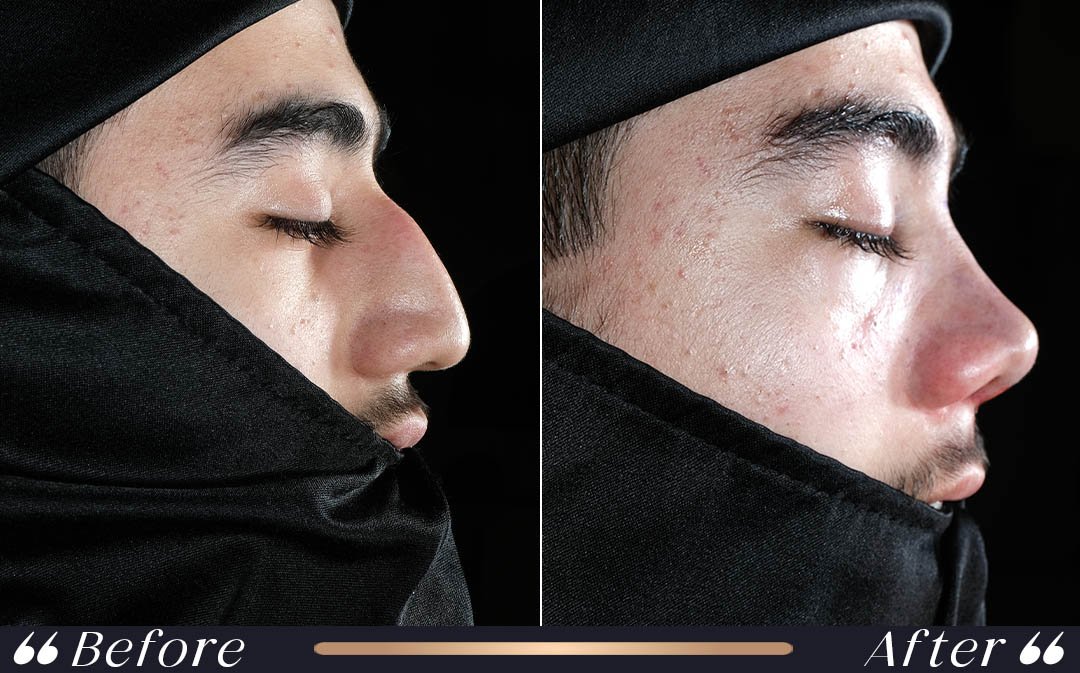
Rhinoplasty is surgery designed to change the shape, proportion or internal structure of the nose.
For men, the goal is not automatically to make the nose significantly smaller or more delicate. A successful plan generally aims to improve the patient's specific concern while maintaining harmony with the rest of the face.
ASPS notes that rhinoplasty is one of the most individualized procedures in plastic surgery. Male patients may often prefer a relatively straighter bridge and preservation of stronger nasal characteristics rather than the softer or more rotated appearance that may be requested by some female patients.
This makes individualized planning particularly important when considering male rhinoplasty turkey.
Depending on individual anatomy, concerns may include:
Not every concern requires the same surgical technique.
Important: Male rhinoplasty should not be based on a stereotypical “male nose.” Facial proportions, ethnicity, skin thickness, anatomy and personal goals differ between individuals.
The difference is not simply the patient's sex. The surgical plan can also reflect anatomical and aesthetic characteristics that may differ from one individual to another.
Some male patients prefer preservation of a relatively straight and strong dorsal profile.
Excessive bridge reduction can potentially change facial character in a way that does not match the patient's goal.
Tip rotation should be carefully individualized.
An excessively rotated or shortened appearance may not suit a patient who wants to preserve stronger facial proportions.
Men can have thicker nasal skin, particularly around the nasal tip.
Thicker skin can influence the degree of visible tip definition and how quickly subtle postoperative swelling resolves.
The nose should be considered in relation to:
ASPS emphasizes proportionality when discussing male rhinoplasty and notes that the relationship between the nose and lower face can influence perceived balance.
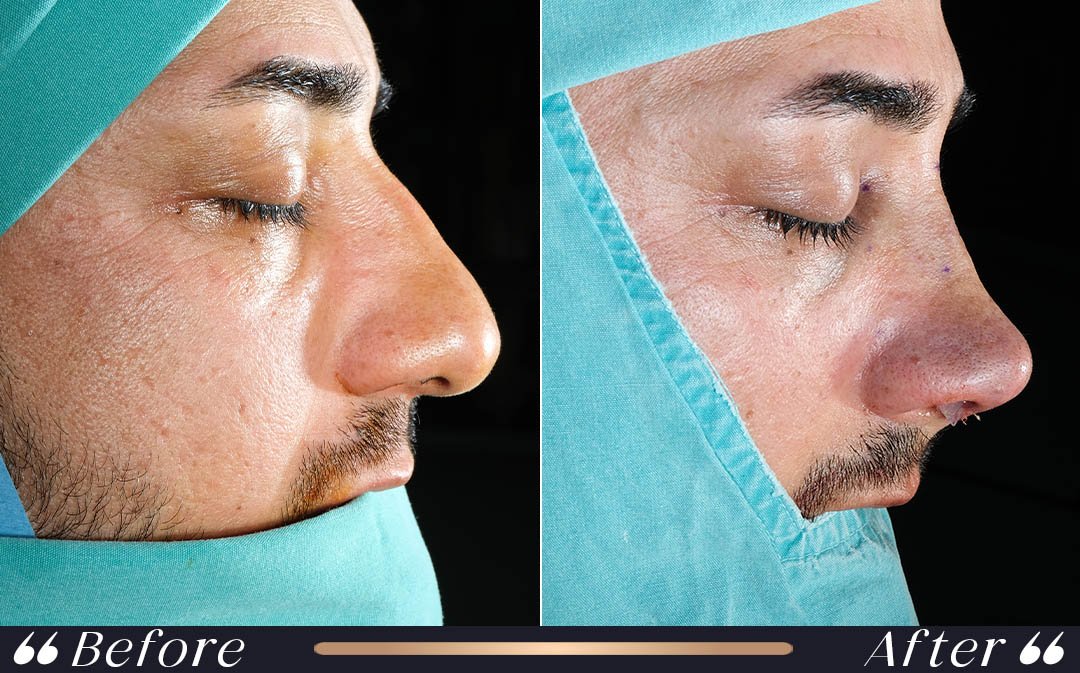
The precise operation depends on the changes required.
The NHS explains that rhinoplasty may involve reducing, increasing or reshaping nasal bone and cartilage. Surgery can be performed through an open approach involving a small external incision across the columella or a closed approach using incisions inside the nostrils.
An open rhinoplasty includes a small incision in the tissue between the nostrils, allowing the nasal skin to be elevated for direct access to underlying structures.
This approach may be considered when significant structural work or detailed tip modification is required.
A closed rhinoplasty uses incisions inside the nostrils.
It avoids an external columellar incision but is not automatically the correct approach for every patient.
The choice between open and closed rhinoplasty should depend on anatomy and the work required rather than the assumption that one technique is universally better.
Some operations may require cartilage grafts to provide additional support or reshape specific structures.
The need for grafting depends on existing anatomy, previous operations and the planned correction.
A nose can be reduced technically but still look out of proportion with the rest of the face.
Professional planning considers overall facial balance rather than treating nasal size as an isolated measurement.
For many male patients, maintaining sufficient bridge and tip strength can be important to preserving facial character.
Some patients seeking male rhinoplasty turkey also experience nasal obstruction.
Aesthetic goals should therefore be discussed alongside any breathing symptoms, previous nasal injury or septal problems.
The NHS notes that rhinoplasty can sometimes be medically indicated when surgery is needed to improve breathing.
Skin thickness affects how underlying cartilage definition appears through the skin.
With thicker skin, changes may appear more gradually and fine tip definition may take longer to become apparent.
This does not mean rhinoplasty cannot be performed; it means expectations and planning need to reflect the patient's tissue characteristics.
Patients should not expect the nose to look final when the splint comes off.
The NHS notes that bruising, swelling and redness may take approximately three weeks to fade substantially and that swelling can take months to resolve.
The nose continues refining after a patient has returned to normal daily activities.
A professional rhinoplasty plan should be built around anatomy, function and individual goals.
Social-media filters, celebrity noses and generic “perfect nose” templates are poor substitutes for clinical assessment.
Yesilkoy Clinic similarly states that rhinoplasty planning should not be based around a photograph or the assumption that a single result suits everyone.
A prominent bridge or dorsal hump is a common reason men consider rhinoplasty.
Reduction should be planned in relation to the forehead, tip and chin rather than simply removing as much bridge height as possible.
Some men may prefer a straighter dorsal line rather than a pronounced slope.
A broad or bulbous tip can sometimes be refined through modification and support of the underlying cartilage.
Skin thickness influences how much fine definition becomes visible.
A tip that points downward can affect the profile and can become more noticeable when smiling.
Where appropriate, surgery can adjust tip position and structural support.
The nasal bridge, nasal bones, tip or nostrils can contribute to perceived width.
Determining which structure is responsible is important before choosing a surgical strategy.
Previous trauma can alter both appearance and internal nasal function.
Patients should disclose previous fractures, sports injuries and nasal operations during consultation.
In selected cases, yes.
Rhinoplasty may be combined with correction of internal nasal structures when breathing problems are present.
Patients experiencing nasal blockage should discuss symptoms during assessment rather than viewing rhinoplasty solely as cosmetic surgery.
A deviated septum is one possible cause of obstruction, but breathing problems can have several causes and need appropriate evaluation.
Key point: An aesthetically pleasing nose should also respect nasal function. If you have difficulty breathing, tell your medical team before surgery so that functional concerns can be evaluated as part of treatment planning.
| Feature | Open Rhinoplasty | Closed Rhinoplasty |
|---|---|---|
| Incisions | Internal incisions plus a small columellar incision. | Incisions remain inside the nostrils. |
| Structural Access | Provides broad direct exposure of nasal structures. | Access is through internal incisions. |
| Visible Scar | A small external scar can remain on the columella. | No external columellar scar. |
| Best For | Depends on structural requirements and surgeon assessment. | Depends on structural requirements and surgeon assessment. |
| Better Technique? | Neither is automatically better. The appropriate technique depends on the individual operation. | |
Recovery from rhinoplasty should be understood as a gradual process.
The NHS states that patients may need up to two weeks away from work, while swelling can continue improving for several months. It also advises avoiding strenuous exercise or contact sports for approximately four to six weeks.
| Recovery Stage | What You May Experience | General Consideration |
|---|---|---|
| Days 1–7 | Swelling, bruising, congestion, tenderness and a nasal splint. | Rest and protect the nose carefully. |
| Around Week 1 | Splint and some stitches may be removed depending on technique. | The nose is still swollen and should not be judged as final. |
| Weeks 2–3 | Bruising and major visible swelling generally improve. | Many patients feel more comfortable socially and professionally. |
| Weeks 4–6 | Further healing and decreasing swelling. | Strenuous exercise may resume only when the surgeon approves. |
| Months 3–6 | Increasing nasal definition. | Fine swelling can remain, particularly at the tip. |
| Up to 1 Year | Progressive refinement of the nasal contour. | Final outcome should be judged after adequate healing. |
ASPS also emphasizes that following the surgeon's postoperative instructions is important during recovery and that patients should allow appropriate time for rest and healing.
Patients often see a substantial change when the nasal splint is removed, but this is not the final result.
Early swelling can make the bridge or tip appear broader than expected.
As swelling gradually decreases, nasal definition becomes clearer.
Individual factors affecting the timeline include:
Men with thicker tip skin may notice that subtle refinement takes longer to become visible.
A natural-looking result should fit the individual face rather than appear surgically standardized.
Important elements can include:
For many men, the aim may be refinement without creating an overly narrow, excessively scooped or highly rotated nose.
ASPS notes that male rhinoplasty often requires particular attention to preserving facial masculinity and maintaining balance with other features.
Cost is an important consideration for international patients, but there is no single fixed male rhinoplasty turkey price.
Yesilkoy Clinic's current 2026 rhinoplasty cost guide reports that published market ranges commonly place many primary rhinoplasty procedures in Turkey at approximately €2,500–€5,800. This is a general market reference rather than a guaranteed Yesilkoy Clinic price. Complex, functional or revision cases may cost more.
The exact quotation can depend on:
Cost note: The €2,500–€5,800 range is an indicative 2026 Turkey market range and is not a fixed Yesilkoy Clinic quotation. An exact price requires individual assessment and a written treatment plan.
Package inclusions vary between providers and should always be confirmed in writing.
Depending on the treatment plan, an international patient package may include:
Flights, travel insurance, additional hotel nights and services outside the agreed treatment plan may not be included.
Patients should request a transparent written quotation before making travel arrangements.
Istanbul has developed a large international healthcare sector and offers access to hospitals, medical centers, hotels and international airports.
Cost is one reason patients compare Turkey with the UK, Europe and the United States, but cost should not be the only decision factor.
A patient considering male rhinoplasty turkey should also evaluate:
The lowest advertised price does not automatically mean the most appropriate treatment.
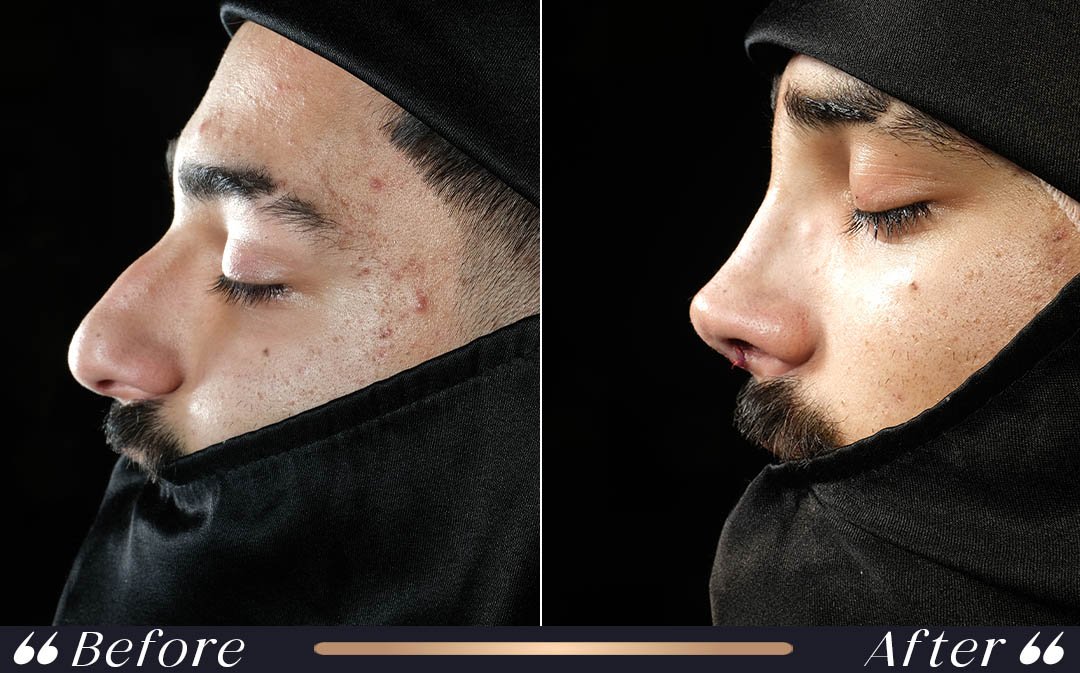
At Yesilkoy Clinic, male rhinoplasty turkey treatment is approached as an individualized medical and aesthetic journey rather than applying the same nasal shape or surgical technique to every patient.
Yesilkoy Clinic states that rhinoplasty planning is based on anatomy, medical history, expectations and the findings of professional assessment. The clinic's treatment pathway emphasizes individual assessment, professional planning, structured patient care and postoperative follow-up.
This is particularly relevant for male patients because preserving appropriate facial proportions and avoiding unnecessary feminization may form part of individual aesthetic planning.
The consultation can consider what the patient would like to change, what is realistically achievable within the existing anatomy and whether there are functional concerns such as breathing difficulty.
Yesilkoy Clinic also states that no single surgical technique is appropriate for every patient and that treatment strategy should be based on professional surgical judgement.
No rhinoplasty procedure can be described as completely risk-free. A professional and safety-focused approach therefore includes medical assessment, appropriate patient selection, discussion of potential risks and limitations, informed consent, individualized planning and postoperative follow-up.
You can read more educational articles about rhinoplasty, plastic surgery and recovery in the Yesilkoy Clinic Plastic Surgery Blog.
For a confidential individual consultation, visit the Yesilkoy Clinic contact page.
Rhinoplasty is surgery, so no clinic or surgeon can responsibly promise that it is completely risk-free.
The NHS lists potential complications including bleeding, infection, altered sense of smell, breathing difficulties and anaesthesia-related complications.
Possible risks and limitations should be discussed before informed consent.
Factors influencing individual risk can include:
A professional clinic should focus on appropriate assessment, clear communication and postoperative care rather than describing surgery as risk-free.
Your medical team may ask for information about:
You may also need laboratory testing or other preoperative assessment depending on your medical history and treatment plan.
Do not stop prescribed medication unless instructed by an appropriate medical professional.
These questions help patients understand the actual surgical plan rather than selecting surgery based only on an advertised package.
The appropriate stay should be based on your surgeon's treatment and postoperative examination schedule.
The NHS notes that a nasal splint is commonly worn for approximately one week.
International patients should therefore discuss:
Do not book a return flight based solely on the shortest possible package duration. Your departure should be medically appropriate for your recovery.
Strenuous exercise should be avoided during early healing.
NHS guidance states that strenuous exercise and contact sports are generally avoided for approximately four to six weeks after rhinoplasty.
Your surgeon's specific instructions take priority because the extent of surgery and recovery vary.
Results should be judged over time rather than immediately after surgery.
The first weeks can involve swelling, nasal stiffness and congestion.
As healing progresses, bridge and tip definition become clearer.
The final outcome depends on:
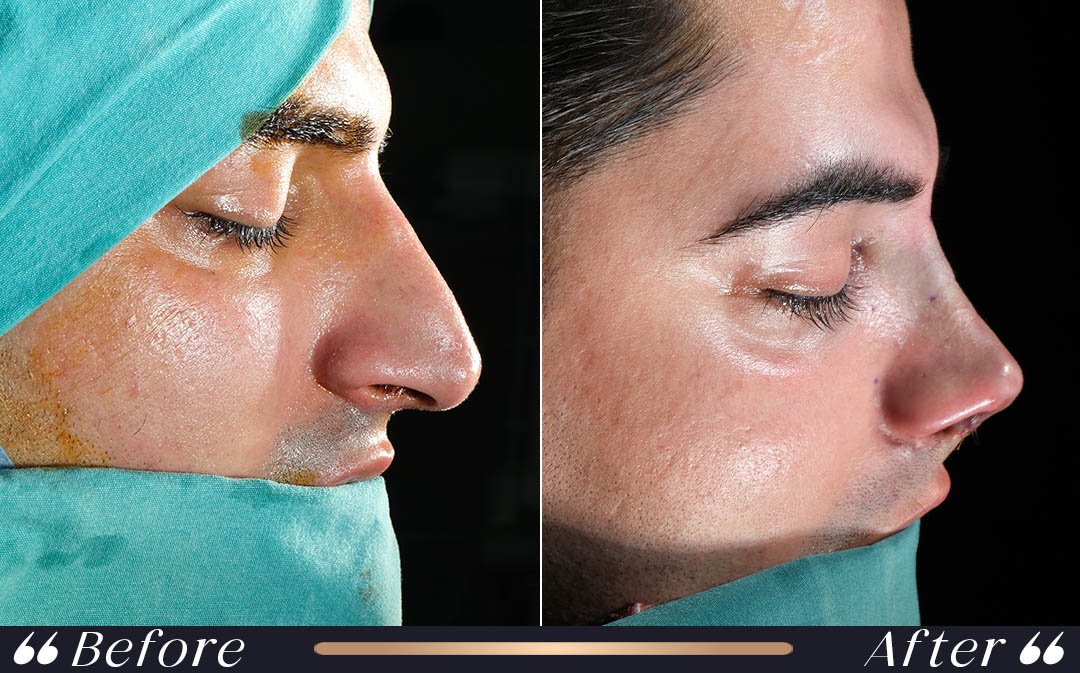
No responsible clinic should guarantee an identical result to another patient's before-and-after photograph.
Contact Yesilkoy Clinic to discuss your nasal anatomy, facial proportions, aesthetic goals and any breathing concerns. Your case can be individually assessed so that the proposed procedure, recovery plan and travel arrangements are explained clearly.
Request a ConsultationMale rhinoplasty turkey planning may place particular emphasis on preserving facial balance, appropriate bridge strength, tip position and other features that suit the individual patient's face rather than automatically creating a smaller or more rotated nose.
Published 2026 market references cited by Yesilkoy Clinic place many primary rhinoplasty procedures in Turkey at approximately €2,500–€5,800. This is not a fixed clinic price. Complex, revision and functional procedures may cost more, and an exact quotation requires individual assessment.
Difficulty depends on anatomy and the required correction rather than sex alone. Skin thickness, cartilage, previous injury, breathing problems and surgical goals can all influence complexity.
A properly individualized treatment plan should consider the patient's facial proportions and aesthetic goals. ASPS notes that preservation of appropriately masculine characteristics can be an important consideration in male rhinoplasty.
A dorsal hump can be addressed in appropriate patients, but the amount of reduction should be planned in relation to the nasal tip, forehead and chin.
Depending on anatomy, surgery may address nasal bone width, tip width or nostril characteristics. The appropriate technique requires examination.
In suitable cases, tip position and support can be modified. The exact amount of rotation should be individualized.
Selected structural problems affecting nasal airflow may be addressed during surgery. Patients with breathing problems should discuss these symptoms during consultation.
Many patients require approximately one to two weeks away from work, while swelling continues to improve for months. More strenuous activity usually requires a longer recovery period.
NHS guidance advises avoiding strenuous exercise and contact sports for approximately four to six weeks. Follow your surgeon's individual instructions.
Major visible swelling improves during the early weeks, but finer swelling can persist for several months, particularly around the nasal tip.
Meaningful changes are visible early, but the nasal contour continues to refine gradually. Final assessment requires adequate healing time.
Neither technique is automatically better. Selection depends on the patient's anatomy and the structural work required.
Your stay should allow completion of the postoperative checks recommended by your surgeon. International travel should be planned around recovery rather than simply around the shortest package.
Visit the Yesilkoy Clinic Plastic Surgery Blog for further educational articles.
Use the Yesilkoy Clinic contact page to request a confidential consultation and treatment information.
Last updated: October 2026. This article provides general educational information about male rhinoplasty in Turkey. Suitability, surgical technique, price, recovery, risks and expected results vary between individuals and require professional medical assessment.