Open vs closed rhinoplasty is one of the most common comparisons patients make before nose surgery. Both approaches can be used to reshape nasal bone and cartilage, improve facial proportions and, when necessary, address selected functional problems, but they differ mainly in how the surgeon accesses the nasal framework.
In open rhinoplasty, a small incision is made across the columella in addition to internal nasal incisions. In closed rhinoplasty, the incisions are made inside the nostrils. Neither approach is automatically better for every patient.
The most appropriate open vs closed rhinoplasty choice depends on nasal anatomy, the complexity of the required changes, whether structural grafting is needed, whether the procedure is primary or revision surgery and the surgeon's experience with the selected technique.
Quick answer: In the open vs closed rhinoplasty comparison, open rhinoplasty offers wider direct visualization of the nasal framework and may be useful for complex structural or tip work. Closed rhinoplasty keeps all incisions inside the nostrils and may be appropriate for selected cases requiring less extensive exposure. Current systematic reviews do not demonstrate that either technique is universally superior. Technique selection should be individualized.

The main difference between the two techniques is surgical access.
The American Society of Plastic Surgeons explains that rhinoplasty can be performed using a closed approach, where incisions are hidden inside the nose, or an open approach, where an additional incision is made across the columella, the narrow strip of tissue between the nostrils.
Through these incisions, the surgeon raises the soft tissues covering the nasal bones and cartilage so the underlying framework can be reshaped.
This means open vs closed rhinoplasty does not describe two completely different operations. Both approaches can involve modification of bone, cartilage, septal structures and the nasal tip.
The difference is primarily how those structures are accessed and visualized during surgery.
Important: Choosing open or closed rhinoplasty should not be based solely on avoiding an external incision. The correct approach depends on what structural work is required to achieve a safe, functional and realistic result.
Open rhinoplasty uses internal nasal incisions together with a small incision across the columella.
This allows the skin and soft tissue to be elevated so that the surgeon can directly visualize a large portion of the underlying nasal framework.
Cleveland Clinic notes that open rhinoplasty is commonly used when major nasal reshaping or more extensive structural access is required.
Potential reasons an open approach may be considered include:
Potential advantages can include:
Potential trade-offs can include:
ASPS notes that open approaches may be associated with more tip swelling in some cases, although the same exposure can be useful when detailed tip refinement is required.
Closed rhinoplasty, also called endonasal rhinoplasty, uses incisions made entirely inside the nostrils.
No incision is made across the external columellar skin.
The surgeon accesses the underlying nasal structures through these internal incisions.
Cleveland Clinic describes closed rhinoplasty as an approach that can be used for selected or more limited reshaping procedures.
Potential advantages may include:
The narrower operative exposure may make some complex structural procedures technically more demanding.
This does not mean closed rhinoplasty is inferior.
Experienced surgeons may perform sophisticated surgery through an endonasal approach when the anatomy and goals are appropriate.
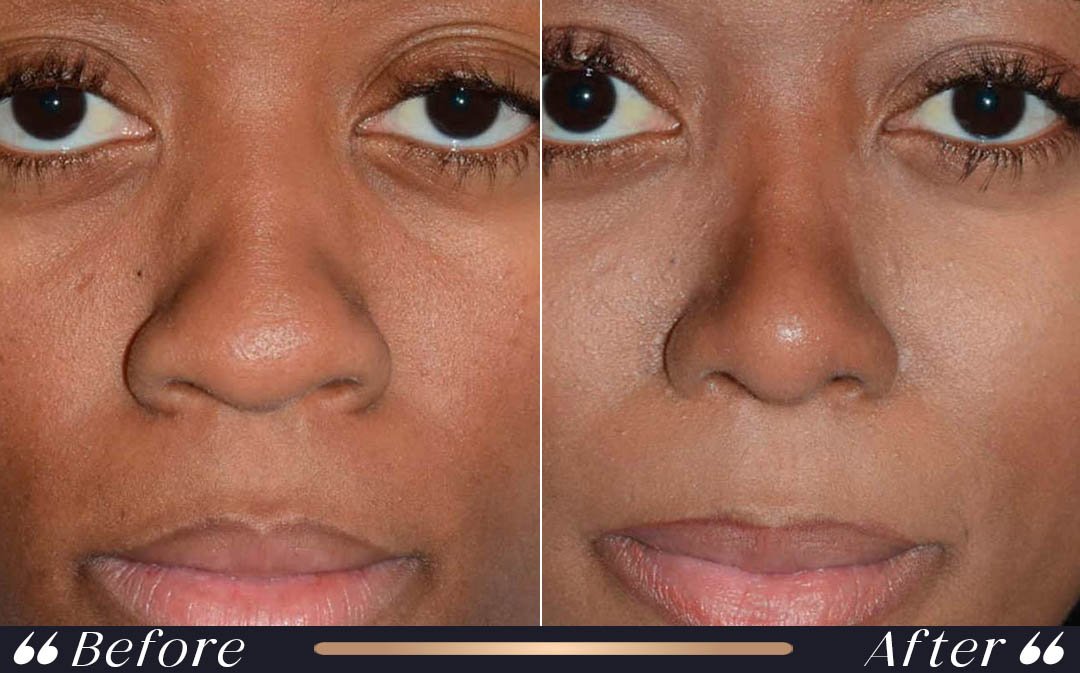
| Feature | Open Rhinoplasty | Closed Rhinoplasty |
|---|---|---|
| Incisions | Internal incisions plus a small columellar incision. | Incisions remain inside the nostrils. |
| External Scar | A small columellar scar is expected. | No intentional external columellar scar. |
| Visualization | Provides broad direct visualization of nasal structures. | Structures are accessed through internal incisions. |
| Complex Tip Work | Often useful when extensive structural tip work is required. | Can be appropriate for selected tip corrections. |
| Grafting | Provides direct access for complex graft placement. | Grafting can still be performed in experienced hands. |
| Early Tip Swelling | May be greater in some patients. | May be less in selected patients. |
| Revision Surgery | Frequently considered for complex revision cases. | Can be used in selected revision cases. |
| Overall Outcomes | Current systematic-review evidence does not establish universal superiority of one approach. | |
Closed rhinoplasty keeps incisions inside the nostrils.
Open rhinoplasty adds a small incision across the columella.
Open rhinoplasty provides wide direct visualization of the nasal framework.
Closed rhinoplasty uses a more limited internal access pathway.
An open approach leaves a small external scar across the columella.
A closed approach does not intentionally create this external incision.
Open rhinoplasty allows broad exposure of the nasal tip cartilages.
This can be particularly useful when significant reshaping, suturing or structural reconstruction is required.
Open rhinoplasty can facilitate direct placement and assessment of cartilage grafts.
Closed rhinoplasty can also involve grafting, but the available working space and visualization differ.
ASPS notes that open rhinoplasty can be associated with more tip swelling than the closed approach.
However, swelling also depends on the amount of surgical work, skin thickness and individual healing.
The complexity of the procedure matters more than the name of the approach.
A simple open procedure may be less complex than an advanced closed operation, and vice versa.
Complex revision surgery often benefits from broad visualization, making the open approach common in revision cases.
However, selected revisions can still be performed through a closed approach.
Complex septal deviation or structural collapse may require extensive access.
A published preservation-rhinoplasty study found that complex dorsal deformity and severe septal deviation were more commonly treated through an open approach.
Closed rhinoplasty can be appropriate when the required correction is relatively limited and does not require extensive exposure.
Both procedures involve swelling and healing.
The exact recovery experience is influenced by the amount of bone, cartilage and soft-tissue manipulation rather than incision type alone.
Technique selection should reflect the surgeon's expertise as well as the anatomical requirements.
A technique is not automatically better simply because it is newer, more complex or more heavily marketed.
This is the most important point in the open vs closed rhinoplasty debate.
A 2025 systematic review and meta-analysis involving 1,067 patients found no statistically significant differences between open and closed approaches in aesthetic outcome scores, nasal-obstruction scores, edema, bruising, operative time, satisfaction or complication rates.
The authors concluded that technique selection should be tailored to individual patient needs and surgeon expertise.
There is no universal winner.
The latest comparative evidence does not support the claim that open rhinoplasty always gives better results or that closed rhinoplasty is always less invasive and therefore preferable.
The more appropriate question is:
Which approach gives the surgeon appropriate access to perform the specific corrections required for this patient's anatomy?
The decision may depend on:
Evidence-based point: The 2025 systematic review and meta-analysis comparing open and closed rhinoplasty found similar overall efficacy. The most appropriate technique should therefore be selected according to patient-specific anatomy, deformity complexity and surgeon expertise.
Tip surgery is one of the areas where access can influence technique selection.
Complex nasal tip deformities may involve:
Open rhinoplasty can provide direct visualization of the tip cartilage and may therefore be useful in more complex reconstruction.
However, closed rhinoplasty can still be used for selected tip modifications by surgeons experienced in endonasal techniques.
The presence of a tip concern alone does not automatically determine the approach.
A dorsal hump can potentially be treated using either technique.
Cleveland Clinic notes that closed rhinoplasty can provide access to bone and cartilage for bridge modification, including reduction of a nasal bump.
More extensive dorsal reconstruction or combined structural changes may lead the surgeon to choose an open approach.
The amount of correction and surrounding anatomy determine the treatment strategy.
A crooked nose can involve multiple structures, including:
Complex asymmetry may benefit from broad structural exposure.
However, technique selection still depends on the exact deformity.
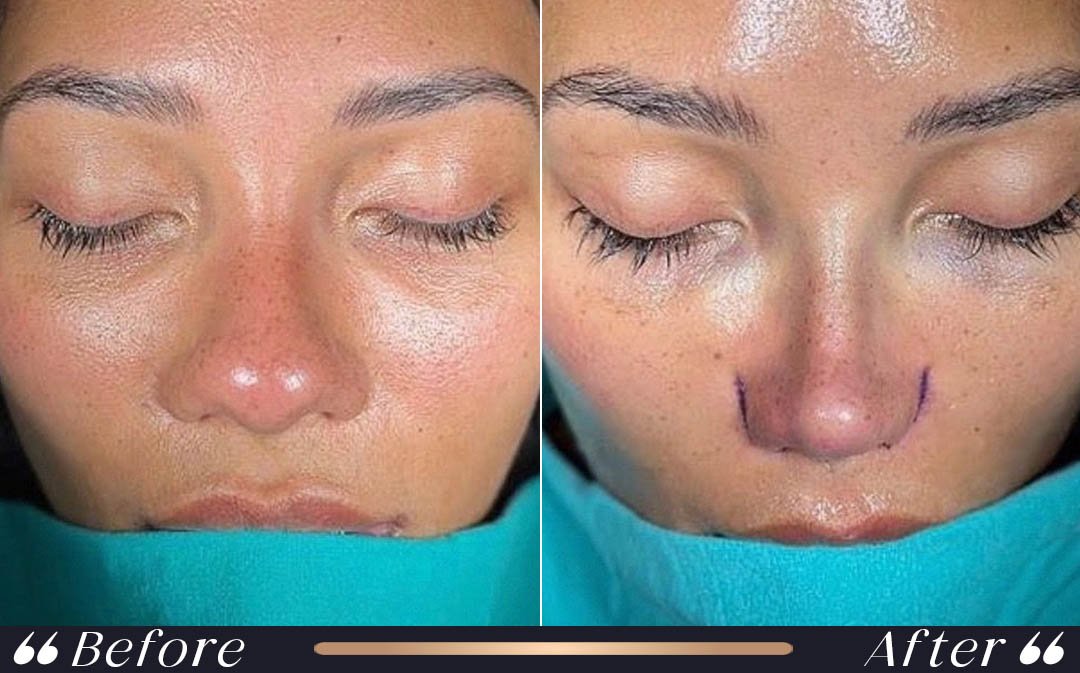
Revision rhinoplasty is surgery performed after a previous rhinoplasty when functional or aesthetic concerns remain or develop.
Revision cases can involve:
Cleveland Clinic notes that revision rhinoplasty can be performed through either an open or closed approach.
However, complex reconstruction frequently requires greater structural exposure, which can make open rhinoplasty useful in many revision cases.
This does not mean every revision requires an open approach.
Open rhinoplasty includes a small incision across the columella.
This creates an external scar.
Its final visibility depends on incision placement, wound healing, skin characteristics and postoperative care.
ASPS notes that skilled rhinoplasty surgeons typically place incisions discreetly so they heal as inconspicuously as possible.
Closed rhinoplasty incisions are inside the nostrils.
This means there is no intentional external columellar scar.
However, choosing surgery based exclusively on scar location may overlook whether the required structural correction can be performed most effectively through that approach.
Both approaches cause postoperative swelling.
ASPS notes that open rhinoplasty may produce more nasal tip swelling than the closed approach in some patients because of the additional soft-tissue elevation.
However, recovery is influenced by more than incision type.
Other factors include:
ASPS also notes that immediate rhinoplasty recovery takes several weeks while full healing and subtle refinement may continue for much longer.
| Recovery Factor | Open Rhinoplasty | Closed Rhinoplasty |
|---|---|---|
| Bruising | Varies according to bone and soft-tissue work. | Varies according to bone and soft-tissue work. |
| Tip Swelling | Can be greater or persist longer in some patients. | May be reduced in selected cases. |
| External Incision Healing | Columellar incision requires healing. | No external columellar incision. |
| Final Refinement | Can take many months. | Can take many months. |
| Overall Recovery | Depends strongly on surgical extent and individual healing rather than approach alone. | |
Either surgical access approach can potentially be used within a functional rhinoplasty plan.
ASPS explains that rhinoplasty can include correction of a deviated septum and reduction of internal projections that contribute to impaired breathing.
Functional planning may involve:
The objective is to improve nasal structure without compromising airway function.
The need for functional treatment should therefore influence the open vs closed rhinoplasty decision where relevant.
Patients sometimes assume that open rhinoplasty provides better results because the surgeon can see more of the nasal structure.
Others assume closed rhinoplasty produces better results because it avoids the external incision.
Current evidence does not support either assumption as a universal rule.
A 2022 systematic review found high patient and provider satisfaction with both techniques and could not establish superiority of one approach.
A larger 2025 systematic review and meta-analysis reached a similar conclusion.
The result depends on:
Ethnic rhinoplasty does not require one specific approach.
The decision should depend on individual anatomy rather than ethnic labels.
A patient requiring bridge augmentation, extensive grafting or complex tip reconstruction may require different exposure from a patient seeking a more limited correction.
The patient's facial identity and aesthetic preferences should also form part of the treatment plan.
Skin thickness can affect visible nasal definition and recovery.
Thick skin can make subtle tip refinement take longer to appear because swelling and soft-tissue thickness can mask underlying structural changes.
However, skin thickness alone does not automatically determine whether open or closed rhinoplasty should be used.
Not necessarily in every case.
Closed rhinoplasty can accomplish substantial nasal modification in experienced hands, but complex structural work may be easier to perform with wider exposure.
Likewise, performing open rhinoplasty for every patient would add an external incision and wider tissue elevation even when such exposure may not be required.
The aim should be to use the access needed for the planned correction rather than forcing every case into the same technique.
The absence of an external columellar incision can mean less external soft-tissue disruption in selected cases.
However, the phrase “less invasive” can be misleading if it is used to imply that the internal surgery is always minor.
A closed rhinoplasty can still involve:
The true surgical extent should therefore be evaluated rather than judging only by incision location.

At Yesilkoy Clinic, the open vs closed rhinoplasty decision should be based on individual nasal anatomy, functional needs, aesthetic goals and the structural work required rather than applying one technique to every patient.
A professional consultation can evaluate the nasal bridge, tip, septum, skin characteristics, breathing, previous trauma or surgery and realistic treatment objectives before a surgical strategy is proposed.
This approach is important because neither open nor closed rhinoplasty has been demonstrated to be universally superior.
The goal is to select an approach that provides the necessary surgical access while avoiding unnecessary intervention.
Yesilkoy Clinic's broader patient-care approach emphasizes clear communication, professional treatment planning, individual medical assessment and coordinated postoperative care for international patients.
The clinic also makes key institutional documentation available to patients, including its Health Tourism Authorization and Facility License, supporting transparency before international patients travel for treatment.
No rhinoplasty can be guaranteed to be completely risk-free. A safety-focused treatment pathway therefore includes medical assessment, appropriate patient selection, realistic expectations, informed consent, professional surgical planning and postoperative follow-up.
For more educational content about rhinoplasty, plastic surgery and recovery, visit the Yesilkoy Clinic Plastic Surgery Blog.
For an individual rhinoplasty consultation, visit the Yesilkoy Clinic contact page.
The surgical approach should be selected after evaluating the actual anatomy and treatment objectives.
Factors can include:
A good consultation should explain not only which technique is recommended, but why that approach is appropriate for the individual patient.
Patients should not be expected to select their surgical approach from an online comparison alone.
The purpose of understanding open vs closed rhinoplasty is to help you discuss the options intelligently with your surgical team.
Open rhinoplasty may provide advantages when broad visualization and extensive structural work are required.
Closed rhinoplasty may provide appropriate access for selected cases while avoiding an external columellar incision.
Neither technique should be promoted as the universally superior option.
Contact Yesilkoy Clinic to discuss your nasal anatomy, breathing, aesthetic goals and previous procedures. An individual assessment can determine whether an open, closed or other rhinoplasty strategy may be appropriate for your case.
Request a ConsultationOpen vs closed rhinoplasty differs primarily in surgical access. Closed rhinoplasty uses incisions inside the nostrils, while open rhinoplasty adds a small incision across the columella to provide wider exposure of the nasal framework.
Neither is universally better. Current systematic reviews show broadly comparable outcomes and recommend selecting the technique according to patient anatomy, deformity complexity and surgeon expertise.
Yes. Open rhinoplasty creates a small columellar incision. Its final visibility varies according to healing and surgical technique.
Closed rhinoplasty uses internal incisions, so it does not intentionally create a visible columellar scar.
Open rhinoplasty can provide wide direct access to the nasal tip and may be useful for complex tip reconstruction. Selected tip corrections can also be performed through a closed approach.
Closed rhinoplasty may produce less early tip swelling in selected cases, but recovery depends strongly on the actual amount of bone, cartilage and soft-tissue work performed.
ASPS notes that open rhinoplasty can cause greater tip swelling in some patients because of the additional tissue elevation. Individual recovery still varies considerably.
Complex revision rhinoplasty often requires broad structural exposure, making open rhinoplasty common. However, some revision cases can be treated through a closed approach.
Yes. Selected bridge humps can be treated through a closed approach. More complex dorsal reconstruction may require a different strategy.
Septal correction can be incorporated into rhinoplasty through either approach depending on anatomy and the extent of the required treatment.
There is no evidence that closed rhinoplasty is universally safer. A 2025 meta-analysis found no significant difference in overall complication rates between open and closed approaches.
Open rhinoplasty provides broader direct visualization, which can be useful in complex structural work. However, current evidence does not demonstrate universally superior patient outcomes.
Major swelling improves during the early recovery period, but subtle tip swelling can persist for months. Final nasal refinement takes time.
Recovery varies with surgical extent. Although selected closed procedures may have less early tip swelling, final nasal refinement can still take months.
Yes. The appropriate approach depends on individual anatomy and the structural changes required rather than ethnicity alone.
A surgeon should evaluate your bridge, tip, septum, breathing, skin characteristics, previous procedures and treatment goals before recommending an approach.
Visit the Yesilkoy Clinic Plastic Surgery Blog for additional educational articles.
Use the Yesilkoy Clinic contact page to request an individual rhinoplasty consultation.
Last updated: October 2026. This article provides general educational information about open and closed rhinoplasty. Technique selection, risks, recovery and expected results depend on individual anatomy, treatment goals, procedure complexity and professional medical assessment.