Rhinoplasty before and after results can show meaningful changes in nasal shape, proportion and facial balance, but the final outcome does not appear immediately after surgery. Swelling, bruising and tissue healing can temporarily affect how the nose looks during the first weeks and months.
Rhinoplasty is an individualized operation. Depending on the patient's anatomy and goals, treatment may involve changes to the nasal bridge, tip, nostrils, width, projection or overall proportion of the nose.
For this reason, understanding rhinoplasty before and after photographs requires more than comparing two images. Patients should consider when the postoperative photograph was taken, what was changed surgically, the patient's starting anatomy and how much healing had occurred.
Quick answer: Rhinoplasty before and after results usually develop gradually. You may notice a visible difference once the initial splint and swelling begin to settle, but the nose continues refining for many months. Final nasal contour may take approximately one year to become fully apparent, and some patients can continue seeing subtle refinement beyond that period.
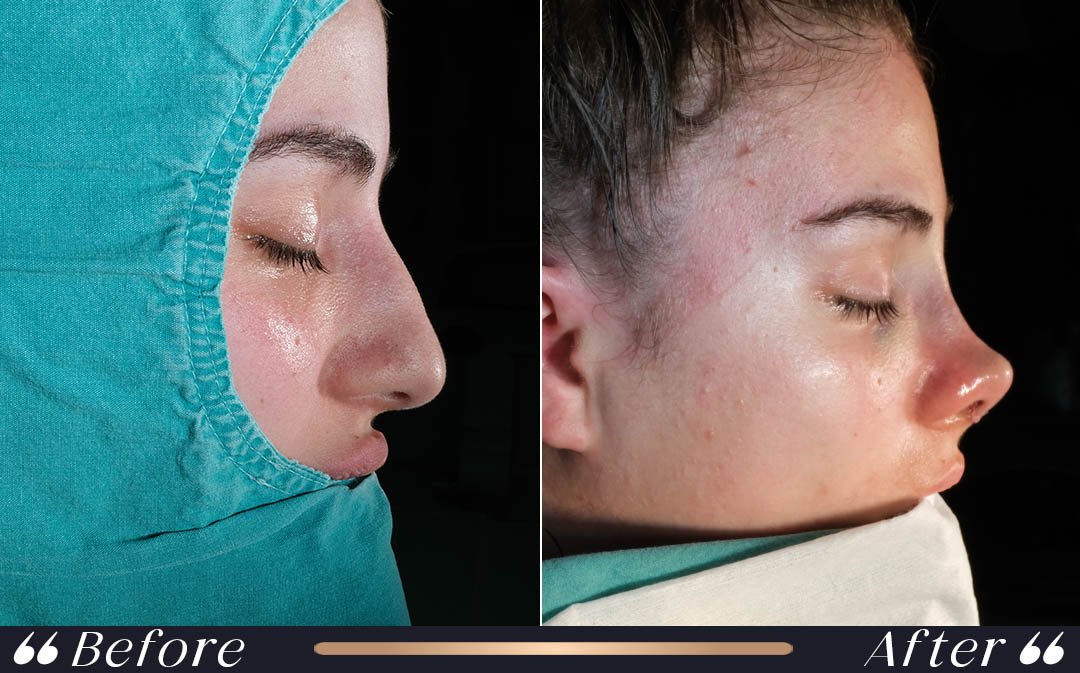
When patients search for rhinoplasty before and after photographs, they often want to understand how much their own nose could change.
The answer is individual because rhinoplasty is not based on applying the same nose shape to every face.
Potential changes may involve:
The American Society of Plastic Surgeons describes rhinoplasty as a procedure that can improve facial harmony and nasal proportions while addressing concerns involving the bridge, nostrils, nasal tip and asymmetry.
However, surgical planning must respect the patient's existing skin, cartilage, bone structure and overall facial anatomy.
Important: Before and after photographs are examples of individual patient outcomes, not a guarantee that another patient will achieve exactly the same result. Anatomy, skin thickness, healing, surgical requirements and individual goals all affect the final outcome.
Rhinoplasty can address different parts of the nose depending on individual anatomy and treatment objectives.
Some patients are concerned about a prominent dorsal hump or irregularity along the bridge.
Surgical planning may involve reshaping bone and cartilage to create a smoother profile when appropriate.
The tip may be refined when concerns involve width, projection, definition, rotation or asymmetry.
Tip surgery can be particularly complex because cartilage support must be considered alongside the desired aesthetic change.
Selected rhinoplasty procedures may change the apparent width of the nasal bones, bridge or nostril base.
When clinically appropriate, nostril width or shape can be considered during treatment planning.
A successful result is not simply about making the nose smaller.
The goal of individualized planning is to consider how the nose relates to the forehead, eyes, cheeks, lips, chin and overall facial profile.
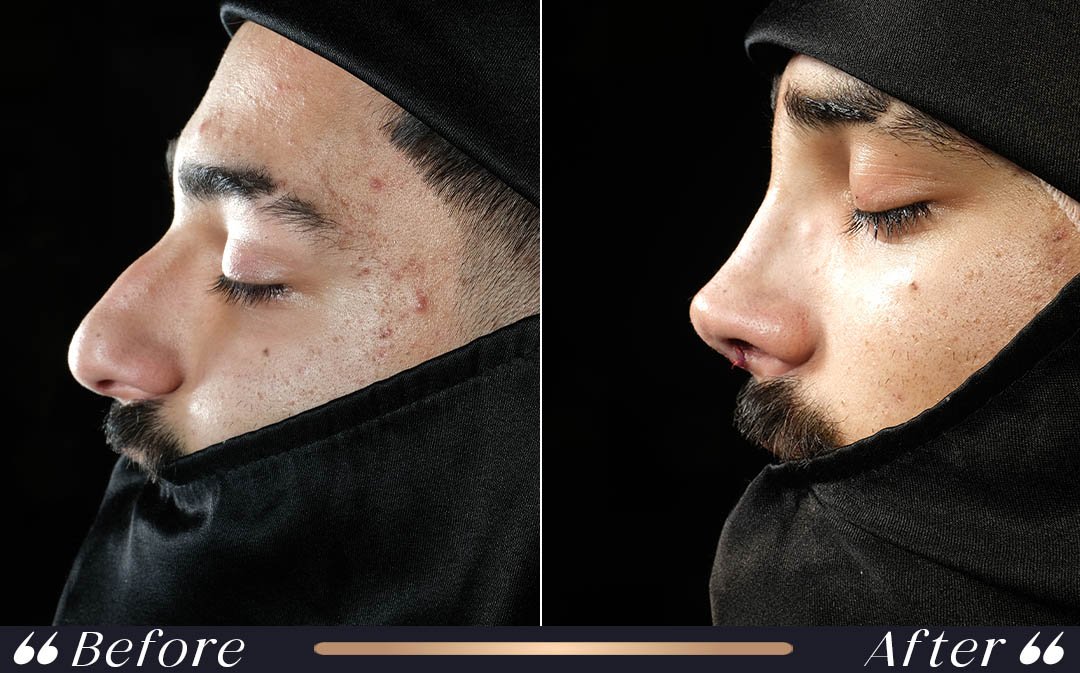
One of the biggest mistakes when judging rhinoplasty before and after results is assuming that the nose seen a few days after surgery represents the final outcome.
Rhinoplasty recovery is gradual.
| Recovery Stage | What You May See | How to Interpret the Result |
|---|---|---|
| First Week | Swelling, bruising, splint or dressings and temporary asymmetry. | Far too early to judge the final result. |
| Weeks 2–4 | Major bruising may improve and swelling begins to reduce. | The overall change becomes easier to see, but refinement is incomplete. |
| 1–3 Months | The bridge often becomes more defined while residual swelling remains, especially around the tip. | A clearer impression of the new shape develops. |
| 3–6 Months | Progressive refinement continues. | Subtle changes can still occur as tissues settle. |
| 6–12 Months | Residual swelling continues to decrease. | The nose increasingly approaches its longer-term contour. |
| Around 1 Year+ | Most refinement has occurred, although subtle changes can continue in some patients. | This period is generally more appropriate for evaluating a mature result. |
The American Society of Plastic Surgeons states that initial swelling generally reduces within weeks, while the new nasal contour can take up to a year to fully refine.
Some patients, particularly those with thicker skin or extensive tip work, may require longer for the final refinement to become apparent.
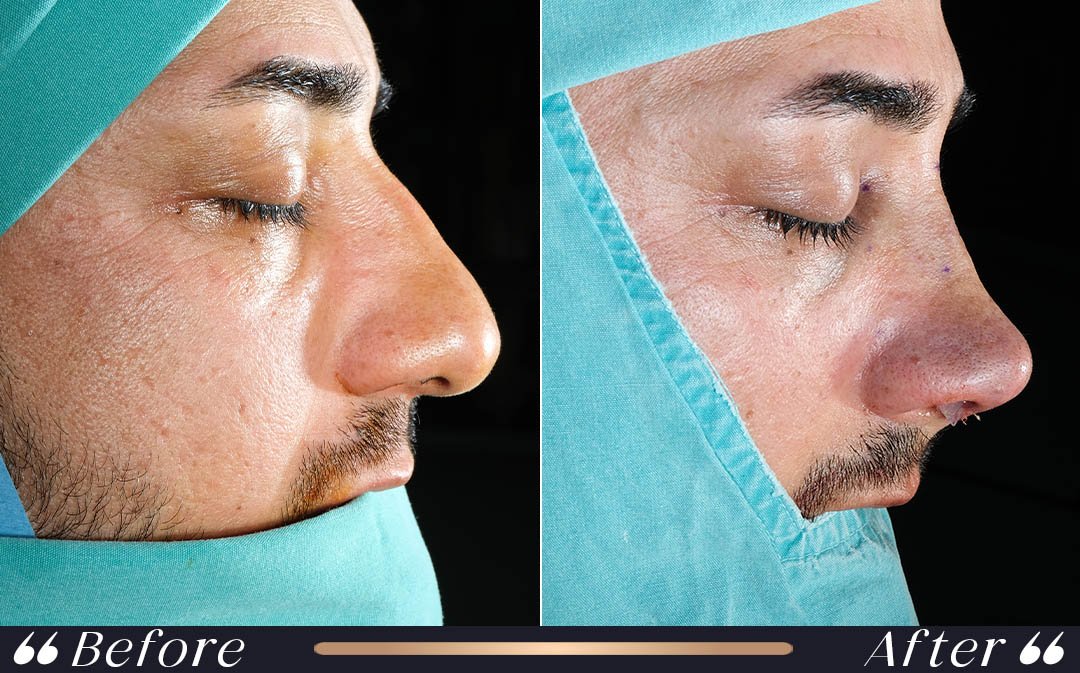
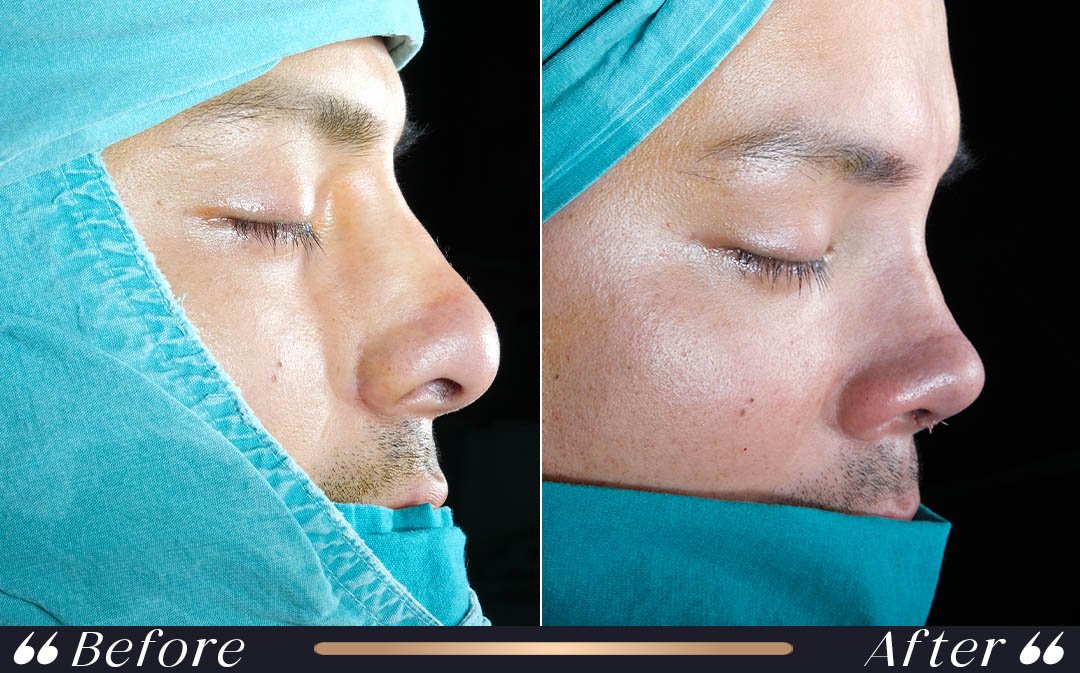
A prominent bridge or dorsal hump can influence the relationship between the nose, lips and chin when viewed from the side.
Rhinoplasty may change the profile by reshaping the bridge or adjusting tip projection when appropriate.
The goal should generally be facial balance rather than simply producing the smallest possible nose.
Patients may seek treatment because the tip appears wide, drooping, poorly defined or disproportionately projected.
Tip refinement can involve modifying existing cartilage and, in selected cases, using structural support techniques.
However, the tip is also commonly one of the last areas to lose postoperative swelling.
Visible deviation or asymmetry may be addressed when anatomy allows.
Perfect mathematical symmetry cannot be guaranteed because human faces are naturally asymmetric and healing can also occur differently between sides.
Some treatment plans may include modifications to nostril width or shape.
These changes should be planned carefully to maintain appropriate proportion with the rest of the nose.
A patient may see a dramatic improvement from the profile while frontal changes remain subtler.
This is why high-quality rhinoplasty before and after photography should include consistent views from multiple angles.
The nose you see shortly after splint removal is not the final nose.
Swelling progressively decreases and tissues settle over many months.
Patience is therefore an important part of rhinoplasty recovery.
Natural-looking rhinoplasty is not defined by one universal nose shape.
A result may appear natural when the nose is proportionate to the patient's facial anatomy and does not look disconnected from surrounding features.
Important considerations can include:
This is why choosing a nose shape from another person's photograph is not a reliable treatment plan.
Reference photographs can help communicate preferences, but the final surgical strategy should be based on individual anatomy and realistic possibilities.
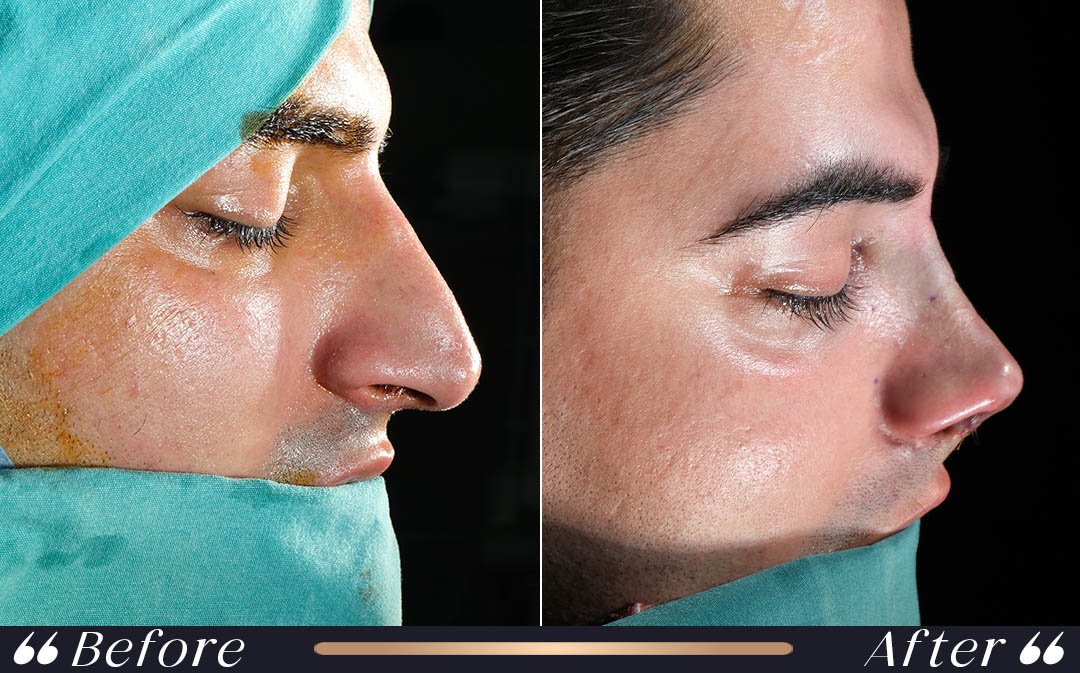
Swelling is one of the most important factors to understand when evaluating rhinoplasty before and after photographs.
During the first days and weeks, swelling can make the nose appear:
These appearances do not necessarily represent the final result.
ASPS notes that the soft tissues of the nose can retain swelling for an extended period and that the final contour can take many months to emerge.
This is particularly relevant when comparing online before and after images. A photograph taken one month after surgery should not be compared directly with a photograph showing another patient's one-year result without acknowledging the difference in healing stage.
Healing is not always perfectly symmetrical.
One side may temporarily hold more swelling than the other, creating an appearance of unevenness during recovery.
Your surgeon should determine whether a change represents normal healing or requires further assessment.
The nasal tip commonly remains swollen longer than the bridge.
This is especially relevant when more extensive tip work has been performed or when the patient has thicker skin.
ASPS notes that the tip is often one of the areas where swelling persists longest and that full healing can extend to a year or even longer in some patients.
Therefore, judging tip definition only a few weeks after surgery can create unrealistic concerns.
If your primary objective involves tip refinement, ask your surgeon specifically how long your own anatomy may take to settle.
Professional rhinoplasty before and after evaluation should include several standardized angles.
The front view can show:
The side profile can show:
The three-quarter view can be particularly useful for evaluating the transition between the bridge and tip and understanding how the nose sits within the overall face.
The base view can help show nostril shape, tip structure and symmetry from below.
Before and after photographs are most useful when lighting, camera distance, head position and facial expression are consistent.
Open and closed rhinoplasty refer to different surgical access approaches.
In closed rhinoplasty, incisions are generally placed within the nostrils.
Open rhinoplasty includes an additional incision across the columella, the tissue between the nostrils, allowing greater exposure of certain nasal structures.
One technique is not universally better than the other.
The appropriate approach depends on the changes required, anatomy, previous surgery and professional surgical judgement.
ASPS notes that open approaches can be associated with more tip swelling in some cases, while they may be useful when greater tip exposure and refinement are required.
A dorsal hump is one of the common concerns seen in rhinoplasty consultations.
Reshaping the bridge can change the side profile significantly.
However, simply removing a hump without considering nasal width, tip position and facial proportions may not create a balanced result.
Surgical planning therefore needs to consider the nose as a complete three-dimensional structure.
A nasal tip that appears downward-pointing or becomes more prominent when smiling may be a treatment concern for some patients.
Depending on anatomy, tip support and rotation can be considered during rhinoplasty planning.
The objective should be a stable and proportionate result rather than excessive upward rotation.
A nose may appear wide because of the nasal bones, bridge, tip cartilage, nostril base or a combination of these structures.
For this reason, “making the nose narrower” is not a single standard procedure.
The surgeon first needs to determine which anatomical structures create the perceived width.
Realistic expectations are central to a responsible rhinoplasty consultation.
Rhinoplasty can produce meaningful aesthetic changes, but surgery cannot guarantee:
The ASPS advises thinking about plastic surgery as improvement rather than perfection.
This is especially relevant for rhinoplasty because relatively small structural changes can have a noticeable effect on facial appearance.
Reference photographs can be useful communication tools, but they should not be treated as exact surgical templates.
Two patients can have very different:
As a result, a nose that looks balanced on one person may not suit or be anatomically achievable for another.
A professional consultation should identify what aspects of a reference image you like and then assess what may realistically be achieved with your anatomy.
Rhinoplasty results are generally intended to be long-lasting.
ASPS states that most of the improvement from rhinoplasty should be relatively permanent, although natural aging continues to affect the face and nose over time.
Long-term appearance can also be influenced by:
Protecting the nose from injury during recovery and following postoperative instructions are therefore important.
A 10-day postoperative photograph and a one-year postoperative photograph represent very different stages of recovery.
For meaningful rhinoplasty before and after evaluation, you should know how much time passed between surgery and the “after” photograph.
Mature photographs can generally provide a more realistic indication of long-term contour than very early images.
At Yesilkoy Clinic, rhinoplasty is approached through individual medical and aesthetic assessment rather than applying one standard nose shape or surgical technique to every patient.
The clinic's rhinoplasty pathway emphasizes individual assessment, professional planning, structured patient care and postoperative follow-up.
The patient's existing anatomy, medical history, expectations and relevant clinical findings are considered before a treatment strategy is established.
This is especially important when discussing rhinoplasty before and after results because every patient's starting anatomy and healing process are different.
Yesilkoy Clinic also emphasizes that aesthetic surgery should not be planned around a photograph or trend. Reference images can help communicate preferences, but treatment planning should remain based on the individual patient's anatomy and realistic possibilities.
No surgical procedure can be described as completely risk-free. Professional and safety-focused care means assessing suitability, explaining risks and limitations, planning treatment individually, obtaining informed consent and providing appropriate postoperative follow-up.
Yesilkoy Clinic also provides access to institutional information, including its Health Tourism Authorization and Facility License, allowing international patients to review relevant clinic information before travelling.
For additional educational information, visit the Yesilkoy Clinic Plastic Surgery Blog.
To discuss your nose, expectations and individual treatment options, visit the Yesilkoy Clinic contact page.
Before choosing a clinic or surgeon, evaluate photographs carefully rather than focusing only on dramatic transformations.
Look for:
ASPS specifically recommends reviewing a prospective surgeon's before and after photographs because they can help demonstrate the type of work and results produced.
Before and after photographs are medical and personal information.
Responsible presentation should respect patient consent and privacy.
Yesilkoy Clinic's website presents selected aesthetic transformations with privacy controls so users actively choose to reveal patient-result imagery.
Patients considering treatment should also understand how their own photographs may be used and should be asked for appropriate consent before publication.
The first week is generally characterized by the most visible early recovery changes.
Depending on the procedure and surgeon's protocol, patients may have:
ASPS notes that splints and sutures are commonly removed during the first week and that bruising under the eyes often improves substantially during this early period.
Your own surgeon's instructions should take priority because recovery protocols differ.
At approximately one month, many patients can see a much clearer change compared with the immediate postoperative period.
However, residual swelling is still expected.
The bridge may appear substantially more refined while the tip can remain fuller than the eventual result.
This is why one-month rhinoplasty before and after photographs should be described as early results rather than final results.
At six months, a substantial portion of healing has usually occurred.
The nasal contour may look considerably more refined, but subtle changes can continue.
Patients with thicker skin or extensive tip surgery may still notice gradual refinement beyond six months.
Around the one-year point is commonly used as an important milestone for evaluating mature rhinoplasty results.
ASPS states that the final nasal contour may take up to a year to fully refine.
Some patients continue to experience subtle changes beyond this point, particularly around the nasal tip.
Your outcome is influenced by more than the surgical plan alone.
Factors can include:
This explains why two people receiving apparently similar surgical changes can heal differently.
Patients should follow the specific warning signs provided by their treating team.
Unexpected or concerning symptoms may include:
Do not judge a medical complication from a before and after photograph or online discussion. If you have concerning symptoms following rhinoplasty, contact your treating medical team for appropriate assessment.
Rhinoplasty recovery takes months, not days.
Postoperative follow-up allows the medical team to evaluate healing, swelling and nasal structure as tissues settle.
Yesilkoy Clinic describes postoperative follow-up as part of its organized patient-care pathway, including communication for international patients after treatment.
You can find further educational content through the Yesilkoy Clinic Plastic Surgery Blog.
Contact Yesilkoy Clinic to discuss your nasal anatomy, aesthetic concerns and realistic treatment goals. Individual assessment can help determine what changes may be appropriate for your face and what you can realistically expect from rhinoplasty.
Request a ConsultationRhinoplasty before and after changes can become visible early, but swelling means the initial appearance is not the final result. Significant refinement occurs over the following months, and final nasal contour may take approximately one year to become fully apparent.
The nose is usually swollen immediately after surgery and may be covered by a splint or tape. Early appearance should not be used to judge the final result.
Most visible swelling improves progressively during the first weeks and months, but subtle swelling—particularly around the tip—can persist for many months.
ASPS states that final nasal contour can take up to approximately one year to fully refine. Some patients may continue to notice subtle improvement beyond this point.
Temporary uneven swelling can occur during recovery. If you are concerned about asymmetry or another change, your treating surgeon should assess whether it is part of normal healing.
Rhinoplasty can reduce selected nasal dimensions when appropriate, but the goal should be proportional change based on the patient's anatomy rather than simply creating the smallest possible nose.
Dorsal hump reduction is a common rhinoplasty objective in appropriately selected patients. The complete surgical plan should also consider the bridge, tip and overall facial balance.
Selected tip characteristics can be addressed with rhinoplasty. The appropriate technique depends on cartilage anatomy, skin thickness and desired changes.
Rhinoplasty may improve visible nasal deviation in selected patients, but perfect symmetry cannot be guaranteed.
The procedure changes the nose rather than the entire face, but because the nose occupies a central facial position, even relatively subtle changes can affect overall facial balance.
Rhinoplasty results are intended to be long-lasting. Natural aging and other life changes continue, but ASPS states that most improvement should be relatively permanent.
Swelling and tissue healing continue for many months. A one-month result is still early, while a one-year result generally provides a more mature representation of the surgical outcome.
Reference photographs can communicate preferences, but another person's result cannot be copied exactly because anatomy, skin, cartilage and facial proportions vary.
Look for consistent lighting, similar angles, multiple views and information about how long after surgery the postoperative photographs were taken.
Yesilkoy Clinic describes its rhinoplasty approach as based on individual anatomy, medical history, expectations and professional assessment rather than one standard technique for every patient.
Visit the Yesilkoy Clinic Plastic Surgery Blog for additional educational articles.
Use the Yesilkoy Clinic contact page to request information about rhinoplasty, consultation and treatment planning.
Last updated: October 2026. This article provides general educational information about rhinoplasty results and recovery. Individual anatomy, surgical technique, healing, risks and outcomes vary. Personalised assessment and postoperative advice from the medical team responsible for your treatment should always take priority.