
Round vs Teardrop Breast Implants: 21 Essential Facts for a Confident Choice
Round vs teardrop breast implants is one of the most important design comparisons for people considering breast augmentation. Round implants are symmetrical and can provide upper-breast fullness, while teardrop or anatomical implants have a deliberate taper toward the upper breast. The most suitable choice is never determined by the shape name alone.
This comprehensive guide explains appearance, projection, implant rotation, shell texture, safety risks, breast lift considerations, recovery, cost and long-term follow-up. The aim is to support thoughtful questions during a qualified plastic-surgery consultation rather than promise that one shape will suit every patient.
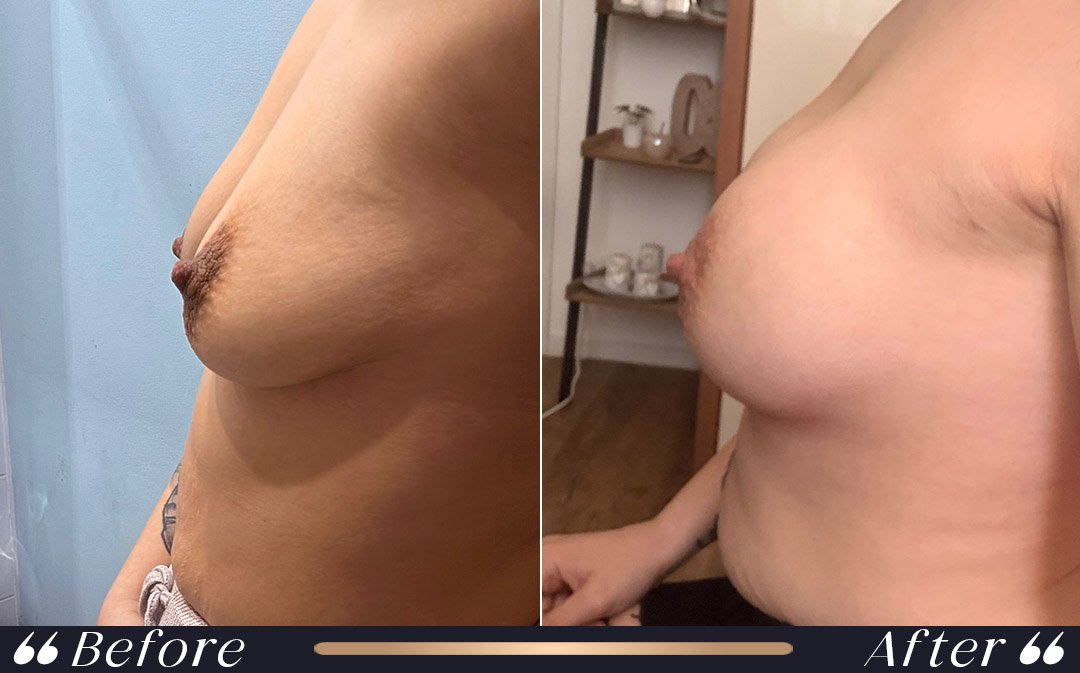
What Are Round Breast Implants?
Round breast implants are symmetrical in outline, with a similar overall contour regardless of rotational orientation. The available range includes different volumes, widths and projection profiles, so round does not mean one fixed look. They can provide noticeable upper-breast fullness, but a carefully fitted round implant can also produce a restrained natural appearance.
The exact appearance depends on existing breast tissue, the chosen implant dimensions, surgical pocket, placement and skin quality. A person with adequate tissue covering the device may see a soft transition, whereas thin covering tissue can make an edge or ripple more apparent.
Because the device is rotationally symmetrical, rotation within the pocket generally does not create the same orientation-related distortion associated with shaped implants. Displacement and other implant problems can still occur.
The relevant choice is not made by comparing two pictures of implants outside the body. The surgeon needs to evaluate soft-tissue thickness, breast width, skin stretch and the relationship between the nipple and the inframammary fold. Ask how the proposed device is expected to behave within your own tissues, and which limitations will remain even with careful technique.
What Are Teardrop Breast Implants?
Teardrop implants, also called anatomical or shaped implants, have more volume toward the lower portion and taper toward the upper portion. Their shape is intended to approximate certain natural breast contours, but whether that effect is desirable depends on the patient.
A shaped implant has an intended upright orientation. Rotation can alter the contour and occasionally require assessment or corrective treatment. Surface design and implant availability vary, and no single textured product should be assumed appropriate or currently available.
Teardrop implants are not automatically more natural after surgery. Tissue characteristics, implant size and the skill of surgical planning can make either shape look natural or conspicuous.
It helps to distinguish a design feature from a clinical outcome. A shape can create a particular potential contour, but healing, positioning and the starting breast all influence what actually becomes visible. Discuss the expected front and side views together, and avoid using a single celebrity photograph as the standard for success.
Round vs Teardrop Breast Implants: Main Differences
The most visible design distinction is symmetry. Round devices distribute their shape evenly around the center; teardrop devices have an intentional top-to-bottom slope. This distinction influences how surgeons discuss fullness, projection and the risk of visible orientation changes.
Neither shape is inherently the best choice for every body. The breast envelope, chest-wall width, position of the nipple and amount of native tissue all affect the outcome. A label such as anatomical should not replace measurements and examination.
Importantly, shape, surface texture, filler material and profile are separate characteristics. A patient should request the specific device details, not just the broad words round or teardrop.
For patients arranging treatment abroad, written documentation makes follow-up safer. Keep information about the manufacturer, implant model, shell surface, size and surgeon. Before travelling, confirm where an unexpected postoperative concern will be evaluated and how records can be transferred to a clinician close to home.
Which Shape Looks More Natural?
Natural appearance is personal and anatomical. Some people define it as a gentle upper slope, whereas others want a fuller cleavage that still suits their proportions. Both round and shaped implants can meet selected goals.
A 2019 systematic review did not find overall aesthetic superiority for anatomical implants over round implants. Individual studies can vary, and study populations may not represent every patient, so consultations remain essential.
Rather than asking which label produces a universally natural result, examine the likely proportions, tissue coverage and surgeon-suggested dimensions for your own body.
Any claim that an implant type is completely safe, permanent or guaranteed to look natural should be questioned. Shared decision-making means understanding alternative devices, the potential need for future surgery and the reasons for a particular recommendation. A lower-risk or smaller approach may also deserve discussion.
Upper-Pole Fullness Compared
The upper pole is the portion of the breast above the nipple. Round devices are often discussed when a patient seeks more upper-breast volume, especially when a higher-profile option is selected.
Anatomical designs have relatively more fullness toward the lower pole and may create a graduated upper contour. Nevertheless, the chest wall, implant position and existing breast tissue can make differences subtle.
An implant should be selected for an overall proportionate shape rather than for one photographic angle. Excessive fullness can be unwanted for some patients, while limited upper fullness may disappoint others.
Consider your longer-term priorities as well as appearance immediately after surgery. Weight changes, pregnancy, aging and changes in personal preference can alter how an augmentation is perceived. A realistic plan acknowledges that implants require monitoring and that some people eventually consider removal or revision.
Lower-Pole Contour and Breast Slope
Lower-pole fullness helps define the arc beneath the nipple and the way the breast transitions into the inframammary fold. Anatomical implants intentionally allocate volume toward this region.
Round implants also settle into an appearance influenced by gravity, tissue response and their profile, and they can produce a natural slope. The results cannot be predicted from an implant sitting on a table.
A surgeon should assess lower-pole skin, nipple position and the existing fold before recommending a device. Underlying asymmetry can make exact matching impossible.
The relevant choice is not made by comparing two pictures of implants outside the body. The surgeon needs to evaluate soft-tissue thickness, breast width, skin stretch and the relationship between the nipple and the inframammary fold. Ask how the proposed device is expected to behave within your own tissues, and which limitations will remain even with careful technique.
Projection and Implant Profiles
Projection refers to how far the breast extends forward from the chest. Implant volume measured in cubic centimeters does not specify projection by itself. Devices with the same volume can have different widths and projected profiles.
A narrower higher-profile round implant can create greater forward projection than a wider lower-profile device. Anatomical implants also come in dimension and projection choices, subject to the available product range.
Ask to compare manufacturer measurements for the actual devices being considered. Choosing only by a cup-size ambition can lead to mismatched width or expectations.
It helps to distinguish a design feature from a clinical outcome. A shape can create a particular potential contour, but healing, positioning and the starting breast all influence what actually becomes visible. Discuss the expected front and side views together, and avoid using a single celebrity photograph as the standard for success.
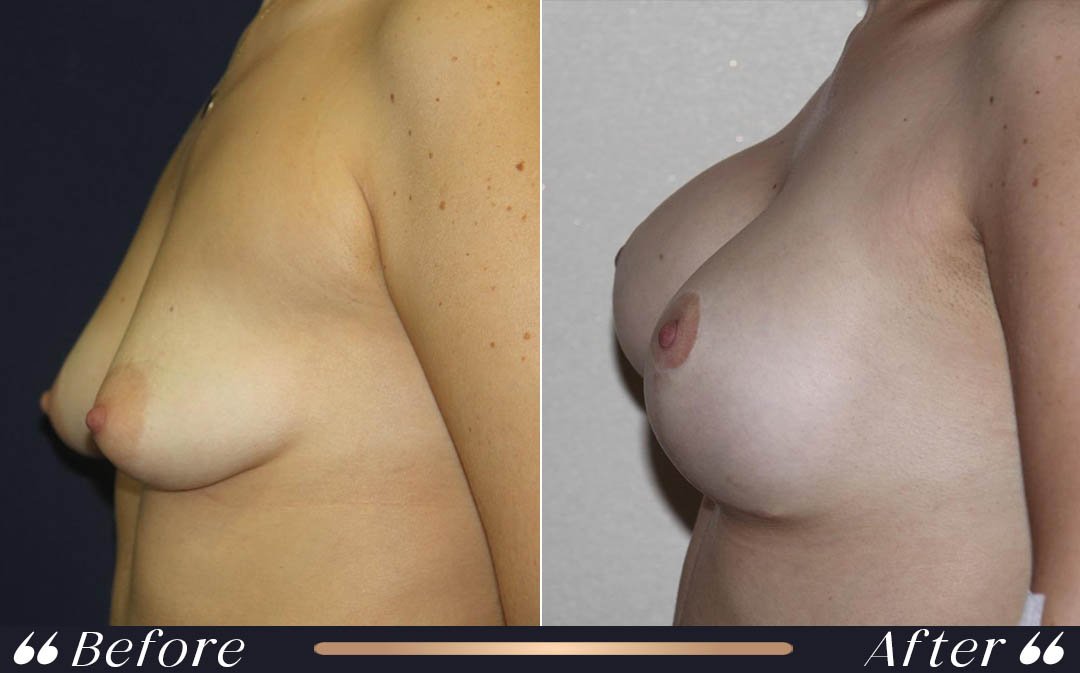
How Implant Volume Changes the Comparison
A 250 cc device and a 400 cc device will not create the same result even if they share a shape category. Volume has to be considered together with implant width, projection, tissue coverage and the patient’s existing size.
Cup-size conversion charts are unreliable because bra sizing systems differ and the same volume looks different on different chest frames. Selection should start with measurements and a conversation about proportions.
A larger device can increase tissue strain and may change the risks of visible edges, discomfort or future revision. The right size is an individualized decision, not a universal fashionable number.
For patients arranging treatment abroad, written documentation makes follow-up safer. Keep information about the manufacturer, implant model, shell surface, size and surgeon. Before travelling, confirm where an unexpected postoperative concern will be evaluated and how records can be transferred to a clinician close to home.
Why Breast Base Width Matters
Breast base width describes the horizontal foundation available for the implant. A device much wider than the suitable pocket can create unwanted lateral fullness or a less natural transition.
A narrow device chosen only for dramatic projection may also produce an appearance that does not match the patient’s expectations. Measurements guide the selection of both shape and profile.
Ask your surgeon how the selected implant matches breast width and existing asymmetry. A technical measurement should always be connected to the aesthetic goal and safe tissue limits.
Any claim that an implant type is completely safe, permanent or guaranteed to look natural should be questioned. Shared decision-making means understanding alternative devices, the potential need for future surgery and the reasons for a particular recommendation. A lower-risk or smaller approach may also deserve discussion.
Rotation Risk With Anatomical Implants
A shaped implant is designed to sit with a particular orientation. If it turns, the thicker lower portion may no longer align as planned, creating unusual breast contours. This is a distinctive issue compared with round implants.
Round devices can move or shift too, but rotation around their central axis does not usually change their silhouette. The possibility of displacement remains separate from the question of rotation.
The actual frequency of rotation depends on design, pocket technique and patient factors. A consultation should discuss what symptoms to look for and how a suspected rotation would be assessed.
Consider your longer-term priorities as well as appearance immediately after surgery. Weight changes, pregnancy, aging and changes in personal preference can alter how an augmentation is perceived. A realistic plan acknowledges that implants require monitoring and that some people eventually consider removal or revision.
Smooth vs Textured Surfaces
The outer shell can have a smooth or textured surface, and this characteristic must not be confused with implant shape. Texturing has historically been used to encourage tissue adherence and reduce certain movement concerns.
However, the FDA states that breast implant-associated anaplastic large cell lymphoma, or BIA-ALCL, is associated more strongly with textured implants than smooth implants. The degree of risk can differ across texture types and devices.
Ask for the exact manufacturer, model and shell surface. Do not assume all shaped implants use the same texture or that a marketing name reveals the relevant safety profile.
The relevant choice is not made by comparing two pictures of implants outside the body. The surgeon needs to evaluate soft-tissue thickness, breast width, skin stretch and the relationship between the nipple and the inframammary fold. Ask how the proposed device is expected to behave within your own tissues, and which limitations will remain even with careful technique.
Understanding BIA-ALCL
BIA-ALCL is a rare lymphoma associated with breast implants, particularly textured-surface devices. It is not the same disease as ordinary breast cancer. The FDA advises patients considering implants to understand this risk.
Symptoms can include persistent swelling, a new fluid collection, a mass, discomfort or asymmetry around the implant, sometimes years after surgery. These findings have other possible causes too and require professional assessment.
Choosing a device should include a frank discussion of current regulatory information, product-specific risks and follow-up needs. Aesthetic preference should not override an informed safety decision.
It helps to distinguish a design feature from a clinical outcome. A shape can create a particular potential contour, but healing, positioning and the starting breast all influence what actually becomes visible. Discuss the expected front and side views together, and avoid using a single celebrity photograph as the standard for success.
Other Implant-Associated Malignancies and Symptoms
Regulatory information continues to evolve concerning rare cancers and other systemic symptoms reported in people with implants. This reinforces the need for accurate documentation of the device and regular access to clinical evaluation.
An unexplained change in breast size, a new lump, persistent pain or swelling should not be dismissed as normal aging of an implant. The treating clinician may recommend examination or imaging depending on the presentation.
No website can determine whether a symptom is implant-related. Early clinical contact and clear records make evaluation more effective.
For patients arranging treatment abroad, written documentation makes follow-up safer. Keep information about the manufacturer, implant model, shell surface, size and surgeon. Before travelling, confirm where an unexpected postoperative concern will be evaluated and how records can be transferred to a clinician close to home.
Capsular Contracture Explained
The body normally forms a capsule of scar tissue around an implant. Capsular contracture occurs when that capsule tightens enough to change shape, feel or comfort. It can affect both round and anatomical implants.
Risk is influenced by several factors, and surface design is only one part of the discussion. Evidence about prevention and device-specific differences is not uniform across all studies.
A breast that becomes increasingly firm, painful or misshapen should be reviewed by a clinician. Some cases need monitoring while others may require surgery.
Any claim that an implant type is completely safe, permanent or guaranteed to look natural should be questioned. Shared decision-making means understanding alternative devices, the potential need for future surgery and the reasons for a particular recommendation. A lower-risk or smaller approach may also deserve discussion.
Rupture and Implant Integrity
An implant can rupture, whether it is round or shaped. Silicone gel rupture may be difficult to recognize without imaging because it does not always cause a dramatic immediate change in shape.
The FDA provides recommendations for imaging surveillance of silicone gel-filled implants. A common recommendation is ultrasound or MRI beginning five to six years after placement and every two to three years thereafter, with additional imaging if symptoms or concerns arise.
Patients should keep their implant card and follow the current instructions applicable to their device. No implant should be described as a lifetime device.
Consider your longer-term priorities as well as appearance immediately after surgery. Weight changes, pregnancy, aging and changes in personal preference can alter how an augmentation is perceived. A realistic plan acknowledges that implants require monitoring and that some people eventually consider removal or revision.
Rippling and Palpability
Rippling refers to folds or surface changes that can sometimes be seen or felt through the breast tissues. It depends on implant characteristics and the thickness of tissue covering the device.
People with thin breast tissue or limited soft-tissue coverage may be more likely to notice implant edges. Device choice and placement can influence the result, but risk cannot be eliminated.
Surgeons may discuss alternative profiles, placement or fat grafting in selected circumstances. Each option has its own limitations and possible complications.
The relevant choice is not made by comparing two pictures of implants outside the body. The surgeon needs to evaluate soft-tissue thickness, breast width, skin stretch and the relationship between the nipple and the inframammary fold. Ask how the proposed device is expected to behave within your own tissues, and which limitations will remain even with careful technique.
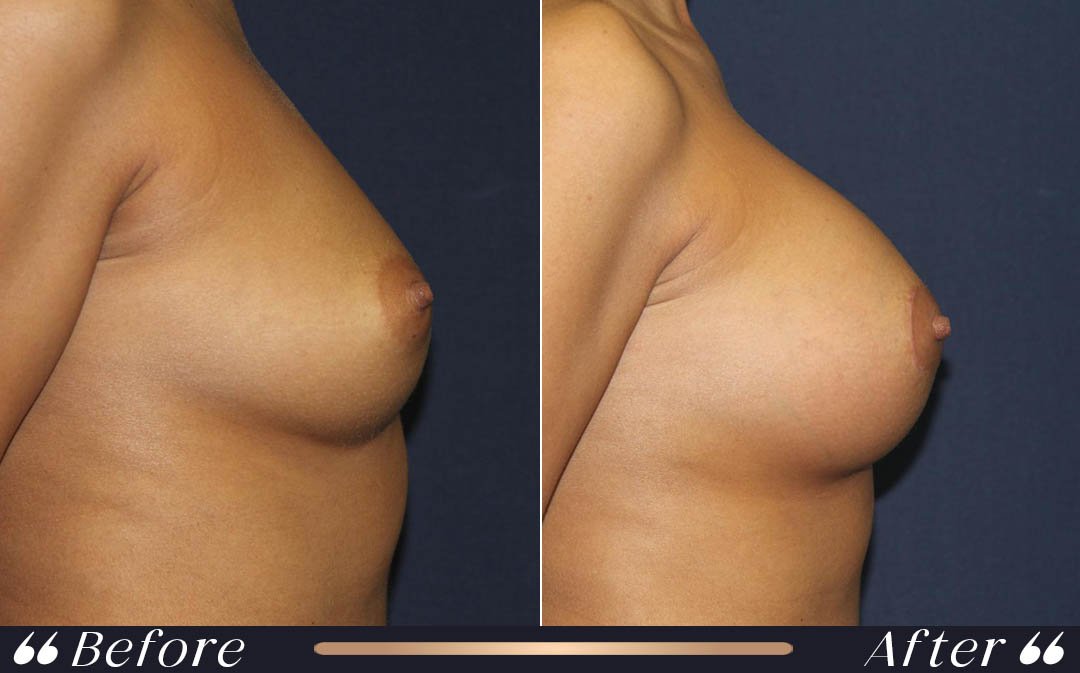
How Implant Placement Affects Appearance
Implants can be positioned in different tissue planes, including under breast tissue or with partial muscle coverage. The appropriate plane depends on anatomy, existing tissue and the surgeon’s assessment.
Placement influences coverage, motion, possible animation changes, recovery discomfort and how an implant contributes to shape. A round implant placed thoughtfully may differ substantially from an identical implant placed in another plane.
Discuss why a particular plane is recommended for your tissue and implant selection. There is no one placement that solves every concern.
It helps to distinguish a design feature from a clinical outcome. A shape can create a particular potential contour, but healing, positioning and the starting breast all influence what actually becomes visible. Discuss the expected front and side views together, and avoid using a single celebrity photograph as the standard for success.
Do Round Implants Feel Different?
How an augmented breast feels depends on gel cohesivity, shell, size, tissue coverage and healing. Round implants come in different cohesive gel formulations and may feel different even within one category.
It is inaccurate to assume that every round implant is soft and every shaped implant is firm. Some anatomical designs use highly cohesive gel to maintain their intended shape, but products vary.
Touching sample implants can help patients understand differences, yet samples cannot exactly reproduce the feel of an implant beneath living tissue.
For patients arranging treatment abroad, written documentation makes follow-up safer. Keep information about the manufacturer, implant model, shell surface, size and surgeon. Before travelling, confirm where an unexpected postoperative concern will be evaluated and how records can be transferred to a clinician close to home.
How Cohesive Silicone Gel Works
Cohesive silicone gel is formulated to hold together rather than behave like a free-flowing liquid. Implant cohesivity can affect shape retention, movement and perceived firmness.
Form-stable devices may use a particularly cohesive gel, but round implants can also contain cohesive silicone. The relationship between gel consistency and natural appearance is not straightforward.
Request product literature for the actual proposed implant. A device’s marketing label alone does not communicate all relevant characteristics or risks.
Any claim that an implant type is completely safe, permanent or guaranteed to look natural should be questioned. Shared decision-making means understanding alternative devices, the potential need for future surgery and the reasons for a particular recommendation. A lower-risk or smaller approach may also deserve discussion.
Can Teardrop Implants Correct Sagging?
Implants add volume, but they do not reliably lift breasts with substantial skin excess or low nipple position. A breast lift, also called mastopexy, addresses different anatomical issues.
A teardrop implant does not substitute for lifting a nipple or tightening a markedly lax breast envelope. Adding volume alone can produce an unsatisfactory result if sagging is the primary concern.
A surgeon should examine the location of the nipples, breast folds and skin quality before advising whether augmentation, lift or a combined plan is appropriate.
Consider your longer-term priorities as well as appearance immediately after surgery. Weight changes, pregnancy, aging and changes in personal preference can alter how an augmentation is perceived. A realistic plan acknowledges that implants require monitoring and that some people eventually consider removal or revision.
Round Implants With a Breast Lift
Some patients consider adding round implants during a breast lift to restore volume while repositioning breast tissues. The combination is more complex than either operation alone and needs careful planning.
The degree of lift and implant size can influence scar design, tissue tension and potential revision. A higher-profile device is not automatically the best way to achieve upper fullness.
Discuss whether staged operations might be preferable and how postoperative restrictions will differ. Results cannot be guaranteed from a single example photograph.
The relevant choice is not made by comparing two pictures of implants outside the body. The surgeon needs to evaluate soft-tissue thickness, breast width, skin stretch and the relationship between the nipple and the inframammary fold. Ask how the proposed device is expected to behave within your own tissues, and which limitations will remain even with careful technique.
Breast Reconstruction Versus Cosmetic Augmentation
Breast reconstruction after mastectomy involves different tissue conditions and objectives from routine cosmetic augmentation. Anatomical implants may be considered in reconstruction, but round devices can also be suitable.
Prior radiation, skin quality, reconstructive stage and muscle or tissue-flap choices can change the plan. Research in reconstruction should not be indiscriminately applied to primary cosmetic surgery.
Patients seeking reconstruction deserve consultation with a team experienced in their particular clinical situation and should receive information about all feasible alternatives.
It helps to distinguish a design feature from a clinical outcome. A shape can create a particular potential contour, but healing, positioning and the starting breast all influence what actually becomes visible. Discuss the expected front and side views together, and avoid using a single celebrity photograph as the standard for success.
What Research Says About Aesthetic Superiority
A systematic review published in 2019 found no clear overall aesthetic superiority of anatomical implants compared with round implants across the included studies. It also found that identifying implant shape from postoperative appearance was unreliable in pooled assessments.
Another smaller comparative study published in 2023 detected shape differences in a specific same-patient setting. These findings illustrate why study design, sample size and the question asked matter.
Patients can reasonably conclude that shape affects possibilities but does not determine a universally superior cosmetic result. Individual examination remains central.
For patients arranging treatment abroad, written documentation makes follow-up safer. Keep information about the manufacturer, implant model, shell surface, size and surgeon. Before travelling, confirm where an unexpected postoperative concern will be evaluated and how records can be transferred to a clinician close to home.
Choosing Implants for a Petite Frame
A smaller chest frame may limit the comfortable implant width and the amount of tissue coverage available. For some patients, a moderate device may better fit the native breast and avoid an exaggerated transition.
The choice is not simply petite equals teardrop or petite equals round. Both categories include designs that may or may not suit the measured base width and soft tissues.
A responsible consultation should explain how the proposed dimensions relate to body proportion, tissue strain and long-term expectations.
Any claim that an implant type is completely safe, permanent or guaranteed to look natural should be questioned. Shared decision-making means understanding alternative devices, the potential need for future surgery and the reasons for a particular recommendation. A lower-risk or smaller approach may also deserve discussion.
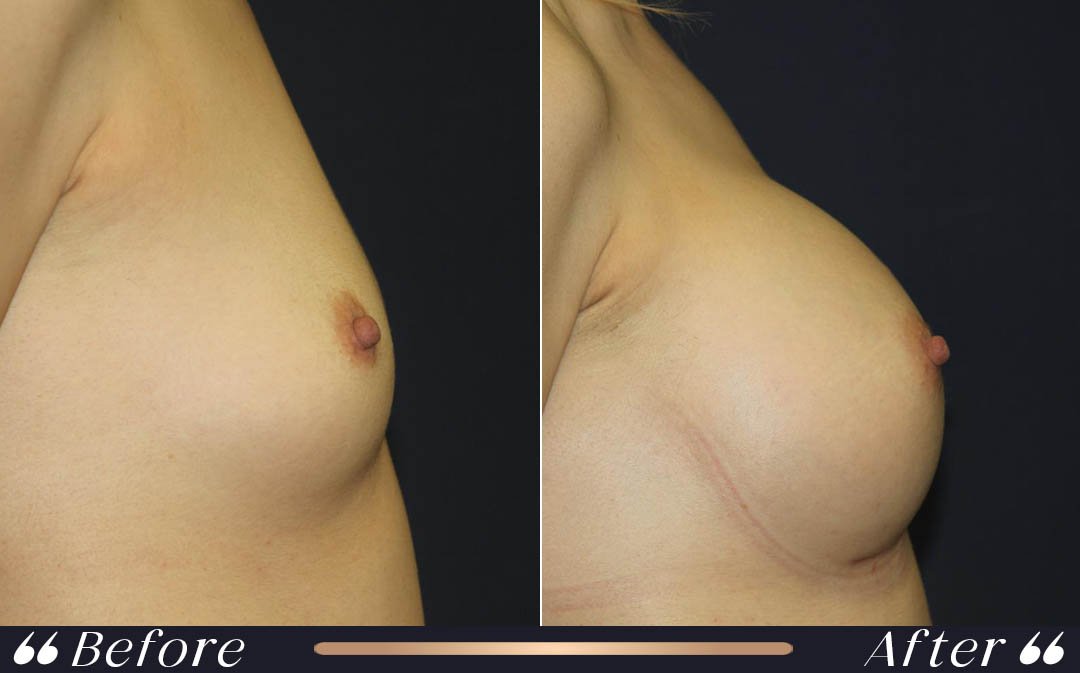
Choosing for a Wider Chest
A wider chest can influence the implant base width needed to produce balanced positioning. Wider devices may provide different lateral contours and upper fullness than narrower, more projecting designs.
Whether a round or anatomical implant fits this geometry depends on the available model dimensions and the patient’s desired silhouette. Existing asymmetry may also require individual adjustments.
Ask to examine front and side proportions together rather than concentrating on the view from one angle.
Consider your longer-term priorities as well as appearance immediately after surgery. Weight changes, pregnancy, aging and changes in personal preference can alter how an augmentation is perceived. A realistic plan acknowledges that implants require monitoring and that some people eventually consider removal or revision.
Existing Breast Asymmetry
Most bodies have some degree of asymmetry, including differences in breast volume, shape, nipple position or chest-wall contour. Implants can sometimes improve balance but cannot guarantee perfect symmetry.
Different implant volumes or profiles may be discussed, yet the underlying fold and tissue envelope can remain different. A shaped implant could create extra challenges if orientation changes later.
Before-and-after comparisons should use standardized angles, and the consultation should identify which asymmetries may persist even after surgery.
The relevant choice is not made by comparing two pictures of implants outside the body. The surgeon needs to evaluate soft-tissue thickness, breast width, skin stretch and the relationship between the nipple and the inframammary fold. Ask how the proposed device is expected to behave within your own tissues, and which limitations will remain even with careful technique.
Which Implant May Suit an Athletic Lifestyle?
Exercise interests can affect how patients think about muscle-related motion, recovery and long-term comfort. For example, strong pectoral activity may influence visible implant movement in some placements.
This issue does not automatically favor round or teardrop shape. Placement, implant dimensions, soft tissue and the type of exercise matter more than a broad label.
Discuss specific sports, lifting patterns and recovery constraints with the surgeon. Do not assume intense training can resume immediately after cosmetic surgery.
It helps to distinguish a design feature from a clinical outcome. A shape can create a particular potential contour, but healing, positioning and the starting breast all influence what actually becomes visible. Discuss the expected front and side views together, and avoid using a single celebrity photograph as the standard for success.
Recovery Timeline After Breast Augmentation
Early recovery can involve soreness, swelling, bruising and restrictions on lifting or vigorous activity. The precise timeline depends on implant placement, combined procedures, individual health and complications.
The shape of an implant alone does not set a universal return-to-work or gym date. Postoperative instructions should cover wound care, supportive garments, medication and scheduled examinations.
New fever, spreading redness, severe pain, unexpected swelling or other concerning symptoms deserve prompt medical advice.
For patients arranging treatment abroad, written documentation makes follow-up safer. Keep information about the manufacturer, implant model, shell surface, size and surgeon. Before travelling, confirm where an unexpected postoperative concern will be evaluated and how records can be transferred to a clinician close to home.
When Are Final Results Visible?
The breast contour can change as postoperative swelling decreases and tissues adapt. Position and softness may continue evolving over weeks and months, and the pace varies.
An early photograph does not reliably show the final projection or upper-pole slope. Patients should follow their surgeon’s guidance before making judgments about symmetry or implant position.
Persistent or worsening asymmetry, deformity or pain should be evaluated instead of dismissed as settling.
Any claim that an implant type is completely safe, permanent or guaranteed to look natural should be questioned. Shared decision-making means understanding alternative devices, the potential need for future surgery and the reasons for a particular recommendation. A lower-risk or smaller approach may also deserve discussion.
Round vs Teardrop Breast Implants and Cost
Prices depend on the manufacturer, device model, surgery complexity, hospital, anaesthesia and follow-up arrangements. Anatomical products can be priced differently from round products, but no price advantage should be assumed for every clinic.
An international quote should specify medical fees, implant brand and model, hospital care, medications, garments and any travel services. Request documentation for what happens if further treatment is needed.
Avoid choosing an implant primarily because its package costs less. The recommended device should reflect medical suitability, informed preferences and available safety information.
Consider your longer-term priorities as well as appearance immediately after surgery. Weight changes, pregnancy, aging and changes in personal preference can alter how an augmentation is perceived. A realistic plan acknowledges that implants require monitoring and that some people eventually consider removal or revision.
How Long Do Breast Implants Last?
The FDA emphasizes that breast implants are not lifetime devices. Some people keep implants for many years without problems, while others need removal or replacement because of complications or changing goals.
There is no universally mandatory replacement date that applies to every implant in the absence of a clinical reason. Follow-up and the instructions specific to silicone implant imaging are important.
Keep the implant identification details and arrange assessment if the breast changes or symptoms develop.
The relevant choice is not made by comparing two pictures of implants outside the body. The surgeon needs to evaluate soft-tissue thickness, breast width, skin stretch and the relationship between the nipple and the inframammary fold. Ask how the proposed device is expected to behave within your own tissues, and which limitations will remain even with careful technique.
Revision Surgery and Implant Removal
Revision may be considered for rupture, capsular contracture, displacement, dissatisfaction or a change in personal preference. Reoperation may involve replacing or removing the implant and sometimes modifying the pocket or breast tissues.
A revision is not automatically a minor procedure. Scar tissue, existing skin, previous implants and the reason for surgery can make planning more complex.
Ask about the possibility of future surgery and its financial and recovery implications before undergoing an initial augmentation.
It helps to distinguish a design feature from a clinical outcome. A shape can create a particular potential contour, but healing, positioning and the starting breast all influence what actually becomes visible. Discuss the expected front and side views together, and avoid using a single celebrity photograph as the standard for success.
Breastfeeding and Future Pregnancy
Pregnancy, breastfeeding and hormonal changes can alter breast volume and skin elasticity, influencing the appearance of implants over time. This is true for both round and teardrop devices.
Surgical incision and placement choices may also be relevant to future breastfeeding concerns, but individual outcomes cannot be guaranteed. Discuss plans openly during consultation.
An implant shape cannot prevent age-related or pregnancy-related body changes, and a future lift or revision may eventually be considered.
For patients arranging treatment abroad, written documentation makes follow-up safer. Keep information about the manufacturer, implant model, shell surface, size and surgeon. Before travelling, confirm where an unexpected postoperative concern will be evaluated and how records can be transferred to a clinician close to home.
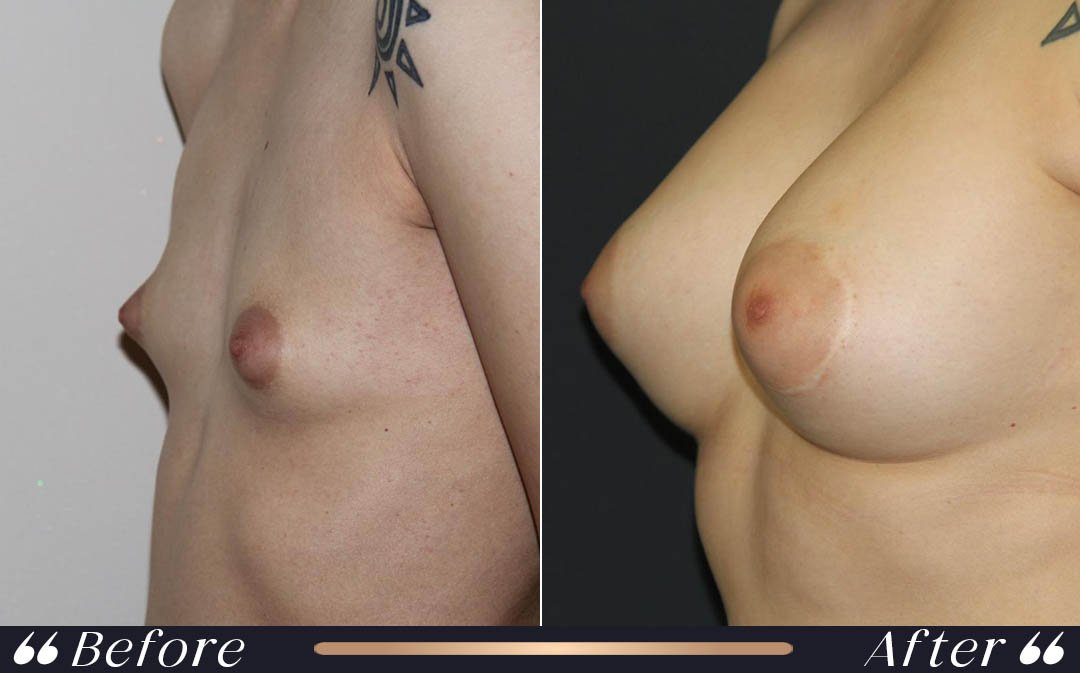
Before-and-After Photos: How to Judge Them
Photographs are more useful when lighting, posture, camera angle, time after surgery and whether other operations were performed are stated. A dramatic cleavage image alone may misrepresent the overall shape.
Try to examine examples with comparable baseline tissue and chest proportions. Ask whether the photographs show round or anatomical implants and which profile and placement were used.
No other patient’s result can be copied exactly. The purpose of reference images is communication, not a guarantee.
Any claim that an implant type is completely safe, permanent or guaranteed to look natural should be questioned. Shared decision-making means understanding alternative devices, the potential need for future surgery and the reasons for a particular recommendation. A lower-risk or smaller approach may also deserve discussion.
Questions to Ask Your Plastic Surgeon
Ask why a round or anatomical implant is being recommended for your anatomy and preferred appearance. Request the device model, surface, size, width, projection, filling and available safety documentation.
Discuss rotation, rupture, contracture, rippling, BIA-ALCL and the need for imaging and possible revision. Ask about the surgeon’s experience and the operating facility.
A good consultation allows room for alternatives, including a smaller implant, a lift, fat grafting or no surgery.
Consider your longer-term priorities as well as appearance immediately after surgery. Weight changes, pregnancy, aging and changes in personal preference can alter how an augmentation is perceived. A realistic plan acknowledges that implants require monitoring and that some people eventually consider removal or revision.
Considering Breast Implants in Turkey
Patients travelling to Istanbul should review the operating surgeon’s credentials, the planned facility and any relevant health-tourism authorization. Interpretation and transport services can help logistics but do not establish surgical quality.
Arrange sufficient time for examination and postoperative review. Confirm who will answer clinical questions after you return home and where urgent problems will be managed.
A written quote and realistic travel schedule are preferable to pressure to book before medical assessment.
The relevant choice is not made by comparing two pictures of implants outside the body. The surgeon needs to evaluate soft-tissue thickness, breast width, skin stretch and the relationship between the nipple and the inframammary fold. Ask how the proposed device is expected to behave within your own tissues, and which limitations will remain even with careful technique.
Round vs Teardrop Implants at Yesilkoy Clinic
Prospective patients can use the clinic’s contact route to discuss breast augmentation goals and request an individualized consultation. The clinical recommendation should follow examination and consideration of available implant options.
Ask who would operate, where the procedure would occur, what specific device is proposed, which risks apply and how follow-up is arranged. Do not interpret a general online article as a personal treatment recommendation.
The most appropriate option may be round, anatomical, another approach or no surgery. A responsible decision reflects patient preferences and informed medical judgment.
It helps to distinguish a design feature from a clinical outcome. A shape can create a particular potential contour, but healing, positioning and the starting breast all influence what actually becomes visible. Discuss the expected front and side views together, and avoid using a single celebrity photograph as the standard for success.
Round vs Teardrop Implant Comparison Table
| Feature | Round | Teardrop / anatomical |
|---|---|---|
| Shape | Symmetrical overall outline | Fuller lower pole and tapered upper pole |
| Rotation | Orientation change usually not visible | Rotation may visibly distort contour |
| Upper fullness | Often selected when more upper fullness is wanted | Designed with a more graduated upper slope |
| Natural appearance | Possible with individualized sizing and placement | Possible, but not guaranteed by shape |
| Shell surface | Smooth and some textured options, subject to market | Surface availability varies by specific device |
| Safety | General implant risks apply | General implant risks plus orientation-specific concerns |
| Cost | Depends on model and provider | Depends on model and provider |
Round vs Teardrop Breast Implants: Frequently Asked Questions
Which is better, round or teardrop breast implants?
Neither is universally better. Shape selection depends on anatomy, desired contour, device characteristics and the surgeon’s assessment.
Do round breast implants look fake?
Not necessarily. Properly selected round implants can produce a natural appearance.
Are teardrop implants always more natural?
No. Research has not established overall aesthetic superiority for anatomical implants.
Can a teardrop implant rotate?
Yes. Rotation can change the visible breast shape because anatomical implants have a designed orientation.
Does a round implant rotate?
It can rotate inside the pocket, but its symmetrical shape generally avoids orientation-related contour changes.
Are anatomical implants textured?
Some anatomical devices use textured surfaces, but do not assume every product has the same surface. Ask for exact model information.
What is BIA-ALCL?
A rare lymphoma associated more strongly with textured breast implants than smooth implants.
Are smooth implants risk-free?
No. All implants have potential complications, including rupture, contracture, infection and reoperation.
Which shape gives more upper fullness?
Round implants are often chosen for upper fullness, but size, profile, tissue and placement also matter.
Which shape gives a gentle slope?
Anatomical designs have a lower-pole emphasis, though selected round implants may also look gently sloped.
Are round implants softer?
Feel depends on gel consistency, shell, size and tissue coverage, not shape alone.
Can teardrop implants correct sagging?
They do not reliably replace a breast lift when significant skin laxity or nipple descent exists.
What does implant projection mean?
Projection is how far the implant extends forward from the chest at a given design and dimension.
Does 350 cc mean a specific cup size?
No. Cup size is not predictable from cc alone because anatomy and bra sizing vary.
Do breast implants last forever?
No. The FDA states that implants are not lifetime devices.
When is silicone implant imaging recommended?
FDA recommendations commonly include ultrasound or MRI starting five to six years after surgery and every two to three years afterward.
Can I breastfeed with implants?
Some people can, but surgical factors and individual circumstances affect outcomes; discuss plans with your surgeon.
Will implants feel different during sports?
Feel and visible movement depend on placement, tissue and exercise; ask about your specific activity.
Can both shapes be used in reconstruction?
Yes, depending on reconstructive goals and tissue conditions.
Is one shape cheaper?
Prices vary by product and provider. Request an itemized patient-specific quote.
Is capsular contracture possible with either shape?
Yes. Scar-tissue tightening can affect either implant shape.
What are signs of a possible complication?
New persistent swelling, a lump, pain, hardening, fever or unexpected shape changes should be assessed.
How long is recovery?
Initial recovery often takes weeks, but timelines depend on the operation and individual healing.
Will a larger implant give better cleavage?
Not automatically. Anatomy, pocket, dimensions and tissue coverage are important.
What if I do not want a very full upper breast?
Discuss moderate projection, appropriate volume and available shapes with the surgeon.
Can I change implant shape during revision?
A change may be possible after assessment, but revision has its own risks and technical limitations.
How can I compare implant options?
Request model dimensions, surface details, photos relevant to your anatomy and a thorough risk discussion.
Where can I ask for a consultation?
Use the official Yesilkoy Clinic contact page to discuss assessment and available treatment options.
Request an Individual Breast Augmentation Consultation
Contact Yesilkoy Clinic to discuss your preferences, anatomy, available implant shapes, material and surface information, potential complications, expected recovery and personalized planning. A consultation does not guarantee surgery will be recommended.
Request a ConsultationMedical References and Further Reading
- American Society of Plastic Surgeons — Types of Breast Implants
- American Society of Plastic Surgeons — Which Shape Is Best?
- FDA — Types of Breast Implants
- FDA — Questions About BIA-ALCL
- PubMed — Round vs Anatomical Implant Systematic Review
- PubMed — Comparison of Implant Shapes in the Same Patient
For related educational articles, visit the Yesilkoy Clinic blog.
Last reviewed: November 2026. Product availability, regulatory recommendations and individualized surgical suitability should be verified at consultation.