Tummy tuck recovery is a gradual process that changes significantly from the first few days after surgery to the following weeks and months. Patients commonly experience swelling, tightness, bruising, reduced mobility and temporary changes in sensation while the abdominal tissues heal.
A tummy tuck, medically known as abdominoplasty, is major surgery. It may involve removal of excess abdominal skin and fat, tightening of weakened or separated abdominal muscles and repositioning of the belly button depending on the procedure performed.
Because of this, recovery should never be rushed or compared too closely with another patient's experience. Your age, overall health, extent of surgery, whether muscle repair or liposuction was performed and your body's healing response can all influence the recovery timeline.
At Yeşilköy Clinic in Istanbul, tummy tuck procedures are planned within an individualized medical pathway involving experienced specialist doctors. Recovery instructions are tailored according to the procedure performed, the patient's condition and the surgeon's assessment.
Quick Answer: Most patients require approximately 4–6 weeks for the main tummy tuck recovery period, although swelling, scar maturation and final contour development continue for several months. Light walking usually begins early, while heavy lifting and strenuous exercise are generally restricted for several weeks.
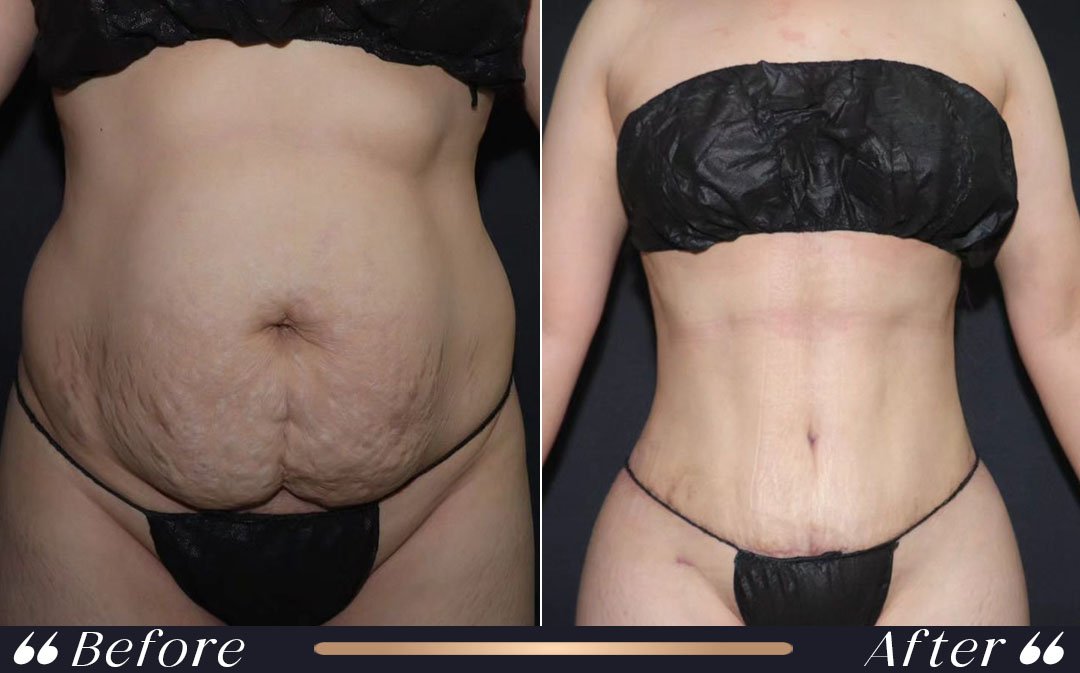
During a tummy tuck, excess skin is removed and the abdominal tissues are repositioned. In some patients, the surgeon also repairs weakened or separated abdominal muscles. Liposuction may also be performed in selected areas.
These changes create swelling and tension in the abdomen during the early healing period. Patients may therefore initially walk slightly bent forward and feel pulling or tightness around the lower abdomen.
Cleveland Clinic notes that discomfort, bruising, numbness and a pulling or tight sensation are common during early recovery. Final results continue improving as swelling decreases over several months. :contentReference[oaicite:1]{index=1}
For this reason, tummy tuck recovery should be viewed as a process rather than a single recovery date.
The first several days are generally the most demanding stage of recovery.
Patients can commonly experience:
Dressings will usually cover the incision. Depending on the surgical technique, drainage tubes may also be used temporarily to remove fluid from the surgical area.
Early walking is usually encouraged because remaining completely immobile can increase the risk of blood clots. However, walking should be short, controlled and according to the medical team's instructions.
Chelsea and Westminster Hospital NHS Foundation Trust recommends mobility from the first day after abdominoplasty and advises short walks while protecting the abdominal area. :contentReference[oaicite:2]{index=2}
You should not attempt to stand aggressively upright if your abdomen feels very tight. Your surgeon may advise a slightly flexed position during the earliest stage of healing.
During week one, swelling and tightness usually remain noticeable. The abdomen may feel firm, and movement is commonly slower than normal.
This is generally not the time to resume work, housework, lifting or exercise.
You may need assistance with everyday activities, particularly during the first few days. Patients with young children should arrange help because lifting a child can place excessive strain on the abdominal wall and incision.
The American Society of Plastic Surgeons notes that patients commonly have limited mobility immediately after surgery and may need help at home during the first stage of recovery. :contentReference[oaicite:3]{index=3}
Gentle walking is generally beneficial when approved by your medical team.
Short walks around your room or home can support circulation and gradually improve mobility.
However, you should avoid:
Your surgeon may recommend sleeping with your upper body and knees slightly elevated to reduce tension on the abdominal incision.
The exact position should follow your surgeon's instructions because recommendations may vary according to the surgery performed.
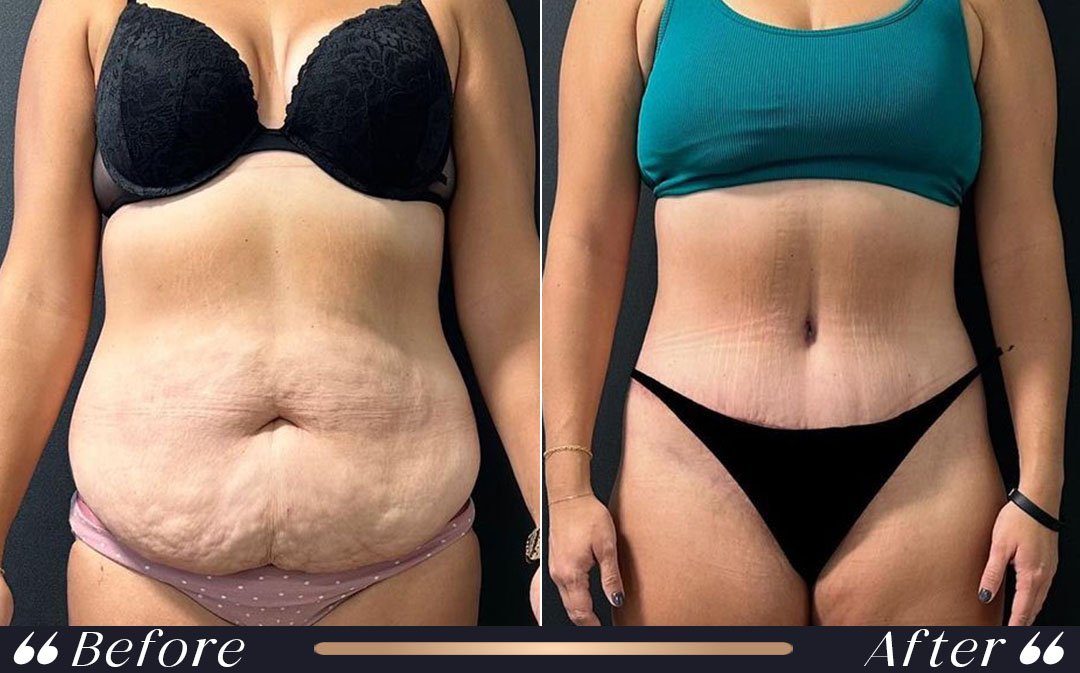
During the second week, many patients begin to feel noticeably better than during the first several days.
You may gradually find it easier to walk and complete basic daily activities.
Swelling is still expected and the abdomen may continue to feel tight.
Bruising often starts to decrease, although it can remain visible.
Cleveland Clinic notes that many patients begin feeling more like themselves after a couple of weeks, although bruising, numbness and tightness may still be present. :contentReference[oaicite:4]{index=4}
This depends heavily on the type of work you do.
A patient with a desk-based job may potentially return earlier than someone whose work requires lifting, bending or prolonged standing.
Chelsea and Westminster NHS guidance notes that stamina generally starts improving from week two, but also states that some patients may be advised to take at least four weeks away from work depending on their surgery and occupation. :contentReference[oaicite:5]{index=5}
Your own surgeon's recommendation should always take priority.
By week three, many patients experience a significant improvement in everyday comfort.
Walking often feels more natural, and daily activities may become easier.
However, internal tissues are still healing even if the outside appearance seems significantly better.
This is one reason patients should not assume that feeling better means the abdomen is fully healed.
Light walking may normally be increased according to medical advice.
Chelsea and Westminster NHS guidance allows light exercise such as walking during weeks three and four but advises avoiding vigorous activity and abdominal-focused exercise. :contentReference[oaicite:6]{index=6}
Avoid testing the abdomen with sit-ups, weight training or high-intensity cardio unless your surgeon specifically approves it.
Week four is often an important milestone in tummy tuck recovery.
Many patients feel much more comfortable moving around and may have returned to non-physical work.
Swelling is typically reduced compared with the first two weeks, although it is normal for the abdomen to remain swollen, especially later in the day.
The incision may look red or firm at this stage. Scar appearance continues changing for many months.
Driving should not resume until you are physically able to react safely, perform an emergency stop and are no longer affected by medications that impair driving.
The NHS notes that patients may be unable to drive for several weeks after abdominoplasty and should follow their surgeon's and insurer's advice. :contentReference[oaicite:7]{index=7}
By weeks five and six, many patients are approaching the end of the main recovery phase.
The NHS advises that people undergoing tummy tuck surgery may need approximately 4–6 weeks away from work and exercise and that recovery commonly takes around six weeks. :contentReference[oaicite:8]{index=8}
The abdomen may still have residual swelling and numbness, but movement is usually significantly easier than during the early stages.
Patients may also begin noticing the new abdominal contour more clearly as swelling decreases.
The NHS notes that patients are commonly advised to wear a supportive corset or tummy-control garment for around six weeks to help support healing and reduce swelling. :contentReference[oaicite:9]{index=9}
Your surgeon's specific garment instructions may differ, so you should follow the duration and fit recommended for your procedure.
Heavy lifting is generally restricted throughout the early recovery period.
Hull University Teaching Hospitals NHS Trust advises avoiding strenuous exercise and heavy lifting, including lifting children, for at least six weeks after abdominoplasty. :contentReference[oaicite:10]{index=10}
Between weeks six and eight, patients who are healing normally may receive permission to begin returning to a wider range of activities.
Chelsea and Westminster NHS guidance states that moderate exercise such as running or swimming may be resumed during weeks six to eight, beginning at a low level and watching for warning signs such as pain. :contentReference[oaicite:11]{index=11}
This does not mean every patient should immediately return to their pre-surgery exercise intensity.
Exercise should be reintroduced progressively.
Patients who have undergone muscle repair or additional procedures may require a different timeline.
Although the main recovery period is measured in weeks, the abdomen continues changing for several months.
Residual swelling decreases gradually and the abdominal contour becomes more defined.
Cleveland Clinic notes that the final result may take up to around three months to become apparent, while scar appearance can continue improving for up to a year. :contentReference[oaicite:12]{index=12}
Some patients may experience temporary numbness or altered sensation around the lower abdomen for weeks or months.
ASPS also notes that swelling and bruising can take months to fully settle and that scar fading continues beyond the early recovery period. :contentReference[oaicite:13]{index=13}
Swelling occurs because surgery creates inflammation and temporarily disrupts normal lymphatic drainage in the treated area.
The abdomen may therefore look flatter in the morning and more swollen later in the day, particularly during the earlier stages of recovery.
Swelling should gradually improve rather than suddenly disappear.
Compression garments, activity recommendations and follow-up care should be followed according to your medical team's instructions.
During the earliest days after surgery, many patients naturally walk with a slight bend at the hips because the abdomen feels tight.
This helps reduce tension on the incision.
The ability to stand fully upright generally improves progressively as swelling and tissue tension decrease.
Do not force your posture abruptly. Follow your surgeon's instructions and allow your body to progress naturally.
There is no universal date that applies to every tummy tuck patient.
Early in recovery, many patients are advised to sleep on their back with their hips and knees slightly flexed.
Side sleeping may be permitted later once the incision and abdominal wall have healed sufficiently.
Your surgeon should determine when changing sleeping positions is appropriate.
Sleeping directly on the abdomen too early can place pressure on healing tissues.
For this reason, stomach sleeping is generally delayed until the surgeon believes the abdominal area has healed enough to tolerate the pressure.
Do not use a generic online timeline as a substitute for medical clearance.
Exercise is one of the most common questions during tummy tuck recovery.
The general progression often looks like this:
The exact progression depends on your surgery and healing.
A tummy tuck leaves a permanent scar, usually positioned across the lower abdomen where it can often be hidden by underwear or swimwear.
A full abdominoplasty generally also produces a scar around the belly button.
The NHS notes that patients should expect a lower abdominal scar and, in full abdominoplasty, a scar around the umbilicus. :contentReference[oaicite:14]{index=14}
During the first few weeks, the scar may look red, raised, firm or darker than surrounding skin.
The scar gradually begins to soften and mature.
Its appearance can still change considerably during this period.
Cleveland Clinic notes that tummy tuck scars can continue improving for up to approximately one year. :contentReference[oaicite:15]{index=15}
Scar outcome varies according to genetics, skin type, wound healing, surgical technique and post-operative care.
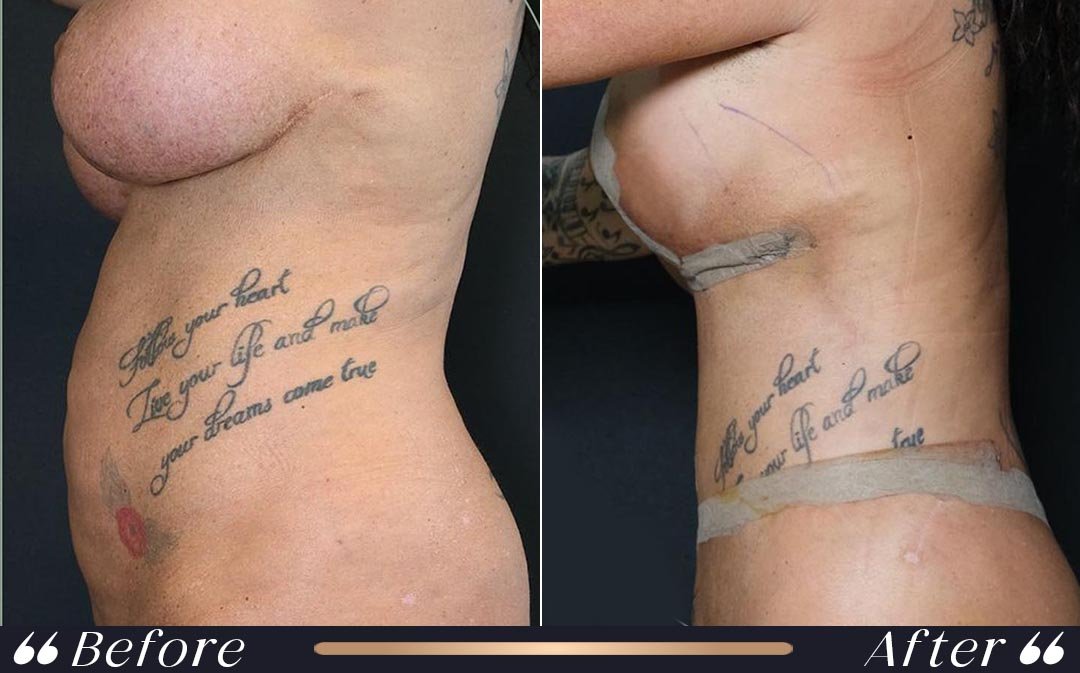
Some patients ask about lymphatic massage to help with post-operative swelling.
This should only be performed if the operating surgeon approves it.
The timing, technique and suitability vary depending on the surgery performed and how the incision is healing.
Do not allow aggressive massage over a recently operated abdomen without medical approval.
Good nutrition supports wound healing and general recovery.
Patients should aim for a balanced diet containing appropriate protein, vegetables, fruit and adequate fluids unless they have specific dietary restrictions.
Constipation may occur after surgery because of reduced activity or certain pain medications.
Your healthcare team can advise on hydration, diet and medication if this becomes a problem.
Smoking and nicotine can impair circulation and interfere with wound healing.
Cleveland Clinic notes that tobacco use increases the risk of complications and delayed healing and that patients may be instructed to stop smoking before and after surgery. :contentReference[oaicite:16]{index=16}
Patients should follow their surgeon's exact recommendations regarding cigarettes, vaping, nicotine pouches and other nicotine products.
Some swelling, bruising and discomfort are expected. However, certain symptoms require prompt medical attention.
If you develop chest pain, breathing difficulty or symptoms that may represent a blood clot or another emergency, seek urgent medical care.
Abdominoplasty carries recognized risks including bleeding, infection, fluid collection, poor wound healing, scarring, numbness and blood clots. :contentReference[oaicite:17]{index=17}
Recovery does not end when the patient leaves the hospital or returns home.
Follow-up allows the medical team to evaluate wound healing, swelling, scar progression and overall recovery.
It also gives patients an opportunity to ask when they can safely return to work, exercise, driving and other activities.
International patients should understand how follow-up will continue after they leave Turkey.
At Yeşilköy Clinic, tummy tuck treatment is planned around the individual patient rather than using a single recovery schedule for everyone.
Experienced specialist doctors evaluate factors such as abdominal anatomy, skin excess, previous pregnancies or weight loss, general health and whether muscle repair or additional procedures are required.
This individualized planning is important because the extent of surgery directly affects the tummy tuck recovery process.
The aim is to combine appropriate surgical planning with clear post-operative instructions and follow-up throughout recovery.
You can review the Yeşilköy Clinic doctors and learn more about the medical team before requesting a consultation.
Patients considering abdominoplasty abroad should look beyond the surgery itself and evaluate the full medical pathway.
At Yeşilköy Clinic, the approach emphasizes:
No responsible medical provider can guarantee a completely complication-free recovery, which is why appropriate assessment and follow-up are important.
Request information based on your anatomy, medical history and treatment goals and learn what your individual recovery pathway may involve.
Contact Yeşilköy ClinicMedical Information Notice: This article provides general educational information only. Recovery times vary between patients and do not replace advice from your surgeon or healthcare team. Always follow the instructions given by the medical professionals responsible for your treatment.
The main recovery period is commonly around 4–6 weeks, although residual swelling, numbness and scar maturation can continue for several months.
For many patients, the first week is the most challenging because swelling, tightness, discomfort and reduced mobility are usually most noticeable during this period.
Yes. Short, gentle walking is generally encouraged early in recovery to support circulation and reduce the risks associated with prolonged immobility. Follow your surgeon's specific instructions.
Patients often stand slightly bent during the early days because of abdominal tightness. Posture usually improves gradually as tissues heal. Do not force yourself upright before it feels comfortable or before your surgeon advises it.
Many patients require several weeks away from work. Desk-based work may sometimes be resumed earlier than physically demanding employment. NHS guidance generally describes a 4–6 week recovery period.
Walking begins early, but strenuous exercise is generally restricted for several weeks. Moderate exercise may gradually return around weeks six to eight in suitable patients when approved by the surgeon.
Heavy lifting, including lifting children, is generally avoided during the early recovery period. NHS hospital guidance advises avoiding heavy lifting for at least six weeks.
Swelling improves gradually over weeks and months. Some residual swelling can remain beyond the initial six-week recovery period.
The incision generally heals much earlier, but scar maturation takes considerably longer. Scar color, firmness and appearance can continue improving for approximately one year or longer.
Temporary numbness or altered sensation around the lower abdomen can occur after surgery and may persist for weeks or months. Discuss persistent or concerning symptoms with your surgeon.
Visit the Yeşilköy Clinic contact page to request an assessment. You can also review the Yeşilköy Clinic doctors before beginning the consultation process.
Last updated: September 2026. This recovery timeline provides general educational guidance. Individual recovery depends on the type of tummy tuck performed, additional procedures, medical history and the surgeon's assessment.