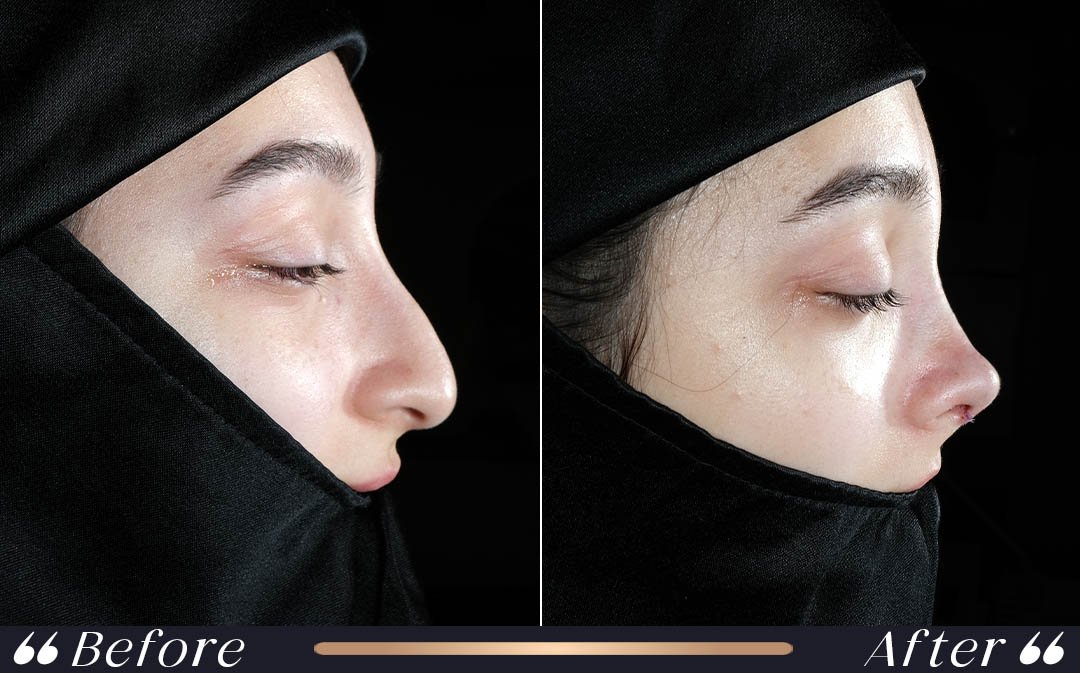
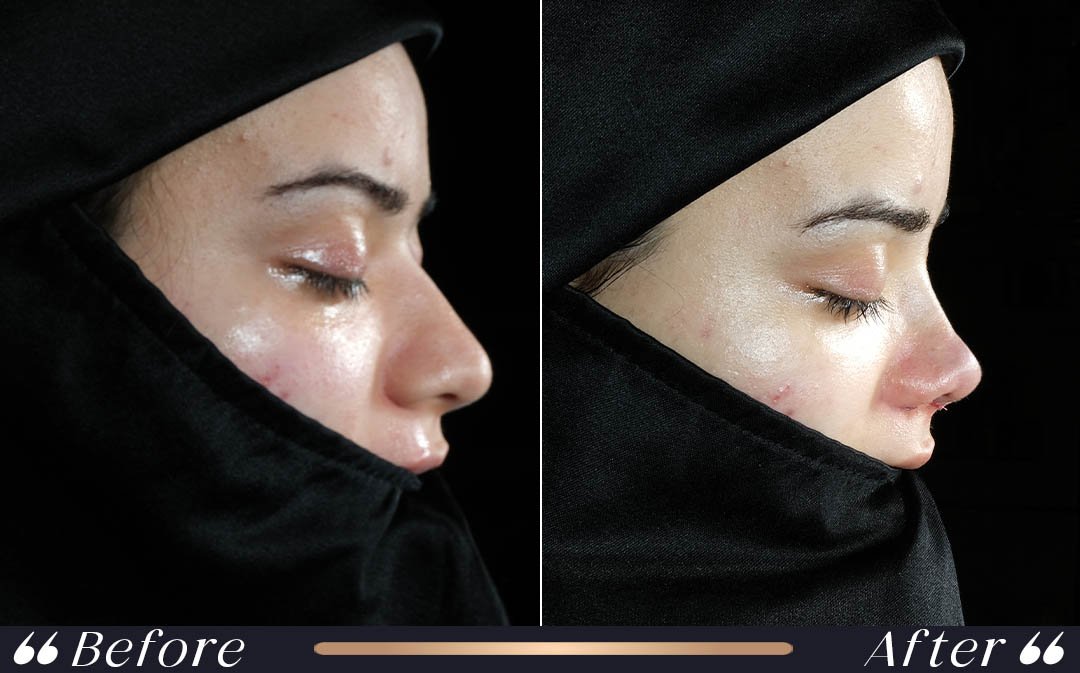
Turkey nose job before and after is one of the most searched topics among patients considering rhinoplasty in Istanbul. Before-and-after photographs can be useful for understanding the type of changes rhinoplasty may achieve, but they should never be interpreted as a guarantee that every patient will have the same result.
Rhinoplasty results develop gradually. Early swelling, bruising and tissue changes can make the nose look different from week to week, so the appearance seen shortly after surgery should not be mistaken for the final outcome.
A responsible turkey nose job before and after comparison should therefore consider both the visible aesthetic change and the recovery timeline behind that change.
Quick answer: When reviewing turkey nose job before and after results, expect the biggest visible changes to appear gradually rather than immediately. Bruising and major swelling often improve during the first few weeks, but finer nasal definition can continue developing for many months. ASPS notes that the final nasal contour can take up to a year to fully refine.
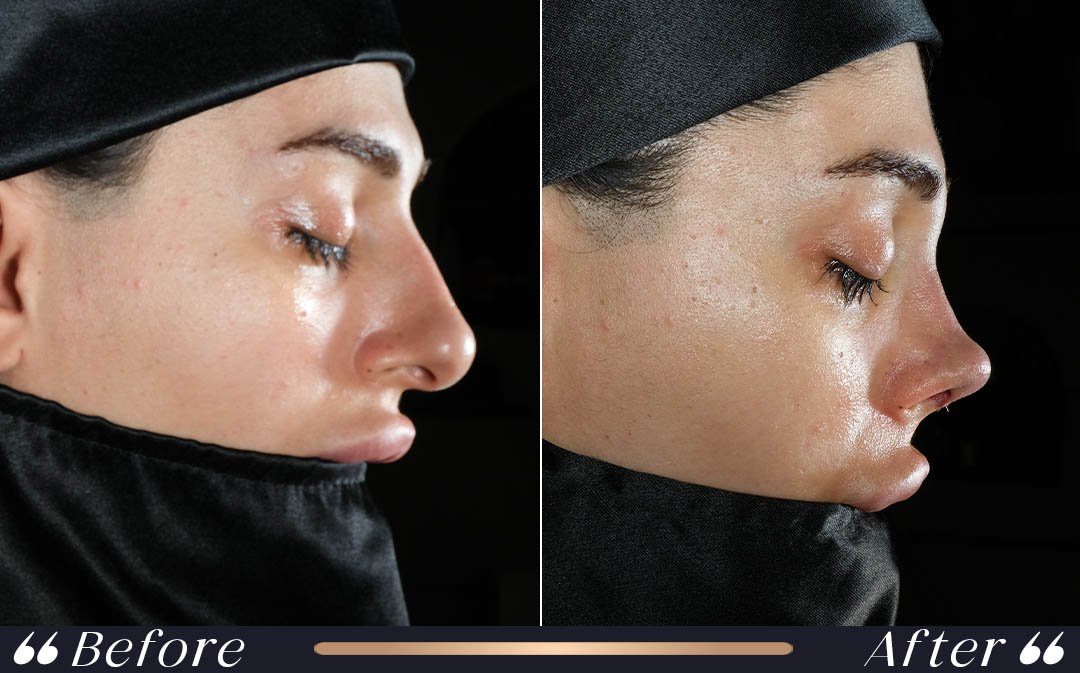
A good turkey nose job before and after comparison should show realistic changes that respect the patient's facial anatomy rather than an exaggerated or standardized nose shape.
Rhinoplasty may be performed to address concerns involving:
ASPS describes rhinoplasty as a procedure that can improve facial harmony and nasal proportions. In appropriate cases, structural changes may also help address a deviated septum or other causes of airway obstruction.
However, the exact result depends on the patient's starting anatomy, skin thickness, cartilage structure, healing pattern and surgical plan.
Important: Before-and-after photographs are examples of individual patient outcomes. They should not be interpreted as a promise or guarantee of an identical result.
The first stage in any turkey nose job before and after journey is the preoperative assessment.
The surgeon should evaluate:
This stage is important because rhinoplasty should be planned around the patient's own anatomy rather than copying another person's nose.
During the first week after rhinoplasty, visible swelling and bruising are expected.
The NHS states that a splint may remain on the nose for approximately seven days and that patients may have difficulty breathing through the nose for around a week.
At this stage, the nose should not be judged as a final result.
Common early features may include:
ASPS also notes that splints or bandages may be used during initial healing to support the new nasal structures.
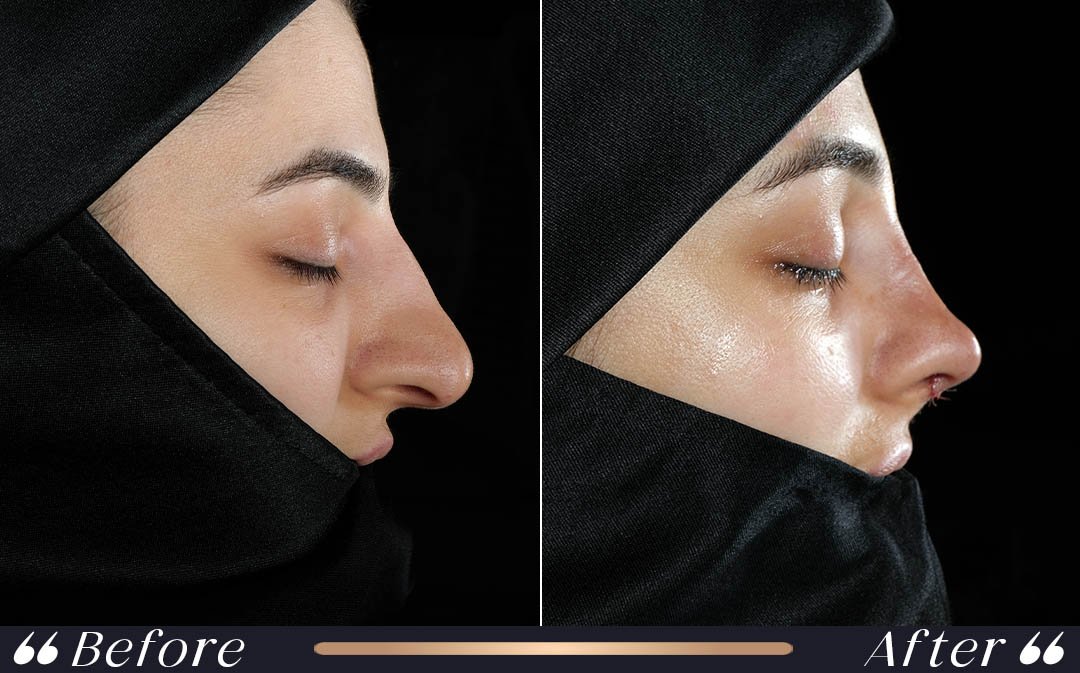
By approximately one month, bruising and major swelling are often considerably improved.
ASPS notes that many patients begin to see meaningful early changes during the first several weeks, although the nose remains in an active healing phase.
The bridge may look more refined, while the nasal tip may still appear thicker or more swollen than expected.
This is particularly important when interpreting turkey nose job before and after photos taken only a few weeks after surgery.
Early photos can show improvement, but they should not be labelled as final results.
By three months, a large proportion of early swelling has usually resolved.
The nose often begins to look more natural and integrated with the face.
However, subtle swelling can remain, especially around the tip.
Patients with thicker skin may notice that definition develops more slowly.
At six months, the nasal contour is usually more refined than it was during the first weeks.
NHS guidance notes that swelling can continue to improve for months after surgery.
At this stage, patients may have a much clearer idea of their result, but some fine changes can still continue.
ASPS states that while initial swelling settles within weeks, the new nasal contour may take up to a year to fully refine.
This is why high-quality turkey nose job before and after comparisons ideally include later postoperative photographs when possible.
The one-year stage gives a more reliable impression of:
| Stage | Typical Appearance | How to Interpret the Result |
|---|---|---|
| Before Surgery | Original nasal anatomy and proportions. | Used as the baseline for planning and comparison. |
| Week 1 | Swelling, bruising, splint and congestion may be present. | Far too early to judge the final result. |
| Weeks 2–4 | Major bruising and swelling usually begin to improve. | Early improvement becomes more visible. |
| Month 3 | More definition is visible, but subtle swelling may remain. | A better indication of overall shape. |
| Month 6 | Further refinement and decreased swelling. | Result looks increasingly stable. |
| Around 1 Year | Fine swelling has largely settled and contour is more mature. | Most representative stage for final-result assessment. |
Not every before-and-after gallery provides equally useful information.
When reviewing turkey nose job before and after photographs, look for consistency and realistic presentation.
Useful rhinoplasty photography typically includes several standardized views, such as:
Comparing completely different camera angles can exaggerate or hide changes.
Dramatically different lighting can alter the appearance of nasal shape and facial shadows.
More reliable comparisons use similar lighting conditions before and after surgery.
The patient's facial expression and head position should be reasonably similar.
Changes in smiling, chin position or camera distance can affect how the nose appears.
This is especially important.
A photograph taken at four weeks and a photograph taken at twelve months represent very different stages of healing.
ASPS emphasizes that nasal refinement continues over many months.
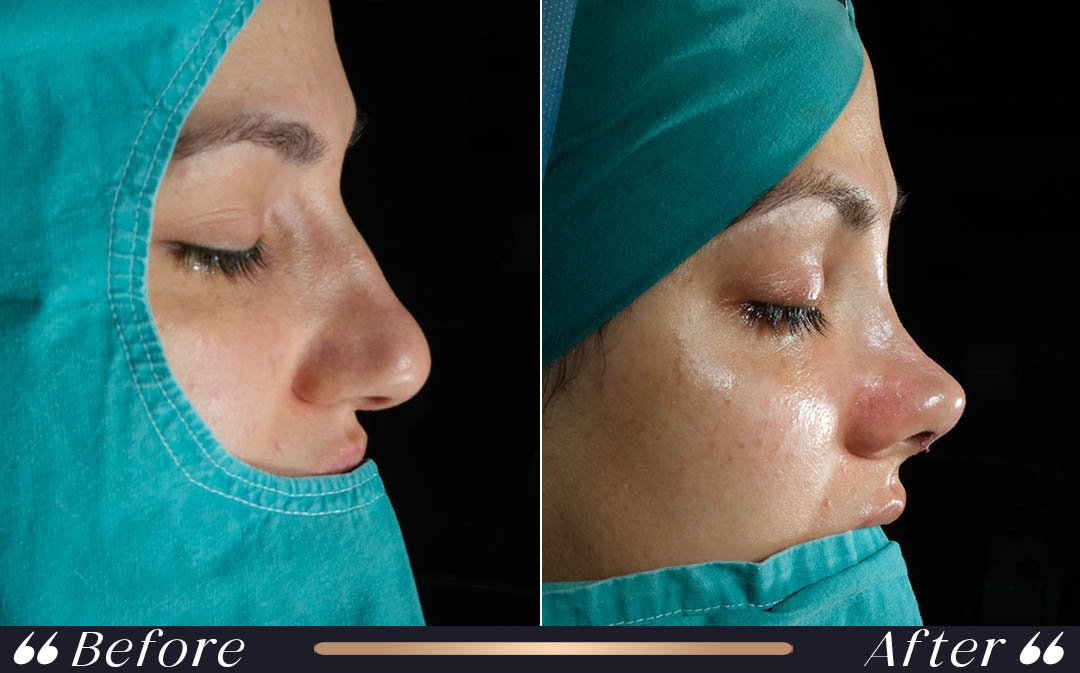
A natural result does not necessarily mean making the nose as small as possible.
Aesthetic rhinoplasty generally aims to improve balance between the nose and surrounding facial features.
Natural-looking planning can consider:
Yesilkoy Clinic states that rhinoplasty planning should be based on anatomy, medical history, expectations and professional assessment rather than applying one standard nose shape to every patient.
This individualized approach is particularly important because the same nasal shape will not suit every face.
A dorsal hump is one of the common reasons patients consider rhinoplasty.
In a profile view, surgery may aim to create a smoother bridge contour.
However, simply removing a hump is not the whole treatment plan.
The surgeon must also consider:
Changes need to remain proportionate to the rest of the face.
A bulbous or broad nasal tip can sometimes be refined through rhinoplasty.
Tip surgery can involve reshaping, repositioning or supporting the underlying cartilage.
The amount of visible definition depends partly on skin thickness.
Thicker nasal skin can mask fine cartilage detail and may take longer to settle after surgery.
For this reason, tip results should be judged patiently over the full recovery timeline.
A drooping nasal tip can affect both profile and front-view appearance.
Rhinoplasty may be used to change tip support and rotation where appropriate.
However, excessive rotation can produce an unnatural result, so planning should reflect the patient's anatomy and facial proportions.
Rhinoplasty should not be evaluated only from photographs.
For patients with nasal obstruction, functional breathing is also important.
ASPS notes that correction of a deviated septum or other internal structural problems can be incorporated when appropriate to improve nasal airflow.
A visually attractive result that compromises breathing should not be considered a successful outcome.
Key point: A successful rhinoplasty plan should consider both appearance and nasal function where relevant. Before-and-after photographs show external appearance but cannot fully demonstrate breathing quality.
Rhinoplasty may be performed using different surgical approaches depending on the treatment plan.
An open rhinoplasty generally includes a small incision across the columella in addition to internal incisions.
A closed approach uses internal nasal incisions.
The appropriate technique depends on the anatomical changes required.
Patients should not assume that one approach automatically creates better turkey nose job before and after results.
Surgical planning, anatomy and execution are more important than selecting a technique based solely on its name.
Patients sometimes become concerned because their nose changes appearance during the first months.
This can happen because swelling does not always resolve evenly.
ASPS notes that swelling can fluctuate and may even be more noticeable in the morning during the first year.
Temporary asymmetry during healing does not automatically mean that the final result will be asymmetric.
Your own surgeon should evaluate any concerns during follow-up.
There is no single mandatory photography schedule, but meaningful comparison points may include:
The most useful final comparison is generally made once the majority of swelling has settled.
ASPS notes that this can take up to a year.
At Yesilkoy Clinic, rhinoplasty is approached as an individualized medical and aesthetic treatment rather than a standardized nose-design package.
The clinic states that planning is based on the patient's anatomy, medical history, expectations and professional assessment. Its rhinoplasty pathway emphasizes individual assessment, professional planning, structured patient care and postoperative follow-up.
This is particularly important when evaluating turkey nose job before and after results because each patient's starting anatomy and healing process are different.
The aim is not to promise that every patient will achieve the same nose seen in a photograph. Instead, treatment planning should focus on what may be realistically achievable within the patient's own anatomy.
Yesilkoy Clinic also explains that early healing should not automatically be interpreted as the final result because swelling, scar maturation and tissue settling continue over time.
No surgical procedure can be guaranteed to be completely risk-free. Professional and safety-focused treatment therefore involves medical assessment, discussion of risks and limitations, individualized planning, postoperative monitoring and clear follow-up instructions.
You can explore additional rhinoplasty, plastic surgery and recovery articles in the Yesilkoy Clinic Plastic Surgery Blog.
For an individual rhinoplasty assessment, visit the Yesilkoy Clinic contact page.
Two patients can undergo rhinoplasty and still have very different outcomes because their anatomy is different.
Factors that can influence results include:
For this reason, turkey nose job before and after galleries are most useful for understanding the style and range of possible changes rather than predicting an identical outcome.
ASPS states that rhinoplasty results are generally long-lasting, although natural aging can gradually change facial and nasal tissues over time.
Patients should also understand that trauma, additional surgery and natural structural changes can affect appearance in the future.
Following postoperative instructions and protecting the nose during healing are important for preserving the surgical result.
These questions provide more useful information than asking for a copy of another patient's result.
No.
They can show examples of what was achieved in other patients, but they cannot guarantee your individual outcome.
Your own result depends on your anatomy and healing process.
ASPS specifically notes that rhinoplasty should be understood in terms of improvement rather than perfection, because final appearance develops gradually and every patient heals differently.
Contact Yesilkoy Clinic to discuss your nasal anatomy, aesthetic goals, breathing concerns and realistic expectations. An individual medical assessment can help establish an appropriate rhinoplasty plan and explain what changes may be realistically achievable.
Request a ConsultationEarly changes can be visible within the first few weeks, but the nose continues to refine for many months. ASPS notes that final nasal contour can take up to a year to fully develop.
Major swelling generally improves during the first weeks, while finer swelling can persist for months. Tip swelling may take particularly long to settle.
No. One month can show meaningful early improvement, but the nose is still healing and refinement continues.
Six months often provides a good indication of the developing result, but subtle changes may still occur afterward.
Around one year is commonly a more representative stage for final-result photography because much of the fine swelling has had time to settle.
Swelling can resolve unevenly and fluctuate during healing. Temporary asymmetry does not automatically indicate a permanent problem.
Selected structural problems such as a deviated septum can sometimes be addressed during rhinoplasty when clinically appropriate.
No. Rhinoplasty is about reshaping and balancing the nose. The appropriate change depends on anatomy and treatment goals.
A photograph can help communicate preferences, but another person's nose cannot simply be copied because facial anatomy and tissue characteristics differ.
Results are generally long-lasting, although natural aging and other future changes can affect facial tissues over time.
Thicker skin can make fine tip definition take longer to become visible. Individual healing varies.
In suitable patients, rhinoplasty can reshape and support tip cartilage to improve contour. The degree of refinement depends on anatomy and skin thickness.
Yes, bridge contour can be altered in appropriate cases, but the overall plan should also consider tip balance and facial proportions.
Visit the Yesilkoy Clinic Plastic Surgery Blog.
Visit the Yesilkoy Clinic contact page to request an individual rhinoplasty consultation.
Last updated: October 2026. This article provides general educational information about rhinoplasty before-and-after results and recovery. Individual anatomy, technique, healing, risks and outcomes vary and require professional medical assessment.