
How Long After BBL Can I Sit? 19 Essential Recovery Tips
How long after BBL can I sit? The answer depends on the operation, the surgeon’s instructions and whether you mean brief necessary sitting, supported sitting or ordinary prolonged sitting. The American Society of Plastic Surgeons describes avoiding prolonged sitting for about two weeks after fat-grafting buttock augmentation, while Cleveland Clinic discusses a return to sitting without a special pillow at approximately eight weeks. Those timelines are not interchangeable.
This detailed guide looks at the BBL sitting recovery timeline, cushions, toileting, working, sleeping, car journeys and flights. It also explains why transferred fat needs protection, how body contour changes during healing and which symptoms need urgent medical attention. Practical advice must always be adapted to the treating surgeon’s personal instructions.
How Long After BBL Can I Sit?
There is no single date that applies to every patient. American Society of Plastic Surgeons patient guidance says to avoid prolonged sitting for about two weeks after buttock augmentation with fat grafting, while explicitly noting that some surgeons recommend longer. Cleveland Clinic describes short sitting periods on a special pillow after several weeks and ordinary sitting without that pillow at around eight weeks. The operating surgeon must choose the instructions for the actual procedure.
The distinction between necessary brief sitting and unrestricted sitting is important. Using a bathroom, travelling to an appointment, or positioning oneself temporarily is not equivalent to spending an entire day on an office chair. Early recovery instructions may permit short exceptions with specific positioning while still prohibiting prolonged direct pressure.
Practical planning is easier when you describe the real activity instead of asking only whether sitting is permitted. Tell the surgeon how long the activity lasts, whether it requires a firm seat, and whether it can be interrupted. This helps distinguish a brief unavoidable task from sustained pressure. Written instructions are especially helpful when family members or employers are involved.
Why Sitting Is Restricted After a Brazilian Butt Lift
A Brazilian butt lift typically transfers a patient’s own processed fat from a donor site into selected superficial areas of the buttocks. Newly placed fat needs to develop and maintain a blood supply in its new environment. Direct sustained pressure can compromise the tissue and may contribute to fat loss or uneven contour.
This is one reason postoperative instructions emphasize avoiding pressure on the grafted region. Sitting guidance does not guarantee survival of all transferred fat, because some reabsorption may occur even when the patient follows instructions. Technique, baseline anatomy, circulation and healing also influence the final result.
For people travelling from abroad, the logistics deserve the same attention as the headline recovery date. A short transfer to an appointment, an overnight journey and a long-haul flight have very different demands. Confirm how the recommended position can be maintained safely, who can help with luggage and whether enough time remains for in-person review.
First 24 Hours: Rest, Monitoring and Essential Movement
Immediately after surgery, monitoring, pain control and safe positioning take priority. Your clinical team may help you stand and take brief walks once medically appropriate, and they should explain how to avoid pressure on the grafted area. Any dizziness or nausea after anaesthesia makes unsupervised movement unsafe.
Do not plan a long car ride or a normal desk schedule on the day of surgery. An escort may be necessary. If transfer from the facility requires sitting, staff should explain exactly how to position your body, whether an approved support is needed, and when to change position.
Healing differs between individuals, and a marketing name does not predict the right schedule. Fat-grafting volume, donor-site liposuction, skin condition, medical history and combined operations may influence restrictions. If the advice you received conflicts with an online timeline, follow the operating team and ask them to explain the difference.
Days Two and Three: Avoiding Prolonged Pressure
During the first days, swelling, soreness and bruising can make both walking and lying down uncomfortable. Many surgeons advise avoiding direct buttock pressure except when absolutely necessary and following prescribed sleep positions. A short bathroom visit is different from optional recreational sitting.
Some patients feel capable of ordinary activities sooner than expected, but feeling better does not mean the grafted tissue has finished adapting. Continue the specific positioning plan, make short safe walks when approved and report significant changes in pain or swelling.
Patients should also keep in mind that comfort alone does not verify the health of the grafts. The absence of pain cannot prove that prolonged pressure is harmless, just as temporary swelling cannot reliably predict the final shape. Planned follow-up gives the surgical team an opportunity to assess wounds, symmetry and recovery in context.
Week One: Sitting, Hygiene and Daily Activities
In the first postoperative week, most sitting decisions should be guided by necessity rather than convenience. Showering, using the toilet, changing garments and attending follow-up appointments may require specialized positioning or assistance. Your team should explain which movements are permitted and how to get in and out of bed safely.
If you have a physically demanding job or care responsibilities at home, arrange support before surgery. Frequent movement without prolonged direct pressure may be easier with assistance. Avoid creating your own sitting schedule based on social media demonstrations.
An effective recovery plan balances protecting grafted tissue with avoiding unnecessary immobility. Safe gentle walking, adequate nourishment and access to medical review remain important. Avoid exaggerated promises that a pillow, garment, massage or supplement can guarantee fat survival or eliminate the need for professional assessment.
Week Two: What the Two-Week Guidance Actually Means
The ASPS recovery page often cited in discussions of BBL sitting advises avoiding prolonged sitting for approximately two weeks and notes that some surgeons prefer longer. That is not a blanket statement that unrestricted sitting becomes safe on day fourteen. Your clinician must decide whether your circumstances allow a change.
At a review appointment, ask about the permitted duration of each sitting interval, whether a thigh-support cushion is required and when ordinary furniture may be used. Differences in graft volume, treated areas, healing and any complications can justify additional restrictions.
Practical planning is easier when you describe the real activity instead of asking only whether sitting is permitted. Tell the surgeon how long the activity lasts, whether it requires a firm seat, and whether it can be interrupted. This helps distinguish a brief unavoidable task from sustained pressure. Written instructions are especially helpful when family members or employers are involved.
Weeks Three and Four: Carefully Modified Sitting
Some patients may be allowed limited sitting after the initial restriction period, often with a specially positioned cushion that transfers pressure toward the thighs. Others may be asked to maintain stricter precautions. The Cleveland Clinic describes this stage as short periods rather than unrestricted use of a chair.
Track tolerance and symptoms rather than increasing sitting time automatically each day. A cushion must fit and be positioned according to medical guidance. It should not create new pressure points, numbness or discomfort in the legs.
For people travelling from abroad, the logistics deserve the same attention as the headline recovery date. A short transfer to an appointment, an overnight journey and a long-haul flight have very different demands. Confirm how the recommended position can be maintained safely, who can help with luggage and whether enough time remains for in-person review.
Weeks Five and Six: Reviewing Your Progress
The early fat-graft healing process continues beyond the first few weeks. An ASPS clinician interviewed for its recovery guidance highlights careful avoidance of prolonged or undue buttock pressure for the first six weeks. This illustrates why surgical practices may differ in how long they restrict sitting.
A six-week follow-up can address contour, swelling, wounds, work requirements and whether modified sitting remains necessary. Even if restrictions are relaxed, prolonged uninterrupted sitting may not be comfortable or advisable immediately. Ask about breaks and the progression to normal chairs.
Healing differs between individuals, and a marketing name does not predict the right schedule. Fat-grafting volume, donor-site liposuction, skin condition, medical history and combined operations may influence restrictions. If the advice you received conflicts with an online timeline, follow the operating team and ask them to explain the difference.
Weeks Seven and Eight: Returning Toward Normal Sitting
Cleveland Clinic notes that some patients may sit without their special pillow at approximately eight weeks, while the American Board of Cosmetic Surgery gives a similar typical timeframe. These are general patient-education examples, not universal permission to sit continuously on day fifty-six.
Before changing your routine, check with your treating team and describe the type of chair, length of sitting and activities you need. Driving for several hours or working at a desk all day represents more sustained pressure than a brief meal.
Patients should also keep in mind that comfort alone does not verify the health of the grafts. The absence of pain cannot prove that prolonged pressure is harmless, just as temporary swelling cannot reliably predict the final shape. Planned follow-up gives the surgical team an opportunity to assess wounds, symmetry and recovery in context.
After Eight Weeks: Is Sitting Completely Normal?
Many patients are gradually returning to ordinary activities by this stage, but residual swelling or sensitivity may still affect comfort. Some people require longer restrictions after extensive fat grafting or complications. There should be no pressure to follow a generic calendar if the surgeon has prescribed a different pathway.
Resume activities step by step and follow any advice regarding cushions, breaks or posture. Unexpected persistent pain, marked asymmetry or new swelling warrants review. Final shape is not necessarily established when sitting becomes easier.
An effective recovery plan balances protecting grafted tissue with avoiding unnecessary immobility. Safe gentle walking, adequate nourishment and access to medical review remain important. Avoid exaggerated promises that a pillow, garment, massage or supplement can guarantee fat survival or eliminate the need for professional assessment.
How to Sit After BBL Surgery With Thigh Support
When a clinician authorizes modified sitting, the aim is generally to support the upper legs so that the operated buttocks do not receive the usual direct load. The ASPS describes placing a cushion behind the legs under the hamstring region to raise the buttocks. Exact support placement must be demonstrated by the clinical team.
Do not assume any soft pillow, rolled towel or product advertised online provides the same pressure distribution. Improper positioning may tilt the pelvis, create discomfort or still load the grafted region. Ask for a practical demonstration before leaving the surgical facility.
Practical planning is easier when you describe the real activity instead of asking only whether sitting is permitted. Tell the surgeon how long the activity lasts, whether it requires a firm seat, and whether it can be interrupted. This helps distinguish a brief unavoidable task from sustained pressure. Written instructions are especially helpful when family members or employers are involved.
What Is a BBL Pillow and Does It Make Sitting Safe?
A BBL pillow is a support product used in some postoperative protocols to alter where body weight rests during limited sitting. It is not an all-purpose permission slip for long work shifts or flights. The value of a particular support depends on the correct shape, positioning and the surgeon’s advice.
Some pillow designs can press on the wrong areas for a particular body shape. Discuss purchase and use with your clinician instead of trusting claims that a product guarantees graft survival. Frequent position changes may still be necessary.
For people travelling from abroad, the logistics deserve the same attention as the headline recovery date. A short transfer to an appointment, an overnight journey and a long-haul flight have very different demands. Confirm how the recommended position can be maintained safely, who can help with luggage and whether enough time remains for in-person review.
BBL Pillow Versus Donut Cushion
Patients often encounter the terms thigh-support cushion and donut pillow online. These products do not all distribute pressure in the same way. Some historical patient guidance references inflatable or donut-shaped supports, but a label alone cannot establish whether a cushion protects the surgically treated area.
The safer approach is to ask the surgeon which exact design is acceptable and how the support should be placed. If a cushion causes tingling, pressure pain or visible marks, stop using it and seek advice. Do not improvise support under fresh wounds.
Healing differs between individuals, and a marketing name does not predict the right schedule. Fat-grafting volume, donor-site liposuction, skin condition, medical history and combined operations may influence restrictions. If the advice you received conflicts with an online timeline, follow the operating team and ask them to explain the difference.
Can I Sit on the Toilet After BBL?
Toileting is an unavoidable daily activity, and clinicians generally account for these short periods in recovery instructions. A plastic surgeon interviewed by ASPS distinguished necessary brief bathroom sitting from prolonged pressure, stressing that the patient should minimize time in that position.
Ask whether a particular toilet position or support is recommended, how to stand safely and how to manage dizziness. The bathroom should have stable surfaces and enough space to move without strain. Hygiene and safety remain priorities; do not avoid toileting out of fear.
Patients should also keep in mind that comfort alone does not verify the health of the grafts. The absence of pain cannot prove that prolonged pressure is harmless, just as temporary swelling cannot reliably predict the final shape. Planned follow-up gives the surgical team an opportunity to assess wounds, symmetry and recovery in context.
Can I Sit to Eat Meals?
Meals may be taken standing, reclining in an approved non-buttock-pressure position or briefly sitting with authorized support, depending on your surgeon’s protocol. Nutrition supports tissue healing, so the recovery plan should make eating and drinking practical.
A dining chair may have a firmer seat than an upholstered chair, but firmness alone does not determine safety. Ask how long you may remain in a supported position and whether you should divide meals into shorter intervals.
An effective recovery plan balances protecting grafted tissue with avoiding unnecessary immobility. Safe gentle walking, adequate nourishment and access to medical review remain important. Avoid exaggerated promises that a pillow, garment, massage or supplement can guarantee fat survival or eliminate the need for professional assessment.
How to Sleep After a BBL
ASPS guidance commonly encourages sleeping face down or on the side during the early fat-grafting recovery period to minimize direct pressure on the buttocks. Your surgeon should explain the permitted positions based on liposuction sites, incisions and any other procedures performed.
Use pillows for comfort only in arrangements approved by the team. A person who had extensive abdominal liposuction may find stomach sleeping uncomfortable, so individualized planning is necessary. Avoid abruptly changing to back sleeping simply because discomfort has decreased.
Practical planning is easier when you describe the real activity instead of asking only whether sitting is permitted. Tell the surgeon how long the activity lasts, whether it requires a firm seat, and whether it can be interrupted. This helps distinguish a brief unavoidable task from sustained pressure. Written instructions are especially helpful when family members or employers are involved.
When Can I Sleep on My Back Again?
Back sleeping puts weight through the buttocks and may be restricted longer than a patient expects. Some postoperative protocols extend pressure precautions through six to eight weeks or longer. The appropriate timeframe depends on the surgeon’s plan and the state of healing.
At follow-up, ask separately about brief reclining, lying flat on the back and sleeping through an entire night in that position. These represent different durations and pressure patterns. No generic article can certify that a specific sleeping position is safe for your operation.
For people travelling from abroad, the logistics deserve the same attention as the headline recovery date. A short transfer to an appointment, an overnight journey and a long-haul flight have very different demands. Confirm how the recommended position can be maintained safely, who can help with luggage and whether enough time remains for in-person review.
Driving After BBL: Sitting and Reaction Time
Driving requires sitting, controlling the pedals, turning to check surroundings and responding quickly to hazards. A cushion cannot solve the problem of impaired alertness from pain medicines or discomfort that prevents normal braking. NHS general fat-transfer guidance recommends driving only when it can be done without discomfort.
Arrange rides for early appointments and discuss the date for driving with your surgeon. A short passenger trip is not the same as driving yourself. Follow local rules and avoid operating a vehicle while taking medication that impairs concentration.
Healing differs between individuals, and a marketing name does not predict the right schedule. Fat-grafting volume, donor-site liposuction, skin condition, medical history and combined operations may influence restrictions. If the advice you received conflicts with an online timeline, follow the operating team and ask them to explain the difference.
How to Travel as a Passenger
Car and taxi journeys are sometimes necessary for reviews or returning to accommodation. Plan the shortest practical transfer and ask staff to show the approved position. Some patients may be advised to use a specially positioned cushion, while others require a different arrangement.
Confirm whether you can safely enter and exit a vehicle without twisting or placing weight on incisions. A companion can help with bags. If symptoms worsen during a journey, contact the clinical team rather than forcing yourself to complete the planned itinerary.
Patients should also keep in mind that comfort alone does not verify the health of the grafts. The absence of pain cannot prove that prolonged pressure is harmless, just as temporary swelling cannot reliably predict the final shape. Planned follow-up gives the surgical team an opportunity to assess wounds, symmetry and recovery in context.
Flying After BBL in Turkey
International flights create separate concerns: prolonged immobility, recent surgery, clotting risk, and difficulty accessing urgent medical care. The earliest possible flight should never be calculated solely from sitting restrictions. Your surgeon must assess the operation, medical history, mobility and postoperative progress before authorizing travel.
Ask about the required stay in Istanbul, postoperative review before departure, help with luggage, permitted position during the flight and warning symptoms. A medical clearance for a short journey does not automatically apply to a long-haul flight.
An effective recovery plan balances protecting grafted tissue with avoiding unnecessary immobility. Safe gentle walking, adequate nourishment and access to medical review remain important. Avoid exaggerated promises that a pillow, garment, massage or supplement can guarantee fat survival or eliminate the need for professional assessment.
Long-Haul Flights and Blood-Clot Precautions
Surgery and extended immobility may raise concern about deep-vein thrombosis and pulmonary embolism. The clinical team may provide personalized guidance about movement, hydration and other risk-reduction measures. Do not start aspirin, anticoagulants or compression products on your own.
Severe chest pain, sudden shortness of breath, collapse or a painful swollen leg requires urgent assessment. Airline arrangements and comfort supports do not replace medical evaluation. Plan travel so that needed follow-up cannot be missed.
Practical planning is easier when you describe the real activity instead of asking only whether sitting is permitted. Tell the surgeon how long the activity lasts, whether it requires a firm seat, and whether it can be interrupted. This helps distinguish a brief unavoidable task from sustained pressure. Written instructions are especially helpful when family members or employers are involved.
Returning to a Desk Job
A desk job can involve many hours of sustained sitting, even if the physical tasks seem light. Returning to work therefore depends on more than wound healing or the ability to walk normally. Some patients arrange standing desks, shorter shifts or remote work while their restrictions remain in force.
Discuss the actual workday with your surgeon: commuting, seated meetings, meals and breaks all count. Obtain written restrictions when an employer needs them. A standing desk can help reduce seat time, but standing continuously without rest is not a substitute for a thoughtful recovery plan.
For people travelling from abroad, the logistics deserve the same attention as the headline recovery date. A short transfer to an appointment, an overnight journey and a long-haul flight have very different demands. Confirm how the recommended position can be maintained safely, who can help with luggage and whether enough time remains for in-person review.
Standing Desks and Workstation Planning
A standing desk may be helpful when approved because it reduces dependence on a chair. However, prolonged standing can cause fatigue, and patients still need a way to rest without putting unwanted pressure on the buttocks. Ergonomics should not override medical restrictions.
Keep frequently used items within comfortable reach, plan breaks, and avoid lifting office equipment. If you become dizzy, excessively tired or painful while standing, stop and seek advice. Work should accommodate recovery rather than force an unsafe posture.
Healing differs between individuals, and a marketing name does not predict the right schedule. Fat-grafting volume, donor-site liposuction, skin condition, medical history and combined operations may influence restrictions. If the advice you received conflicts with an online timeline, follow the operating team and ask them to explain the difference.
When Can I Return to Physical Work?
Jobs that require lifting, climbing, carrying, bending or prolonged driving can be more demanding than office work. Restrictions also depend on donor-site liposuction and any additional procedures. Clinical clearance should refer to specific tasks rather than a vague return-to-work date.
Talk to your employer about temporarily reducing strenuous duties. Do not assume that being able to stand automatically means heavy tasks are safe. A gradual return may be more sustainable than jumping directly into a full schedule.
Patients should also keep in mind that comfort alone does not verify the health of the grafts. The absence of pain cannot prove that prolonged pressure is harmless, just as temporary swelling cannot reliably predict the final shape. Planned follow-up gives the surgical team an opportunity to assess wounds, symmetry and recovery in context.
Walking After BBL Surgery
Gentle walking is often encouraged early when a clinician has confirmed that it is safe. Its purpose is basic mobility and circulation, not achieving a fitness target. Walking should not involve unnecessary overexertion, and patients must account for dizziness, pain medicines and wounds.
Build activity around short comfortable bouts and rests. If walking produces unusual pain or swelling, contact the treating team. Walking guidance is separate from restrictions on running, weight training or other strenuous workouts.
An effective recovery plan balances protecting grafted tissue with avoiding unnecessary immobility. Safe gentle walking, adequate nourishment and access to medical review remain important. Avoid exaggerated promises that a pillow, garment, massage or supplement can guarantee fat survival or eliminate the need for professional assessment.
When Can I Exercise After BBL?
ASPS general recovery information says exercise may often resume after approximately six to eight weeks, but timing varies with surgery and healing. The clinician should define which exercises are permitted. A gentle walk is not equivalent to a gym workout or contact sport.
Squats, cycling and exercises that place weight through the buttocks may need specific clearance. Fat-grafted tissue and donor sites both matter. Ask whether a staged activity plan is preferable and what symptoms mean you should stop.
Practical planning is easier when you describe the real activity instead of asking only whether sitting is permitted. Tell the surgeon how long the activity lasts, whether it requires a firm seat, and whether it can be interrupted. This helps distinguish a brief unavoidable task from sustained pressure. Written instructions are especially helpful when family members or employers are involved.
Compression Garments and Pressure on the Buttocks
Compression garments are commonly applied to liposuction donor areas. However, garment design should avoid inappropriate direct compression of grafted buttock tissue when the treating team recommends this. The fit, coverage and wearing duration must come from your surgeon.
Do not add compression layers, boards or tight shapewear just because a social media influencer recommends them. Garment rolling, numbness, friction, skin injury or pressure pain should prompt a fit review. Compression is not a substitute for careful positioning.
For people travelling from abroad, the logistics deserve the same attention as the headline recovery date. A short transfer to an appointment, an overnight journey and a long-haul flight have very different demands. Confirm how the recommended position can be maintained safely, who can help with luggage and whether enough time remains for in-person review.
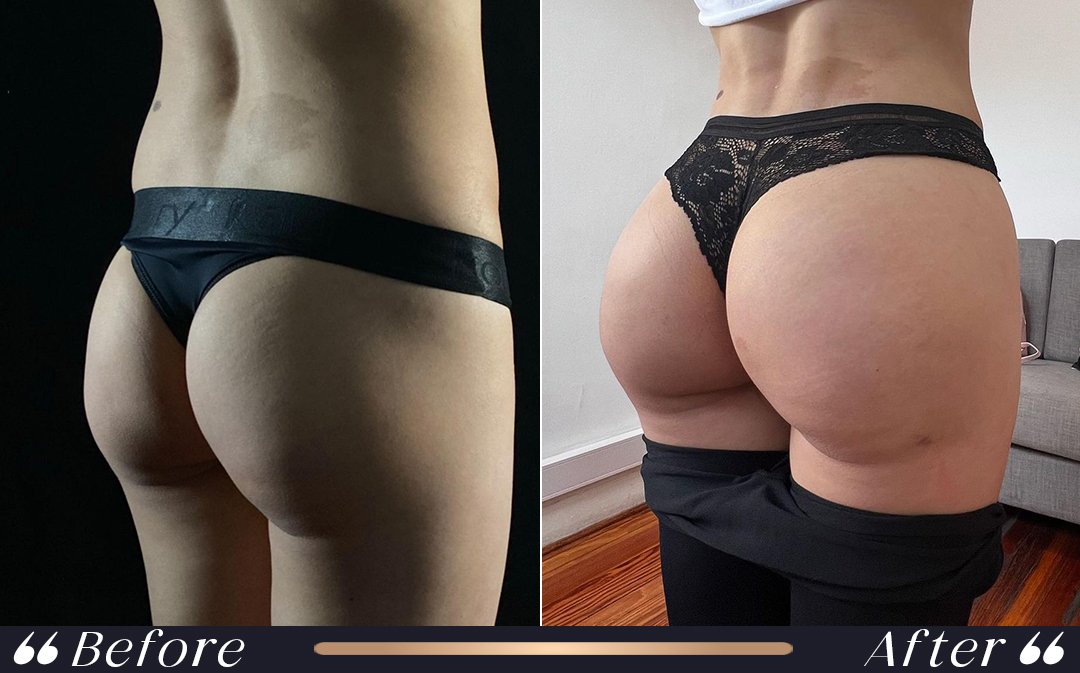
Swelling and Bruising During BBL Recovery
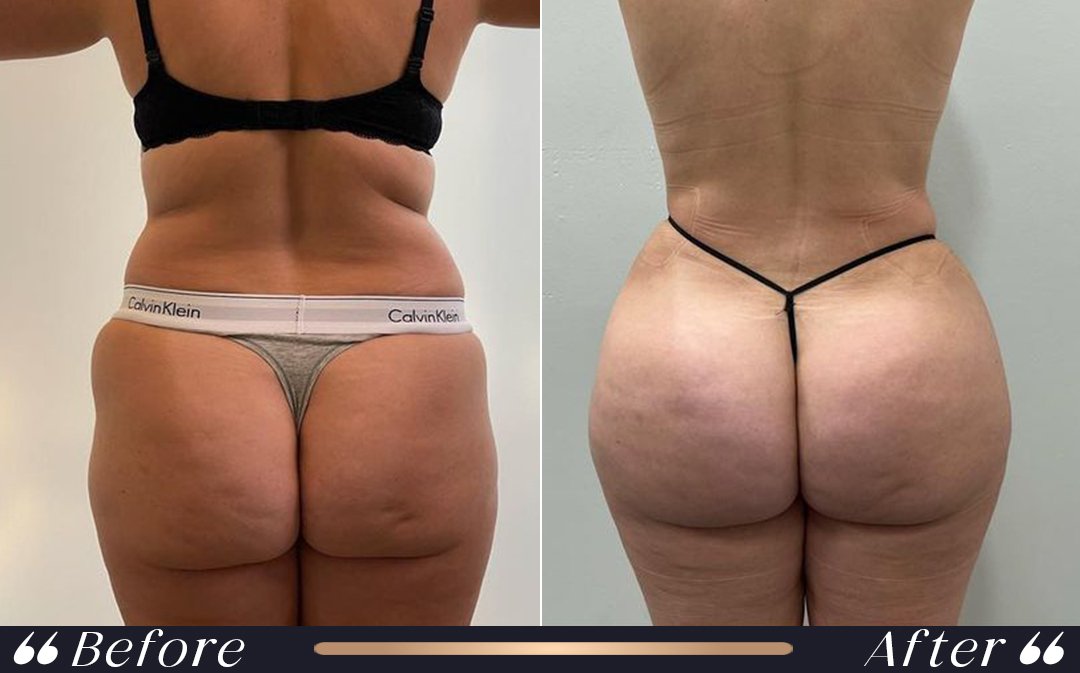
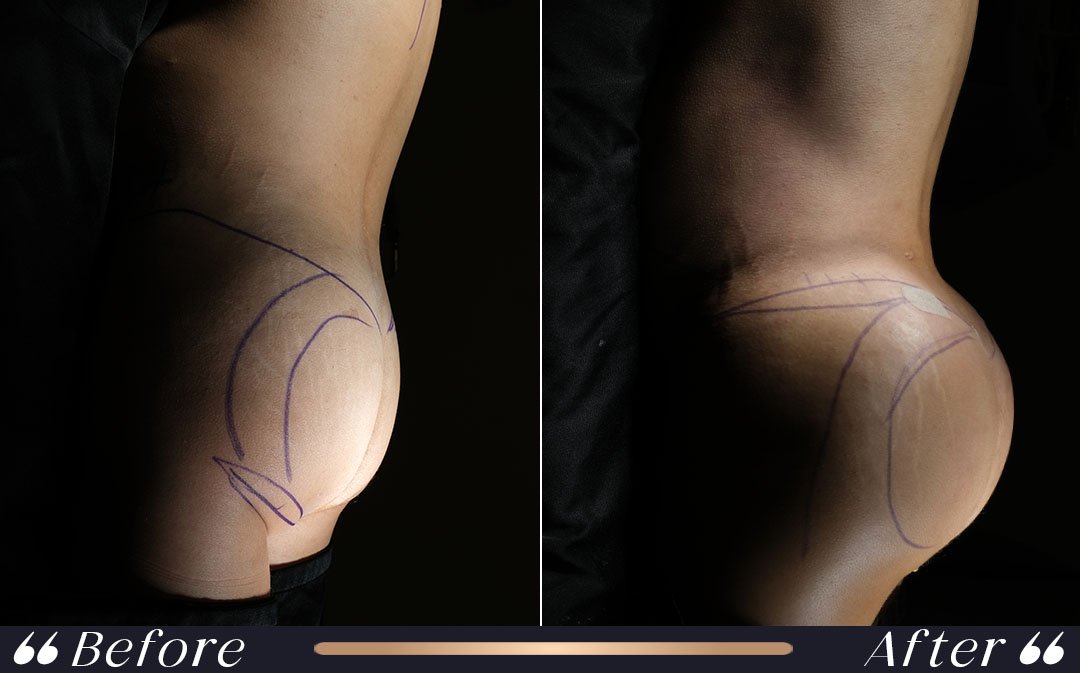
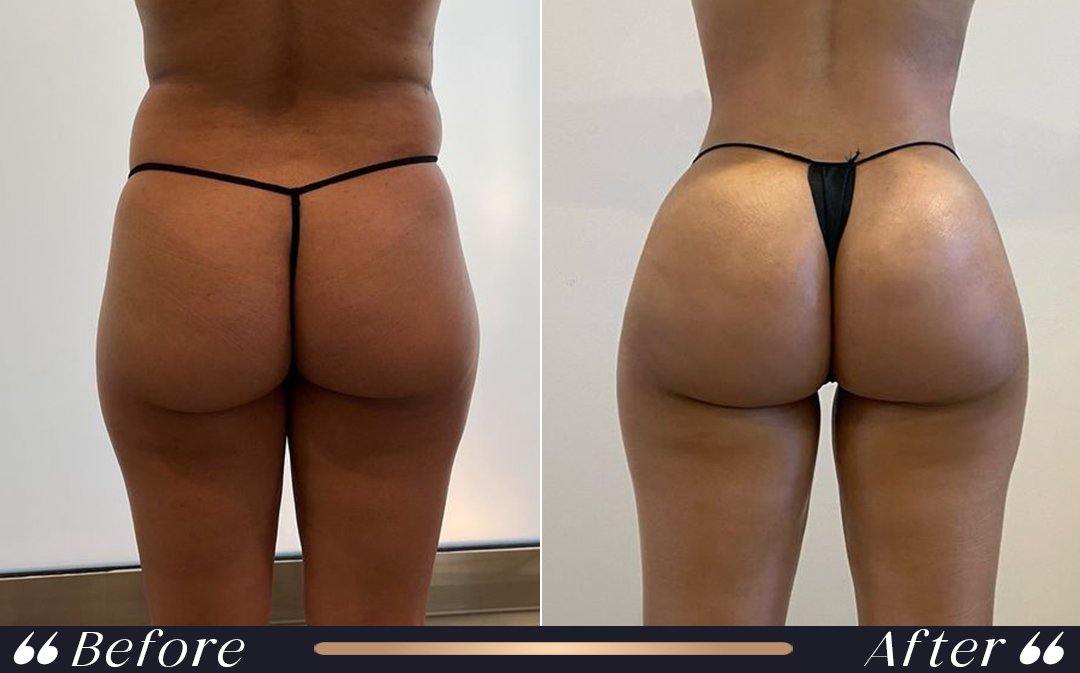
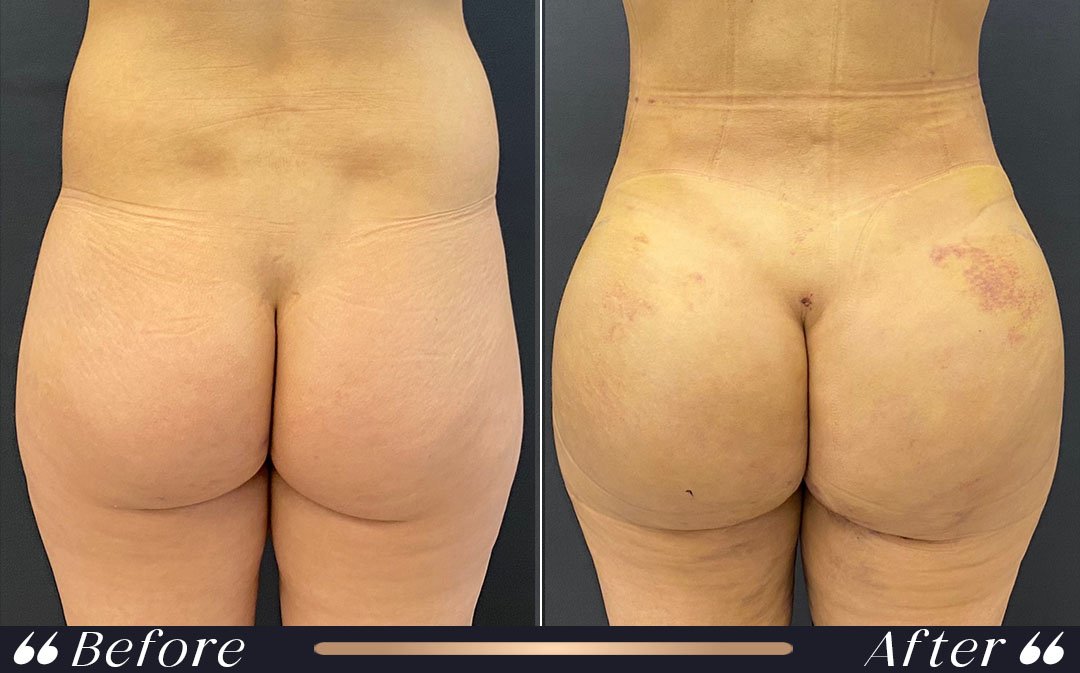
Bruising, swelling, soreness and temporary numbness are common after surgical fat transfer and liposuction. They can make the buttocks look larger or uneven early on. A shape seen in the first days should not be treated as the final result.
NHS guidance notes that a surgical fat transfer may take up to six months to fully take effect because some grafted fat is reabsorbed over the first months. Persistent or dramatically worsening swelling deserves assessment rather than assumption that it is normal.
Healing differs between individuals, and a marketing name does not predict the right schedule. Fat-grafting volume, donor-site liposuction, skin condition, medical history and combined operations may influence restrictions. If the advice you received conflicts with an online timeline, follow the operating team and ask them to explain the difference.
How Much Transferred Fat Survives?
Not every fat cell transferred during a BBL necessarily survives. The amount retained varies with surgical technique, blood supply, patient biology and healing. It is not possible to give every patient a fixed retention percentage or a guaranteed final volume.
Pressure avoidance is one postoperative measure intended to support the grafts, but it cannot control all biological factors. Be cautious about clinics that promise a specific survival rate or identical shape to a before-and-after photograph.
Patients should also keep in mind that comfort alone does not verify the health of the grafts. The absence of pain cannot prove that prolonged pressure is harmless, just as temporary swelling cannot reliably predict the final shape. Planned follow-up gives the surgical team an opportunity to assess wounds, symmetry and recovery in context.
Can Sitting Too Early Ruin BBL Results?
Prolonged pressure too early may compromise newly grafted fat, but one accidental brief episode does not allow an online article to predict the outcome. It is also important not to dismiss persistent pressure as harmless just because there is no immediate pain.
If you sat unexpectedly or were required to sit longer than instructed, resume your prescribed precautions and contact the treating team for guidance. Do not attempt painful massage, unusual positioning or self-treatment to correct a perceived mistake.
An effective recovery plan balances protecting grafted tissue with avoiding unnecessary immobility. Safe gentle walking, adequate nourishment and access to medical review remain important. Avoid exaggerated promises that a pillow, garment, massage or supplement can guarantee fat survival or eliminate the need for professional assessment.
What If I Accidentally Sit on My Buttocks?
An accidental brief moment of sitting is a common concern. The appropriate response depends on duration, pressure, symptoms and the individualized postoperative plan. The grafts cannot be evaluated by a simple feeling or photograph immediately afterward.
Avoid panic and avoid repeated experiments to check whether sitting feels acceptable. Explain the incident clearly to your surgeon, including when it happened and whether swelling or pain changed. Obtain assessment for concerning symptoms.
Practical planning is easier when you describe the real activity instead of asking only whether sitting is permitted. Tell the surgeon how long the activity lasts, whether it requires a firm seat, and whether it can be interrupted. This helps distinguish a brief unavoidable task from sustained pressure. Written instructions are especially helpful when family members or employers are involved.
Is Sitting Pain a Warning Sign?
Mild soreness can be part of recovery, but increasing, severe or unusual pain should not be ignored. Pain with support may also mean the cushion is incorrectly positioned or creating excessive pressure. Discomfort is not a reliable measure of fat survival.
Stop the activity that provokes symptoms and consult the surgical team. Fever, spreading redness, wound discharge or rapidly worsening swelling needs prompt examination. Serious breathing or chest symptoms require emergency care.
For people travelling from abroad, the logistics deserve the same attention as the headline recovery date. A short transfer to an appointment, an overnight journey and a long-haul flight have very different demands. Confirm how the recommended position can be maintained safely, who can help with luggage and whether enough time remains for in-person review.
BBL Complications and Emergency Symptoms
Brazilian butt lift procedures have distinctive safety concerns in addition to the usual risks of surgery. Potential complications include infection, fluid collections, fat necrosis, blood clots, and fat embolism. Fat embolism can be life-threatening, which is why modern safety recommendations emphasize appropriate technique and clinical standards.
Call emergency services for sudden breathlessness, chest pain, fainting, severe confusion or collapse. A sudden painful swollen leg should also be evaluated urgently. Do not substitute a message to a clinic social media account for emergency care.
Healing differs between individuals, and a marketing name does not predict the right schedule. Fat-grafting volume, donor-site liposuction, skin condition, medical history and combined operations may influence restrictions. If the advice you received conflicts with an online timeline, follow the operating team and ask them to explain the difference.
Why Surgical Technique and Ultrasound Guidance Matter
Modern multisociety safety guidance supports placing transferred fat only in subcutaneous tissue above the gluteal fascia, not into gluteal muscles. The International Society of Aesthetic Plastic Surgery also describes the use of real-time ultrasound guidance to visualize the cannula during fat placement.
These procedural safety issues matter independently of postoperative sitting instructions. Ask your surgeon about their technique, credentials, operating facility, emergency resources and ultrasound use. A carefully managed recovery cannot undo unsafe fat injection technique during surgery.
Patients should also keep in mind that comfort alone does not verify the health of the grafts. The absence of pain cannot prove that prolonged pressure is harmless, just as temporary swelling cannot reliably predict the final shape. Planned follow-up gives the surgical team an opportunity to assess wounds, symmetry and recovery in context.
How to Choose a BBL Surgeon in Turkey
Choosing a clinic should involve confirming the actual surgeon, professional qualifications, hospital or operating facility, clinical monitoring, and capacity to manage complications. International patient services such as transfers or interpretation are convenient but are not proof of surgical quality.
Ask for current relevant facility and medical-tourism documentation through official channels. Request a consultation that explains risks, alternatives, realistic outcomes and postoperative restrictions. Be cautious of guaranteed results, excessive discounts or pressure to pay before medical assessment.
An effective recovery plan balances protecting grafted tissue with avoiding unnecessary immobility. Safe gentle walking, adequate nourishment and access to medical review remain important. Avoid exaggerated promises that a pillow, garment, massage or supplement can guarantee fat survival or eliminate the need for professional assessment.
BBL Consultation Questions About Sitting
Ask the surgeon when brief necessary sitting is allowed, what duration is acceptable, whether a thigh-support cushion is required, and when normal unrestricted sitting may resume. Ask separately about toileting, meals, working, driving, flying and sleep positions.
Request answers in writing whenever possible so that travel companions or employers can help. If clinic documents differ from verbal advice, clarify which current instructions apply. Different restrictions may be appropriate when combined procedures are performed.
Practical planning is easier when you describe the real activity instead of asking only whether sitting is permitted. Tell the surgeon how long the activity lasts, whether it requires a firm seat, and whether it can be interrupted. This helps distinguish a brief unavoidable task from sustained pressure. Written instructions are especially helpful when family members or employers are involved.
When Will BBL Results Look Final?
Initial results are affected by swelling and the fact that some transferred fat may not survive. NHS notes that fat-transfer effects may continue developing for up to six months. ASPS clinicians similarly describe a period of change over several months as retained fat and contours stabilize.
Rather than comparing daily photographs, ask your surgeon about planned postoperative assessments. A temporary difference in size does not prove an error, while new or painful asymmetry needs clinical evaluation. Final results can never be guaranteed.
For people travelling from abroad, the logistics deserve the same attention as the headline recovery date. A short transfer to an appointment, an overnight journey and a long-haul flight have very different demands. Confirm how the recommended position can be maintained safely, who can help with luggage and whether enough time remains for in-person review.
Maintaining Your Results After Recovery
Once recovery restrictions are lifted, maintaining a reasonably stable weight and healthy habits may help preserve the surgical contour. Remaining fat cells can respond to weight change. Ageing, hormonal changes and further pregnancies may also alter appearance.
Regular exercise can support long-term health when your surgeon clears it, but no supplement or special diet guarantees a particular fat-retention percentage. Focus on sustainable routines rather than rapid weight loss during healing.
Healing differs between individuals, and a marketing name does not predict the right schedule. Fat-grafting volume, donor-site liposuction, skin condition, medical history and combined operations may influence restrictions. If the advice you received conflicts with an online timeline, follow the operating team and ask them to explain the difference.
Planning a Safe Recovery Space at Home
Before surgery, consider where you will sleep, how you will get up without strain, how you will eat and work, and whether someone can help with transportation. A home recovery plan should provide ways to rest without prolonged pressure on the grafted region.
Prepare commonly needed items at comfortable height and keep paths clear to reduce falls. Check whether your bed is easy to enter and exit. Ask the team to demonstrate practical movements while you are still under their care.
Patients should also keep in mind that comfort alone does not verify the health of the grafts. The absence of pain cannot prove that prolonged pressure is harmless, just as temporary swelling cannot reliably predict the final shape. Planned follow-up gives the surgical team an opportunity to assess wounds, symmetry and recovery in context.
BBL Recovery for International Patients
An international treatment journey should include sufficient local recovery time, in-person follow-up, access to urgent services and a clear route for communicating with the operating surgeon after returning home. A clinic package should not automatically dictate the medical departure date.
Keep an operative summary, medication list, emergency instructions and local contact details. Arrange local medical assessment for serious new symptoms after travel. Remote photographs can assist routine communication but cannot replace all examinations.
An effective recovery plan balances protecting grafted tissue with avoiding unnecessary immobility. Safe gentle walking, adequate nourishment and access to medical review remain important. Avoid exaggerated promises that a pillow, garment, massage or supplement can guarantee fat survival or eliminate the need for professional assessment.
How Yesilkoy Clinic Can Help With an Individual Consultation
Patients considering BBL can contact Yesilkoy Clinic to ask about the assessment pathway, the proposed surgeon, medical suitability, recovery guidance and available international patient services. Questions about sitting, travel and work should be answered by the medical team responsible for the actual procedure.
No surgery or particular result should be promised from a web article or photo alone. Request a personalized explanation of technique, safety standards, written cost inclusions and postoperative restrictions before deciding whether treatment is appropriate.
Practical planning is easier when you describe the real activity instead of asking only whether sitting is permitted. Tell the surgeon how long the activity lasts, whether it requires a firm seat, and whether it can be interrupted. This helps distinguish a brief unavoidable task from sustained pressure. Written instructions are especially helpful when family members or employers are involved.
BBL Sitting Recovery: General Timeline
| Stage | General discussion | What to ask your surgeon |
|---|---|---|
| First 72 hours | Avoid unnecessary direct pressure and focus on monitored recovery | Necessary transfers, toileting and safe sleeping position |
| Week one | Early pressure precautions continue; gentle approved walking | Support, hygiene, transport and wound care |
| Week two | ASPS describes avoiding prolonged sitting for around two weeks, sometimes longer | Whether any brief supported sitting is permitted |
| Weeks three–four | Some patients may begin limited modified sitting after clearance | Correct cushion, duration and breaks |
| Weeks five–six | Fat-graft protection may still be important | Work arrangements and whether restrictions continue |
| Weeks seven–eight | Some protocols gradually allow ordinary sitting around eight weeks | When the cushion can be discontinued |
| After eight weeks | Activity may expand while swelling continues to settle | Unrestricted sitting, exercise, long journeys and follow-up |
Frequently Asked Questions About Sitting After BBL
How long after BBL can I sit normally?
Normal sitting may be permitted around eight weeks in some recovery protocols, but your surgeon must confirm when unrestricted sitting is appropriate.
Can I sit two weeks after BBL?
Some guidance restricts prolonged sitting for about two weeks, but that does not mean everyone can sit normally at that point. Ask your surgeon about short supported sitting.
Can I sit after three weeks?
Some patients are cleared for limited supported sitting after several weeks; others must continue stricter precautions.
Do I need a BBL pillow?
A thigh-support cushion may be recommended, but its design and positioning should be approved by your surgeon.
Can I sit for ten minutes?
Some surgeons describe short necessary sitting intervals, but the allowed duration depends on your own postoperative protocol.
How do I sit on the toilet after BBL?
Necessary bathroom sitting is usually addressed in postoperative instructions; request a practical demonstration and minimize unnecessary time.
Can I sit to eat dinner?
Ask whether brief supported sitting is allowed or whether another position is preferable during early recovery.
When can I sit in a car after BBL?
A necessary passenger journey may be possible with surgeon-approved positioning, but driving and long trips require separate clearance.
When can I drive after BBL?
Only drive when your surgeon approves sitting and you can safely operate the vehicle without discomfort or impairing medication.
Can I fly home two weeks after BBL?
Do not choose a flight date from a generic timeline. Recent surgery, mobility, blood-clot risk and follow-up require individual medical review.
Can I sleep on my back after BBL?
Back sleeping may place pressure on grafted fat; follow your surgeon’s specific timing for resuming it.
Is side sleeping better after BBL?
Side or stomach sleeping is often recommended early, depending on other treated areas and your surgeon’s instructions.
Can sitting kill transferred fat cells?
Prolonged direct pressure can interfere with the newly grafted tissue and is one reason restrictions are recommended.
Did I ruin my BBL by sitting once?
A brief accidental sit does not allow a reliable conclusion. Contact your surgical team, describe the event and follow their advice.
Can I return to a desk job in two weeks?
Some people return to work with accommodations, but prolonged chair use may conflict with sitting restrictions.
Is a standing desk enough?
It may reduce seat time but does not remove the need for rest, safe movement and individualized medical clearance.
When can I exercise after BBL?
ASPS general guidance commonly describes a gradual return to exercise around six to eight weeks, depending on healing.
When does BBL swelling go away?
Swelling often improves over weeks while the contour continues evolving over several months.
How much of my transferred fat survives?
Survival varies and cannot be guaranteed as a fixed percentage for every patient.
Can I wear regular tight leggings?
Follow your surgeon’s instructions about garment pressure, especially over grafted areas.
What are BBL emergency warning signs?
Sudden breathlessness, chest pain, collapse or a painful swollen leg require urgent medical assessment.
Is BBL surgery risk-free?
No. Complications can include infection, blood clots, fat necrosis and potentially life-threatening fat embolism.
Does real-time ultrasound make BBL safer?
Current multisociety guidance supports ultrasound guidance during subcutaneous fat placement as part of a broader safety approach.
When do I see the final result?
The NHS notes that fat-transfer effects may take up to six months to settle as some fat is reabsorbed.
How can I ask Yesilkoy Clinic about BBL?
Use the official contact page to request an individualized consultation, clinical details and recovery information.
Planning a BBL Consultation in Istanbul?
Contact Yesilkoy Clinic to discuss individual assessment, clinical suitability, surgical safety, postoperative sitting restrictions and international patient arrangements. A treatment plan and outcome can only be determined following professional evaluation.
Request an Individual ConsultationIndependent Medical Resources and Further Reading
- American Society of Plastic Surgeons — Buttock Enhancement Recovery
- Cleveland Clinic — Brazilian Butt Lift
- ASPS — Six Things to Know About BBL Recovery
- NHS — Surgical Fat Transfer
- ISAPS — Fat Transfer Patient Information
- Yesilkoy Clinic — BBL Recovery Guide
- Yesilkoy Clinic — Blog
Last reviewed November 2026. General information only. Surgeon-specific restrictions and emergency care instructions take priority.