How Long Does Tummy Tuck Swelling Last? 19 Essential Recovery Facts
How long does tummy tuck swelling last? For many patients, the largest changes happen during the first few weeks, while additional swelling gradually diminishes over the following months. Some residual swelling can remain for six months or longer. The precise course depends on the operation, individual healing, activity and whether a complication develops. A swelling timeline is a guide to questions, not a substitute for examination.
A tummy tuck, also called abdominoplasty, removes excess abdominal skin and may involve tightening the abdominal wall. It is a significant operation. The first postoperative appearance can include bruising, puffiness, tightness, numbness and a contour that does not yet resemble the intended result. Those changes can be unsettling, particularly when a patient expects to see a flat abdomen immediately.
This detailed guide explains a realistic tummy tuck swelling timeline from the first days through the following months. It also discusses compression, walking, food, sleep, seromas, warning signs, international travel and how to speak with your surgeon. The goal is to help patients understand which patterns may be expected and which changes should prompt timely medical review.
Every recovery plan must be individualized. Follow the instructions of the team that performed your surgery, especially if you had liposuction, muscle repair, other combined procedures or a medical condition that affects healing. If an instruction in this guide differs from your clinician’s advice, use the clinician’s advice and ask them to clarify the reason.
Quick answer: The early, prominent swelling generally settles over weeks, with further changes over months. Residual swelling can sometimes continue for six months or longer. A new, painful or rapidly enlarging area requires medical advice rather than waiting for a calendar milestone.
Contents: Tummy Tuck Swelling Timeline and Recovery
An abdominoplasty changes the skin and underlying tissues of the abdomen. The body responds to surgery with inflammation, additional fluid in healing tissue, and temporary changes in how fluid returns through the lymphatic and venous systems. Swelling is therefore expected, not automatically a sign that the procedure has failed. The pattern, however, deserves attention: a gradual downward trend is reassuring, whereas rapidly enlarging swelling, severe pain or new symptoms needs professional assessment.
The word swelling describes more than one process. Ordinary postoperative edema is diffuse fluid within healing tissue; a seroma is a localized collection of fluid that may require a clinician to examine it. Bruising, temporary firmness, muscle tightness and reduced sensation can coexist with either. Patients cannot reliably distinguish these conditions from photographs alone.
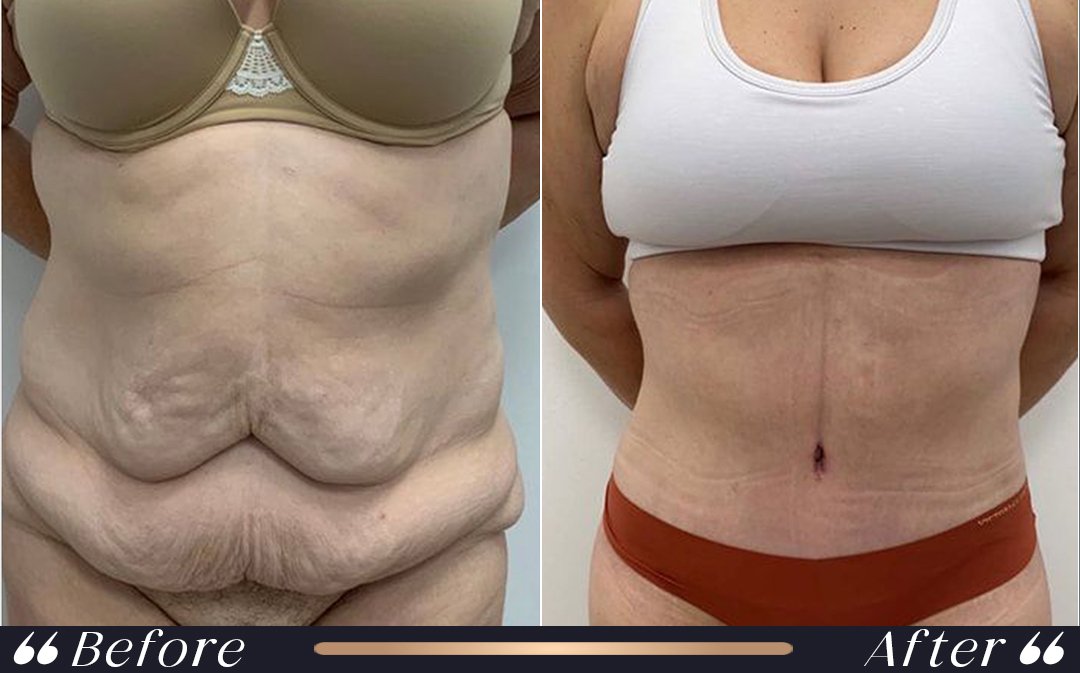
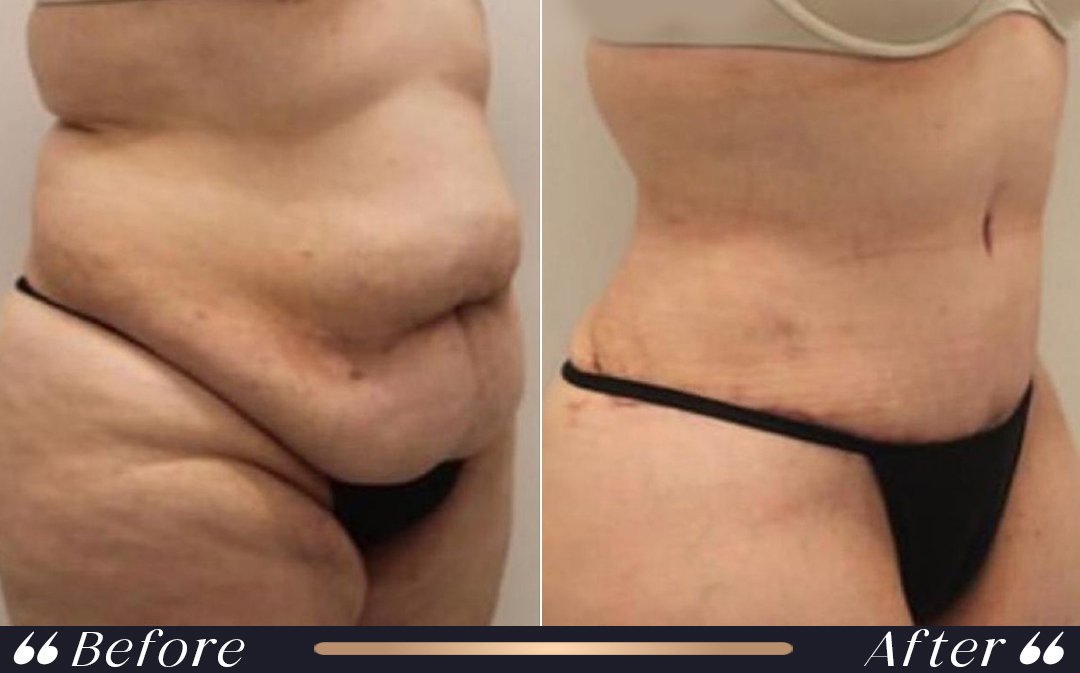
The most useful way to assess recovery is to compare your own abdomen over time under similar conditions. Body position, activity, clothing, time of day and even camera angle can change the appearance. An evaluation with your surgical team takes account of examination findings and the specifics of your operation.
Practical takeaway: Write down the specific concern and the day it began. Your team can give a more useful answer when they know whether the change was sudden, gradual, painful or linked to an activity. A photograph may help convey appearance, but swelling should not be diagnosed from an image alone.
Abdominoplasty recovery varies. Use surgical follow-up and the pattern of symptoms rather than photographs alone to interpret swelling.
A realistic overall swelling timeline
During the first one to two weeks, visible fullness and tightness are commonly most noticeable. Bruising and discomfort may accompany them. From approximately weeks three through six, many people notice the abdomen becoming less puffy and movement becoming more comfortable. These are broad observations, not deadlines or a guarantee that everything will feel normal at six weeks.
Over the following months, smaller fluctuations may persist around the lower abdomen or incision. The American Society of Plastic Surgeons notes that swelling can continue improving through roughly three months, and that residual swelling may linger six months or longer in some patients. Recovery time varies with the procedure and individual healing.
It helps to distinguish return to routine activities from the maturation of surgical results. Being back at work or walking comfortably does not necessarily mean all swelling has resolved. Likewise, lingering mild swelling alone does not prove a complication. The direction of change and accompanying symptoms matter more than a single date.
What to discuss with your team: Ask which findings they expect at your stage of recovery, what would require an earlier appointment and how to contact them after hours. These questions are useful even when everything is going well, because instructions can be easier to follow when the reasons behind them are clear.
Days one through three
In the immediate postoperative period, the body begins an inflammatory healing response. An abdomen that feels full, tight and tender is common. Dressings, an approved support garment and any drainage tubes can make it difficult to judge the final contour. Patients should not interpret the first few days as a preview of the final cosmetic result.
Your surgeon may advise short, assisted walks, positioning that reduces tension on the incision, hydration and carefully prescribed medications. Follow your exact discharge instructions because muscle repair, liposuction, other procedures and medical history can change what is appropriate. Do not self-adjust compression or drainage devices to make swelling disappear faster.
One practical step is to know whom to call before leaving the facility. Keep the postoperative contact number available, and ensure a responsible adult understands the first-day instructions. Escalating pain, heavy bleeding, breathing difficulty or other alarming symptoms warrant urgent medical help, even if you expected some swelling.
How to keep expectations realistic: Two people who underwent abdominoplasty on the same date may have different recovery experiences. Surgery details and individual healing matter. A useful comparison is your own progression across several weeks rather than someone else’s photograph or social-media diary.
Days four through seven
During the rest of week one, swelling may remain prominent even when pain begins easing. Some people feel more pressure after sitting or standing for longer periods. The lower abdomen may look rounded while the upper abdomen changes more quickly. These variations can occur without representing the final surgical outcome.
Gentle mobility, rest and incision care remain the priorities. It is tempting to resume chores when energy returns, but overexertion may increase discomfort and prolong the perception of fullness. Small, frequent walks are different from training, lifting or deliberate abdominal exercise. Ask your care team exactly which actions are permitted.
If you have drains, use the measurement and recording method your surgical team provided. Do not assume a drain is blocked or ready for removal simply because its output changes. A sudden new bulge, fever, foul drainage or spreading redness merits a prompt call to the surgeon.
A common misconception is that all postoperative fullness represents the same thing. Fluid within tissue, a discrete collection, temporary bloating and scar-related firmness require different interpretation. Avoid self-treatment when a change feels unusual, and seek advice before introducing a new recovery technique.
Weeks two and three
By the second and third weeks, some initial bruising and swelling may be settling. Patients often start noticing early improvement in the shape of the waist. Nevertheless, the abdomen can still feel rigid or uneven, particularly near the lower incision. Healing tissue is changing at different depths and speeds.
Return-to-work decisions depend on job demands and your clinician’s assessment. An office-based role is not equivalent to a physically demanding job. Even when you return to lighter duties, frequent breaks and gradual activity increases may be appropriate. Do not interpret the ability to work as permission for abdominal workouts.
Comparing day fourteen to day fifteen usually reveals little. Comparing the start of one week with the start of the next may better reveal progress. If swelling instead increases substantially or is accompanied by new pain, asymmetry, warmth or drainage, get advice rather than waiting for a scheduled appointment.
Practical takeaway: Write down the specific concern and the day it began. Your team can give a more useful answer when they know whether the change was sudden, gradual, painful or linked to an activity. A photograph may help convey appearance, but swelling should not be diagnosed from an image alone.
Weeks four through six
Many patients feel a meaningful shift in comfort and mobility during weeks four to six. The NHS describes around six weeks as a typical early recovery milestone, although the full evolution of the result continues beyond that. A support garment may still be prescribed during this stage, depending on the surgeon’s protocol.
A frequent mistake is to stop all precautions simply because the calendar reaches week six. Return to exercise, lifting and unrestricted stretching requires individualized clearance, especially after muscle repair. Some patients can expand everyday activity earlier than others; combined surgeries or complications may require a slower progression.
If the abdomen appears more swollen after an unusually active day, reduce activity to the level recommended by your team and monitor what happens. Persistent or marked deterioration deserves examination. No generic internet article can determine whether a specific change is harmless.
What to discuss with your team: Ask which findings they expect at your stage of recovery, what would require an earlier appointment and how to contact them after hours. These questions are useful even when everything is going well, because instructions can be easier to follow when the reasons behind them are clear.
Months two and three
Between the second and third months, swelling often becomes less dramatic. Clothes may fit differently and contours may be easier to appreciate. However, numbness, tightness or firmness can continue, and the skin around the incision may not look or feel identical to nearby skin. Those sensations reflect tissue recovery, not necessarily unresolved fluid.
Cleveland Clinic explains that results continue to improve as swelling decreases over several months. The American Society of Plastic Surgeons also describes continued reduction in swelling through approximately three months in many patients. These descriptions apply to groups, not to every operation or body.
Bring questions about persistent fullness to follow-up appointments with an accurate timeline and photographs if your clinician requests them. An examination is useful when swelling is one-sided, localized or progressive, or when it is difficult to separate fluid accumulation from scar tissue or contour changes.
How to keep expectations realistic: Two people who underwent abdominoplasty on the same date may have different recovery experiences. Surgery details and individual healing matter. A useful comparison is your own progression across several weeks rather than someone else’s photograph or social-media diary.
Months four through six
After the initial recovery phase, the remaining changes can be subtle. Some patients notice a small pouch of swelling above the incision or variation in how flat the abdomen looks through the day. Others see most of the improvement earlier. A stable, mildly swollen area without other symptoms still deserves mention at routine follow-up.
The American Society of Plastic Surgeons has noted that residual swelling may remain for six months or longer. This is one reason surgery should not be judged too early. Scar maturation is a separate process and can continue well after noticeable swelling has improved.
There is no evidence-based rule that every patient will be completely flat at six months. If you are disappointed with the appearance, discuss whether more healing time, weight change, scar tissue or a complication could explain it. Avoid attempting aggressive massages, restrictive dieting or tighter garments to force an outcome.
A common misconception is that all postoperative fullness represents the same thing. Fluid within tissue, a discrete collection, temporary bloating and scar-related firmness require different interpretation. Avoid self-treatment when a change feels unusual, and seek advice before introducing a new recovery technique.
Abdominoplasty recovery varies. Use surgical follow-up and the pattern of symptoms rather than photographs alone to interpret swelling.
After six months and toward one year
A minority of patients may experience lingering minor swelling or tissue firmness beyond six months, particularly after extensive operations. Ongoing changes can overlap with scar maturation. The appropriate response depends on severity, location and whether improvement continues.
If a new bulge appears months later or a previously settled area starts swelling, contact your surgeon rather than assuming it is the same normal postoperative edema. Weight changes, seroma, hernia, infection and other causes may need consideration. Only an examination can establish what is happening.
A year is sometimes discussed as a meaningful period for broad recovery and scar evolution, but it is not a promise that every tissue change follows a twelve-month schedule. Clear communication with the operating surgeon remains the best way to interpret an individual course.
Practical takeaway: Write down the specific concern and the day it began. Your team can give a more useful answer when they know whether the change was sudden, gradual, painful or linked to an activity. A photograph may help convey appearance, but swelling should not be diagnosed from an image alone.
Why the lower abdomen can stay swollen
The region immediately above a low transverse incision can retain noticeable fullness as fluid movement and tissue healing evolve. Its location may make the area more visible when sitting or when the garment is removed. Some patients describe this as a shelf or a temporary lower-abdominal pouch.
Possible explanations include ordinary edema, scar tissue, changes in contour and, less commonly, a collection of fluid. The appearance alone does not establish which is present. Localized swelling that enlarges, feels fluid-filled or becomes painful should be assessed rather than dismissed as routine healing.
You can ask your surgeon what findings they expect at your particular incision and when an in-person visit is appropriate. Photographs, drainage records and a timeline of changes can support that conversation; they cannot substitute for a hands-on assessment.
What to discuss with your team: Ask which findings they expect at your stage of recovery, what would require an earlier appointment and how to contact them after hours. These questions are useful even when everything is going well, because instructions can be easier to follow when the reasons behind them are clear.
Morning versus evening fullness
Some people report that their abdomen looks flatter after resting overnight and more swollen after a day of movement or being upright. Position, temporary fluid redistribution, clothing pressure and activity can all contribute to visible fluctuations. The pattern is not a validated diagnostic test.
If the change is mild and improves with rest, it may fit the broader course of recovery. Still, a swelling pattern that is worsening, asymmetric, unusually painful or accompanied by fever deserves clinical attention. It is safer to discuss persistent uncertainty than to keep adjusting your routine based on online anecdotes.
For useful self-observation, take photographs at similar times, in similar lighting and with the same posture no more frequently than you find helpful. Record associated symptoms, not only waist appearance. Focus on trends and comfort instead of trying to achieve identical measurements every day.
How to keep expectations realistic: Two people who underwent abdominoplasty on the same date may have different recovery experiences. Surgery details and individual healing matter. A useful comparison is your own progression across several weeks rather than someone else’s photograph or social-media diary.
Full versus mini tummy tuck
A full tummy tuck generally involves a longer area of skin adjustment and may involve repair of the abdominal wall. A mini tummy tuck is typically more limited, although the exact operation varies. Swelling can follow either procedure because both involve tissue manipulation and healing.
It is reasonable to expect differences in recovery burden, but no reliable single conversion tells us that a mini tummy tuck will resolve swelling in exactly half the time. Technique, additional liposuction, medical history and individual response may be more influential than the label alone.
Ask your surgeon for a procedure-specific recovery timeline before surgery. Understanding which tissues were treated makes it easier to interpret postoperative sensations. If you are comparing your results with another patient, confirm whether their procedure actually resembles yours.
A common misconception is that all postoperative fullness represents the same thing. Fluid within tissue, a discrete collection, temporary bloating and scar-related firmness require different interpretation. Avoid self-treatment when a change feels unusual, and seek advice before introducing a new recovery technique.
The influence of muscle repair
When separated abdominal muscles are repaired or the fascial layer is tightened, tension across the abdomen may be more noticeable. Patients can experience a pulling sensation when changing posture or trying to straighten fully. Tightness does not always mean excess fluid is present.
Restrictions after muscle repair may differ from those after skin-only procedures. Lifting, core training and strain that raises abdominal pressure can be particularly relevant. Your surgeon’s instructions should determine how rapidly those activities resume. Do not test the strength of the repair with exercises just to see whether swelling changes.
At follow-up, describe the exact feeling: pressure, ache, tightness, burning, numbness or a visible bulge. This language helps clinicians distinguish expected healing discomfort from symptoms that require additional evaluation.
Practical takeaway: Write down the specific concern and the day it began. Your team can give a more useful answer when they know whether the change was sudden, gradual, painful or linked to an activity. A photograph may help convey appearance, but swelling should not be diagnosed from an image alone.
When liposuction is combined
Liposuction may be performed alongside a tummy tuck in selected cases. It treats additional areas of fat and creates its own inflammatory response. This can make swelling extend into the flanks or other treated regions and can complicate comparisons with a tummy tuck performed alone.
Compression instructions may also vary based on the combined operation. Wearing additional or tighter shapewear without approval is not a safe substitute for the prescribed support garment. Too much pressure can cause discomfort or compromise the skin, especially near vulnerable incisions.
If several regions were treated, ask the clinical team which changes are expected in each one. Do not infer that all swelling has the same cause merely because it appeared after one operation.
What to discuss with your team: Ask which findings they expect at your stage of recovery, what would require an earlier appointment and how to contact them after hours. These questions are useful even when everything is going well, because instructions can be easier to follow when the reasons behind them are clear.
Compression garments and support
Compression garments are commonly used after abdominoplasty to support healing tissues and help manage swelling. The American Society of Plastic Surgeons describes elastic dressings or compression garments as a possible part of recovery. The NHS also describes a commonly used six-week period for a support corset, though individual instructions differ.
The key word is prescribed. Too loose a garment may not provide intended support; too tight a garment may cause pain, pressure marks or circulatory concerns. Ask your surgeon about correct fit, skin checks, washing and whether breaks are permitted. Never layer multiple devices without approval.
If you notice significant discomfort, skin discoloration, breathing restriction, tingling or a garment cutting into the incision, contact the surgical team. Comfort and safety matter more than attempting to compress the abdomen into a desired shape.
How to keep expectations realistic: Two people who underwent abdominoplasty on the same date may have different recovery experiences. Surgery details and individual healing matter. A useful comparison is your own progression across several weeks rather than someone else’s photograph or social-media diary.
Walking without overdoing it
Short, gentle walks are often encouraged early because immobility after surgery increases the risk of blood clots. Walking also supports ordinary movement and helps prevent prolonged bed rest. The correct amount must respect your recovery plan, pain level and balance.
Try to think in terms of steady, low-intensity movement rather than steps, calories or exercise performance. A slow walk around the home can be useful even if you are not ready for longer distances. Avoid pushing through increasing pain, dizziness or exhaustion to reach a self-imposed target.
Walking is not a treatment for every form of swelling. If one leg becomes swollen and painful, or you experience chest pain or sudden breathlessness, seek urgent medical evaluation rather than continuing to walk or trying to massage the area.
A common misconception is that all postoperative fullness represents the same thing. Fluid within tissue, a discrete collection, temporary bloating and scar-related firmness require different interpretation. Avoid self-treatment when a change feels unusual, and seek advice before introducing a new recovery technique.
Rest and sleep positioning
Adequate rest supports recovery, but lying motionless all day is not generally recommended after surgery. Balance rest with permitted movement. Surgeons commonly advise positions that reduce tension on the abdominal incision, such as keeping the upper body supported and knees slightly bent early in recovery.
Use pillows or an adjustable bed only as instructed and avoid sleeping on the abdomen until your surgeon permits it. Good positioning is primarily about protecting healing tissues and comfort; it does not guarantee that swelling will disappear on a fixed schedule.
If pain prevents sleep, ask your care team whether medication timing, positioning or another issue should be reviewed. Do not use alcohol or extra sedatives to force sleep, especially while taking prescribed postoperative pain medications.
Practical takeaway: Write down the specific concern and the day it began. Your team can give a more useful answer when they know whether the change was sudden, gradual, painful or linked to an activity. A photograph may help convey appearance, but swelling should not be diagnosed from an image alone.
Abdominoplasty recovery varies. Use surgical follow-up and the pattern of symptoms rather than photographs alone to interpret swelling.
Hydration and regular meals
Drinking sufficient fluids and eating balanced meals support overall healing. Dehydration can make recovery harder and may contribute to constipation or dizziness. However, drinking extreme amounts of water does not flush surgical swelling away and can be harmful for people with certain medical conditions.
Meals that include an appropriate protein source, vegetables, fruit and other nutrient-rich foods help meet healing needs. People with diabetes, kidney disease, heart conditions or dietary restrictions should follow individualized medical advice. Avoid drastic weight-loss diets during the postoperative period unless a clinician specifically directs them.
Reducing excessive salt in heavily processed foods may be reasonable for general dietary balance, but there is no universal low-sodium prescription after abdominoplasty. Do not abruptly restrict salt or fluids without clinical guidance. If vomiting or poor intake persists, contact your healthcare team.
What to discuss with your team: Ask which findings they expect at your stage of recovery, what would require an earlier appointment and how to contact them after hours. These questions are useful even when everything is going well, because instructions can be easier to follow when the reasons behind them are clear.
Bowel habits and abdominal bloating
Constipation and gastrointestinal bloating can make the abdomen feel larger even when surgical edema is improving. Reduced mobility, changes in diet and certain pain medicines may contribute. This sensation is different from swelling within the surgical tissues, although patients may experience both at once.
Discuss an appropriate constipation-prevention plan with your team, particularly if you are taking opioid pain medication. Gradual movement, fluids and fiber may be helpful when medically appropriate. Do not strain forcefully or take laxatives without checking whether they are suitable for you.
Severe, persistent abdominal pain, vomiting, inability to pass gas or a markedly distended abdomen requires medical attention. Do not assume these symptoms are ordinary tummy tuck swelling.
How to keep expectations realistic: Two people who underwent abdominoplasty on the same date may have different recovery experiences. Surgery details and individual healing matter. A useful comparison is your own progression across several weeks rather than someone else’s photograph or social-media diary.
Medications and supplements
Use only the medications and doses provided or approved by your surgical team. Pain relievers, anticoagulants and other prescriptions have different purposes; some may affect bleeding risk or interact with other drugs. Taking extra diuretics to remove swelling is not an appropriate do-it-yourself strategy.
Supplements marketed for postoperative drainage or inflammation may have weak evidence, uncertain quality or interactions with prescribed medication. Even familiar herbal products can influence bleeding or anesthesia recovery. Tell your team about everything you take, including vitamins and over-the-counter products.
If a medication seems to make you dizzy, unusually sleepy, nauseated or unwell, contact the prescribing clinician. Never discontinue an anticoagulant, antibiotic or other prescribed drug just because an online article suggests a different recovery method.
A common misconception is that all postoperative fullness represents the same thing. Fluid within tissue, a discrete collection, temporary bloating and scar-related firmness require different interpretation. Avoid self-treatment when a change feels unusual, and seek advice before introducing a new recovery technique.
Massage and lymphatic drainage claims
Patients may encounter recommendations for lymphatic drainage massage immediately after surgery. Evidence and protocols vary, and these treatments are not universally appropriate. Massage too close to a fresh incision, drain or suspected fluid collection could be unsafe.
Before booking any treatment, ask the operating surgeon whether it is indicated, when it may begin and what technique or practitioner is acceptable. A procedure recommended after liposuction cannot automatically be assumed safe after extensive muscle repair or wound complications.
Massage should never be used in place of evaluation for severe pain, warmth, redness, unilateral leg swelling or sudden abdominal enlargement. The first priority is ruling out a complication, not trying to push fluid away.
Practical takeaway: Write down the specific concern and the day it began. Your team can give a more useful answer when they know whether the change was sudden, gradual, painful or linked to an activity. A photograph may help convey appearance, but swelling should not be diagnosed from an image alone.
Seroma versus ordinary edema
A seroma is a collection of fluid in a space created by surgery. It is different from diffuse tissue edema. A seroma may create a localized, persistent or enlarging area of swelling and sometimes a sensation of fluid movement, but those features are not diagnostic on their own.
Your surgeon may diagnose a collection through examination and, when necessary, imaging. Management varies depending on its size, symptoms and timing; not every collection requires the same intervention. Attempting to drain or puncture an area at home is dangerous and should never be done.
If you notice a new bulge, sudden asymmetry, increased tenderness or a change in drainage, contact the surgical team promptly. Early assessment can help distinguish expected healing changes from fluid collections and other problems.
What to discuss with your team: Ask which findings they expect at your stage of recovery, what would require an earlier appointment and how to contact them after hours. These questions are useful even when everything is going well, because instructions can be easier to follow when the reasons behind them are clear.
Infection and other warning signs
Some swelling is routine; worsening swelling accompanied by spreading redness, unusual warmth, fever, foul-smelling discharge or increasing pain can signal infection. A wound that separates or begins bleeding heavily also needs prompt assessment. Do not wait for all symptoms to appear before calling.
A blood clot in a deep vein may cause swelling or pain in one leg, sometimes with redness or warmth. A clot in the lungs can cause sudden shortness of breath, chest pain or faintness and is an emergency. These symptoms should never be attributed to ordinary postoperative abdominal swelling.
Your discharge sheet should include emergency instructions. When serious symptoms arise, seek urgent medical help or emergency services rather than relying on chat messages, photographs or routine office hours.
How to keep expectations realistic: Two people who underwent abdominoplasty on the same date may have different recovery experiences. Surgery details and individual healing matter. A useful comparison is your own progression across several weeks rather than someone else’s photograph or social-media diary.
Seek urgent help: Sudden breathlessness, chest pain, collapse or concerning one-sided leg pain or swelling can indicate a serious complication. Spreading wound redness, fever, pus, significant bleeding or rapidly worsening abdominal swelling should also be evaluated promptly.
How to document swelling usefully
Recovery photos can be helpful when they are consistent and taken for a medical purpose. Use a stable camera angle, similar lighting and the same posture. Avoid pressing, squeezing or repeatedly measuring the abdomen if doing so increases discomfort or anxiety.
Keep brief notes about the surgery date, pain level, temperature if advised, activity changes, drain output if applicable and any changes in the incision. This creates a clearer record than relying on memory when you speak with your surgeon.
You do not need to photograph every fluctuation. If a change is dramatic, painful or accompanied by warning signs, medical assessment is more useful than gathering additional images. Documentation supports care but must not delay it.
A common misconception is that all postoperative fullness represents the same thing. Fluid within tissue, a discrete collection, temporary bloating and scar-related firmness require different interpretation. Avoid self-treatment when a change feels unusual, and seek advice before introducing a new recovery technique.
Questions for postoperative appointments
Follow-up is a good opportunity to clarify which swelling patterns are typical for your particular operation. Ask whether your current distribution and firmness are expected, whether the garment still fits correctly and what activities are safe to resume.
It is also useful to ask what would count as a concerning change: sudden enlargement, one-sided fullness, increasing redness, fever, unexpected discharge or pain. Having specific criteria may make recovery less confusing than applying general online timelines.
If you are traveling internationally for surgery, confirm before departure how follow-up will work once home and where to obtain urgent local care. Distance makes planning particularly important if a fluid collection or wound issue develops.
Practical takeaway: Write down the specific concern and the day it began. Your team can give a more useful answer when they know whether the change was sudden, gradual, painful or linked to an activity. A photograph may help convey appearance, but swelling should not be diagnosed from an image alone.
Travel and flights after tummy tuck
Long trips require consideration of mobility, wound care and the increased risk of blood clots following surgery. The timing of a safe flight is individualized; it cannot be determined from swelling alone. Ask your surgeon about the duration of travel, whether you need support while moving and how to manage your postoperative equipment.
Do not remove prescribed compression or take blood-thinning medicines based on general travel advice. Ask for written instructions on walking breaks, medication schedules and warning symptoms. If you must travel shortly after surgery, arrange a clear emergency contact plan.
People traveling to Istanbul for surgery should discuss their return journey before booking. The best travel date depends on your medical status, operation, complications, follow-up schedule and the treating team’s clearance.
What to discuss with your team: Ask which findings they expect at your stage of recovery, what would require an earlier appointment and how to contact them after hours. These questions are useful even when everything is going well, because instructions can be easier to follow when the reasons behind them are clear.
Abdominoplasty recovery varies. Use surgical follow-up and the pattern of symptoms rather than photographs alone to interpret swelling.
Exercise, lifting and returning to the gym
The return to activity usually proceeds in stages. Light walking is not the same as resistance training, swimming, running or core exercise. The NHS and professional surgical sources commonly describe several weeks of recovery before broader activities resume.
Exact restrictions may be longer with muscle repair, combined procedures or complications. A sudden increase in exertion can bring discomfort and temporary swelling; it can also place undesirable tension on healing tissue. Do not use how flat your abdomen looks as the sole test of exercise readiness.
Ask for a specific, graduated plan that states what you may lift, when to return to work tasks and what warning signs should stop activity. If symptoms increase after a new exercise, inform your team before trying it again.
How to keep expectations realistic: Two people who underwent abdominoplasty on the same date may have different recovery experiences. Surgery details and individual healing matter. A useful comparison is your own progression across several weeks rather than someone else’s photograph or social-media diary.
Body image and expectations
It is natural to focus on the abdomen after surgery, but frequent comparisons to polished photographs can make normal recovery feel disappointing. Lighting, posture, body type, procedure details and stage of healing create large differences between images.
A more helpful approach is to define realistic milestones with your surgeon: wound healing, safe mobility, return to daily life and gradual changes in contour. These measures are more meaningful than expecting a perfect final result within days.
If worries about the appearance are affecting sleep, eating or day-to-day functioning, mention this at follow-up. Your team can explain whether the current appearance is consistent with recovery and help you make informed decisions without rushing into unnecessary interventions.
A common misconception is that all postoperative fullness represents the same thing. Fluid within tissue, a discrete collection, temporary bloating and scar-related firmness require different interpretation. Avoid self-treatment when a change feels unusual, and seek advice before introducing a new recovery technique.
When to ask about persistent swelling
A concern that persists beyond the general recovery milestones deserves a discussion even if it is not an emergency. Persistent fullness may reflect ordinary residual edema, scar changes, a localized collection or other factors. The distinction is made by clinical history and examination, not a fixed number of weeks.
Tell your surgeon whether the area is improving, staying unchanged or getting worse. Describe whether it is diffuse or localized and whether you have pain, fever, skin changes or functional limitations. Bring the operation date and information about any combined treatments.
If the swelling has clearly worsened after an initial period of improvement, or new symptoms have appeared, seek assessment sooner. Do not wait for a six-month or one-year anniversary to investigate an unexpected change.
Practical takeaway: Write down the specific concern and the day it began. Your team can give a more useful answer when they know whether the change was sudden, gradual, painful or linked to an activity. A photograph may help convey appearance, but swelling should not be diagnosed from an image alone.
Care planning with Yesilkoy Clinic
At Yesilkoy Clinic, educational information about tummy tuck recovery should be used to prepare for an individual consultation rather than to predict a guaranteed result. Your medical history, surgical technique and findings on follow-up determine which instructions and timelines are relevant.
Ask your treating surgeon about garment use, wound care, activity restrictions, drainage devices, expected swelling and the plan for contacting the team after discharge. International patients should also confirm arrangements for care after returning home.
The purpose of this guide is to make discussions with healthcare professionals more informed. It is not a diagnosis, a personalized aftercare order or a substitute for emergency assessment when symptoms are concerning.
What to discuss with your team: Ask which findings they expect at your stage of recovery, what would require an earlier appointment and how to contact them after hours. These questions are useful even when everything is going well, because instructions can be easier to follow when the reasons behind them are clear.
Monitoring changes without overreacting
Keep your notes simple: state what you noticed, the approximate time, what you were doing beforehand and whether it improved with normal rest. A clinician can often interpret a sequence more accurately than a single description such as “still swollen.” Do not use a tape measure so tightly that it compresses a tender abdomen.
Sometimes the greatest benefit of monitoring is recognizing improvement that is too gradual to notice every day. If uncertainty persists, schedule a review rather than increasing the number of measurements. A calm, consistent record can make appointments more efficient and help you communicate concerns precisely.
Planning the first month at home
Before surgery, prepare a comfortable resting area, clothing that does not rub the incision, easy meals and access to the items you will need daily. Arrange help with chores and lifting if the team expects these to be restricted. Check whether you will have drains and who will assist with their care.
A recovery plan should include the date and purpose of follow-up visits, medication instructions and emergency contact details. Keep them together with discharge paperwork. A relative or friend who knows the plan can help you avoid unnecessary exertion or confusion while you recover.
Understanding differences among patients
Age alone does not determine swelling duration. The extent of tissue adjustment, use of liposuction, additional operations, smoking status, nutrition, medical conditions and complications can affect healing. Some of these factors are modifiable, but none provides an exact formula that predicts the date swelling will disappear.
Ask the team which individual issues matter for you rather than treating generic timelines as personalized predictions. If you have a chronic condition or take long-term medication, your operating clinicians need that information to guide safe recovery.
What your surgeon checks on examination
An appointment may include assessment of wound healing, skin condition, localized tenderness, symmetry and whether there appears to be a fluid collection. The clinician may ask about fever, drain output, mobility, medication use and how symptoms have changed. Additional testing is considered only when clinically appropriate.
If you feel embarrassed asking whether a particular contour is normal, remember that postoperative review is designed for such questions. Describe what changed and why it worries you. A clear conversation is more helpful than trying to diagnose a lump through internet search results.
Different meanings of a final result
The phrase final result can refer to different milestones: reduced bruising, enough healing to resume normal activities, visible improvement in shape or mature scars. These are not simultaneous. It is possible to feel well enough for ordinary life while tissues continue to settle for months.
Discuss with your surgeon when photographs and contour comparisons are most meaningful in your case. A premature assessment can encourage unnecessary worry, while ignoring new symptoms because “results take time” can also be unsafe. Balance patience with appropriate follow-up.
Handling online recovery advice
Patient forums may help you feel less isolated, but their timelines are anecdotal and often omit details about the operation or complications. Advice to double compression, start massage immediately or take medications to remove water may be inappropriate for your case.
Use official surgical resources for general expectations and your own medical team for instructions. Ask for the reasoning behind restrictions when they are unclear. Reliable advice acknowledges variability and explains when medical assessment is needed rather than promising a universal trick for faster swelling reduction.
Comfort and clothing decisions
Soft clothing that accommodates the garment and avoids rubbing incisions can make daily activities easier. Tight waistbands, stiff seams or fabrics that press against drains can increase discomfort without helping postoperative swelling. Choose garments and clothing based on surgeon instructions and practical comfort.
Do not judge a change in body shape solely by one item of clothing. The garment itself and temporary changes in posture may influence fit. If you experience pressure sores, numbness worsened by clothing or skin irritation near the surgical area, report it to the team.
Preparing for your next follow-up
Before your visit, list your three most important questions. These might include whether swelling is decreasing as expected, whether the garment remains necessary and what activities are safe now. Share new symptoms and any medications or treatments introduced since the last appointment.
After the visit, repeat back the instructions you found most important and ask for written guidance if needed. Knowing who to call, what changes to watch for and when the next review occurs can make the months of recovery much easier to navigate.
Questions About Tummy Tuck Recovery in Istanbul?
Contact Yesilkoy Clinic to discuss your individual surgical plan, expected recovery course, follow-up arrangements and the symptoms that should trigger a medical review. The clinic team can help clarify the next step for an individual consultation.
Frequently Asked Questions About Tummy Tuck Swelling
How long does tummy tuck swelling last for most people?
Much of the noticeable swelling improves in the first several weeks, with further reduction over roughly three months. Some residual swelling may last six months or longer. Your surgeon can interpret your individual course.
Is swelling normal three months after a tummy tuck?
Mild residual swelling may still be present at three months. Sudden, painful, increasingly localized or otherwise concerning swelling should be assessed.
Can swelling last six months after abdominoplasty?
Yes. Professional surgical resources describe some residual swelling extending to six months or beyond. This does not mean every patient will experience it.
Why is my tummy flatter in the morning?
Temporary variation may relate to posture, activity and fluid redistribution. This pattern alone cannot confirm that swelling is normal.
Why is my lower abdomen swollen above the incision?
The region can retain temporary fullness during healing. A localized collection, scar changes or other issues can appear similar, so mention persistent or enlarging swelling to your surgeon.
Does compression help swelling?
A properly fitted garment prescribed by your surgeon may support tissues and help manage swelling. More pressure is not automatically better.
How tight should my tummy tuck garment be?
It should fit according to your team’s instructions without causing significant pain, skin problems or breathing restriction. Contact your team if it seems excessively tight.
Can I stop wearing compression at four weeks?
Only if your surgeon approves. Recommended duration depends on the procedure and the specific recovery plan.
Does drinking water remove swelling?
Appropriate hydration supports recovery, but excessive water intake does not rapidly eliminate postsurgical edema.
Can I massage tummy tuck swelling myself?
Do not massage fresh surgical areas unless your surgeon has approved a particular method and timing.
What is a seroma?
A seroma is a localized collection of fluid after surgery. It may need evaluation and is not the same as ordinary diffuse swelling.
When should swelling make me call my surgeon?
Call promptly for increasing pain, spreading redness, fever, abnormal drainage, sudden enlargement or a new localized bulge.
When is swelling a medical emergency?
Chest pain, sudden shortness of breath, fainting or symptoms suggesting a blood clot require urgent medical care.
Does liposuction change the timeline?
Combined liposuction can add swelling in the treated areas. Your surgeon should explain how this affects your individual recovery.
Does muscle repair cause more tightness?
Muscle or fascial repair can contribute to pulling or tightness. A clinician can assess whether symptoms fit normal healing.
Why do I feel swollen after walking?
Some fluctuation after activity may occur. Marked, persistent or painful increases deserve medical advice.
Can I exercise while I am still swollen?
Activity should advance according to medical clearance, not the appearance of swelling alone.
Does swelling mean the surgery failed?
No. Swelling is expected after surgery, and early appearance is not the final contour. Persistent concerns should be discussed at follow-up.
When can I judge my final results?
Contours often improve over several months. Some residual changes and scar maturation can continue longer; your surgeon can recommend an appropriate review point.
What if swelling starts again after improving?
New or recurrent swelling may have several causes. Ask your surgeon to assess it, particularly if it is painful or accompanied by other symptoms.
Can salt affect swelling?
A balanced diet and avoiding excessive highly processed salty foods may be sensible, but an extreme low-sodium diet is not a standard treatment for surgical swelling.
Should I take water pills for swelling?
Do not take diuretics to treat postoperative swelling unless your clinician specifically prescribes them.
Independent Medical Resources
The following resources describe postoperative recovery, garments, expected swelling and possible complications. They are educational references, not individualized instructions.
Updated: October 2026. This is general educational information and does not replace advice from your treating surgeon. Call emergency services for serious symptoms and contact your surgical team about unexpected changes.